
Table of Contents >> Show >> Hide
- Why Vertical Gardens Work So Well in Small Spaces
- 21 Vertical Garden Ideas for Small Spaces
- 1. Fence-Mounted Planter Boxes
- 2. A Freestanding Multi-Tier Plant Stand
- 3. A Classic Trellis for Climbing Edibles
- 4. A Ladder Garden
- 5. Hanging Baskets in Layers
- 6. A DIY Wall Garden with Mixed Containers
- 7. A Pocket Planter Wall
- 8. Rain Gutter Gardens
- 9. A Vertical Herb Wall Near the Kitchen
- 10. A Balcony Railing Planter System
- 11. A Privacy Screen Made of Plants
- 12. A Pegboard Plant Wall
- 13. PVC Pipe Vertical Planters
- 14. Pallet Gardens
- 15. A Mini Living Wall of Succulents
- 16. A Wall of Mounted Mason Jars or Small Pots
- 17. A Garden Arch or Arbor
- 18. Espalier Against a Wall
- 19. A Bookshelf-Style Plant Wall
- 20. A Shoe Organizer Garden
- 21. A Mixed Vertical Garden Corner
- What to Grow in a Vertical Garden
- Small-Space Vertical Gardening Tips That Actually Help
- Design Ideas for a Better-Looking Vertical Garden
- Real-World Experiences and Lessons from Small-Space Vertical Gardeners
- Conclusion
If your dream garden is bigger than your balcony, patio, porch, side yard, or suspiciously optimistic windowsill, welcome to the club. The good news is that you do not need a sprawling backyard to grow herbs, flowers, strawberries, or even a few ambitious vegetables. You just need to stop thinking outward and start thinking upward.
That is the magic of vertical gardening. It turns fences into planting space, walls into living decor, railings into herb bars, and awkward corners into hardworking green zones. It also makes a small area feel more layered, lush, and intentional. In other words, a vertical garden is part practical solution, part design trick, and part excuse to buy one more plant. Or twelve.
Below, you will find 21 vertical garden ideas for small spaces, plus smart planning tips, plant suggestions, and real-world lessons that make the difference between a charming green wall and a crunchy wall of regret.
Why Vertical Gardens Work So Well in Small Spaces
Vertical gardens make use of walls, fences, trellises, shelves, arches, and hanging systems instead of relying only on ground space. That means you can grow more in less room while also improving the look of the space. A plain fence becomes a feature. A bare wall becomes a backdrop. A tiny patio starts feeling like a cozy garden room instead of an outdoor hallway.
They are also useful for practical reasons. Climbing crops can stay cleaner and easier to harvest when lifted off the ground. Containers can be grouped where the light is best. Herbs can be placed close to the kitchen. And when everything is arranged vertically, the garden often feels tidier, more organized, and easier to manage.
21 Vertical Garden Ideas for Small Spaces
1. Fence-Mounted Planter Boxes
Attach shallow planter boxes to a fence to create instant planting space where there was none before. This works especially well for herbs, trailing annuals, lettuce, and compact flowers. Stagger the boxes for a more relaxed look, or line them up evenly if you want the whole thing to feel crisp and architectural.
2. A Freestanding Multi-Tier Plant Stand
If drilling into walls sounds like a terrible Saturday, use a freestanding tiered stand. It gives you vertical height without permanent installation. Mix pots of different sizes for texture, and keep the thirstiest plants on lower shelves where watering is less messy.
3. A Classic Trellis for Climbing Edibles
A simple trellis is still one of the smartest small-space garden moves around. Grow peas, pole beans, cucumbers, or compact melons upward instead of letting them sprawl across precious floor space. A trellis also adds visual height, which helps a small yard feel bigger.
4. A Ladder Garden
An old ladder can become a vertical display for potted plants in about five minutes. Lean it against a wall for a casual look or use an A-frame version for more stability. This setup is perfect for herbs, trailing vines, and decorative containers that deserve better than being ignored on the ground.
5. Hanging Baskets in Layers
Do not stop at one hanging basket. Create a vertical cluster at different heights to make a small porch or balcony feel fuller. Use spillers like ivy, petunias, or string-of-pearls style succulents for movement, and be sure the hanging hardware can handle the weight after watering.
6. A DIY Wall Garden with Mixed Containers
Mount a mix of pots, metal buckets, or small containers to a wall or fence for an eclectic vertical garden. This is one of the easiest ways to make a garden look personal instead of store-bought. Keep the color palette consistent if you want the setup to feel stylish rather than delightfully chaotic.
7. A Pocket Planter Wall
Fabric pocket planters, felt systems, and even repurposed hanging organizers can hold herbs, greens, succulents, and small annuals. They are ideal for narrow areas where floor space is limited. Just remember that pocket systems dry out quickly, so they work best with attentive watering habits.
8. Rain Gutter Gardens
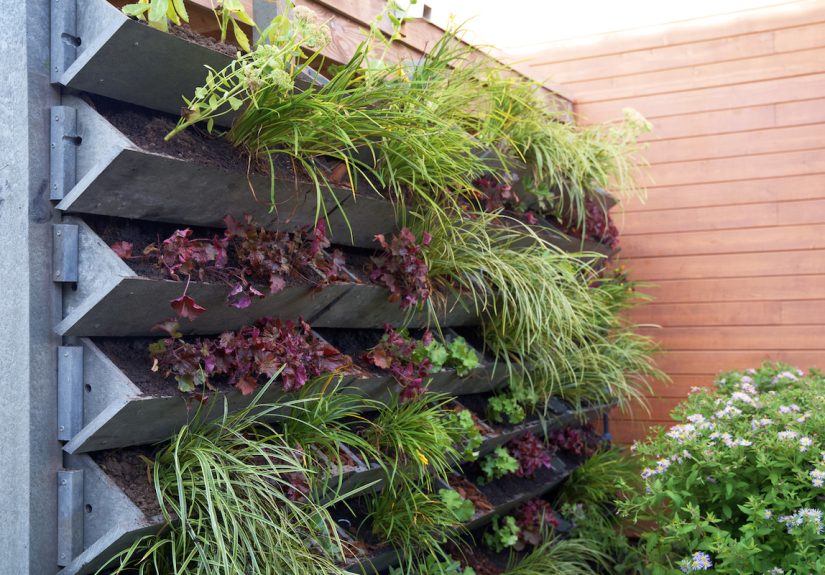
Mounted rain gutters can become slim planting channels for shallow-rooted crops like lettuce, spinach, and strawberries. They fit nicely on fences and sunny walls and look surprisingly neat when arranged in clean rows. This idea is excellent for people who want a productive garden without sacrificing walking space.
9. A Vertical Herb Wall Near the Kitchen
If your cooking style can be described as “aggressively basil-forward,” a vertical herb garden near the back door or kitchen window makes perfect sense. Grow parsley, thyme, oregano, chives, mint in its own container, and compact basil varieties. The convenience alone makes this setup feel genius.
10. A Balcony Railing Planter System
Railings are prime gardening real estate. Add secure railing planters for herbs, flowers, or trailing plants that soften the edge of a balcony. It is a smart way to gain growing room without sacrificing the limited square footage you actually stand on.
11. A Privacy Screen Made of Plants
Use a trellis panel, wire grid, or narrow arbor with climbing plants to create a living privacy screen. This is especially useful on patios, decks, and apartment balconies where the view includes too much neighboring life. Jasmine, clematis, climbing nasturtiums, or edible vines can all do the job beautifully.
12. A Pegboard Plant Wall
A weather-resistant pegboard lets you move shelves, hooks, and planters around as your needs change. It is part garden, part organizational masterpiece. This option works well for people who like flexibility and secretly enjoy rearranging things just because they can.
13. PVC Pipe Vertical Planters
PVC pipe systems can be cut, mounted, and filled to create a narrow vertical planter column. They are especially popular for herbs, leafy greens, and strawberries. The look is more modern than rustic, so it fits well in contemporary outdoor spaces or small urban patios.
14. Pallet Gardens
A wood pallet can be converted into a rustic vertical planter with planting pockets or shelf-style supports. Pallet gardens work best for lightweight plants and shallow-rooted varieties. Sand rough surfaces well, use clean materials, and make sure the structure is secure before adding soil and plants.
15. A Mini Living Wall of Succulents
If you love the look of a living wall but not the idea of constant watering, build a smaller succulent version. Succulents provide texture, color, and sculptural interest without demanding as much moisture as thirstier plants. This is a strong choice for sunny spots and design-focused gardeners.
16. A Wall of Mounted Mason Jars or Small Pots
Mounted jars or petite pots can make a charming indoor or outdoor herb display. Keep the containers small and purposeful rather than cramming in full-size vegetables that will clearly outgrow them by next Tuesday. Think herbs, propagation cuttings, or tiny ornamentals.
17. A Garden Arch or Arbor
An arbor creates planting space overhead, which is a wonderful move when ground space is scarce. Train beans, cucumbers, or flowering vines to climb over the top and suddenly your tiny garden has a dramatic focal point. It is functional, beautiful, and slightly show-offy in the best way.
18. Espalier Against a Wall
Espalier is the technique of training a plant, often a fruit tree, flat against a wall or support. It takes patience, but it is a brilliant way to grow in very narrow spaces. Even if you never become the kind of gardener who casually says “espalier” at parties, the result is worth admiring.
19. A Bookshelf-Style Plant Wall
Outdoor shelving units can hold rows of pots without requiring any wall mounting. This is one of the easiest ways to create a vertical garden on a rental property or in a temporary space. Choose shelves with enough airflow and avoid overcrowding so plants are not fighting for light.
20. A Shoe Organizer Garden
Yes, the humble shoe organizer has entered the chat. A fabric over-the-door organizer or hanging pocket system can be turned into a playful vertical planter for herbs, greens, or flowers. It is budget-friendly, beginner-friendly, and oddly satisfying when it works.
21. A Mixed Vertical Garden Corner
You do not have to choose just one idea. Some of the best small-space gardens combine a trellis, a few hanging baskets, stacked pots, and a railing planter or two. When layered thoughtfully, even a tiny patio corner can feel lush, productive, and surprisingly polished.
What to Grow in a Vertical Garden
The best plants depend on your light, climate, and structure, but some categories consistently do well in vertical systems:
- Climbers and vines: peas, pole beans, cucumbers, some squash, and compact melons
- Herbs: basil, parsley, thyme, oregano, chives, dill, and rosemary in larger containers
- Leafy greens: lettuce, arugula, baby kale, spinach, and mixed salad greens
- Small fruits: strawberries are excellent for pockets, towers, and gutters
- Flowers: petunias, calibrachoa, nasturtiums, pansies, coleus, and trailing annuals
- Low-water plants: succulents and some cacti for sunny, decorative walls
For vegetables, compact, dwarf, bush, and patio varieties are often the best fit for containers. Big ambitions are fine, but giant plants in tiny pots are how gardening turns into performance art.
Small-Space Vertical Gardening Tips That Actually Help
Match the structure to the plant
Peas and beans need lighter support than tomatoes or heavier fruiting vines. If you are growing melons or other weighty crops, use a strong trellis and consider fabric slings to support the fruit.
Install supports early
Put trellises, cages, and panels in place when you plant, not after the vine has gone feral. This avoids damaging roots later and gives the plant a clear path upward from the start.
Use the right growing medium
For containers, use a quality potting mix rather than dense garden soil. A lighter mix helps balance drainage, moisture, and root growth, which matters even more in vertical setups.
Watch watering closely
Containers, hanging baskets, pocket planters, and mounted systems dry out faster than in-ground beds. In hot weather, some may need daily checks. Deep watering is usually better than frequent tiny sips.
Do not ignore sunlight
Most vegetables and many flowering plants need at least six hours of sun a day. Observe your space honestly before you plant. A shady wall is not the place for a tomato’s dreams.
Think about access
The most beautiful vertical garden in the world is still annoying if you cannot reach the top row to water, trim, or harvest. Keep maintenance in mind before you create a twelve-foot masterpiece.
Design Ideas for a Better-Looking Vertical Garden
Good vertical gardens are not just practical. They are also visually satisfying. Repeat materials or colors to make a mixed setup feel cohesive. Combine upright forms with trailing plants for contrast. Leave a bit of breathing room between containers so the wall does not look overcrowded. And if your space is tiny, let one structure become the focal point instead of adding seventeen competing features.
It also helps to mix ornamental and edible plants. A trellis with cucumbers can sit next to pots of flowers. Herbs can share space with compact annuals. Strawberries can spill from a gutter planter while a jasmine vine climbs nearby. Productive does not have to mean plain.
Real-World Experiences and Lessons from Small-Space Vertical Gardeners
One of the biggest surprises people have when they start vertical gardening is how quickly a small area changes character. A plain balcony with three pots can feel temporary and underdressed. Add a trellis, a railing planter, and one hanging basket, and suddenly the whole space feels intentional. It starts reading as a garden instead of “an outdoor area where a folding chair lives.” That visual transformation is part of why vertical gardening feels so rewarding.
Another common experience is learning that vertical does not always mean low maintenance. In fact, some small-space systems need more attention than a traditional bed. Hanging baskets dry out fast. Pocket planters can go from thriving to dramatic in a single hot afternoon. Wall-mounted containers may get uneven light and wind exposure. Gardeners who succeed long term usually become excellent observers. They notice where the afternoon sun hits hardest, which shelf stays damp longest, and which plant is clearly plotting a coup against its neighbors.
There is also a learning curve with scale. Many beginners pack too much into too little space because the setup looks adorable on day one. By week six, the basil is bullying the thyme, the tomato is pretending the trellis is optional, and the mint is behaving exactly like mint. Over time, experienced gardeners become more selective. They choose fewer plants, better supports, and containers sized for actual mature growth instead of optimistic wishful thinking.
Small-space gardeners also become clever problem-solvers. They use hooks where there is no floor space, grow strawberries in narrow channels, turn railings into herb stations, and repurpose simple household items into planters that look far more charming than they have any right to. That creativity is part of the appeal. A vertical garden often feels less like following a rigid formula and more like designing a tiny custom ecosystem for the exact space you have.
Perhaps the best part is how usable these gardens become. Snipping herbs just outside the kitchen, picking cucumbers from a trellis beside the patio chair, or watering a living wall with your morning coffee in hand makes the garden part of everyday life. Even when the space is small, the experience feels rich. That is the beauty of vertical gardening: it proves that lack of square footage does not have to mean lack of abundance. You do not need a giant yard to create something green, useful, and full of personality. You just need a little light, a solid plan, and the willingness to look up.
Conclusion
Vertical gardening is one of the smartest ways to grow more in less room. Whether you choose a trellis of climbing vegetables, a wall of herbs, a privacy screen of vines, or a whole layered mix of planters and shelves, the goal is the same: make every inch count. Start small, choose plants that suit your light and structure, and build a garden that fits your real life. Your space may be short on square footage, but it does not have to be short on charm.






 Close
Close