
Table of Contents >> Show >> Hide
- Why Hard Boiled Eggs Can Be So Annoying to Peel
- The Best Method for Easy-Peel Hard Boiled Eggs
- Extra Tricks That Can Help
- Common Mistakes That Make Eggs Harder to Peel
- How to Store Hard Boiled Eggs
- Best Ways to Use Perfectly Peeled Eggs
- Frequently Asked Questions
- Kitchen Experiences: What Peeling Hard Boiled Eggs Is Really Like
- Final Thoughts
Peeling a hard boiled egg should be simple. In theory, it is just shell meets fingers, fingers meet breakfast, breakfast meets happiness. In real life, it often turns into a tiny kitchen tragedy. The shell breaks into confetti, the white tears apart, and suddenly your “beautiful protein-packed snack” looks like it lost a bar fight.
The good news is that easy-peel hard boiled eggs are not a myth invented by smug brunch hosts. There are a few practical techniques that really do make a difference. The secret is not one magical ingredient or one viral internet stunt. It is a combination of choosing the right eggs, using the right cooking method, cooling them properly, and peeling them with a little strategy instead of pure rage.
In this guide, you will learn how to easily peel a hard boiled egg, why some eggs practically undress themselves while others cling to their shells like they are protecting state secrets, and what actually works in a normal home kitchen. Whether you are making deviled eggs, meal-prep lunches, egg salad, or a quick snack with a sprinkle of salt, this method will help you get smooth, clean eggs without sacrificing your patience.
Why Hard Boiled Eggs Can Be So Annoying to Peel
Let’s start with the problem. When eggs are very fresh, the egg white tends to cling more tightly to the inner membrane of the shell. That means when you peel, the shell does not come away neatly. Instead, it takes chunks of the white with it, leaving you with a bumpy, cratered egg that looks a little emotionally exhausted.
As eggs age a bit, the air pocket inside becomes larger and the bond between the white and the shell membrane weakens. That is why older eggs are usually easier to peel than super-fresh eggs. So if your goal is picture-perfect hard boiled eggs, the “freshest eggs possible” rule does not really help you here. For frying? Great. For peeling? Not the star of the show.
Temperature matters too. Starting eggs in already hot water or steaming them can help the whites set more quickly, which often leads to easier peeling later. Then comes cooling. A quick ice bath helps stop the cooking and encourages the egg white to pull away from the shell a bit. That is the part many people skip when they are hungry, and unfortunately, hungry shortcuts are often shell-sticking shortcuts.
So the easy-peel formula is pretty straightforward: use slightly older eggs, cook them in a way that encourages cleaner separation, chill them quickly, then peel smart. No kitchen wizard cape required.
The Best Method for Easy-Peel Hard Boiled Eggs
If you want a reliable, low-drama approach, this is the method to use. It is simple, repeatable, and works whether you are making two eggs for breakfast or a dozen for a picnic platter.
What You Need
- 6 to 12 large eggs
- A saucepan or pot
- Water
- A bowl filled with ice and cold water
- A slotted spoon
Step 1: Choose Eggs That Are Not Extremely Fresh
If possible, use eggs that have been in your refrigerator for about a week. They do not need to be old in a scary way. They just should not be straight-from-the-hen fresh. This small detail can make a surprisingly big difference when it is time to peel.
Step 2: Bring the Water to a Boil First
Fill your pot with enough water to cover the eggs by about an inch. Bring the water to a gentle boil before adding the eggs. Using a slotted spoon, carefully lower the eggs into the hot water one at a time. This helps the outer egg white set quickly and often results in shells that release more easily.
If you prefer, you can also steam the eggs instead of boiling them. Many home cooks swear by steaming because it produces easy peel hard boiled eggs with less sticking. Either method can work well, but the hot-start approach is one of the easiest for most kitchens.
Step 3: Cook Them Gently, Not Like You Are Punishing Them
Once the eggs are in the pot, lower the heat slightly so the water stays at a gentle boil rather than a wild, shell-smashing frenzy. Cook large eggs for about 10 to 12 minutes for fully hard boiled centers. If you like a slightly softer middle, shave a minute or two off the time.
The goal is a firm white and a set yolk without overcooking. Overcooked eggs can develop that gray-green ring around the yolk and a sulfur smell that says, “I was forgotten on the stove.”
Step 4: Move Them Straight Into an Ice Bath
This part matters. As soon as the eggs are done, transfer them to a bowl of ice water. Let them sit for at least 10 to 15 minutes. This rapid cooling stops the cooking, makes the eggs easier to handle, and helps loosen the membrane under the shell.
If you are in a rush, cool them until they are at least comfortable to touch. But for the best peeling results, do not skimp on this step. Your future self will thank you and possibly write you a nice note.
Step 5: Crack, Roll, and Start at the Wide End
Tap the egg gently on the counter until the shell cracks all over. Then roll it lightly under your palm to create a mosaic of small cracks. Start peeling at the wider end of the egg, where the air pocket usually sits. That little pocket gives you a better chance of sliding under the membrane and removing larger pieces of shell at once.
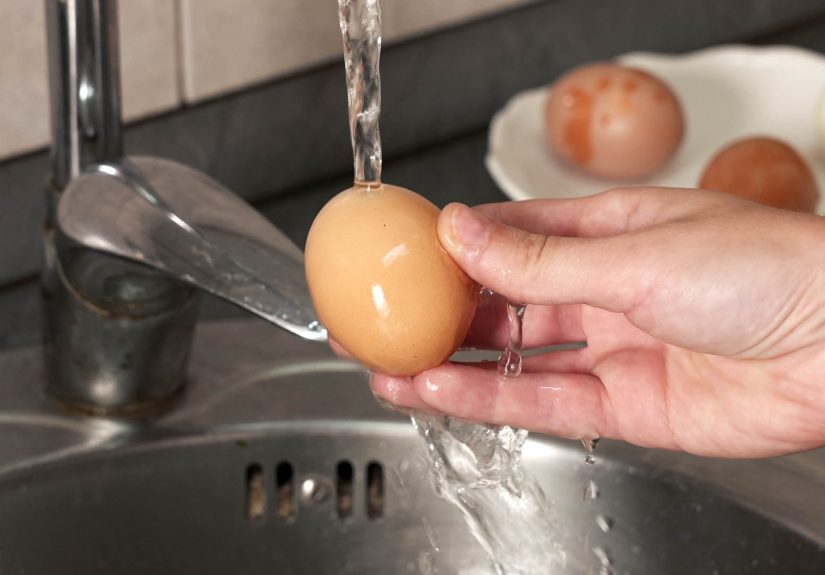
If the shell still resists, peel the egg under cold running water or submerged in a bowl of water. The water helps separate the membrane from the white and washes away shell fragments as you go.
Extra Tricks That Can Help
The core method above will do most of the heavy lifting, but a few extra tricks can improve your odds even more.
Use a Spoon
Once the shell is cracked and loosened, you can sometimes slide a spoon just under the shell and membrane to help lift it away. This works best after the egg has already started peeling cleanly.
Peel While Slightly Warm or Fully Chilled
Some people find eggs easiest to peel when they are no longer hot but still slightly warm. Others prefer them fully chilled. The sweet spot can vary a little by egg and by method, but what usually does not work well is peeling them immediately when they are scorching hot and your fingertips are negotiating a labor strike.
Try Steaming if Boiling Keeps Failing You
If you consistently struggle with stuck shells, try steaming instead of boiling. Steam tends to cook eggs gently while still helping the shell release well. For many cooks, this is the “why did nobody tell me sooner?” option.
What About Baking Soda, Salt, or Vinegar?
These are the celebrity gossip topics of egg peeling. Some cooks swear by them, others shrug. Baking soda is often suggested because it can raise pH, which theoretically may help. Vinegar is sometimes used because it may slightly affect the shell and can help if an egg cracks in the water. Salt is often added for tradition or insurance against messy leaks.
Can they help? Sometimes. Are they the main reason eggs peel beautifully? Usually not. If your cooking method and cooling process are off, a teaspoon of anything is not going to swoop in like a superhero. Think of these as optional extras, not the foundation.
Common Mistakes That Make Eggs Harder to Peel
Using Ultra-Fresh Eggs
Fresh eggs are wonderful in many recipes, but they are not always ideal for hard boiling if appearance matters. When you need smooth eggs for deviled eggs or party platters, a slightly older carton is usually your friend.
Skipping the Ice Bath
This is one of the biggest mistakes. Without quick cooling, the eggs continue cooking and the membrane tends to cling more stubbornly. Also, hot eggs are miserable to peel. That alone should be enough to send you running for the ice tray.
Cracking Only One Tiny Spot
If you make one timid little crack and hope the shell will politely zip off, you are asking a lot from an egg. Crack the shell all over so it loosens evenly. A little commitment goes a long way here.
Starting at the Pointy End
You can do it, but why make life harder? The wider end usually has the air pocket, which makes it easier to get under the membrane and remove bigger pieces.
Boiling Too Aggressively
A harsh, rolling boil can bang eggs around and increase the chance of cracks. A steady, gentle boil is much kinder and usually gives better results.
How to Store Hard Boiled Eggs
Once cooked, hard boiled eggs should be refrigerated promptly. Store them in the shell if possible until you are ready to eat or use them. The shell helps protect the egg and slows down drying. If you peel them ahead of time, keep them in a covered container so they stay fresh and do not take on mysterious refrigerator flavors that absolutely nobody requested.
If you are meal prepping, label the container and use the eggs within the week. Hard boiled eggs are great for salads, grain bowls, lunch boxes, sandwiches, and quick snacks, but only if they are still fresh enough to enjoy safely.
Best Ways to Use Perfectly Peeled Eggs
Once you have mastered how to peel hard boiled eggs easily, your snack and meal options open up in a big way.
- Deviled eggs: Smooth whites look much better on a platter.
- Egg salad: No shell bits hiding in the mix like crunchy betrayal.
- Lunch bowls: Slice over rice, quinoa, or greens for easy protein.
- Avocado toast upgrades: Add sliced egg, salt, pepper, and hot sauce.
- Simple snacks: Eat with everything bagel seasoning, paprika, or a pinch of flaky salt.
Frequently Asked Questions
Are older eggs really easier to peel?
Yes, generally. Slightly older eggs tend to peel better than very fresh eggs because the shell membrane separates more easily from the white.
Is steaming better than boiling?
For many cooks, yes. Steaming is often praised for producing eggs that peel more cleanly. But boiling with a hot start and an ice bath also works very well.
Should I peel eggs under running water?
It can help a lot. The water gets between the membrane and the egg white, helping shell pieces slide off more easily.
Why do my eggs have a green ring around the yolk?
That usually means they were overcooked or cooled too slowly. It is mostly a quality issue rather than a dramatic kitchen disaster, but it does affect appearance and texture.
Can I make hard boiled eggs ahead of time?
Absolutely. They are excellent for meal prep. Keep them refrigerated and use them within a week.
Kitchen Experiences: What Peeling Hard Boiled Eggs Is Really Like
There is the textbook version of peeling eggs, and then there is the real-world version where you are making a dozen deviled eggs for a family cookout, your phone is buzzing, the potato salad still is not done, and one egg has somehow exploded into what can only be described as breakfast confetti. That is where this topic gets very relatable.
One of the most common experiences people have is assuming the freshest eggs will give the best result. It sounds logical. Fresh ingredients equal better food, right? Usually yes. But with hard boiled eggs, that instinct often backfires. You boil a batch of very fresh eggs, cool them quickly, start peeling, and the shell clings so tightly that it feels personal. By the third egg, you are no longer making lunch. You are negotiating with calcium armor.
Then there is the opposite experience: using eggs that have been in the fridge for several days, lowering them into hot water, and watching the shell come off in satisfying curved pieces. It feels oddly glamorous, like one of those rare kitchen moments where everything works exactly the way it is supposed to. No torn whites. No shell crumbs. No muttering.
Another familiar moment comes when you are making eggs for presentation. Maybe it is for Easter, maybe it is for a baby shower, maybe it is for that one friend who somehow makes even casual snacks look catered. In those moments, ugly peeled eggs are not ideal. That is when technique matters most. The ice bath, the crack-all-over method, the wide-end start, the cold-water assistsuddenly these are not “extra steps.” They are the difference between a beautiful tray and a plate of lumpy little survivors.
Meal preppers have their own version of the story. You boil a batch on Sunday, thinking Future You will be thrilled. And Future You is thrilleduntil Monday morning when the shell sticks, you are late, and breakfast becomes an obstacle course. Once you get the method right, though, hard boiled eggs become one of the easiest high-protein foods to keep around. Slice one over a salad, tuck one into a lunch box, chop a few into egg salad, or eat one standing in front of the fridge like a person making responsible life choices.
There is also a quiet emotional truth here: peeling eggs badly is more frustrating than it has any right to be. It is such a small task, and yet when it goes wrong, it feels wildly disrespectful. That is why a dependable method matters. It saves time, yes, but it also saves mood. And in a busy kitchen, mood is an ingredient.
Over time, most cooks end up with their own little egg routine. Some always steam. Some insist on boiling water first. Some peel under running water like it is a sacred ritual. Some keep a separate carton labeled “boiling eggs only,” which is honestly the kind of practical genius more people should celebrate. The point is not perfection for perfection’s sake. The point is making the process easier, cleaner, and less ridiculous.
And once you have a method that works, hard boiled eggs stop being a gamble. They become what they were always meant to be: quick, useful, affordable, protein-packed little overachievers that do not need to fight you on the way to the plate.
Final Thoughts
If you have been wondering how to easily peel a hard boiled egg, the answer is refreshingly practical. Use slightly older eggs, start them in boiling water or steam them, cool them in an ice bath, crack the shell all over, and peel from the large end under cold water if needed. That is the method. No drama, no gimmicks, and no need to sacrifice half the egg white to the shell gods.
Once you get the hang of it, peeling hard boiled eggs becomes one of those satisfying kitchen skills that pays off again and again. Your egg salad looks better, your deviled eggs look smoother, and your breakfast feels much less like a test of character. Which, frankly, is how breakfast should be.


 Close
Close