
Table of Contents >> Show >> Hide
- Why Military Outposts Need a New Energy Playbook
- How Project POWER Works in Simple Terms
- The 2025 PRAD Demonstration: A Big Step for Wireless Power
- Why Laser Power Beaming Could Matter for Defense
- Benefits Beyond the Battlefield
- The Engineering Challenges Are Very Real
- How Project POWER Could Change Outpost Design
- Specific Examples of Potential Uses
- What Project POWER Is Not
- The Bigger Energy Future: From Fuel Convoys to Energy Networks
- Experience-Based Perspective: What Project POWER Feels Like From the Logistics Side
- Conclusion
Imagine a remote military outpost sitting far beyond friendly infrastructure. The road in is rough, the weather is rude, and every gallon of fuel has to arrive by convoy, aircraft, or a very tired logistics team wondering why electricity cannot simply be emailed. That is the kind of problem DARPA’s Project POWER is trying to solvenot by sending a bigger fuel truck, but by exploring whether energy itself can be delivered through the air using laser-based power beaming.
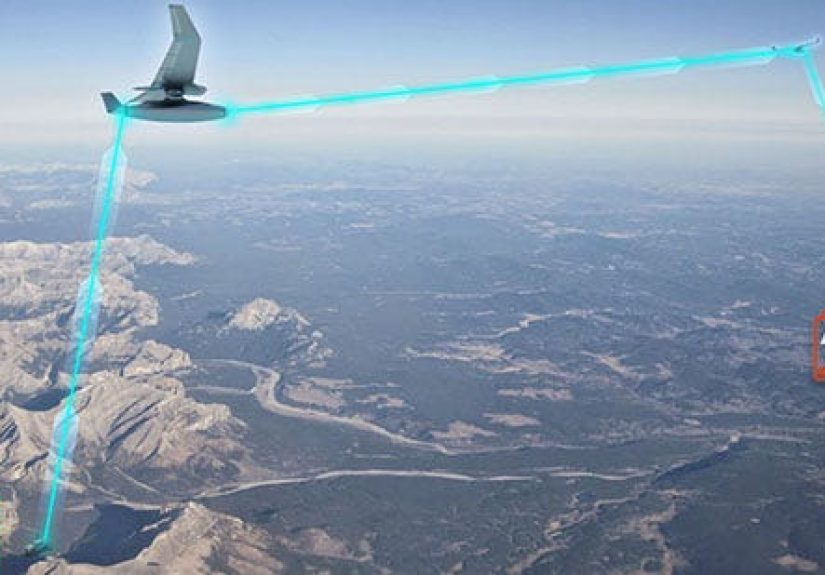
Project POWER, short for Persistent Optical Wireless Energy Relay, is a U.S. defense research effort focused on moving electricity across long distances without traditional wires, pipelines, or constant fuel deliveries. Instead of treating power as something that must be physically hauled to the edge of the battlefield, the program studies how ground-based lasers, airborne relays, and specialized receivers could form a flexible energy network. In plain English: DARPA wants to see whether electricity can travel more like informationfast, directed, and available where the mission needs it.
The idea sounds like science fiction with a hard hat, but recent demonstrations have pushed it closer to serious engineering. In 2025, DARPA announced that its POWER Receiver Array Demo, known as PRAD, delivered more than 800 watts of power over 8.6 kilometers, or 5.3 miles, during a 30-second laser transmission. The campaign transferred more than a megajoule of energy overall. That is not enough to run a whole base, but it is enough to prove that optical power beaming is moving from “interesting lab trick” toward “potential logistics tool.”
Why Military Outposts Need a New Energy Playbook
Modern military operations run on energy. Radios, radar, sensors, drones, computing systems, satellite links, medical gear, water purification, heating, cooling, and battery charging all need reliable power. Even a small forward operating location can become surprisingly electricity-hungry once it is packed with communications equipment and autonomous systems. The problem is not just generating power; it is getting power to places where roads, grids, and fuel infrastructure may not exist.
Traditional energy logistics often depend on diesel fuel. Diesel generators are rugged and familiar, but they come with a long tail: fuel storage, maintenance, spare parts, transport vehicles, security escorts, and repeated resupply. Every delivery can expose personnel to risk, especially in contested regions where convoys are visible, predictable, and difficult to hide. The military has spent years studying how to reduce fuel demand because energy dependence can become an operational vulnerability.
That is where laser energy delivery becomes attractive. If even a portion of a remote site’s power could be transmitted wirelessly from a safer location, commanders might reduce fuel trips, extend the endurance of unmanned systems, and support temporary outposts without building a full electrical grid. Nobody is saying diesel disappears overnight. But Project POWER asks a smart question: what if some of the most dangerous “last mile” energy delivery could be replaced by beams of light?
How Project POWER Works in Simple Terms
Project POWER is built around optical wireless power transmission. A laser source sends energy through the air. A receiver captures that light and converts it back into usable electricity, often through photovoltaic cells designed to respond efficiently to the laser’s wavelength. The concept is related to solar panels, except the light is not coming from the sun and it is not spread across the sky like a lazy summer afternoon. It is aimed, concentrated, and engineered for energy transfer.
The Ground Source
The energy begins at a source where power is available or easier to generate. That could be a secure base, a ship, a larger installation, or another platform with enough electrical capacity. Instead of loading fuel onto vehicles and sending them across risky terrain, the system would convert electrical energy into an optical beam. The laser is not the “pew-pew” fantasy version from movies; it is a carefully controlled energy transmission tool.
The Airborne Relay
DARPA’s larger vision includes airborne optical relays. These relays could be carried by existing aircraft or future platforms and used to redirect, correct, and pass the beam over longer distances. This matters because Earth’s surface is not a perfectly flat billiard table. Hills, curvature, weather, atmospheric distortion, and line-of-sight limits all complicate long-distance transmission. Airborne relay nodes could help create a multi-path “energy web,” where power can move around obstacles and reach receivers far from the original source.
The Receiver
The receiver is where the light becomes useful electricity again. In DARPA’s PRAD demonstration, the incoming laser entered a receiver aperture, reflected onto a parabolic mirror, and was distributed across photovoltaic cells arranged inside the device. Those cells converted the optical energy into electrical power. Think of it as a very serious, very expensive cousin of wireless chargingexcept instead of charging a phone on a bedside pad, the goal is to support equipment across miles.
The 2025 PRAD Demonstration: A Big Step for Wireless Power
The 2025 POWER Receiver Array Demo was important because it broke previous publicly reported optical power beaming records for meaningful power over distance. The team delivered more than 800 watts across 8.6 kilometers for 30 seconds and transferred more than one megajoule during the test campaign. Earlier milestones had involved lower power, shorter distances, or smaller delivered amounts. PRAD showed that a compact receiver could capture useful energy across a real-world outdoor range.
The test took place in New Mexico with participation from government and industry partners, including the U.S. Naval Research Laboratory and facilities associated with high-energy laser testing. The demonstration also produced one of the most delightfully nerdy details in defense technology: some of the transferred energy was reportedly used to make popcorn. It was a playful nod to laser-lab culture, but it also made the point nicely. If the beam can do something ordinary and visible, the abstract engineering becomes easier to understand.
Of course, popcorn is not the mission. The mission is proving that power can be delivered over meaningful distances without a physical cable or fuel convoy. In a future use case, this kind of system might support sensors, communications gear, unmanned aerial systems, emergency equipment, or temporary field infrastructure. The big dream is not one heroic laser doing everything. It is a network of sources, relays, and receivers that can move energy quickly and flexibly.
Why Laser Power Beaming Could Matter for Defense
The military value of Project POWER comes from logistics. In war, logistics is not the boring department in the back room; it is often the difference between sustained operations and a very expensive pause button. Energy supply affects mobility, endurance, communications, intelligence gathering, and the ability to operate in austere environments. If power cannot reach the edge, the smartest sensors and most advanced drones become decorative electronics.
Power beaming for military outposts could reduce the number of fuel deliveries to certain locations. It could also help smaller teams operate for longer periods without carrying heavy batteries or depending entirely on generators. For unmanned systems, beamed energy could open the door to longer endurance missions. A drone that can receive power while airborne, for example, might spend more time observing, relaying communications, or supporting search-and-rescue operations.
Another advantage is flexibility. A fixed power line is useful until the mission moves, the road disappears, or the environment becomes hostile. Wireless power transmission could, in theory, allow energy routes to be changed more quickly. If one path is blocked by terrain or atmospheric conditions, a network with multiple relay options could shift to another path. That kind of resilience is exactly why DARPA describes POWER as a multi-path energy network rather than a single beam between two points.
Benefits Beyond the Battlefield
Although Project POWER is a defense program, the technology has obvious civilian echoes. Disaster response teams often face the same basic problem as forward-deployed military units: people need power where infrastructure is damaged, flooded, burned, or unreachable. After a hurricane, earthquake, wildfire, or major storm, roads may be blocked and power lines may be down. A future wireless energy relay system could help deliver emergency power to communications equipment, medical stations, water systems, or temporary shelters.
Space applications are another major area of interest. Power beaming has long been discussed in relation to space-based solar power, lunar bases, satellites, and high-altitude platforms. A solar collector in space could convert sunlight into microwave or optical energy and transmit it to a receiver. That idea remains technically and economically difficult, but Project POWER contributes to the same broad family of research: how to move useful energy without relying on copper wires or fuel trucks.
There is also a commercial angle. Remote mining sites, Arctic research stations, offshore platforms, and isolated communications towers all struggle with power delivery. Laser power beaming will not replace the grid in your neighborhood, and nobody should expect their toaster to run on a sky laser next Tuesday. But in places where cables are expensive and fuel delivery is dangerous, even partial wireless power could become valuable.
The Engineering Challenges Are Very Real
For all its promise, Project POWER faces serious technical hurdles. The first is efficiency. Every conversion step loses energy: electricity to laser light, laser transmission through the atmosphere, beam capture, and optical energy back to electricity. The 2025 demonstration was a major milestone, but future systems must improve efficiency to become practical at larger scales. Delivering hundreds of watts is impressive; delivering reliable kilowatts across operational distances is a much tougher assignment.
Atmospheric conditions are another challenge. Fog, dust, rain, smoke, turbulence, and heat shimmer can affect optical beams. Anyone who has watched a road wobble in summer heat has seen the atmosphere acting like a mischievous lens. A military-grade power beaming system must handle changing weather and battlefield conditions while maintaining safety and beam quality.
Pointing accuracy also matters. A beam must remain aligned with the receiver, especially if either side is moving. Airborne relays add complexity because they must redirect energy accurately while managing vibration, motion, and changing geometry. DARPA’s focus on wavefront correction, accurate energy redirection, and throttleable energy harvesting reflects these challenges.
Safety is equally important. A system capable of transmitting significant energy must be designed with strict controls, exclusion zones, sensors, shutdown mechanisms, and operational rules. The goal is not to turn the sky into a hazard. The goal is to create controlled pathways for energy delivery. That distinction matters, especially when discussing lasers in public. The technology must be powerful enough to be useful but controlled enough to be safe around people, aircraft, wildlife, and equipment.
How Project POWER Could Change Outpost Design
If power can be transmitted rather than carried, the design of future military outposts could change. Today, planners must think carefully about fuel storage, generator placement, resupply frequency, and battery capacity. Those requirements shape the size, weight, and visibility of a site. Fuel storage can become a target. Generators make noise and heat. Batteries add weight. Everything has a trade-off.
A beamed energy system could allow some outposts to become lighter and more temporary. Instead of building a large fuel footprint, a team might deploy receivers, battery buffers, and efficient equipment. Power could arrive during scheduled windows or on demand. The outpost would still need backup systems, because no serious planner would trust a single energy source, but the overall logistics burden could shrink.
The concept also fits the military’s growing interest in distributed operations. Smaller, scattered units are harder to target than one large base, but they are harder to supply. Project POWER could help solve that paradox by supporting distributed teams without requiring a constant stream of vehicles. In that sense, laser energy is not just a technical curiosity; it is part of a broader shift toward resilient, flexible, and harder-to-disrupt military networks.
Specific Examples of Potential Uses
Remote Sensor Sites
A sensor node placed on a ridge, desert plain, island, or mountain pass may need steady electricity but have no easy access to fuel or grid power. Laser power beaming could recharge batteries or supplement solar panels, especially when weather or mission demands reduce local generation.
Unmanned Aerial Systems
Drones are limited by battery life and fuel. A future receiver-equipped unmanned aircraft could potentially extend its time in the air by receiving energy from a safe source or relay. That could be useful for communications, surveillance, mapping, or disaster response.
Temporary Humanitarian Sites
After a storm or earthquake, roads can be impassable and electrical infrastructure can fail. A wireless power link could support emergency communications, lighting, refrigeration for medical supplies, or water purification until normal infrastructure returns.
Forward Operating Locations
Small outposts often need power for radios, laptops, sensors, counter-drone systems, and life-support needs. Beamed energy could reduce generator runtime and fuel storage, especially when paired with batteries, solar arrays, and efficient microgrids.
What Project POWER Is Not
Project POWER is not a magic replacement for every power cable, generator, or battery. It is not a household technology. It is not ready to beam megawatts casually across continents. It is also not the same as a laser weapon, even though both involve directed energy. The intention here is energy delivery, not target damage. That difference shapes the engineering, safety controls, receiver design, and operational purpose.
It is better to view Project POWER as an experimental logistics technology. Its success will depend on whether it can deliver enough energy, at acceptable efficiency, under real-world conditions, with safe and reliable control. The 2025 record was a strong proof point, but the road from demonstration to deployment is long. In defense research, “promising” is not the same as “fielded,” and “fielded” is not the same as “used everywhere.”
The Bigger Energy Future: From Fuel Convoys to Energy Networks
The most important idea behind Project POWER is not the laser itself. It is the shift from energy as cargo to energy as a network. For more than a century, military power has depended on moving physical fuel. That will remain true for many platforms, especially vehicles and aircraft. But the growth of electric systems, autonomous devices, sensors, and distributed operations makes new energy architectures increasingly attractive.
A future force might combine diesel, batteries, solar panels, hydrogen, portable nuclear concepts, microgrids, and laser power beaming. Each would serve a different role. Diesel might provide rugged backup. Solar could support daytime generation. Batteries could smooth demand. Beamed power could bridge gaps where terrain, distance, or risk makes physical delivery difficult. The winning formula is not one silver bullet; it is a smarter toolkit.
That is why Project POWER deserves attention. It is not just about a spectacular laser test in the desert. It is about rethinking how energy reaches the places where people and machines need it most. If successful, the technology could make remote military operations less dependent on vulnerable supply routes and more capable of adapting quickly.
Experience-Based Perspective: What Project POWER Feels Like From the Logistics Side
Anyone who has worked around remote operationsmilitary, emergency response, construction, field research, or off-grid engineeringunderstands that electricity is never “just electricity.” It is planning, weight, noise, heat, maintenance, spare parts, fuel, transport, and backup plans for the backup plans. A small generator may look simple until you calculate fuel burn, delivery schedules, weather delays, engine servicing, and the awkward reality that everything important seems to run out of power at the worst possible time.
From that perspective, Project POWER feels less like a futuristic gadget and more like a response to a very old headache. Remote teams do not want complexity for fun. They want fewer things to haul, fewer machines to repair, fewer trips through dangerous areas, and more confidence that radios, sensors, medical equipment, and computers will keep working. If laser energy can eventually supplement existing power systems, it could remove some of the most annoying and risky parts of field logistics.
Picture a small temporary outpost that needs to operate quietly for several days. A diesel generator works, but it makes sound, produces heat, needs fuel, and announces itself like a mechanical rooster. Batteries are quieter, but they are heavy and finite. Solar panels help, but they depend on sunlight, space, and weather. A beamed power receiver would not eliminate those tools, but it could add a new option: receive energy from somewhere safer, store it locally, and use it when needed.
The best comparison may be communications. Decades ago, moving information required wires, couriers, or bulky radio systems. Today, information moves through layered networks: fiber, satellites, cellular towers, Wi-Fi, mesh systems, and tactical radios. Energy is harder because electrons are stubborn little workers and power requires much more physical transfer than data. Still, Project POWER imagines a similar kind of layered future, where energy can be routed, redirected, and delivered through multiple pathways.
There is also a practical human benefit. Reducing fuel delivery is not glamorous, but it can be lifesaving. Fuel convoys demand drivers, escorts, route planning, maintenance, and security. They can be delayed by terrain, weather, mechanical breakdowns, or hostile activity. If a future power-beaming system prevents even a fraction of risky resupply movements, the value is not just measured in watts. It is measured in fewer exposed personnel and more operational breathing room.
At the same time, experience teaches caution. Field environments are messy. Equipment gets dusty, wet, bumped, misaligned, overheated, and misunderstood by someone holding a clipboard in bad weather. A power receiver must be rugged, simple to deploy, easy to monitor, and compatible with real energy needs. The system must also be boring in the best possible way: reliable, predictable, and safe. In the field, “exciting” technology is fun during demonstrations and terrifying during emergencies.
The smartest path for Project POWER is likely gradual integration. It may first support niche missions: charging unmanned systems, powering sensor packages, supplementing microgrids, or aiding disaster response where conventional infrastructure is damaged. Over time, if efficiency improves and relay networks become practical, larger uses could follow. The technology does not need to replace every generator to matter. It only needs to solve specific problems better than the current alternatives.
That is the real promise of Project POWER. It takes a familiar frustrationgetting energy to hard placesand attacks it with a fresh architecture. Not a bigger truck. Not another pile of batteries. Not a louder generator. A beam, a receiver, and a networked way of thinking. If the engineering continues to mature, laser power beaming could become one of those technologies that sounds strange right up until people start asking why we did not try it sooner.
Conclusion
Project POWER is one of the most intriguing energy logistics experiments in modern defense research. By exploring laser-based wireless power transmission, DARPA is testing whether electricity can be delivered to distant military outposts, drones, sensors, and disaster zones without relying entirely on vulnerable fuel routes or fixed infrastructure. The 2025 PRAD milestone proved that meaningful power can be transmitted across miles, but the technology still faces challenges in efficiency, weather resilience, safety, alignment, and scale.
Still, the direction is clear. Future operations will need more energy, not less. Distributed teams, autonomous systems, advanced sensors, and resilient communications all depend on reliable power at the edge. Project POWER offers a bold vision: an energy web that moves power at the speed of light. It may not replace conventional logistics, but it could make remote operations safer, lighter, and more flexible. And yes, if a serious defense program can use laser energy to make popcorn along the way, the future has at least a little sense of humor.
Note: This article is based on publicly available information from official U.S. defense sources and reputable technology reporting, rewritten as original web-publishing content without source-link blocks.





 Close
Close