
Table of Contents >> Show >> Hide
- The Rise of Mr. Holmes Bakehouse in San Francisco
- The Cruffin: A Pastry Built for Obsession
- Why Mr. Holmes Was Perfect for the Instagram Age
- The Recipe Theft That Became Bakery Legend
- Beyond the Cruffin: Cookies, Donuts, Croissants, and Creative Chaos
- Expansion, Ambition, and the Business Behind the Buzz
- What Mr. Holmes Bakehouse Taught Modern Bakeries
- Experience Section: What the Mr. Holmes Bakehouse Moment Felt Like
- Conclusion: A Bakery That Became a Blueprint
Note: This article is written from synthesized public information about Mr. Holmes Bakehouse, its San Francisco origins, cruffin fame, branding, expansion, pandemic-era changes, and lasting influence on modern bakery culture.
Some bakeries become famous because they make excellent bread. Some become famous because they have a secret family recipe, a hundred-year-old sourdough starter, or a pastry chef who can laminate dough with the calm precision of a watchmaker. Mr. Holmes Bakehouse became famous because it had all the right ingredients for the modern food era: buttery pastries, a cheeky neon sign, beautiful boxes, long lines, and one highly photogenic hybrid pastry that made Instagram users behave like they had just discovered edible gold.
Located at 1042 Larkin Street in San Francisco, Mr. Holmes Bakehouse opened in 2014 and quickly turned into one of the city’s most talked-about bakeries. It was small, stylish, a little rebellious, and very aware that food in the smartphone age needed to taste good and look good under natural light. Its signature creation, the cruffin, helped launch the bakery from neighborhood curiosity to viral pastry destination. A croissant-muffin hybrid filled with rotating creams and finished with sugar, the cruffin was not merely breakfast. It was an event with flaky layers.
Today, the original San Francisco location is no longer operating, but Mr. Holmes Bakehouse still matters. It remains a case study in food branding, social media buzz, pastry innovation, and the strange power of making people line up before 9 a.m. for something that technically counts as a muffin only if you squint.
The Rise of Mr. Holmes Bakehouse in San Francisco
Mr. Holmes Bakehouse arrived during a golden era for highly shareable food. San Francisco already had a deep bakery culture, from classic sourdough to elegant French-style pastry shops, but Mr. Holmes brought something different: a modern, minimal, playful bakery that felt designed for the camera without forgetting the butter.
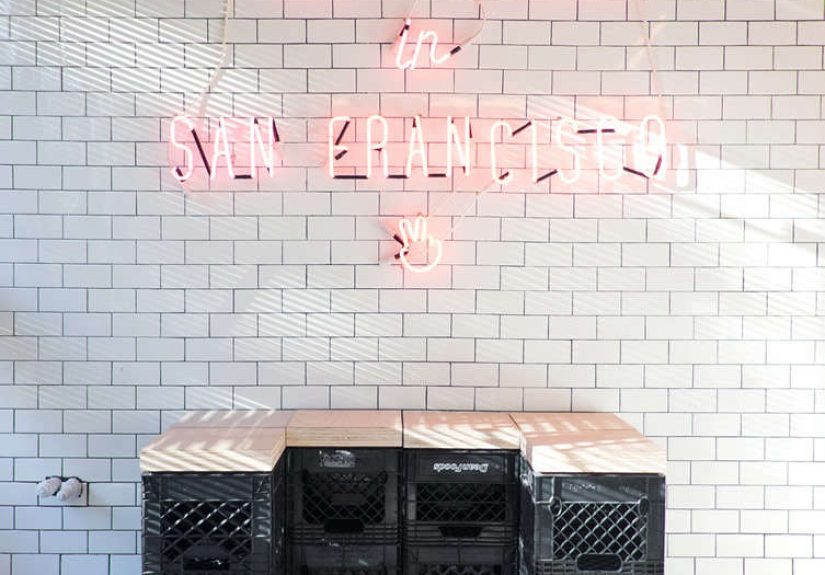
The bakery was founded by Aaron Caddel with pastry talent associated with Ry Stephen, and it quickly gained attention for its polished but mischievous personality. The interior was simple and graphic. The packaging looked premium. The famous neon sign, “I Got Baked in San Francisco,” became practically mandatory for anyone holding a pastry and a phone. In the age of brunch photos and geo-tagged travel lists, this was not just a bakery wall. It was a marketing department with electricity.
That is one reason Mr. Holmes Bakehouse became more than a place to grab a croissant. It became a stop on the San Francisco food pilgrimage. Visitors did not just want to eat there; they wanted proof they had been there. A pastry in hand, a pink box nearby, neon glowing in the background: that was the full receipt.
The Cruffin: A Pastry Built for Obsession
The cruffin was the star. At its simplest, it combined the laminated, buttery layers of a croissant with the shape of a muffin. But that description undersells the drama. A proper cruffin had height, swirl, crunch, filling, and the kind of flaky exterior that made eating one in public a commitment to wearing crumbs like confetti.
Mr. Holmes Bakehouse helped popularize the cruffin in the United States, especially in San Francisco. The bakery typically offered rotating flavors, which made the pastry feel collectible. One day might bring a fruit-forward filling; another might lean into chocolate, caramel, matcha, or cream. Scarcity added fuel to the fire. Cruffins were limited, they came out at a certain time, and they often sold out. Nothing makes a pastry more desirable than the possibility that someone three people ahead of you might buy the last one.
In marketing terms, the cruffin was genius. It had a memorable name, a clear visual identity, and a built-in explanation. “It’s a croissant muffin” is the kind of sentence people repeat without being paid. It sounded fun, looked impressive, and tasted indulgent. In other words, it was built for the feed before many restaurants fully understood what “built for the feed” even meant.
Why Mr. Holmes Was Perfect for the Instagram Age
1. The bakery had a visual hook
The neon sign was not background decoration. It was a magnet. In the same way murals, tiled floors, and latte art became social media props, Mr. Holmes Bakehouse understood that a bakery could create an entire visual ritual. Customers photographed the sign, the boxes, the line, the pastries, and sometimes themselves pretending they had casually wandered into pastry fame by accident.
2. The products were easy to recognize
A plain croissant can be beautiful, but a cruffin is instantly identifiable. It stands tall. It has texture. It looks like something engineered by a French baker who accidentally wandered into a cupcake tray. That recognizability helped Mr. Holmes stand out in crowded social feeds.
3. Scarcity made the story stronger
Food trends love scarcity. When people know something might sell out, they arrive earlier, post faster, and talk louder. Mr. Holmes Bakehouse did not need to manufacture all of that urgency; the production process and demand helped create it naturally. The result was a daily mini-drama: who got the cruffin, who missed the cruffin, and who would return tomorrow with better strategy and possibly more comfortable shoes.
4. The brand voice had personality
Mr. Holmes did not feel like a quiet, old-world pastry shop whispering respectfully in French. It felt young, witty, and slightly chaotic in a charming way. The brand leaned into humor and modern design, which made it easier for customers to connect emotionally. People remember great pastry, but they also remember how a place made them feel. Mr. Holmes felt like a bakery that knew it was cool, but still had powdered sugar on its shirt.
The Recipe Theft That Became Bakery Legend
No discussion of Mr. Holmes Bakehouse is complete without the now-famous recipe theft story. In 2015, the bakery reportedly experienced a break-in where recipe binders were stolen while other valuable items were left behind. The incident became part mystery, part publicity wildfire, and part proof that the cruffin had entered food-culture mythology.
Most bakeries worry about rent, staffing, and whether the morning buns are browning evenly. Mr. Holmes had to deal with the idea that someone wanted the recipes badly enough to ignore more obvious loot. It was a strange story, but strangely perfect for the brand. A secret pastry recipe, a cult following, a midnight thefthonestly, it sounds like the opening act of a Netflix documentary called Flakes of Fortune.
Whether the theft materially changed the bakery’s operations or simply added to its legend, it reinforced one point: the cruffin was not an ordinary pastry. It had become a symbol of hype, craft, and food obsession in San Francisco.
Beyond the Cruffin: Cookies, Donuts, Croissants, and Creative Chaos
Although the cruffin received most of the attention, Mr. Holmes Bakehouse offered more than one famous item. Fans also praised its donuts, croissants, twice-baked pastries, cookies, and seasonal experiments. The bakery had a talent for making items feel both familiar and unusual. A donut was not just a donut; it might be filled with a bright cream flavor. A cookie might include cornflakes, brown butter, toffee, or another ingredient that made people say, “I was only going to take one bite,” right before the cookie mysteriously vanished.
This willingness to play mattered. Many modern bakeries now build menus around limited drops, rotating flavors, and social-friendly specials. Mr. Holmes was early to that rhythm. It understood that novelty keeps people checking back, while quality keeps them from feeling tricked by a pretty pastry with the emotional depth of cardboard.
Expansion, Ambition, and the Business Behind the Buzz
After its San Francisco success, Mr. Holmes Bakehouse expanded beyond the Bay Area, including Los Angeles and international locations. The brand’s growth showed how powerful a pastry concept could become when paired with sharp visual branding. It was not only selling baked goods; it was exporting a lifestyle image: cool bakery, bold pastry, playful attitude, camera-ready everything.
But growth in food service is hard. Bakeries face brutal economics: early mornings, skilled labor, ingredient costs, tight margins, and customers who want innovation but also expect their favorite item to taste exactly the same every time. Add expansion, franchising, wholesale ambitions, and social media expectations, and the croissant layers are no longer the most complicated part of the business.
The pandemic created even more pressure. Like many food businesses, Mr. Holmes Bakehouse had to pivot quickly. Public reporting described efforts such as online sales, baking kits, and altered operations during the early COVID-19 period. Eventually, the San Francisco and Los Angeles operations went dark, and the company filed for Chapter 7 bankruptcy in 2021. The original SF shop became a closed chapter, but its influence did not disappear with the storefront.
What Mr. Holmes Bakehouse Taught Modern Bakeries
A bakery can be a brand, not just a counter
Before Instagram became a standard restaurant strategy, Mr. Holmes showed how design, packaging, signage, and product shape could work together. The bakery was memorable from multiple angles: taste, name, visuals, humor, and story.
Social media can amplify craft, but it cannot replace it
People may show up because of a photo, but they only defend a place online if the product delivers. Mr. Holmes succeeded because its pastries were not just props. They were ambitious, rich, and technically demanding.
Scarcity is powerful when it feels real
The limited availability of cruffins helped create desire. But scarcity works best when attached to a product that genuinely takes time and skill. Otherwise, it feels like a gimmick wearing a bakery apron.
Personality travels
The best food brands have a point of view. Mr. Holmes had one: playful, stylish, indulgent, and slightly irreverent. That personality helped it travel far beyond Larkin Street.
Experience Section: What the Mr. Holmes Bakehouse Moment Felt Like
To understand Mr. Holmes Bakehouse, imagine arriving in San Francisco on a cool morning when the city is still stretching awake. Larkin Street has its usual urban rhythm: buses sighing, coffee cups moving, people pretending they are not checking their phones every twelve seconds. Then you spot the line. Not a terrifying line, perhaps, but a line with purpose. A line with pastry intelligence. A line that says, “Something buttery is happening here, and we intend to be part of it.”
The experience was never just about walking in and buying breakfast. It was about timing. Regulars and determined visitors knew that cruffins had a schedule, and the schedule had to be respected. You could arrive too early and wait. You could arrive too late and face the emotional devastation of a sold-out sign. Somewhere in the middle was the sweet spot, a narrow window of hope filled with the smell of baked dough and quiet competitive energy.
Inside, the bakery felt compact and modern. There was no need for heavy decoration because the pastries were doing most of the talking. The display case had the gravitational pull of a small moon. Croissants sat in golden layers. Donuts looked unapologetically filled. Cookies seemed dense enough to solve personal problems. And the cruffins stood there like little pastry skyscrapers, each one suggesting that breakfast could, in fact, be dramatic.
Then came the photo ritual. The pink or gold-lettered box. The neon sign. The careful hand placement. The quick check for lighting. Someone inevitably tried to take a casual picture that required seventeen adjustments and the patience of nearby strangers. This was part of the charm. Mr. Holmes existed at the exact intersection of appetite and performance. You were not just eating a pastry; you were participating in a small cultural scene.
The first bite of a cruffin was messy in the best possible way. The exterior gave a delicate crunch, the interior pulled apart in soft laminated layers, and the filling made the whole thing feel excessive but justified. It was not a neat food. It did not politely remain contained. It flaked, oozed, and scattered sugar in a way that made napkins feel less like an accessory and more like a survival tool.
What made the experience memorable was the combination of craft and theater. A lot of places can make a good pastry. Fewer can turn that pastry into a morning quest. Mr. Holmes Bakehouse gave visitors a story to tell: the wait, the sign, the flavor of the day, the box, the photo, the first bite, and the tiny regret of not buying one more for later. That regret, by the way, is how bakeries win.
Even now, when the San Francisco location is no longer open, people still talk about it because it represented a specific moment in food culture. It was the moment when bakeries became destinations, pastries became status updates, and a clever hybrid could travel around the world through phone screens. Mr. Holmes did not invent social media food culture, but it understood the assignment earlyand added butter.
Conclusion: A Bakery That Became a Blueprint
Mr. Holmes Bakehouse may be remembered first for the cruffin, but its deeper legacy is about how modern food businesses create desire. It combined real pastry technique with visual branding, humor, scarcity, and a sense of occasion. The result was a bakery that people did not merely visit; they documented it, discussed it, chased it, and remembered it.
The original San Francisco shop is closed, but its influence is visible in countless bakeries that now treat pastry as both craft and content. From limited-edition flavor drops to neon signs and carefully designed packaging, the Mr. Holmes effect is still with us. It proved that a bakery could be delicious, stylish, funny, and viral all at once. Not bad for a place that turned laminated dough into a social media landmark.

 Close
Close