
Table of Contents >> Show >> Hide
- The Legacy of Kojima Shōten
- What Makes a Japanese Chōchin Lantern Special?
- The Kyo-Jibari Method: Slow Craft in a Fast World
- Classic Japanese Lanterns, Reimagined for Modern Design
- Why Natural Materials Feel So Contemporary
- The Role of Light in Japanese Atmosphere
- Kojima Shōten and the Art of Cultural Continuity
- How Kojima Shōten Lanterns Fit Modern Interiors
- Specific Examples of Reimagined Use
- Why the Kojima Shōten Story Resonates Globally
- Experience Section: Living With the Glow of Kojima Shōten-Inspired Lanterns
- Conclusion: A Brighter Future for an Old Light
Note: This article is written in publish-ready HTML body format and is based on researched information from reputable craft, museum, cultural, and design sources.
Some objects whisper. Some objects shout. A Kojima Shōten lantern does something far better: it glows like it knows a secret. In a world addicted to brighter bulbs, louder branding, and smart devices that need a software update before they can turn on, the handmade Japanese lantern feels almost radical. It is quiet, warm, portable, deeply human, and somehow more modern than most “modern” lighting.
Kojima Shōten, a historic Kyoto workshop known for traditional Kyo-chochin lanterns, has become a fascinating example of how old craftsmanship can survive without being trapped in a museum case. The company’s lanterns are rooted in the Edo-period craft culture of Kyoto, yet they now appear in restaurants, hotels, design shops, art installations, and contemporary interiors. That is the magic of Kojima Shōten: it does not simply preserve classic Japanese lanterns. It reimagines them without sanding off their soul.
To understand why these lanterns matter, you have to look beyond the pretty glow. A Kojima Shōten lantern is not just a decorative object. It is a meeting point between bamboo, washi paper, wheat-based glue, hand painting, cultural memory, and modern design thinking. In other words, it is what happens when patience gets a lighting budget.
The Legacy of Kojima Shōten
Kojima Shōten is closely associated with Kyoto’s traditional paper lantern craft, especially the Kyo-jibari or jibari-shiki method. The workshop is often described as having roots in the late Edo period, around the Kansei era of 1789 to 1801. That means the family craft has lived through political change, modernization, electricity, mass production, global tourism, design trends, and probably more than a few customers asking, “Can you make it a little more Instagrammable?”
Unlike mass-produced paper lanterns, Kojima Shōten’s work emphasizes hand construction from beginning to end. The craft process traditionally includes splitting bamboo, forming the frame, applying washi paper, and painting or decorating the finished lantern. This all-hands approach gives the lantern its structure, texture, durability, and distinct character. No two handmade lanterns feel exactly the same, which is part of the charm. Perfection here is not sterile. It breathes.
Kyoto is the right home for this kind of craft. The city has long been associated with temples, shrines, tea culture, textiles, ceramics, lacquerware, gardens, and refined hospitality. In such a place, light is not merely practical. It creates atmosphere. It frames a doorway, softens a room, marks a festival, welcomes a guest, or guides the eye down a narrow evening street.
What Makes a Japanese Chōchin Lantern Special?
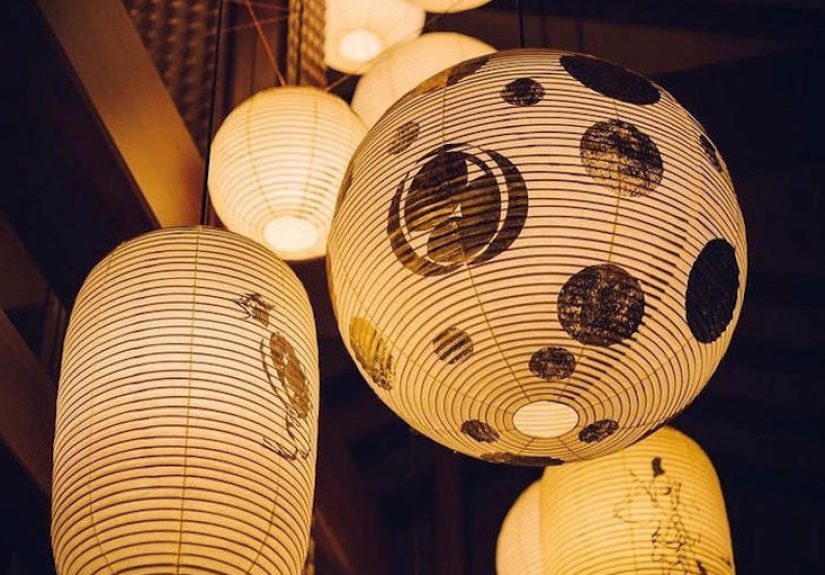
A chōchin is a traditional Japanese lantern usually made with paper stretched over a bamboo frame. Historically, these lanterns were portable sources of light, often illuminated by candles. Today, many are fitted with electric lighting, but the basic appeal remains the same: soft illumination filtered through paper and held in a lightweight structure.
Chōchin lanterns have appeared in many parts of Japanese life. They are used at festivals, outside restaurants, near temples and shrines, in Obon traditions, and as signage for businesses. A red lantern outside an izakaya can feel like a friendly wink from the street: “Come in. The noodles are hot, the drinks are cold, and yes, you deserve a snack.”
The lantern’s shape is both practical and poetic. Its ribs allow the form to expand and hold volume, while the paper diffuses light into a calm glow. This is why Japanese paper lantern lighting works so beautifully in interiors. It does not blast a room with brightness. It invites people to slow down. In design terms, it creates ambience. In human terms, it tells your nervous system to unclench.
The Kyo-Jibari Method: Slow Craft in a Fast World
One of the most important things to know about Kojima Shōten is its commitment to the jibari-shiki technique. In simplified terms, this method uses individual bamboo rings rather than a single spiral strip of bamboo. Compared with faster production styles, the Kyo-jibari approach is labor-intensive and requires careful handwork.
The process often begins with bamboo. Craftspeople split and prepare the material, shaping it into ribs or rings that will define the lantern’s body. These pieces must be accurate, flexible, and strong. If the frame is clumsy, the entire lantern suffers. If the frame is elegant, the paper can sit beautifully across it, like fabric on a well-tailored jacket.
Next comes the washi paper. Washi, a traditional Japanese paper, is prized for its texture, strength, and ability to diffuse light. When pasted onto the bamboo frame with natural glue, it becomes both surface and atmosphere. The paper is not just a cover; it is the lantern’s skin. It controls how the light softens, spreads, and warms the surrounding space.
Finally, decoration may be added by hand. Characters, crests, patterns, family names, shop names, or expressive modern designs can turn the lantern into a visual identity. A restaurant lantern says, “We are here.” A festival lantern says, “Gather.” A temple lantern says, “Remember.” A contemporary Kojima Shōten installation might say, “Tradition can still surprise you.”
Classic Japanese Lanterns, Reimagined for Modern Design
The phrase “classic Japanese lanterns reimagined” is not just a stylish headline. It describes the central tension in Kojima Shōten’s work. The workshop respects tradition, but it does not treat tradition as a locked box. Instead, it asks what handmade lanterns can do now.
This has led to lanterns being used in modern interiors, hospitality spaces, retail environments, exhibitions, and collaborations. The old form finds new rooms. A lantern once associated with temples or festival streets can become the focal point of a boutique hotel lounge. A traditional structure can become a sculptural pendant light. A hand-painted sign lantern can become a piece of brand storytelling.
That flexibility matters because craft traditions survive when they stay useful. A lantern that only belongs to the past is fragile. A lantern that can enter contemporary life has a future. Kojima Shōten’s genius is in understanding that “modern” does not have to mean plastic, anonymous, or cold. Modern can mean adaptable. Modern can mean sustainable. Modern can mean handmade with better context.
Why Natural Materials Feel So Contemporary
One reason Kojima Shōten lanterns feel relevant today is their material honesty. Bamboo, washi paper, wood, and wheat-based glue are not trying to imitate something else. They are exactly what they are. In an era of synthetic finishes and disposable decor, that honesty feels luxurious.
Bamboo offers lightness and structure. Washi paper gives softness and texture. Natural glue connects the parts without making the object feel industrial. Together, these materials create a lantern that is tactile, renewable in spirit, and emotionally warm. The sustainability conversation often focuses on new inventions, but many traditional crafts already contain low-waste, repair-minded, nature-based wisdom. The old ways were not always perfect, but they often knew how to make beauty without shouting at the planet.
For interior designers, this is a gift. Kojima Shōten lanterns pair well with wood, stone, plaster, linen, ceramics, and neutral palettes. They also work as contrast pieces in minimalist apartments, modern restaurants, and gallery-like spaces. Put one in a room with too many hard edges, and suddenly the room looks like it remembered how to exhale.
The Role of Light in Japanese Atmosphere
Japanese design has a famous sensitivity to shadow, surface, and subtle transitions. A Kojima Shōten lantern fits naturally into that world. Its glow is not flat. It has depth. The bamboo ribs create rhythm. The paper softens the light. The shape gives the illumination a body.
This matters because lighting changes behavior. Harsh light makes people alert, exposed, and sometimes slightly suspicious of their own pores. Soft lantern light makes people linger. It flatters food, faces, wood grain, and quiet conversations. That is why chōchin lanterns remain powerful in hospitality settings. They do not simply help people see. They help people feel welcome.
In restaurants, a lantern can signal warmth before a guest even steps inside. In hotels, it can make a lobby feel less like a transaction and more like an arrival. In homes, it can turn a corner into a reading nook, a dining table into a gathering place, or a hallway into a soft transition from the outside world.
Kojima Shōten and the Art of Cultural Continuity
There is a difference between copying tradition and continuing it. Copying repeats the surface. Continuing understands the purpose. Kojima Shōten’s work belongs to the second category. The workshop preserves the skills, materials, and forms of Kyoto lantern making while allowing the lanterns to participate in new cultural and design conversations.
This is especially important for endangered or declining craft traditions. Handmade work requires time, training, and customers who understand value beyond speed. A machine can make something cheaper. A global supply chain can make something faster. But neither can easily reproduce the layered meaning of an object made by people who inherited a technique, practiced it, adapted it, and then passed it forward.
Kojima Shōten’s lanterns remind us that heritage is not a costume. It is a living practice. The craft survives because makers continue to make, teach, test, collaborate, and invite new audiences to care. That is not nostalgia. That is strategy with better lighting.
How Kojima Shōten Lanterns Fit Modern Interiors
For homeowners, designers, and hospitality brands, Kojima Shōten-style lanterns offer several design lessons. First, choose lighting for mood, not just brightness. A room can meet technical lighting requirements and still feel like a dentist’s office. Layered lighting, especially with paper lanterns, makes a space more human.
Second, use organic forms to soften modern architecture. A round or oval lantern can balance square windows, straight furniture, and hard surfaces. The contrast is subtle but powerful. The room does not become “Japanese themed” in a cliché way; it simply becomes more balanced.
Third, let craftsmanship be visible. The ribs, paper texture, brushwork, and slight irregularities are not flaws. They are evidence. They tell the viewer that the object has a maker, a process, and a place of origin. In a design market filled with look-alike decor, that kind of identity is rare.
Finally, avoid overdecorating around the lantern. A handmade Japanese lantern does not need a shouting chorus of accessories. Give it space. Let it glow. Let the quiet object do its quiet-object magic.
Specific Examples of Reimagined Use
Kojima Shōten’s lanterns have been connected with a variety of modern uses, from hospitality projects to branded installations and international showcases. The workshop’s own listed works include collaborations and projects involving commercial spaces, signage, design brands, and cultural venues. This range shows how a traditional lantern can move beyond the expected festival or temple setting.
For example, a large lantern for a theater sign carries public visibility and historical continuity. A lantern installation in a hotel or inn creates atmosphere and memory for guests. A retail collaboration introduces the craft to design-conscious audiences who may know Japanese aesthetics through fashion, furniture, or ceramics. Workshops and demonstrations, meanwhile, transform the lantern from a finished product into a learning experience.
That educational side is crucial. When people see the bamboo split, the frame formed, the washi pasted, and the painting applied, they understand why handmade lanterns cost more than mass-produced decor. They are not paying only for an object. They are supporting skill, time, tradition, and the possibility that the next generation will still know how to make the thing.
Why the Kojima Shōten Story Resonates Globally
The global design world has become increasingly interested in objects with origin stories. Consumers want to know who made something, what it is made of, how long it will last, and whether it carries cultural meaning. Kojima Shōten answers those questions beautifully.
Its lanterns are rooted in Kyoto. They use traditional materials. They require specialized handwork. They connect to Japanese rituals, streetscapes, and hospitality. At the same time, they are not frozen in the past. They can hang in a modern apartment in New York, a ceramic studio in California, a boutique hotel in Kyoto, or a design exhibition in Europe and still make sense.
That is the rare quality of good craft: it belongs somewhere specific, yet it speaks across borders. You do not need to be an expert in Japanese culture to feel the appeal of warm light passing through paper. Your eyes understand first. Your research can catch up later.
Experience Section: Living With the Glow of Kojima Shōten-Inspired Lanterns
Experiencing a Kojima Shōten-style lantern is not like switching on an ordinary lamp. The first difference is emotional. Instead of a sudden blast of light, the room slowly gathers warmth. The paper diffuses the glow, the bamboo structure gives it rhythm, and the object itself becomes part of the atmosphere. It feels less like turning on a device and more like inviting a small moon indoors.
Imagine placing one above a dining table. The table changes immediately. Dinner feels slower, even if the food came from a takeout container and the “tablescape” is one heroic fork and a napkin you found in a drawer. The lantern softens everything. Bowls look more sculptural. Steam looks more dramatic. Conversation feels less rushed. This is the secret power of good lighting: it edits life in real time.
In a bedroom, a handmade Japanese paper lantern can create a restful transition at the end of the day. Many modern homes are full of screens, sharp LED light, and visual noise. A chōchin lantern offers the opposite experience. It is quiet, low-tech, and calming. The glow encourages reading, stretching, journaling, or simply sitting without pretending to be productive for five heroic minutes.
In a restaurant or cafe, the effect is even stronger. A row of lanterns can guide customers from the street into the space, creating a sense of welcome before anyone says hello. The lantern becomes both sign and mood. It tells guests that care has been taken. It suggests warmth, craft, food, and hospitality without needing a paragraph of branding copy taped to the door.
For travelers in Kyoto, seeing lanterns in context can be unforgettable. They appear near temples, along narrow streets, outside eateries, and in seasonal celebrations. The glow seems to belong to the city’s rhythm. It is not simply decoration; it participates in the evening. A Kojima Shōten lantern carries that same feeling into modern spaces. Even when removed from Kyoto, it brings a trace of that atmosphere with it.
There is also a hands-on appreciation that comes from learning how these lanterns are made. Watching a craftsperson prepare bamboo or paste washi paper changes your relationship with the finished object. Suddenly the lantern is not “just paper.” It is measurement, pressure, moisture, timing, material knowledge, and muscle memory. The beauty becomes more impressive because it looks effortless only after generations of effort.
The best way to live with such a lantern is to let it be itself. Do not crowd it with too many competing statement pieces. Do not force it into a theme room full of random “Asian-inspired” decor. Instead, pair it with honest materials: wood, stone, cotton, linen, clay, plaster, or simple painted walls. Let the lantern provide warmth and shape. It will do the heavy lifting quietly, because that is what elegant objects do.
Ultimately, the experience of Kojima Shōten is an experience of attention. The lantern asks you to notice paper, shadow, bamboo, glow, and time. It proves that usefulness and beauty do not have to be enemies. It shows that tradition can adapt without becoming gimmicky. Most importantly, it reminds us that the right light can make an ordinary room feel deeply, wonderfully alive.
Conclusion: A Brighter Future for an Old Light
Kojima Shōten represents one of the most inspiring paths for traditional craft in the modern world. Rather than treating classic Japanese lanterns as relics, the workshop allows them to evolve through design, collaboration, hospitality, education, and contemporary interiors. The result is not a watered-down version of tradition. It is tradition with its pulse intact.
These lanterns endure because they solve a problem that never goes out of style: people need light, but they also need warmth, beauty, welcome, and meaning. A Kojima Shōten lantern offers all of that in bamboo, washi paper, and glow. It is proof that handmade objects still matter, that natural materials still feel fresh, and that the future of design may sometimes be found by looking carefully at the past.






 Close
Close