
Table of Contents >> Show >> Hide
- Why Lower Back Stretching Helps
- Before You Start: Stretching Rules Your Back Will Appreciate
- 1. Knee-to-Chest Stretch
- 2. Child’s Pose
- 3. Cat-Cow Stretch
- 4. Pelvic Tilt
- 5. Supine Lower Back Rotation
- 6. Seated Hamstring Stretch
- 7. Figure-Four Piriformis Stretch
- 8. Hip Flexor Stretch
- A Simple 10-Minute Lower Back Stretching Routine
- Common Mistakes to Avoid
- When to Stretch and When to Rest
- Real-Life Experience: What Lower Back Stretching Feels Like Over Time
- Conclusion
Lower back pain has a special talent for showing up at the worst possible time. You bend down to tie your shoes, pick up a laundry basket, or sneeze with too much enthusiasm, and suddenly your back sends a strongly worded complaint to management. The good news? For many people, gentle lower back stretches can help reduce stiffness, improve flexibility, and make everyday movement feel less like negotiating with a rusty gate.
This guide covers eight practical lower back stretches for flexibility and pain relief, with clear instructions, safety tips, and real-life examples. These movements are inspired by widely accepted physical therapy, orthopedic, and medical guidance: move gently, warm up first, avoid forcing range of motion, and stop if symptoms get worse. Stretching is not magic, unfortunately. If it were, yoga mats would come with capes. But when done consistently, these stretches can support better mobility, calmer muscles, and a back that does not act offended every time you stand up.
Important note: This article is educational and not a replacement for medical care. If you have severe pain, pain after trauma, numbness, weakness, fever, unexplained weight loss, pain traveling down the leg, or trouble controlling bowel or bladder function, contact a healthcare professional promptly.
Why Lower Back Stretching Helps
The lower back, or lumbar spine area, works with the hips, pelvis, glutes, hamstrings, abdominal muscles, and deep stabilizing muscles. When one part gets tight or lazy, another part often has to work overtime. Think of your body as a group project: the lower back often ends up doing the PowerPoint, the research, and the presenting.
Gentle stretching may help by improving range of motion, reducing muscle tension, increasing circulation to stiff tissues, and making movement feel safer. For people who sit for long hours, stretches can also counter the “desk chair fossil” posture: tight hip flexors, rounded spine, sleepy glutes, and hamstrings that behave like guitar strings tuned too tight.
However, lower back pain has many possible causes. Muscle strain, poor posture, prolonged sitting, disc irritation, arthritis, sciatica, hip tightness, and stress can all play a role. That is why the best routine is usually gentle, progressive, and personalized. These eight stretches are beginner-friendly, but your body gets the final vote.
Before You Start: Stretching Rules Your Back Will Appreciate
Warm Up First
Do not stretch a cold, stiff back like you are trying to open a pickle jar with your spine. Walk around for five to ten minutes, march in place, or take a warm shower first. Warm muscles usually stretch more comfortably.
Use the “Comfortable Pull” Rule
You should feel a mild to moderate stretch, not sharp pain, burning, numbness, or electric zaps. A good stretch says, “Hello, I’m working.” A bad stretch says, “Call customer service immediately.”
Breathe Normally
Holding your breath makes your body tense up. Try slow nasal inhales and relaxed exhales. Your muscles often soften when your nervous system stops acting like a raccoon in a trash can.
Be Consistent, Not Aggressive
Flexibility improves through regular practice, not one heroic session on a Tuesday night. Start with one round daily or every other day, then increase as tolerated.
1. Knee-to-Chest Stretch
The knee-to-chest stretch is one of the most popular lower back stretches because it is simple, soothing, and easy to adjust. It gently stretches the lumbar area, glutes, and hips.
How to Do It
- Lie on your back with both knees bent and feet flat on the floor.
- Bring one knee slowly toward your chest.
- Hold behind your thigh or over your shin, whichever feels better.
- Keep your shoulders relaxed and your lower back comfortable.
- Hold for 20 to 30 seconds, then switch sides.
Repeat two to three times per side. For a deeper version, bring both knees toward your chest at the same time. If that feels too intense, return to the single-leg version. This is stretching, not a wrestling match with your kneecaps.
2. Child’s Pose
Child’s pose is a calming stretch borrowed from yoga. It can lengthen the lower back, hips, and sides of the torso. It is also one of the few positions where looking like a tired turtle is considered excellent form.
How to Do It
- Start on your hands and knees.
- Bring your big toes together and widen your knees as comfortable.
- Slowly sit your hips back toward your heels.
- Reach your arms forward and lower your chest toward the floor.
- Rest your forehead on the floor, a pillow, or a yoga block.
Hold for 30 to 60 seconds while breathing slowly. If your knees dislike this position, place a pillow behind them or skip it. If your hips do not reach your heels, no problem. Your body is not applying for a gymnastics scholarship.
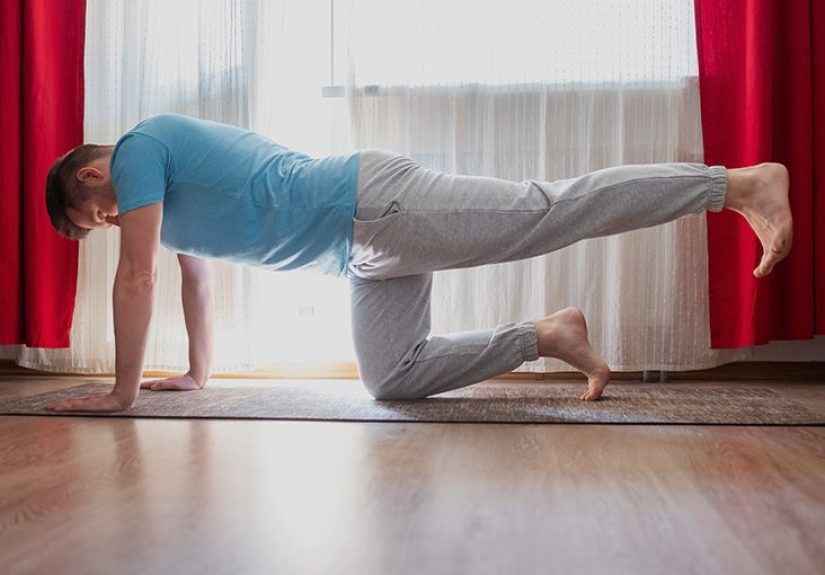
3. Cat-Cow Stretch
Cat-cow is a gentle spinal mobility movement that alternates between rounding and arching the back. It helps the spine move through flexion and extension without heavy loading.
How to Do It
- Begin on your hands and knees, with hands under shoulders and knees under hips.
- For “cat,” slowly round your back upward and tuck your chin slightly.
- For “cow,” gently drop your belly and lift your chest forward.
- Move slowly between the two positions.
- Repeat 8 to 12 times.
Keep the movement smooth and pain-free. Avoid forcing your lower back into a deep arch. Imagine your spine is a wave, not a crowbar.
4. Pelvic Tilt
The pelvic tilt is a small movement with big value. It teaches you to control the position of your pelvis and lower back, which can help relieve stiffness and build awareness of your core muscles.
How to Do It
- Lie on your back with knees bent and feet flat on the floor.
- Relax your shoulders and neck.
- Gently tighten your abdominal muscles.
- Flatten your lower back toward the floor by tilting your pelvis backward.
- Hold for 5 seconds, then relax.
Start with 5 to 10 repetitions. Over time, you can work up to 20 or more if it feels good. This movement should be subtle. If your whole body is sliding across the floor, you have turned it into a luge event.
5. Supine Lower Back Rotation
The supine lower back rotation gently stretches the lumbar spine, hips, and outer thighs. It is especially useful after long periods of sitting, driving, or pretending your office chair is ergonomic enough.
How to Do It
- Lie on your back with knees bent and feet flat on the floor.
- Extend your arms out to the sides in a “T” shape.
- Keeping shoulders on the floor, slowly let both knees fall to one side.
- Pause when you feel a comfortable stretch.
- Hold for 10 to 20 seconds, then return to center and switch sides.
Repeat two to three times per side. Keep the movement slow. Do not bounce your knees from side to side like windshield wipers in a thunderstorm.
6. Seated Hamstring Stretch
Tight hamstrings can pull on the pelvis and contribute to lower back tension. A seated hamstring stretch is gentle, accessible, and easy to do almost anywhere.
How to Do It
- Sit on the edge of a chair.
- Place one foot flat on the floor and extend the other leg forward.
- Keep the extended leg mostly straight, with heel on the floor and toes pointing upward.
- Hinge forward from your hips while keeping your back long.
- Stop when you feel a stretch in the back of your thigh.
Hold for 20 to 30 seconds per side. The key is to hinge from the hips, not collapse through the spine. Think “proud chest,” not “sad shrimp.”
7. Figure-Four Piriformis Stretch
The piriformis is a small muscle deep in the buttock area. When it becomes tight, it may contribute to hip tension and discomfort that feels connected to the lower back. The figure-four stretch targets the glutes and deep hip rotators.
How to Do It
- Lie on your back with knees bent.
- Cross your right ankle over your left thigh, making a figure-four shape.
- Keep your right foot flexed to protect the knee.
- Lift your left foot and gently pull the left thigh toward your chest.
- Hold for 20 to 30 seconds, then switch sides.
You should feel this in the outer hip or glute, not in the knee. If your knee complains, reduce the stretch or place your foot back down. Knees are dramatic, but sometimes they are right.
8. Hip Flexor Stretch
Your hip flexors sit at the front of your hips and can become tight from sitting. Tight hip flexors may pull the pelvis forward, increasing stress in the lower back. Stretching them can help restore a more comfortable posture.
How to Do It
- Kneel on one knee with the other foot in front, like a half-kneeling lunge.
- Place a folded towel under the back knee if needed.
- Keep your torso tall and gently tuck your pelvis under.
- Shift forward slightly until you feel a stretch in the front of the back hip.
- Hold for 20 to 30 seconds, then switch sides.
Avoid arching your lower back. The stretch should come from the front of the hip, not from turning your spine into a decorative banana.
A Simple 10-Minute Lower Back Stretching Routine
If you want to combine the eight movements into one easy routine, try this sequence:
- Warm up with 5 minutes of walking or gentle movement.
- Cat-cow: 8 to 12 slow repetitions.
- Pelvic tilt: 10 repetitions.
- Knee-to-chest stretch: 30 seconds per side.
- Supine lower back rotation: 20 seconds per side.
- Child’s pose: 30 to 60 seconds.
- Seated hamstring stretch: 30 seconds per side.
- Figure-four stretch: 30 seconds per side.
- Hip flexor stretch: 30 seconds per side.
Do this routine once daily or several times per week. If your back feels better with shorter sessions, split the routine into morning and evening. A little often beats a lot once in a while.
Common Mistakes to Avoid
Stretching Through Sharp Pain
Stretching should not feel like punishment for having a spine. Stop if you feel sharp pain, numbness, tingling, or symptoms traveling down the leg.
Bouncing
Bouncing can irritate sensitive tissues. Hold stretches steadily and breathe. Your muscles respond better to calm persuasion than surprise attacks.
Ignoring the Hips
Many lower back issues are connected to tight hips, glutes, and hamstrings. A good lower back flexibility routine should include the surrounding muscles, not just the exact spot that hurts.
Doing Too Much Too Soon
If you have been stiff for months, one intense stretching session will not instantly turn you into a graceful forest deer. Start small and progress gradually.
When to Stretch and When to Rest
For mild stiffness, stretching after a short warm-up or after a walk often works well. Many people like stretching in the morning to reduce stiffness, during work breaks to undo sitting posture, or in the evening to relax before bed.
However, if your pain is new, intense, or worsening, give your body a gentler approach. Short walks, comfortable positions, and professional guidance may be better than forcing stretches. If a movement repeatedly makes symptoms worse, remove it from your routine and speak with a clinician or physical therapist.
Real-Life Experience: What Lower Back Stretching Feels Like Over Time
Many people begin lower back stretching for the same reason: their back starts acting like an old door hinge. At first, the goal is usually simplestand up without making a sound effect. The first few sessions may feel awkward. You might discover that your right hip is tighter than your left, your hamstrings have the flexibility of dry spaghetti, or your breathing gets weird the moment you try to relax. That is normal.
In the first week, the biggest change is often awareness. You notice which movements feel soothing and which ones feel suspicious. For example, knee-to-chest may feel wonderful after sitting, while deep rotation may feel too intense. The lesson is not “never rotate.” The lesson is “rotate like a civilized adult, not like you are wringing out a towel.”
By the second or third week, consistency usually matters more than intensity. People who do five to ten minutes most days often report that their back feels less stiff when getting out of bed, standing after long work sessions, or walking after driving. The improvement may be subtle at first. You may not wake up feeling like a superhero, but you may realize you no longer need three dramatic sighs to put on socks.
One practical experience is that lower back relief often comes from stretching areas that do not seem like “the back” at all. Tight hip flexors can make standing posture feel strained. Tight hamstrings can pull on the pelvis. Tight glutes can make the lower back feel locked. That is why a balanced routine includes hip flexor, hamstring, and figure-four stretches. The back is not a solo artist. It is part of a very opinionated band.
Another useful lesson is that breathing changes everything. When you rush a stretch, your body may brace. When you slow down and exhale fully, your muscles often let go a little. A good trick is to count breaths instead of seconds. Hold a stretch for five slow breaths. This makes the routine feel less like homework and more like a reset button.
People who sit all day often benefit from “movement snacks.” Instead of waiting until bedtime to do a full routine, they stand every hour, walk briefly, and do one or two gentle stretches. A seated hamstring stretch, standing hip flexor stretch, or slow pelvic tilt can break the cycle of stiffness. This is especially helpful for office workers, drivers, students, and anyone whose chair has slowly become their natural habitat.
The most important experience-based advice is to track how your back responds afterward, not just during the stretch. A movement may feel fine in the moment but leave you more irritated later. Another stretch may feel mild but give you better mobility the next morning. Your body gives feedback; unfortunately, it does not provide subtitles, so you have to pay attention.
Finally, stretching works best when paired with daily movement and basic strength. Walking, light core work, glute strengthening, and good lifting habits all support long-term lower back health. Stretching can open the door, but strength helps keep the door from falling off its hinges.
Conclusion
Lower back stretches can be a simple, affordable, and effective way to improve flexibility and ease everyday stiffness. The best routine is gentle, consistent, and focused not only on the lower back but also on the hips, glutes, and hamstrings. Start with easy movements like knee-to-chest, child’s pose, cat-cow, pelvic tilts, lower back rotations, hamstring stretches, figure-four stretches, and hip flexor stretches. Move slowly, breathe deeply, and avoid pushing into pain.
If your lower back pain is mild and related to stiffness or sitting, these stretches may help you feel looser and more confident with daily movement. If your pain is severe, persistent, or paired with concerning symptoms, get medical guidance. Your back does a lot for you. Treat it less like a stubborn machine and more like a teammate that occasionally needs coffee, kindness, and a very good stretch.



 Close
Close