Table of Contents >> Show >> Hide
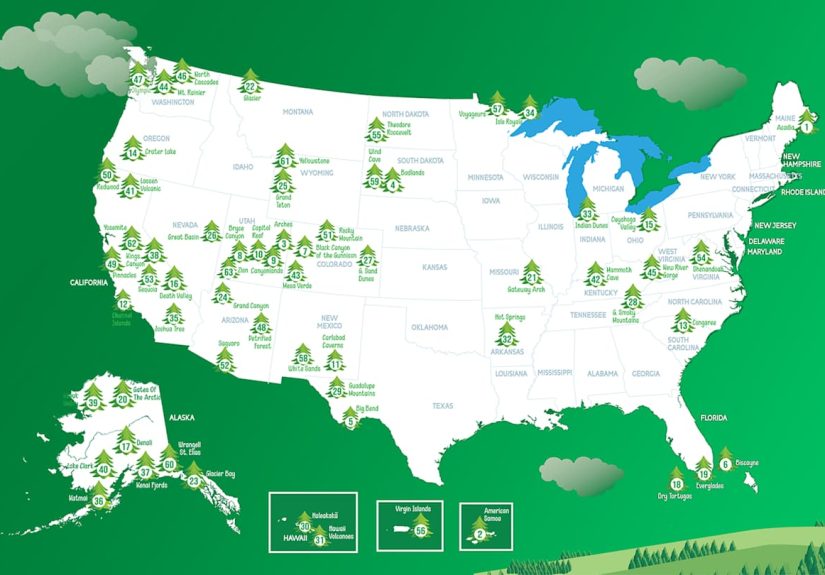
The United States has 63 national parks, and together they form the kind of lineup that makes a road atlas look like a bucket list with commitment issues. Some parks are famous for blockbuster scenery: Yellowstone’s geysers, Yosemite’s granite drama, and the Grand Canyon doing its usual job of making human problems feel adorably small. Others are quieter legends, tucked into Alaska, floating in the Caribbean, or hiding incredible geology under layers of “Wait, why don’t more people talk about this place?”
This guide rounds up one memorable fact about every single U.S. national park. The goal is simple: give you a fast, useful, and fun overview of America’s most iconic protected places without making it feel like you accidentally enrolled in a textbook. You will find famous landmarks, weird geological superpowers, historic surprises, and a few facts that sound made up by an overexcited park ranger but are gloriously real.
Whether you are planning a national parks road trip, building your travel wishlist, or just trying to win an oddly specific trivia night, this list delivers the highlights in plain English. Think of it as a scenic sprint through all 63 parks, from Acadia to Zion, with plenty of natural wonders, wild landscapes, and “America really kept the receipt on this planet?” energy along the way.
1 Fact About Every U.S. National Park
A to C
- Acadia National Park: Cadillac Mountain is famous for being one of the first places in the U.S. to see sunrise for part of the year, which is a pretty strong way to start a morning.
- Arches National Park: The park contains more than 2,000 natural stone arches, proving Utah’s rocks have been overachieving for a very long time.
- Badlands National Park: Badlands is packed with dramatic eroded formations and some of North America’s most important fossil beds from ancient mammals.
- Big Bend National Park: Big Bend protects the entire Chisos Mountain range, making it one of the rare national parks with a mountain range fully inside its boundaries.
- Biscayne National Park: About 95 percent of Biscayne is underwater, so this is the national park equivalent of an iceberg introduction.
- Black Canyon of the Gunnison National Park: This canyon is famous for its extreme depth, narrow openings, and steep cliffs that give it a remarkably dramatic profile.
- Bryce Canyon National Park: Bryce is known for the world’s largest concentration of hoodoos, those skinny rock spires that look like geology got into sculpture.
- Canyonlands National Park: The Colorado and Green rivers divide Canyonlands into distinct districts, each with its own personality and scenery.
- Capitol Reef National Park: Capitol Reef preserves the Waterpocket Fold, a nearly 100-mile-long wrinkle in the Earth’s crust that looks like the planet forgot to iron its shirt.
- Carlsbad Caverns National Park: The park’s Big Room is one of the largest cave chambers in North America and feels like nature built a cathedral underground.
- Channel Islands National Park: These islands are often called the “Galápagos of North America” because of their rich biodiversity and unusual species.
- Congaree National Park: Congaree protects the largest intact expanse of old-growth bottomland hardwood forest left in the southeastern United States.
- Crater Lake National Park: Crater Lake is the deepest lake in the United States, and yes, it really is that impossibly blue in person.
- Cuyahoga Valley National Park: Cuyahoga Valley blends nature and history, with the Ohio and Erie Canal Towpath Trail running through the park.
D to G
- Death Valley National Park: Death Valley is the hottest, driest, and lowest national park in the U.S., which is impressive and deeply committed to a theme.
- Denali National Park: Denali is centered on North America’s tallest peak, a mountain so huge it can make nearby ranges look like supportive background actors.
- Dry Tortugas National Park: Dry Tortugas is home to Fort Jefferson and is reachable only by boat or seaplane, which makes every visit feel a little more legendary.
- Everglades National Park: Everglades protects the largest tropical wilderness in the United States and is essential habitat for species like alligators, crocodiles, and wading birds.
- Gates of the Arctic National Park: This remote Alaska park has no roads, no established trails, and no campgrounds, which is either thrilling or your personal nightmare.
- Gateway Arch National Park: Gateway Arch is the smallest U.S. national park, proving you do not need vast acreage to make a giant visual statement.
- Glacier Bay National Park: Glacier Bay is famous for active tidewater glaciers, where massive walls of ice meet the sea in unforgettable style.
- Glacier National Park: Glacier straddles the Continental Divide and is one of the most iconic alpine landscapes in the Lower 48.
- Grand Canyon National Park: The canyon exposes nearly two billion years of Earth’s geologic history, which is more backstory than most civilizations can offer.
- Grand Teton National Park: The Teton Range rises sharply from the valley floor with very little foothill buildup, giving the park one of America’s most dramatic skylines.
- Great Basin National Park: Great Basin is famous for ancient bristlecone pines, some of the oldest living trees on Earth.
- Great Sand Dunes National Park: This park contains the tallest dunes in North America, because Colorado apparently wanted beaches with altitude.
- Great Smoky Mountains National Park: Great Smoky Mountains is consistently the most-visited national park in the United States.
- Guadalupe Mountains National Park: Guadalupe Peak, the highest point in Texas, stands inside the park and rewards hikers with enormous desert views.
H to L
- Haleakalā National Park: Haleakalā’s volcanic summit rises above the clouds, creating a sunrise scene that feels like Earth borrowed a sky from another planet.
- Hawai‘i Volcanoes National Park: The park protects both Kīlauea and Mauna Loa, two of the world’s most famous volcanoes.
- Hot Springs National Park: Hot Springs preserves thermal waters and historic Bathhouse Row, making it a national park with spa credentials.
- Indiana Dunes National Park: Indiana Dunes packs beaches, wetlands, forests, and dunes into one surprisingly biodiverse stretch along Lake Michigan.
- Isle Royale National Park: Isle Royale is accessible mainly by boat or seaplane, and its isolation is a big part of the appeal.
- Joshua Tree National Park: Joshua Tree sits where the Mojave and Colorado deserts meet, creating a striking blend of ecosystems and scenery.
- Katmai National Park: Katmai is famous for brown bears fishing for salmon at Brooks Falls, which is basically wildlife cinema without the subscription fee.
- Kenai Fjords National Park: Kenai Fjords is dominated by ice, with the massive Harding Icefield feeding many of the park’s glaciers.
- Kings Canyon National Park: Kings Canyon includes one of North America’s deepest canyons, plus giant sequoias because California does not do subtle.
- Kobuk Valley National Park: Kobuk Valley features the Great Kobuk Sand Dunes north of the Arctic Circle, which sounds fake until you see the photos.
- Lake Clark National Park: Lake Clark combines volcanoes, wild rivers, salmon runs, coastal scenery, and bears in one staggeringly varied Alaska landscape.
- Lassen Volcanic National Park: Lassen is one of the few places on Earth where all four major volcano types can be found in one area.
M to P
- Mammoth Cave National Park: Mammoth Cave contains the world’s longest known cave system, which is an excellent reason to stop calling your basement “spacious.”
- Mesa Verde National Park: Mesa Verde preserves some of the most remarkable ancestral Pueblo cliff dwellings in the United States.
- Mount Rainier National Park: Mount Rainier is the most glaciated peak in the contiguous United States.
- National Park of American Samoa: This is the only U.S. national park south of the equator, and it protects rainforests, reefs, and flying foxes.
- New River Gorge National Park and Preserve: The New River is widely considered one of the oldest rivers on the continent, which gives the park serious geologic bragging rights.
- North Cascades National Park: North Cascades has more glaciers than any other U.S. national park outside Alaska.
- Olympic National Park: Olympic protects an unusual trio of ecosystems: glacier-capped mountains, temperate rain forests, and wild Pacific coastline.
- Petrified Forest National Park: Petrified Forest is famous for brilliantly colored fossilized wood from the Late Triassic period.
- Pinnacles National Park: Pinnacles is one of the best places in California to spot the endangered California condor.
R to Z
- Redwood National Park: Redwood protects some of the tallest trees on Earth, which is humbling if you have ever felt proud about assembling a bookshelf.
- Rocky Mountain National Park: Rocky Mountain is known for high-elevation tundra, alpine lakes, and spectacular mountain drives and trails.
- Saguaro National Park: Saguaro protects the giant saguaro cactus, a plant found naturally only in the Sonoran Desert.
- Sequoia National Park: Sequoia is home to the General Sherman Tree, the largest tree on Earth by volume.
- Shenandoah National Park: Shenandoah’s Skyline Drive runs along the crest of the Blue Ridge Mountains and turns a simple drive into a panoramic event.
- Theodore Roosevelt National Park: This is the only national park named directly after a U.S. president.
- Virgin Islands National Park: The park covers much of St. John and blends beaches, reefs, hiking trails, and historic plantation sites.
- Voyageurs National Park: Voyageurs is a water-based park where boats are part of the basic transportation plan, not a luxury upgrade.
- White Sands National Park: White Sands protects the world’s largest gypsum dune field, which looks like snow but absolutely does not behave like it.
- Wind Cave National Park: Wind Cave is famous for rare boxwork formations, a cave feature found in very few places worldwide.
- Wrangell-St. Elias National Park: Wrangell-St. Elias is the largest national park in the United States, and it operates on a scale that makes maps feel inadequate.
- Yellowstone National Park: Yellowstone was the world’s first national park and still has the planet’s greatest concentration of geysers.
- Yosemite National Park: Yosemite is legendary for granite landmarks like El Capitan and Half Dome, plus waterfalls that know how to make an entrance.
- Zion National Park: Zion is famous for soaring Navajo sandstone cliffs that turn the canyon into a giant natural amphitheater.
Why These 63 Facts Matter More Than Trivia
One fact per park might sound like a quick listicle move, but together these details tell a bigger story about the U.S. national park system. These parks are not copies of one another wearing different postcards. They protect wildly different landscapes, ecosystems, and histories: coral reefs in Biscayne, cliff dwellings in Mesa Verde, giant dunes in White Sands, and rainforest in American Samoa. Some are geological masterpieces. Others preserve biodiversity, cultural heritage, or rare combinations of both.
That variety is exactly why national parks remain such a powerful travel and education resource. They are scenic, yes, but they are also scientific, historical, and ecological archives. A park can teach you about volcanoes, ancient civilizations, climate, migration, erosion, fire ecology, or conservation policy without ever feeling like a lecture hall. It is education with better views and significantly fewer fluorescent lights.
The Experience of Visiting America’s National Parks
Reading one fact about all 63 U.S. national parks is useful. Visiting even a handful of them is something else entirely. The facts become physical. They become the sting of dry desert air in your nose at Arches, the slippery humidity of the Everglades wrapping around you like a wet blanket with ambitions, or the eerie silence of snow-dusted pines in Rocky Mountain National Park before the rest of the world has finished its coffee.
Each park changes your sense of distance. In the East, Acadia and Shenandoah feel accessible and welcoming, the kind of places where you can squeeze transcendence into a long weekend. Out West and in Alaska, scale starts messing with your brain. The Grand Canyon does not look real at first. Denali feels less like a mountain and more like weather with a rock identity. Wrangell-St. Elias is so enormous that your normal sense of “nearby” quietly resigns.
Then there are the parks that surprise you because they do not match the stereotype people carry around in their heads. Cuyahoga Valley proves a national park can sit near cities and still feel restorative. Hot Springs reminds you that preservation can include architecture, culture, and old bathhouses, not just giant cliffs and dramatic moose. Gateway Arch shows that a national park can tell an urban story and still deserve a place in the national imagination.
The sensory variety is part of the magic. In White Sands, the light bounces so brightly off the gypsum that the whole landscape feels surreal. In Redwood, the air is cool, dim, and cathedral-like under the trees. In Yellowstone, the ground hisses, bubbles, steams, and occasionally smells like the planet is cooking eggs underground. In Dry Tortugas, the sea is so vividly blue that it seems digitally enhanced by nature’s marketing team.
National parks also have a way of slowing people down. You stop checking your phone as much because a condor is circling at Pinnacles, or because sunset at Haleakalā has turned the clouds into molten gold. You remember how small you are in the best possible way. That feeling is not about being insignificant. It is about being connected to something older, larger, and more durable than the endless noise of regular life.
And yes, the logistics can be messy. There are shuttle systems, timed entries, weather swings, ferry schedules, trail snacks, and at least one member of every group who forgot a water bottle and now speaks only in regret. But even the inconvenience becomes part of the story. Years later, people do not just remember the overlook or the hike. They remember the elk crossing the road in the Smokies, the first glimpse of Crater Lake’s impossible blue, the cave darkness at Mammoth, and the moment they realized the stars over Great Basin were brighter than any city memory they had left.
That is the real experience behind these 63 facts. The parks are not just a list to complete. They are places that rearrange your attention. They teach patience, wonder, and respect for landscapes that were here long before us and, with luck and stewardship, will remain long after our car rentals have been returned.
Final Thoughts
If there is one big takeaway from all 63 U.S. national parks, it is this: America did not accidentally end up with a world-class collection of protected places. These parks represent deep geological time, extraordinary biodiversity, layered human history, and a national decision that some places are worth preserving simply because they are irreplaceable. That is a powerful idea, and it still holds up beautifully.
So whether your dream trip involves hiking Zion, paddling Voyageurs, spotting bears in Katmai, or standing speechless at the edge of the Grand Canyon like every human before you who suddenly ran out of adjectives, there is a national park fact waiting to turn into a national park memory.