
Table of Contents >> Show >> Hide
- 1. Darvaza Gas Crater, Turkmenistan – The Door to Hell
- 2. Houska Castle, Czech Republic – A Fortress Built Over a Pit
- 3. Aokigahara Forest, Japan – A Sea of Trees with a Dark Reputation
- 4. Mount Osore, Japan – The Gateway to the Underworld
- 5. The Seven Gates of Hell, Hellam Township, Pennsylvania, USA
- 6. Stull Cemetery, Kansas, USA – The Midwestern Gate to Hell
- 7. Hellfire Caves, West Wycombe, England – Rituals in the Dark
- 8. Masaya Volcano, Nicaragua – The Mouth of Hell
- 9. Pluto’s Gate at Hierapolis, Turkey – Deadly Fumes and Divine Rituals
- 10. Lake Avernus, Italy – Rome’s Doorway to Hades
- Bonus: Fengdu Ghost City, China – Bureaucracy of the Afterlife
- What These “Gates to Hell” Really Reveal
- Visiting the “Gates of Hell”: Experiences, Ethics, and Practical Tips
For thousands of years, humans have stared into dark caves, bubbling
volcanoes, and suspiciously creepy forests and thought, “Yep, that’s where
the bad place starts.” Before horror movies and Reddit threads, there were
real locations people believed were literal gates to hell places where
the veil between our world and the underworld was painfully thin.
Today, many of those “entrances to hell” are tourist attractions, hiking
spots, or sleepy villages that get really annoyed every Halloween. But the
legends are still going strong. From burning craters and volcanic lakes to
haunted castles and ghost cities, these 10 real-world locations are said to
be doors straight into the underworld or at least, into the part of your
brain that loves a good scare.
1. Darvaza Gas Crater, Turkmenistan – The Door to Hell
The desert pit that won’t stop burning
Deep in Turkmenistan’s Karakum Desert sits a blazing crater that looks like
someone hit “install lava” on planet Earth. The Darvaza Gas Crater
nicknamed the “Door to Hell” or “Gates of Hell” was created in the early
1970s when a Soviet drilling operation reportedly collapsed into an
underground gas pocket. To stop methane from spreading, engineers are said
to have set it on fire, assuming it would burn out quickly. Decades later,
it’s still glowing, spewing flames from a hole roughly 200 feet (60–70
meters) across and about 100 feet (30 meters) deep, visible for miles at
night.
Hell, but make it glamping
Instead of fleeing from this infernal-looking pit, people now camp near the
rim, eat dinner in yurts, and take dramatic “standing on the edge of hell”
selfie shots. The crater has even become a symbol of Turkmenistan’s gas
wealth and a favorite stop for adventure tours. Recently, though, local
authorities have talked about finally extinguishing or capping the crater,
so if “visit a burning hole called the Gates of Hell” is on your bucket
list, don’t procrastinate too long.
2. Houska Castle, Czech Republic – A Fortress Built Over a Pit
The castle that defends against demons, not armies
Houska Castle doesn’t really make sense if you think of it like a normal
fortress. It’s in the middle of nowhere, not on a border, and it was
historically pretty useless for defending anything. According to legend,
that’s because it’s not meant to keep invaders out it’s meant to keep
something much worse in.
Local folklore says the castle was built directly over a gaping chasm that
was believed to be a bottomless pit leading to hell. Stories claim that
prisoners sentenced to death were once lowered into the hole to report what
they saw. The first volunteer allegedly came back screaming, aged decades
in just a few minutes, with hair turned white. Not exactly a 5-star Yelp
review for the underworld.
Gothic vibes and ghost stories
Today, visitors come for the ominous chapel built over the “pit,” complete
with faded frescoes showing strange hybrid creatures and demonic figures.
The castle has been featured on paranormal TV shows and ghost tours, and
legends claim Nazi occult experiments took place there during World War II.
Whether the pit is actually a gateway to hell or just a geological oddity,
Houska Castle has become one of Europe’s most famous “hell-adjacent”
locations.
3. Aokigahara Forest, Japan – A Sea of Trees with a Dark Reputation
Beautiful, silent, and deeply unsettling
At the base of Mount Fuji lies Aokigahara, a dense forest so quiet that
sound seems to vanish a few steps off the trail. Its twisted roots, mossy
rocks, and tangled branches give it an otherworldly vibe, and volcanic rock
underfoot can interfere with compasses. Combined with thick foliage, it’s
very easy to get lost.
Over time, Aokigahara has become infamous for tragic real-world events, and
popular culture has turned it into a symbol of despair and the
supernatural. In some modern retellings and paranormal lore, it’s framed as
a place where spirits wander and as a kind of emotional gate to hell less
a fiery pit and more a landscape that reflects human suffering.
Why this “hell” needs compassion, not thrill seekers
Unlike many sites on this list, Aokigahara is not a playground for ghost
hunters. Local volunteers patrol the area looking for people in crisis, and
signs urge visitors to value their lives and seek help. If you do visit,
treat the forest as a place that deserves respect and empathy rather than a
horror-movie set. The real demons here are stigma and silence around mental
health and those are worth fighting in the real world.
4. Mount Osore, Japan – The Gateway to the Underworld
Where volcano meets afterlife
Further north, on Japan’s Shimokita Peninsula, Mount Osore (“Mount
Fear” or “Dread Mountain”) looks like something straight out of a mythic
underworld. The landscape is full of sulfurous vents, gray volcanic rock,
and steaming pools that smell strongly of rotten eggs. In Buddhist
cosmology, the area is often interpreted as a combination of hell and
paradise a place where the living can symbolically approach the realm of
the dead.
A temple complex, Jizo statues, and colorful pinwheels left for deceased
children create a stark contrast between sorrow and serenity. The nearby
Sanzu River is likened to the Styx the boundary between the world of the
living and the dead reinforcing Mount Osore’s reputation as a spiritual
gateway.
Hellish scenery, heavenly hot springs
The mountain is also home to onsen (hot baths) where pilgrims and tourists
soak after visiting the temple grounds. The result is an experience that
feels like walking through the visual language of hell and rebirth at the
same time: volcanic desolation, sacred rituals, and very real, very
soothing hot water.
5. The Seven Gates of Hell, Hellam Township, Pennsylvania, USA
A wooded walk straight into an urban legend
According to a persistent Pennsylvania legend, there’s a stretch of woods
near Hellam Township that hides a series of gates. Pass through all seven
in the right order, the story goes, and you’ll go directly to hell. One
version says the gates were built after a mental institution burned down,
trapping and killing patients whose spirits still roam the forests. Another
version blames an eccentric doctor who lived nearby and supposedly built
the gates as some sort of twisted experiment.
Reality check: private land, public headaches
In reality, historical records don’t support the asylum story, and there’s
no evidence of a real infernal portal. There are some gates on
private property, and that’s about it. The township has even published
official statements begging people to stop trespassing and harassing
residents because of the myth. If there’s a hell here, it’s probably the
one homeowners go through every Halloween when thrill seekers show up in
the middle of the night.
6. Stull Cemetery, Kansas, USA – The Midwestern Gate to Hell
Small town, big reputation
On paper, Stull, Kansas, is a tiny unincorporated community with a church,
a cemetery, and farm fields. On the internet, it’s one of the most famous
“gateways to hell” in America. Since the 1970s, stories have claimed that
the Devil appears in Stull Cemetery twice a year on Halloween and the
spring equinox and that a hidden staircase in the ruins of an old church
leads straight down to hell itself.
The legend exploded in college newspapers, horror zines, and later online
forums. Bands posed for creepy album covers in the cemetery, horror movies
used Stull as inspiration, and TV shows name-dropped it as one of the
world’s supernatural hotspots.
The real horror: vandalism and disrespect
Locals, however, tell a less dramatic story: it’s a community graveyard
that’s been repeatedly vandalized by people chasing legends. Tombstones
have been broken, fences cut, and families disturbed while visiting their
loved ones. Today the cemetery is locked at night, and trespassing can land
you with a fine or even jail time. If there’s anything truly cursed about
Stull, it’s how quickly folklore can turn a quiet rural site into a target
for destructive tourism.
7. Hellfire Caves, West Wycombe, England – Rituals in the Dark
From chalk mine to infamous underground club
The Hellfire Caves in West Wycombe are a network of man-made chalk tunnels
stretching beneath a hillside church and mausoleum. Created in the 18th
century, they were used by Sir Francis Dashwood’s notorious Hellfire Club
a private society of aristocrats and politicians rumored to indulge in
debauchery, satirical “rituals,” and possibly some light occult performance
art.
While the historical reality is probably more “rich guys behaving badly”
than serious satanic worship, the caves are now marketed with a healthy
dose of spooky flair. Visitors walk through chambers named things like the
Banqueting Hall, the Triangle, and the Inner Temple, crossing a
subterranean “River Styx” before reaching the deepest hall, said to lie
directly beneath the hilltop church.
Tourism with theatrical darkness
Today, the Hellfire Caves run ghost tours, Halloween events, and school
field trips. It’s one of the most Instagram-friendly “entrances to hell”
out there: atmospheric lighting, dripping water, and plenty of ghost
stories all with a gift shop at the end to prove you survived the
“underworld.”
8. Masaya Volcano, Nicaragua – The Mouth of Hell
When the crater literally glows beneath your feet
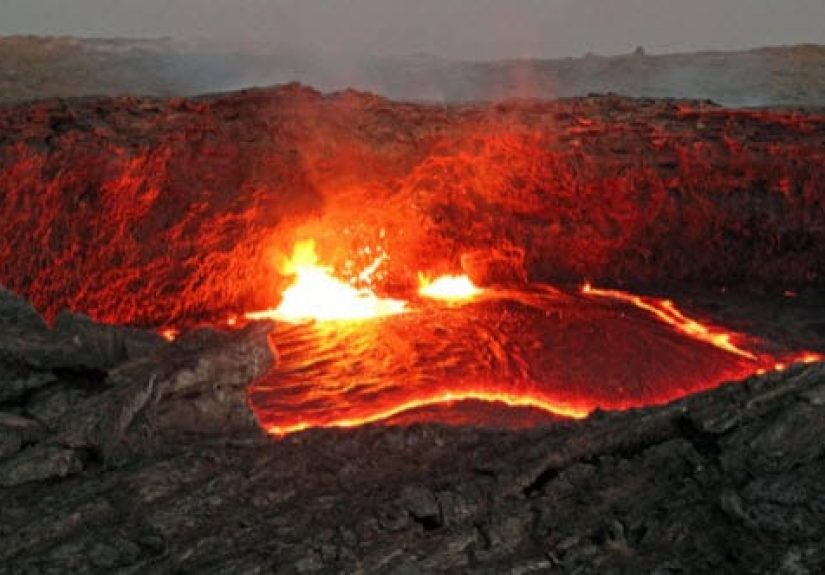
Masaya Volcano, near Managua, has an active crater whose lava lake glows
like a furnace after dark. Indigenous cultures once saw the volcano as a
sacred site and made offerings to its fiery depths. When Spanish
conquistadors arrived, they took one look at the molten lava and dubbed it
La Boca del Infierno the Mouth of Hell.
A 16th-century friar reportedly climbed the volcano and raised a cross on
the rim to ward off demonic forces. That cross (or its successor) still
stands as a literal symbol of humans trying to negotiate terms with a very
active planet.
Up close with the underworld (safely, please)
Modern visitors can drive up to viewing platforms and peer down into the
churning lava, though access sometimes closes due to gas or activity
levels. Standing on the edge of a glowing crater that once inspired both
sacrifices and exorcisms, it’s easy to see why people felt this was a
doorway to somewhere otherworldly.
9. Pluto’s Gate at Hierapolis, Turkey – Deadly Fumes and Divine Rituals
The ancient “gate to hell” that killed animals on contact
In the ancient city of Hierapolis (modern-day Pamukkale), there’s a small
cave called the Ploutonion Pluto’s Gate that really earned its
underworld branding. Greek and Roman writers described it as a place where
animals led into the opening would drop dead almost instantly, while
special priests could enter and exit unharmed during rituals honoring
Pluto, god of the underworld.
For a long time this sounded like myth; then archaeologists rediscovered
the site and confirmed that lethal concentrations of volcanic carbon
dioxide collect just above the ground near the entrance. Animals with noses
close to the floor would suffocate, while taller humans who knew what they
were doing could survive by staying higher and holding their breath.
Science behind the supernatural
What ancient worshippers saw as divine proof of an underworld portal, we
now understand as geology and gas behavior. But walking past ruins where
crowds once watched sacrifices vanish into a toxic mist, it’s not hard to
imagine why the label “gate to hell” stuck for two thousand years.
10. Lake Avernus, Italy – Rome’s Doorway to Hades
The lake the Romans didn’t trust
Lake Avernus, a volcanic crater lake near Naples, looks peaceful at first
glance: tree-lined shores, calm water, pretty reflections. The ancient
Romans, however, considered it one of the main entrances to Hades. The name
“Avernus” is often linked to the Greek word for “without birds,” because
supposedly the volcanic fumes were strong enough to kill birds flying
overhead.
In mythology, Aeneas is said to have descended into the underworld through
a cave near the lake, guided by the Sibyl. Roman writers used “Avernus” as
shorthand for the underworld itself a kind of literary shortcut that
turned this one lake into a symbol for death and what lies beyond.
A calm surface over fiery roots
Today, Lake Avernus is surrounded by vineyards and hiking paths, and nobody
is reporting bird-related mass fainting spells. But it still sits atop an
active volcanic field, and that uneasy tension between tranquil scenery and
powerful forces beneath the surface is exactly why so many cultures have
pointed at places like this and whispered, “That’s where the door is.”
Bonus: Fengdu Ghost City, China – Bureaucracy of the Afterlife
Hell, but with paperwork
Fengdu Ghost City, built on Ming Mountain along the Yangtze River, isn’t
usually described as a literal hole in the ground it’s more like the
administrative capital of the afterlife. Temples, statues, and elaborate
dioramas depict scenes from Chinese concepts of hell, including judges,
demons, and multiple levels of punishment.
Visitors cross the “Bridge of Helplessness,” face symbolic judgment tests,
and pass larger-than-life sculptures of underworld guardians. Rather than a
single entrance, Fengdu works like a visual syllabus for what could happen
after death. It’s less “oops, fell into a fiery pit” and more “please take
a number and wait for your cosmic sentencing.”
What These “Gates to Hell” Really Reveal
Taken together, these entrances to hell have a pattern. Many are located in
volcanically active regions, sulfuric springs, or gas-emitting fissures.
Others are places where people experienced tragedy, danger, or just a lot
eerie silence. When humans don’t fully understand what’s going on
whether it’s invisible gas killing animals or a forest that swallows sound
we often reach for myth to fill in the blanks.
There’s also something strangely comforting about the idea of “entrances.”
If there’s a doorway to hell, maybe there’s some structure to suffering and
chaos. Maybe someone is in charge, even if that someone is a horned
overlord with questionable interior design taste.
In the end, these places say as much about our fear, imagination, and
grief as they do about demons or deities. The underworld we keep mapping
onto landscapes is often our own emotional one.
Visiting the “Gates of Hell”: Experiences, Ethics, and Practical Tips
Why we’re drawn to hell on a Saturday night
There’s an actual term for driving out to creepy sites with a spooky
reputation: “legend tripping.” People pile into cars, grab flashlights, and
head to the local “haunted bridge,” “crybaby tunnel,” or “gateway to hell”
to see if the stories are true. It’s part horror tourism, part rite of
passage, and part social bonding fear makes for great group memories.
The draw is obvious. Locations like Darvaza, Masaya, or Pluto’s Gate look
like the movie version of hell: fire, fumes, or eerie ruins. Places like
Stull Cemetery, the Seven Gates of Hell, or Aokigahara layer emotional or
tragic histories on top of that. Standing there at midnight, every snap of
a twig and gust of wind feels like confirmation that the stories are real.
But should every “hell gate” be a tourist spot?
Not all hell-themed destinations are created equal. Some, like Darvaza, the
Hellfire Caves, Fengdu Ghost City, or Masaya Volcano, are managed as
official attractions, often with guides, safety rules, and clear boundaries
for where visitors can go. In those cases, snapping photos and enjoying the
atmosphere (while following local regulations) is part of how the site
supports the surrounding community.
Others like Stull Cemetery or the area around the Seven Gates of Hell
are still active community spaces or private land. There, ghost-hunting can
easily turn into trespassing, vandalism, and harassment of residents. For
local families visiting their relatives’ graves, it’s not “fun spooky
content,” it’s their real life being disrupted by strangers treating their
hometown like a horror set.
How to be a responsible visitor
If you’re tempted to visit one of these “entrances to hell,” a few simple
guidelines make all the difference:
-
Check what the place actually is. Is it a national park,
an archeological site, a working temple, or a private cemetery? Rules and
etiquette are very different for each. -
Follow local laws and posted signs. If a place is closed
at night or clearly marked as private, the only “hell” you’re opening is
the legal kind. -
Treat tragedies with respect. Sites connected with real
loss like Aokigahara or active cemeteries deserve quiet, empathy, and
absolutely no “I spent the night in the suicide forest, like and
subscribe” energy. -
Leave things as you found them. No breaking stones, no
stealing artifacts, no carving your initials into “Satan’s favorite
tree.” Future visitors (and local communities) will thank you.
What you actually “get” from visiting a gate to hell
Most people who visit these places don’t encounter demons, but they do get
something very real: perspective. Standing at the rim of a burning crater
or in a sulfur-stained valley, you’re reminded how thin the line is between
comfortable daily life and forces we can’t control. Walking through a ghost
city or along a forest trail with a heavy history, you feel how deeply
stories and grief can shape the way we see a landscape.
In a way, that’s the real “hell gate” experience not falling into a fiery
pit, but stepping just far enough outside your comfort zone to remember that
the world is older, stranger, and more powerful than your to-do list. You
come back with the same life, but maybe a slightly different sense of what
it means to live it.
So yes, there are “entrances to hell” all over Earth. Some belch flame,
some leak poisonous gas, some hide in legends about staircases that appear
twice a year. But the moment you walk away, back into the ordinary world,
you realize something important: as long as we’re still able to tell these
stories, laugh nervously, and choose kindness in the face of fear, we’re
firmly on the right side of the gate.






 Close
Close