Table of Contents >> Show >> Hide
- 1. It Was Carved Into Land the Lakota Consider Sacred
- 2. The Black Hills Were Taken After Treaty Promises
- 3. The Monument Was Born as a Tourism Scheme
- 4. The Original Concept Ignored Native Perspectives From the Beginning
- 5. The Sculptor, Gutzon Borglum, Had Ties to White Supremacist Circles
- 6. The Presidents Chosen Are Not Exactly Uncontroversial
- 7. The Mountain Was Literally Blasted Apart
- 8. It Was Never Finished the Way It Was Supposed to Be
- 9. Native Protest Has Followed the Monument for Decades
- 10. It Turns a Complicated History Into a Clean National Fairytale
- So, Was Mount Rushmore a Terrible Idea?
- Experiences That Make the Controversy Feel Real
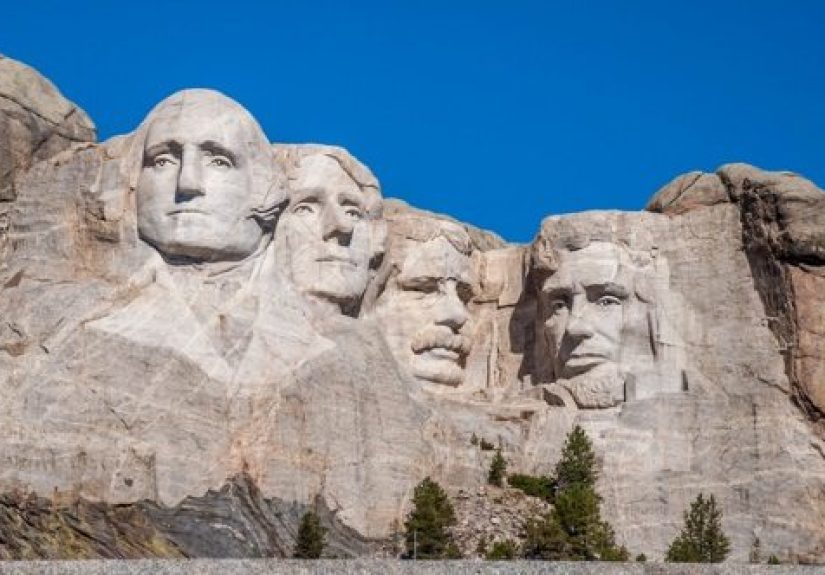
Mount Rushmore is one of those American landmarks that shows up in textbooks, road-trip brochures, and movies whenever a director needs to scream, “Look! Symbolism!” But once you get past the giant granite faces and the patriotic glow-up, the story becomes a lot less flattering. In fact, the more you learn about Mount Rushmore, the more it starts to look like one of the worst ideas ever blasted into a mountain with dynamite.
This is not a complaint about the craftsmanship alone. The carving took tremendous labor, engineering, and nerve. The problem is the larger idea behind it: who decided this was a good place, what message it sent, whose land it occupied, and why Americans were expected to clap politely while a sacred landscape was turned into a giant political billboard.
So let’s take a clear-eyed look at the history, controversy, and contradictions behind the monument. Here are 10 facts that make a strong case that Mount Rushmore was, at best, wildly misguided and, at worst, a monumental act of arrogance with excellent lighting.
1. It Was Carved Into Land the Lakota Consider Sacred
The biggest reason critics call Mount Rushmore a terrible idea is also the hardest to dodge: the monument sits in the Black Hills, a place that is deeply sacred to the Lakota. Long before tourists arrived with selfie sticks and sunscreen, this region held spiritual, cultural, and historical importance for Native communities.
That alone would make carving presidential faces into the mountain a deeply fraught choice. Imagine taking one of the holiest places in a culture and saying, “Great news, we’re going to redecorate it with four enormous politicians.” It is difficult to describe that as respectful, subtle, or smart.
Why this matters
Mount Rushmore is not controversial because people suddenly became anti-sculpture. It is controversial because the site itself carries meaning that the monument ignored. For many Native people, the carving is not a tribute. It is a desecration.
2. The Black Hills Were Taken After Treaty Promises
The land issue gets even worse when you move from morality to law. The 1868 Fort Laramie Treaty recognized the Black Hills as part of Sioux territory. Later, after gold was discovered, the United States took the land anyway. That is not exactly a shining example of national integrity.
In 1980, the U.S. Supreme Court ruled that the Black Hills had been taken illegally and that compensation was owed. The Sioux have famously refused the money, because accepting a payout would imply the land was for sale in the first place. Their position has been consistent: they want justice, not a consolation prize with interest attached.
That legal history makes Mount Rushmore feel less like a proud national shrine and more like a permanent reminder of a broken promise. It is difficult to celebrate a monument when the land beneath it is still part of an unresolved injustice.
3. The Monument Was Born as a Tourism Scheme
Mount Rushmore did not begin as a solemn, inevitable mission to honor democracy. It began because South Dakota historian Doane Robinson wanted to attract tourists. That is right: one of the most iconic landmarks in the country started, in part, as a giant marketing strategy.
Robinson wanted a colossal carving in the Black Hills that would bring travelers into the state. There is something almost charmingly blunt about that. Need more visitors? Put huge faces on a mountain. It is the 1920s version of clickbait, except with more granite and fewer banner ads.
But the tourism angle matters because it reveals the monument’s priorities from the start. This was not just about preserving history. It was also about creating spectacle, boosting traffic, and selling a mythic version of America that visitors could admire without thinking too hard about what had to be erased to make it look tidy.
4. The Original Concept Ignored Native Perspectives From the Beginning
Robinson’s original idea did not even begin with the four presidents we know today. He first imagined featuring figures from the American West, including explorers and frontier icons. That proposal was later reshaped into a national monument with presidents instead.
Either way, Native voices were not centered in the process. The land was Native land. The mountain stood in a Native sacred landscape. The history of the region was inseparable from Native nations. Yet the project moved forward by framing the site as a canvas for somebody else’s story.
That is one of Mount Rushmore’s most revealing flaws: it turned a living, contested place into a one-sided national myth. It did not ask, “What story does this mountain already hold?” It asked, “What story do outsiders want to impose on it?” And then it brought drills.
5. The Sculptor, Gutzon Borglum, Had Ties to White Supremacist Circles
No conversation about Mount Rushmore is complete without looking at the man behind it. Sculptor Gutzon Borglum was a talented and ambitious artist, but his legacy is anything but clean. Before Mount Rushmore, Borglum was involved in the Stone Mountain project in Georgia, a Confederate memorial with ties to the Ku Klux Klan and white supremacist mythmaking.
That background matters. Public monuments are not neutral. They reflect the politics, values, and ambitions of the people who build them. When the artist behind one of America’s most famous monuments also has documented ties to deeply racist movements and memorial culture, the entire project deserves much harder scrutiny than it usually gets.
This does not mean every chip of granite carries identical intent. It does mean the monument did not appear in a vacuum. It was shaped by a period in American history that often celebrated conquest, whiteness, and national triumph while minimizing the damage done to everyone pushed aside.
6. The Presidents Chosen Are Not Exactly Uncontroversial
Even if you set aside the land issue for a moment, the four presidents on Mount Rushmore are hardly beyond debate. George Washington and Thomas Jefferson were enslavers. Abraham Lincoln preserved the Union and issued the Emancipation Proclamation, but his policies toward Native peoples remain debated and complicated. Theodore Roosevelt is often praised for conservation, yet he also championed muscular expansionism and held views about race and civilization that feel grimly familiar today.
In other words, Mount Rushmore does not present four universally beloved saints gazing nobly into the distance. It presents four powerful men who helped shape the United States, yes, but also a country built through conquest, dispossession, slavery, and expansion.
That complexity is exactly why critics object to the monument’s tone. The carving freezes these leaders in heroic stone and strips away the messier parts of their legacies. It is history with the edges sanded off until it can fit on a souvenir mug.
7. The Mountain Was Literally Blasted Apart
About 90 percent of Mount Rushmore was carved using dynamite. Roughly 450,000 tons of rock were removed from the mountain. The technical achievement is impressive. The symbolism, though, is another story.
There is something painfully on-the-nose about taking a sacred landscape already wrapped in a land dispute and then exploding it until four presidential faces appear. If the goal was subtle nation-branding, this was not it. This was geological domination with patriotic cheekbones.
Supporters may see an engineering wonder. Critics see a spectacular example of the American habit of mistaking “we can do this” for “we should do this.” Those are not the same sentence, and history gets expensive when a country confuses them.
8. It Was Never Finished the Way It Was Supposed to Be
Here is an underrated reason Mount Rushmore feels like a bad idea: even by its own creators’ standards, it did not fully work. Borglum originally imagined far more than just giant heads. The presidents were supposed to be carved from the head to the waist. He also dreamed of a massive inscription and a grand Hall of Records explaining American history.
Funding, technical problems, and time got in the way. The result is a monument that is both enormous and unfinished. The public got the heads, but not the full vision. It is a bit like ordering an outrageously expensive custom cake and receiving only the frosting sculpture on top.
That unfinished quality matters symbolically too. Mount Rushmore was supposed to communicate confidence, grandeur, and clarity. Instead, it also reveals the limits of grand nationalist art: huge ambition, partial execution, and a permanent air of “well, this got awkward.”
9. Native Protest Has Followed the Monument for Decades
Opposition to Mount Rushmore is not new, trendy, or invented on social media last Tuesday. Native activists have challenged the monument for generations. In 1971, members of the American Indian Movement occupied the site and renamed it “Mount Crazy Horse” during their protest.
That action was not random theater. It was a direct statement about land, memory, and representation. The protest made visible what the official monument tried to bury: the Black Hills were never an empty stage waiting for patriotic carving. They were already somebody’s homeland, already somebody’s sacred place, already part of an unfinished struggle.
When a monument keeps generating protest over decades, that is not a public-relations hiccup. It is a sign that the monument itself is built on unresolved conflict.
10. It Turns a Complicated History Into a Clean National Fairytale
Perhaps the strongest argument against Mount Rushmore is that it teaches a dangerously simplified version of American history. The monument suggests that the nation was built by four great men whose wisdom and courage shaped a noble democratic experiment. That story is not entirely false, but it is wildly incomplete.
Missing from the stone are the people displaced by expansion. Missing are the enslaved people who lived under some of these presidents. Missing are the Native nations forced into treaties, wars, removals, and land theft. Missing is the fact that the mountain itself is part of that story, not separate from it.
Mount Rushmore packages national memory in the easiest possible way: big faces, bold symbolism, no footnotes. It gives visitors awe without requiring discomfort. And that is exactly why so many critics call it a terrible idea. Not because it is ugly, but because it is tidy in all the wrong ways.
So, Was Mount Rushmore a Terrible Idea?
If you judge it purely as a feat of engineering, Mount Rushmore is extraordinary. If you judge it as public art, it is undeniably unforgettable. But if you judge it in historical, moral, and cultural terms, the case against it becomes very hard to ignore.
It was carved into sacred land. That land was taken in violation of treaty promises. The monument grew from a tourism campaign, erased Native perspectives, celebrated contested leaders, and was shaped by a sculptor whose broader legacy includes white supremacist associations. It literally blasted a mountain apart to tell a cleaner story about America than America has actually lived.
That does not mean people should pretend Mount Rushmore does not exist. It means they should stop treating it like a harmless patriotic postcard. The monument is best understood not as a simple national treasure, but as a giant lesson in how countries memorialize power while avoiding accountability.
So yes, “terrible idea” may sound blunt. Then again, carving colossal presidential faces into disputed sacred land was not exactly subtle. Sometimes the blunt description is the honest one.
Experiences That Make the Controversy Feel Real
Reading about Mount Rushmore in a history article is one thing. Standing near it, or even just imagining the full experience around it, is something else entirely. The contradictions get louder the closer you move to the monument as a lived place instead of a textbook image.
For one visitor, the trip might begin with excitement. The road curves through the Black Hills, the trees open up, and there they are: the faces everyone has seen a thousand times on calendars, documentaries, and refrigerator magnets. At first, it feels familiar, almost cinematic. Then the context starts creeping in. You realize this is not just a giant sculpture. It is a statement written across a mountain in a place already heavy with spiritual meaning and historical pain.
Another common experience is that strange emotional split between admiration and discomfort. You can appreciate the technical scale while also feeling uneasy about what the monument represents. That tension is part of the Mount Rushmore experience whether some tourists can name it or not. The craftsmanship may impress you. The backstory refuses to stay politely in the parking lot.
For Native visitors, the experience can be far more personal. The monument is not merely controversial in the abstract. It sits inside a living history of dispossession. What many travelers treat as a bucket-list stop may feel to others like a painful public display of erasure. That difference in experience is exactly why the site remains such a flashpoint. People are not all arriving at the same mountain with the same inheritance.
Even the polished visitor experience can feel surreal when you think about what has been packaged for consumption. Gift shops, scenic overlooks, patriotic framing, and carefully managed narratives all encourage a certain reaction: admiration first, questions later. But once the questions arrive, they tend to arrive in a crowd. Why this mountain? Why these men? Why here? Why this story and not the fuller one?
That is the real experience Mount Rushmore leaves behind for many thoughtful visitors: not pure inspiration, but cognitive whiplash. You come for an icon and leave with an argument. You expect a monument and find a moral case study. And maybe that is the strangest part of all. Mount Rushmore was supposed to simplify American greatness into four giant faces. Instead, for anyone willing to look closely, it does the opposite. It exposes just how messy, selective, and contested public memory can be.
Note: This article is based on historical records and established reporting. Source links are intentionally omitted as requested.