Table of Contents >> Show >> Hide
- 1. Carter’s Grove Plantation, Virginia
- 2. The Hollywood Sign (and the land around it), California
- 3. The Empire State Building, New York
- 4. The Alamo, Texas
- 5. The Liberty Bell, Pennsylvania
- 6. Monticello, Virginia
- 7. Bran Castle, Romania
- 8. London Bridge, England (now in Arizona)
- 9. New Scotland Yard, London
- 10. Stonehenge, England
- What These Sales Tell Us About Landmarks and Money
- Experiences and Takeaways: Visiting Landmarks That Were (Almost) For Sale
- Conclusion: Landmarks, For Sale (And Hopefully Not For Scrap)
We like to think of famous landmarks as timeless fixtures: Stonehenge brooding on the Salisbury Plain forever,
the Hollywood Sign glowing over Los Angeles until the end of time, the Empire State Building anchoring every
New York skyline photo. But behind the postcard images, most of these icons are exactly what you and I live in
every day: real estate. And real estate, sooner or later, tends to end up with a price tag.
Over the past few centuries, governments, foundations, and private families have quietly put some of the world’s
most famous places on the market. Sometimes it was to pay off crushing debt. Sometimes it was part of a
redevelopment deal. And sometimes it was just a very creative way to raise cash. From a colonial plantation in
Virginia to a literal medieval-looking “Dracula’s castle,” here are 10 famous landmarks that were put up for sale
and what happened after the “for sale” sign went up.
1. Carter’s Grove Plantation, Virginia
A colonial showpiece that kept changing hands
If historic homes had LinkedIn profiles, Carter’s Grove would need the premium tier. Located near Williamsburg,
Virginia, this 18th-century plantation sits on land tied to early English settlement and the tobacco economy.
For years it was owned and interpreted by the Colonial Williamsburg Foundation as a kind of “off-campus” showpiece
of elite plantation life.
The problem? Gorgeous Georgian mansions on hundreds of acres next to the James River are not cheap to maintain.
By the early 2000s, storms, deferred repairs, and operating costs added up. The foundation eventually decided
it couldn’t afford to keep the site open and began looking for a buyer, with conservation easements attached
to protect the landscape and archaeology.
In 2007, tech entrepreneur Halsey Minor bought the estate with big plans. Those plans collided with the
financial crisis and personal bankruptcy, and Carter’s Grove wound up in court and in limbo. Finally, in 2014,
preservation-minded investor Samuel M. Mencoff stepped in and acquired the property in a deal that balanced
private ownership with protections for the historic fabric. It’s a textbook example of what happens when a
high-maintenance landmark meets modern budgets.
2. The Hollywood Sign (and the land around it), California
Letters sold, hillside nearly lost
The most famous nine letters in Los Angeles started out as a real-estate ad (“HOLLYWOODLAND”) and have never
really stopped acting like real estate. By the 1970s, the original sign was rusted, sagging, and not exactly
inspiring silver-screen dreams. To pay for a brand-new version, the Hollywood Chamber of Commerce resorted to
a uniquely Hollywood solution: sell the landmark letter by letter.
Celebrity sponsors paid tens of thousands of dollars per letter to fund the replacement. Each donor “bought”
a letter in the sense of funding it, not actually taking it home for the den (sorry). The stunt worked, a fresh
sign was built, and the Hollywood skyline was saved for the moment.
But the bigger real-estate drama played out on the hills behind the sign. In the early 2000s, privately owned
land near the sign was put up for sale to developers, who floated plans for luxury homes. Preservationists and
local leaders, backed by a major last-minute donation from Playboy founder Hugh Hefner, raised millions of
dollars to buy the land instead and fold it into Griffith Park. In other words, the view of the landmark
almost sold to the highest bidder, until a public campaign “bought it back” for everyone else.
3. The Empire State Building, New York
When a landmark went public
Putting a skyscraper on the market is one thing. Putting a skyscraper that practically is the New York
skyline up for sale is something else entirely. For decades, the Empire State Building was owned through a
complex web of private partnerships. By the early 2010s, the owners wanted to simplify things and unlock cash,
and that meant turning the icon into a stock.
Shareholders eventually approved a plan to roll the building and a group of related properties into a
real-estate investment trust, Empire State Realty Trust. The trust then launched an initial public offering
(IPO) valued at roughly $4.2 billion. Overnight, anyone with a brokerage account could literally buy a piece
of the Empire State Buildingjust in the form of shares, not a souvenir gargoyle for the living room.
Not everyone was thrilled. Some investors argued they could have gotten more through a straight sale to private
buyers and filed lawsuits over lost value. But in the end, the IPO closed, the stock listed on the New York
Stock Exchange, and one of the world’s most recognizable landmarks officially joined the world of ticker symbols
and quarterly earnings calls.
4. The Alamo, Texas
Divided up, sold off, and stitched back together
“Remember the Alamo!” is a lot more stirring than “Check the closing costs on the Alamo,” but the site’s
post-battle history is mostly about real estate. After its famous 1836 siege during the Texas Revolution, the
former mission complex went through a long, messy period of division and sale.
Different pieces of the Alamo grounds were sold to private owners for warehouses, shops, and even plans for a
modern hotel. Old walls were altered, structures were added, and the site’s appearance changed depending on
what each buyer needed. In the early 20th century, preservationistsmost famously the Daughters of the Republic
of Texasraised money to buy back key buildings, including the long barracks, to prevent more redevelopment.
Eventually, the State of Texas stepped in and bought major portions of the complex, working with preservation
groups to stabilize and interpret the site. What visitors now experience as a unified landmark is the result
of decades of piecing back together a site that had once been carved up and sold like any other downtown property.
5. The Liberty Bell, Pennsylvania
Almost melted for scrap metal
The Liberty Bell is one of America’s top patriotic icons: cracked, solemn, and framed by Independence Hall.
But in the 19th century, it wasn’t a sacred relic. It was an old, damaged bell taking up space in a building
that city leaders weren’t sure what to do with.
As Philadelphia’s political importance shifted and the original State House aged, officials seriously considered
tearing down the building and treating the bell like any other obsolete fixture. One option on the table: sell
it as scrap metal. After all, bronze and copper were valuable; the bell could be weighed, sold by the pound,
melted down, and turned into something much less historic but much more useful.
In the end, the cost and logistics of lowering a one-ton bell from a high tower helped save it. Public sentiment
slowly shifted, especially as the bell was reimagined in the late 19th and early 20th centuries as a symbol of
freedom and abolition. The would-be scrap metal became an irreplaceable brand for the city and for American
democracy. Not a bad glow-up for something almost sold for parts.
6. Monticello, Virginia
Jefferson’s dream home with very real debts
Monticello looks like pure architectural confidence: a domed neoclassical house on a hill, designed by Thomas
Jefferson himself. Financially, it was closer to a money pit. Jefferson spent decades customizing, enlarging,
and re-imagining the house and its grounds. He also carried heavy personal debts throughout his life.
After Jefferson’s death in 1826, his daughter inherited a beautiful but heavily encumbered estate. To pay off
creditors, the family had little choice but to put Monticello and much of its contents up for sale. The house
passed to new owners, including naval officer and investor Uriah Levy, who saw its symbolic value and worked
to preserve it rather than demolish or radically alter it.
Eventually, in the 20th century, a nonprofit foundation purchased Monticello and turned it into a museum with a
mission to interpret Jefferson’s life, the enslaved community, and the broader context of early American history.
The landmark’s survival is a reminder that some of the grandest houses in American history were only one
bad ledger away from being sold off or gutted.
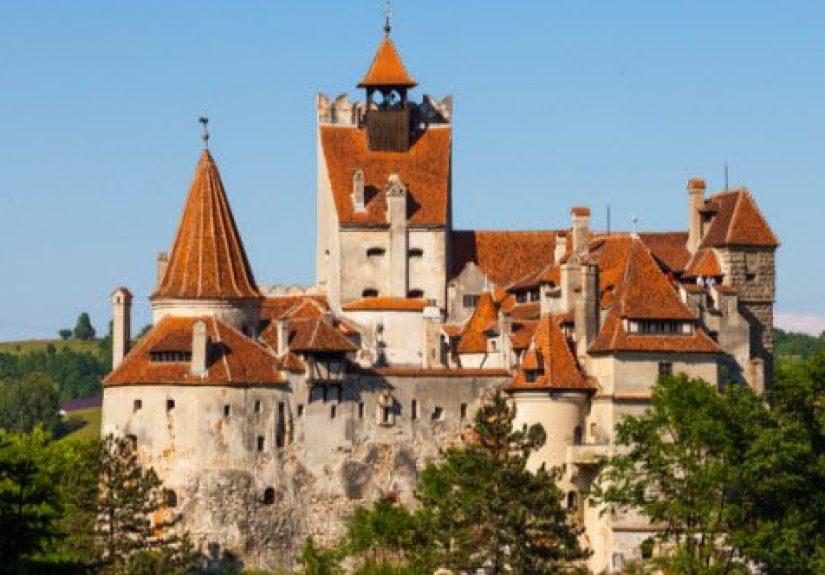
7. Bran Castle, Romania
“Dracula’s castle” looks for a buyer
Perched on a rocky hill in Transylvania, Bran Castle looks like it was dreamed up by a movie studio art director.
In reality, it’s a medieval fortress tied to regional power struggles and, much later, to Romania’s royal family.
Thanks to tourism brochures and pop culture, it’s also marketedsomewhat looselyas “Dracula’s Castle,” which
doesn’t hurt ticket sales.
In the 20th century, the communist government seized the castle from the royal family. After the fall of
communism, Bran Castle was eventually restituted to heirs of the former royals. Maintaining a massive hilltop
fortress isn’t cheap, even if it’s full of vampires (or tourists), so the owners explored selling it in the
mid-2000s, with asking prices in the tens of millions of dollars.
Despite international headlines about “Dracula’s castle for sale,” local authorities and potential buyers had
mixed feelings about paying such a premium. The property ultimately remained tied to the family and was
repositioned more firmly as a museum and tourism engine. Still, for a brief moment, you could imagine a billionaire
closing a deal on a castle branded with the world’s most famous fictional vampire.
8. London Bridge, England (now in Arizona)
The landmark that crossed an ocean
London Bridge really was falling downat least structurallyby the mid-20th century. The stone bridge
spanning the Thames was slowly sinking under the weight of traffic. Engineers recommended replacing it with a
more modern structure, but that left London with a question: what to do with the old one?
Rather than simply demolish the bridge, city officials did something bold. They decided to sell it. An American
entrepreneur, Robert P. McCulloch, saw opportunity where others saw rubble. He bought the bridge’s stone cladding
in 1968, had each block carefully numbered, shipped them to the United States, and reassembled London Bridge in
the desert town of Lake Havasu City, Arizona.
The project cost millions of dollars, but it worked as a marketing stunt. A sleepy planned community suddenly
had a world-famous landmark as its centerpiece. Tourists came to walk across a British bridge in the American
Southwest, and real-estate sales followed. London Bridge became proof that, yes, you can literally buy a famous
European landmark and have it rebuilt next to your new subdivision.
9. New Scotland Yard, London
The police HQ turned luxury real estate
New Scotland Yard, headquarters of London’s Metropolitan Police, is best known from TV cop dramas and news
broadcasts. For decades, the name conjured flashing blue lights and press conferences in front of a spinning
sign. But the building itself eventually joined the long list of “prime urban property in need of a new business model.”
As part of a broader effort to streamline police real estate and raise funds, London authorities put New
Scotland Yard’s headquarters on the market in the mid-2010s. The site’s central location and development potential
made it catnip for global investors. An Abu Dhabi–based investment group ultimately bought the property for
hundreds of millions of pounds, significantly above the initial guide price.
The plan? Retire the famous HQ, build a new, smaller police headquarters elsewhere, and transform the old site
into a mix of high-end apartments, offices, and possibly hotels. The “sale” of New Scotland Yard wasn’t about
losing the police force; it was about treating a landmark office building as an asset to be optimized in a
global real-estate market.
10. Stonehenge, England
Prehistoric stones with a surprisingly modern auction story
It’s hard to imagine Stonehenge with a price tag, but in the early 20th century that’s exactly what happened.
The land under and around the prehistoric stone circle had long been part of private estates. After the sole
heir of one such family died during World War I, the estate was broken up and put up for auction, with multiple
lots carved out across the property.
One of those lots included Stonehenge itself. The site was well known, but not treated with the kind of reverence
and protection it enjoys today. At auction, the Stonehenge lot sold for a price that, even adjusted for inflation,
feels shockingly modest for one of humanity’s most famous monuments.
The new owner later donated Stonehenge to the British government, which gradually put stronger protections
and management plans in place. Today, visitor centers, research programs, and strict rules control access.
But behind that modern layer of heritage management is a very simple truth: once upon a time, one of the most
iconic landmarks on earth changed hands at a public sale, just like a farmhouse or a parcel of pastureland.
What These Sales Tell Us About Landmarks and Money
Look across these stories and a pattern emerges. Landmarks aren’t floating above economics; they’re immersed in it.
Cash-strapped foundations sell plantations. City governments monetize police headquarters and skyscrapers.
Families burdened with upkeep on historic estates open the door to global investors. Even prehistoric stone circles
can wind up at auction when inheritance law and bad luck collide.
At the same time, public sentiment matters. Fundraisers saved the Hollywood Sign’s hillside. Preservationists
rallied around the Alamo and Monticello. Governments stepped in to acquire Stonehenge and the Liberty Bell before
they disappeared into private collections or scrap yards. The tug-of-war between “sell it” and “save it” is ongoing,
and landmarks often sit right in the middle of that negotiation.
Experiences and Takeaways: Visiting Landmarks That Were (Almost) For Sale
Reading about these sales is one thing. Standing in front of the landmark and realizing it could easily have
gone a very different way is another. Whether you’re a history buff, a casual traveler, or just someone who
likes a good real-estate plot twist, knowing the “for sale” backstory changes the way you experience these places.
Seeing the price tag behind the postcard
Imagine visiting the Empire State Building’s observation deck after learning that ownership is now chopped into
millions of tradable shares. When you look down at Manhattan, you’re not just seeing a city; you’re watching a
dense, constantly shifting financial machine where nearly every major building is, in some form, an investment product.
You realize that this beloved landmark is also a line item on a REIT balance sheet.
Or picture yourself on the tour path at Monticello, listening to guides talk about Jefferson’s architecture and
the lives of the enslaved people who built and maintained the estate. Add the knowledge that the house was once
auctioned off to pay debt, and the site feels even more fragile. Great ideas and beautiful buildings don’t exempt
anyone from financial reality; they sometimes intensify it.
Traveling with a preservation “radar” turned on
Knowing these stories also changes the way you move through other historic places. When you walk into a
centuries-old church, a grand train station, or an aging sports stadium, you start asking quiet questions:
How much does it cost to maintain this? Who’s paying for it? Could this be sold someday,
too? That awareness doesn’t make the experience less magical; it makes it more real.
You might pay more attention to donation boxes, membership drives, or discreet plaques thanking corporate sponsors.
You start to see how crowdfunding campaigns, philanthropic gifts, and government grants can make the difference
between “open for tours” and “closed indefinitely.” When a city debates what to do with an old stadium or civic
building, you’ll recognize the pattern from the Hollywood Sign’s hillside or New Scotland Yard’s lucrative sale.
Using these stories as travel conversation starters
These “for sale” histories also make fantastic conversation openers if you like nerdy travel talk. Waiting in
line at the security checkpoint for a famous site? It’s a perfect moment to share that London Bridge was actually
purchased, shipped, and rebuilt in Arizona as a marketing move. Visiting an old mission or fort in the American
Southwest? You can point out that the Alamo’s post-battle story is just as much about property lines and
preservation activism as it is about heroics.
Even casual travelers tend to light up when they realize landmarks are not frozen in time. They have ownership
histories, ugly fights over money, and lucky breaks where someone stepped in at the last moment to save them from
being scrapped, gutted, or turned into condos. That human elementdeals, mistakes, clever ideas, and last-minute
rescuesis often what sticks with people long after the selfie is buried in their camera roll.
Why these stories matter for the future
Finally, knowing that famous landmarks have been put up for sale encourages all of us to think about what we want
to protect going forward. Today’s “just another old building” can be tomorrow’s cherished landmark once people
attach memories and meaning to it. The Liberty Bell, after all, was nearly melted down. The idea of turning it
into scrap metal seems unthinkable nowbut it only became unthinkable because people decided it mattered.
So next time you’re planning a trip, consider adding a little “heritage homework” to your itinerary. Look up
whether the sites you’re visiting were ever on the market. Check if there are current campaigns to protect
surrounding land or associated buildings. And when you’re standing there, taking in the view, remember that
behind every grand façade, there’s usually a stack of bills, a set of contracts, and at least one moment when
someone had to decide whether to cash out or hold on.
Conclusion: Landmarks, For Sale (And Hopefully Not For Scrap)
From Carter’s Grove to Stonehenge, from the Hollywood hills to Wall Street trading floors, these stories show that
even the most beloved landmarks aren’t immune to financial pressure. They are bought, sold, nearly scrapped,
bundled into IPOs, and rescued at the last minute by people who see more than just square footage and development
rights. Understanding that hidden real-estate history doesn’t make these places less special. It makes them more
humanand reminds us how easily they could have been lost.