
Table of Contents >> Show >> Hide
- What “Right to Die” Actually Covers (and Why People Argue Past Each Other)
- 1) Karen Ann Quinlan (New Jersey): “Let us stop the machines.”
- 2) Nancy Cruzan (U.S. Supreme Court): “Show us the proof.”
- 3) Terri Schiavo (Florida): When a private tragedy becomes a national brawl
- 4) Elizabeth Bouvia (California): The right to refuseeven when people don’t like your reasons
- 5) Robert Wendland (California): “Clear and convincing” isn’t just for courtroomsit’s for families
- 6) Helga Wanglie (Minnesota): When “medical futility” collides with family authority
- 7) Washington v. Glucksberg (and the 1997 Supreme Court “No”): The limits of constitutional autonomy
- 8) Jahi McMath (California/New Jersey): “Brain death” isn’t just a diagnosisit’s a legal earthquake
- 9) Marlise Muñoz (Texas): Pregnancy, brain death, and a law that wouldn’t let go
- 10) Brittany Maynard (Oregon): Making the option visiblewhether you choose it or not
- What These Cases Teach (Without Pretending the Lessons Are Easy)
- Experiences at the Heart of Right-to-Die Debates (About )
- Conclusion: The Real “Right” Is to Be Heard Before You Can’t Speak
End-of-life decisions are where law, medicine, love, fear, faith, and family history all crash into each otherusually in a hospital room with fluorescent lighting that makes everyone look like they’ve been awake for three days. (They have.)
The phrase “right to die” sounds tidy. Reality is not tidy. Sometimes it means the right to stop treatment. Sometimes it means the right to refuse a feeding tube. Sometimes it means the right to choose medical aid in dying where it’s legal. And sometimes it means the right to be left alone by politicians who suddenly discover their passion for your private tragedy.
Below are ten real cases that shaped the American conversation about autonomy, suffering, disability rights, religious objections, and what it means to be “alive” in the eyes of law and medicine. These stories are heartbreaking not because they’re dramaticthough they often arebut because they show how hard it is to translate a person’s wishes into paperwork, evidence, and court orders when that person can no longer speak.
What “Right to Die” Actually Covers (and Why People Argue Past Each Other)
Before the cases, a quick map of the territory:
- Refusing or stopping treatment: A competent adult generally has the right to refuse medical treatmenteven if refusing leads to death. This includes ventilators, dialysis, and sometimes artificial nutrition and hydration.
- Decisions for someone who can’t speak: If a patient is incapacitated, families or appointed decision-makers may act, but states can require strong proof of what the patient would have wanted.
- Medical aid in dying (where legal): In some jurisdictions, a qualifying terminally ill adult may request a prescription they can self-administer to shorten dying. This is not the same as euthanasia (a clinician administering the medication), which remains illegal in most of the U.S.
- Disputes about “death” itself: Brain death, religious exemptions, and conflicting state rules can create legal limbo that feels like grief with extra steps.
Nowten cases that forced the country to wrestle with those lines.
1) Karen Ann Quinlan (New Jersey): “Let us stop the machines.”
What happened
In the mid-1970s, Karen Ann Quinlan, a young woman in New Jersey, was left in a profoundly impaired state and placed on a ventilator. Her parents asked to remove the ventilator, believing that continued mechanical support was not what she would have wanted and offered no meaningful recovery.
Why it hit so hard
This wasn’t a debate on cable news; it was a family pleading to be allowed to grieve without a machine doing the breathing for them. Hospitals feared liability. The family feared prolonged suffering and a life reduced to equipment alarms.
What it changed
The Quinlan case helped push the idea that a patient’s privacy and autonomy can include decisions to withdraw life-sustaining treatment, and it made ethics committees and hospital policies more than just “nice-to-have” paperwork.
2) Nancy Cruzan (U.S. Supreme Court): “Show us the proof.”
What happened
Nancy Cruzan was in a persistent vegetative state after a car crash. Her family sought to remove artificial nutrition and hydration. Missouri required “clear and convincing” evidence that this was what Nancy would have wanted.
Why it hit so hard
Cruzan revealed a brutal reality: families can love someone fiercely and still be told, “Love isn’t evidence.” Courts asked for proofstatements, documents, prior wishesbecause the stakes were irreversible.
What it changed
Cruzan put advance directives on the national radar. It taught the country that if you want your voice heard later, you may need to “say it now” in writingbecause later, your silence becomes a legal obstacle.
3) Terri Schiavo (Florida): When a private tragedy becomes a national brawl
What happened
Terri Schiavo suffered catastrophic brain injury and lived for years with a feeding tube. Her husband, as guardian, argued she would not have wanted prolonged artificial life support without hope of recovery. Her parents disagreed, fought the diagnosis and the decision, and the case escalated through state courts, federal courts, and intense political intervention.
Why it hit so hard
The most painful part wasn’t only the medical uncertainty. It was the public spectacle: strangers yelling outside a hospice while a family imploded under a spotlight so bright it could’ve powered the whole state.
What it changed
Schiavo became a cautionary tale about not leaving your wishes to interpretationand about how quickly end-of-life care can become a proxy war for cultural and political battles.
4) Elizabeth Bouvia (California): The right to refuseeven when people don’t like your reasons
What happened
Elizabeth Bouvia, a competent adult with severe disabilities and profound suffering, sought to refuse forced feeding via a nasogastric tube in a public hospital. Physicians had inserted and maintained the tube against her will to keep her alive through involuntary feeding.
Why it hit so hard
Bouvia forced the public to face an uncomfortable question: Do we respect autonomy only when the patient’s decision feels emotionally comfortable to onlookers? Or do rights apply even when a person’s choice makes us angry, scared, or morally conflicted?
What it changed
The case reinforced that competent adults can refuse medical treatment, including interventions that sustain life. It also highlighted how disability, depression, and autonomy can become tangled in ways that demand careful, compassionate evaluationnot assumptions.
5) Robert Wendland (California): “Clear and convincing” isn’t just for courtroomsit’s for families
What happened
After severe brain injury, Robert Wendland was conscious but profoundly disabled. His wife, acting as conservator, sought authority to withdraw artificial nutrition and hydration. California’s Supreme Court required clear and convincing evidence that the decision aligned with his wishes or best interests.
Why it hit so hard
Wendland is the nightmare scenario for families who say, “We’ve talked about this,” but never wrote it down. The law demanded a higher standard because the patient wasn’t terminally ill or in a comahe existed in that agonizing middle ground where suffering is real and certainty is scarce.
What it changed
It underscored that “someone would’ve wanted” is not the same as “someone did want,” legally speaking. The case pushed advance directives and durable powers of attorney into the category of emotional kindness, not just legal hygiene.
6) Helga Wanglie (Minnesota): When “medical futility” collides with family authority
What happened
Helga Wanglie, an elderly woman on a ventilator, became the center of a dispute between clinicians who believed continued treatment was futile and a family that wanted life support continued. The case spotlighted who ultimately holds decision-making authority when clinicians and surrogates disagree.
Why it hit so hard
“Futility” sounds clinical. Living through it is anything but. For families, stopping can feel like giving up. For clinicians, continuing can feel like inflicting harm. Wanglie showed that both sides can be acting from a place that feels morally necessary.
What it changed
It fueled ethics-policy development around conflict resolutionethics consults, clearer hospital processes, and the realization that end-of-life disputes are not rare edge cases. They are predictable human events that need predictable, humane systems.
7) Washington v. Glucksberg (and the 1997 Supreme Court “No”): The limits of constitutional autonomy
What happened
Terminally ill patients, physicians, and advocates challenged Washington State’s ban on physician-assisted suicide, arguing it violated liberty protections. The Supreme Court rejected a federal constitutional right to assisted suicide, emphasizing the state’s role in regulating medicine and protecting vulnerable groups.
Why it hit so hard
The plaintiffs weren’t abstract policy props; they were people facing decline who wanted options. The Court’s refusal didn’t make the suffering disappearit simply meant the question would be fought state by state, legislature by legislature, family by family.
What it changed
Glucksberg didn’t end the debateit relocated it. It shaped today’s patchwork approach, where end-of-life options differ dramatically depending on your ZIP code (and sometimes your ability to travel).
8) Jahi McMath (California/New Jersey): “Brain death” isn’t just a diagnosisit’s a legal earthquake
What happened
After complications from surgery, Jahi McMath was declared brain dead in California. Her family rejected the diagnosis and fought to maintain bodily support, eventually moving her to New Jersey, where state law allows a religious objection to neurological criteria for death.
Why it hit so hard
If you’ve never seen grief refuse to accept “final,” you might assume it’s denial. McMath showed it can also be a sincere belief about what counts as deathplus a deep mistrust of institutions at the worst possible time to feel alone.
What it changed
The case forced public education on a grim but essential distinction: a beating heart on a ventilator is not always “life” in the medical-legal sense. It also highlighted how state-by-state rules can create two realities for one family.
9) Marlise Muñoz (Texas): Pregnancy, brain death, and a law that wouldn’t let go
What happened
Marlise Muñoz was declared brain dead while pregnant. Her family sought removal from mechanical support, saying this matched her wishes. A hospital cited a Texas statute related to pregnant patients’ advance directives, leading to a court fight over whether that law even applied when the patient was legally dead.
Why it hit so hard
This case stacked grief on grief: a spouse losing a partner, a family fearing the fetus could not survive, and a state law effectively commandeering a body in the name of potential life. It felt to many like a horror story written in legislative language.
What it changed
Muñoz exposed a legal blind spot: pregnancy clauses in advance-directive laws can collide with brain-death standards in ways lawmakers didn’t anticipate. It also pushed families to ask a new, painful question: “What would my state require if I’m pregnant?”
10) Brittany Maynard (Oregon): Making the option visiblewhether you choose it or not
What happened
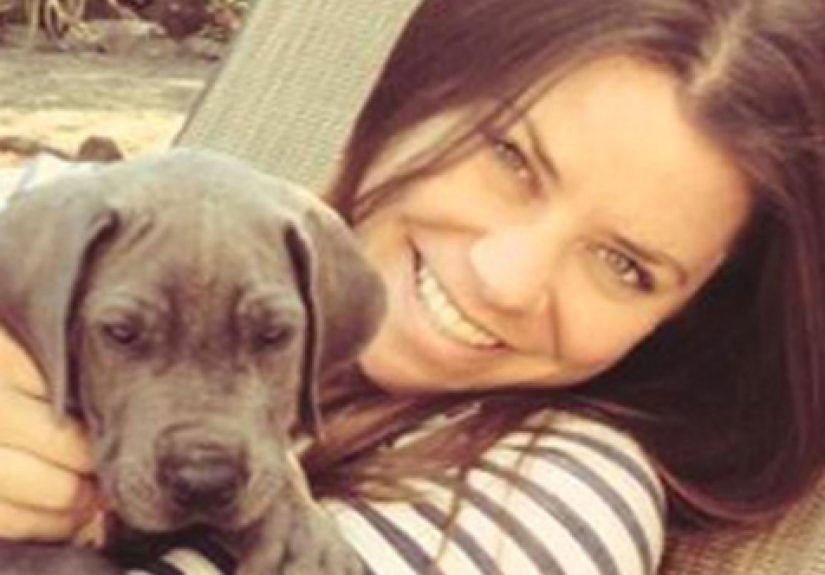
Brittany Maynard, diagnosed with terminal brain cancer at 29, moved from California to Oregon to access medical aid in dying under Oregon’s Death with Dignity law. She spoke publicly about wanting control over unbearable decline and helped ignite a new wave of legislative debate across the country.
Why it hit so hard
Maynard’s story put a human face on an argument that often sounds like philosophy homework. She wasn’t asking the country to agree with hershe was asking the country to let her family face tragedy without added terror.
What it changed
The “Maynard effect” accelerated public attention to end-of-life options. It also clarified a quiet truth: for many patients, the comfort comes from having the option availableeven if they never use it.
What These Cases Teach (Without Pretending the Lessons Are Easy)
Across all ten stories, you can see the same themes repeatinglike a chorus nobody asked to hear:
- Words matter, and written words matter more. Courts trust documents because memories get argued into dust.
- Families can love each other and still disagree. Disagreement isn’t evidence of bad faithit’s evidence of pain.
- Medicine has definitions; humans have meanings. “Brain death” may be medically clear, but emotionally, it can feel impossible.
- Politics finds tragedy the way moths find porch lights. Once a story becomes symbolic, the person at the center can disappear.
- Disability complicates everythingand demands extra care. Autonomy must be protected, and so must vulnerable people. Those obligations are not enemies; they’re a balancing act.
Experiences at the Heart of Right-to-Die Debates (About )
If you read these cases back-to-back, the legal language starts to sound like it was written by someone trying to do surgery with oven mitts. That’s not an insult; it’s a reminder that law was never designed to hold grief. People were.
One common experience families describe is the sudden transformation from “spouse/child/sibling” into “project manager of the unimaginable.” Overnight, you’re learning acronyms (ICU, DNR, PEG), comparing prognoses, and making decisions while your brain is running on two hours of sleep and cold coffee. You can love a person completely and still feel terrified that every choice is either “playing God” or “giving up.” The emotional whiplash is real.
Another experience is the way hope shape-shifts. Early on, hope may mean recovery. Later, hope may mean comfort. Later still, hope may mean a peaceful death. Outsiders sometimes interpret that evolution as despair, but many families describe it as a form of devotion: “I’m still hopingjust for a different kind of mercy.” In that sense, accepting decline can be an act of fierce love, not surrender.
Clinicians often describe a different tension: the duty to preserve life versus the duty to relieve suffering. Nurses and doctors can feel caught between a family’s demand for “everything” and their own belief that “everything” is becoming cruelty. In real hospitals, this isn’t a tidy ethics-seminar debate. It’s a 2 a.m. conversation in a hallway, where everyone is trying to be decent and nobody feels like they’re winning. When communication is good, families tend to remember compassioneven if the outcome is tragic. When communication breaks down, families remember trauma.
People who’ve lived through these situations also talk about paperwork with unexpected emotion. The advance directive, the health-care proxy form, the living willthese documents can feel cold until you need them, and then they feel like the warmest thing in the world: a note from your past self saying, “I know this is hard. Here’s what I want. I’m giving you permission to stop.” That permission can spare families years of guilt.
Finally, there’s the experience of “being seen.” Patients facing terminal illness often describe feeling reduced to symptoms, schedules, and scans. What they wantsometimes more than any particular medical optionis to be treated as a whole person whose values matter. Whether a patient chooses to continue treatment, stop treatment, or pursue an option allowed by local law, the emotional core is the same: dignity is not a drug. It’s how people speak to you, listen to you, and honor what you believe makes your life yours.
Conclusion: The Real “Right” Is to Be Heard Before You Can’t Speak
These cases are heartbreaking because none of them are just “about death.” They’re about communicationwhat was said, what wasn’t said, and what the system demands when silence fills the record. The most practical takeaway isn’t political; it’s personal: talk early, write it down, and tell the people you trust what matters to you. Not because tragedy is inevitable, but because if it shows up, it shouldn’t also get to steal your voice.






 Close
Close