Table of Contents >> Show >> Hide
- Why a Standing Core Workout Can Help Back Pain
- Before You Start: How to Brace Your Core Properly
- The 10-Minute Standing Core Workout for Back Pain Relief
- Minute 1: Posture Reset With Belly Breathing
- Minute 2: Standing Pelvic Tilts
- Minute 3: Slow Core March
- Minute 4: Standing Bird Dog
- Minute 5: Side Reach With Core Brace
- Minute 6: Standing Trunk Rotation
- Minute 7: Wall Press Knee Lift
- Minute 8: Hip Hinge With Hands on Thighs
- Minute 9: Standing Knee-to-Elbow Crunch
- Minute 10: Standing Cooldown and Back Release
- How Often Should You Do This Standing Core Routine?
- Common Mistakes That Can Make Back Pain Worse
- Who Benefits Most From Standing Core Exercises?
- Simple Ways to Make This Workout Easier or Harder
- Daily Habits That Support Back Pain Relief
- Experience-Based Notes: What This Workout Feels Like in Real Life
- Conclusion
- SEO Tags
Back pain has a sneaky personality. One minute you are bending over to pick up a sock, and the next minute your lower back is acting like you tried to lift a refrigerator with poor life choices. The good news? You do not always need a gym, a yoga mat, or a dramatic fitness montage to feel better. A simple 10-minute standing core workout to relieve back pain can help wake up the muscles that support your spine, improve posture, and make daily movement feel less like negotiating with a grumpy door hinge.
This routine is designed for people who want a gentle, practical, no-floor workout. That makes it especially useful if getting down onto a mat is uncomfortable, if you work at a desk all day, or if you prefer exercises that fit between meetings, errands, and that mysterious 3 p.m. snack investigation. The focus is not on six-pack abs. It is on real-world core strength: the kind that helps you stand taller, walk better, lift groceries safely, and stop your lower back from doing all the unpaid overtime.
Important note: This article is for general educational purposes. If your back pain is severe, spreading down your leg, linked with numbness, weakness, fever, unexplained weight loss, bladder or bowel changes, or follows a fall or accident, speak with a healthcare professional before exercising.
Why a Standing Core Workout Can Help Back Pain
Your core is not just your abs. It is a team of muscles wrapping around your midsection, including the deep abdominal muscles, obliques, spinal stabilizers, pelvic floor, diaphragm, glutes, and hips. Think of them as the body’s built-in support belt, except less sweaty and more useful. When these muscles are weak, stiff, or poorly coordinated, your lower back may absorb more stress than it should.
A standing core workout trains your body in a position you actually use all day. You stand while cooking, walking, brushing your teeth, carrying laundry, and pretending you are “just browsing” in a store before buying three things. Because standing exercises involve balance, posture, and coordination, they can build functional core strength in a way that feels practical and joint-friendly.
For many people with mild, nonspecific lower back discomfort, gentle movement is better than complete rest. Controlled exercise can improve blood flow, reduce stiffness, strengthen supporting muscles, and restore confidence in movement. The key word is controlled. This is not the moment for wild twisting, speed records, or turning your living room into an audition for a superhero film.
Before You Start: How to Brace Your Core Properly
Core bracing is the secret sauce of this workout. To brace, stand tall, inhale through your nose, then gently tighten your midsection as if you are preparing for a light poke in the belly. Do not suck in your stomach like you are trying to zip jeans from 2012. Do not hold your breath. Keep breathing while maintaining light tension around your waist.
Your posture should feel stacked: ears over shoulders, shoulders over ribs, ribs over hips, and feet grounded. Keep your knees soft, not locked. If any exercise creates sharp pain, stop and switch to the easier version. Mild effort is fine; pain that makes you question your life plan is not.
The 10-Minute Standing Core Workout for Back Pain Relief
This routine uses no equipment. A wall or chair nearby is helpful for balance. Perform each move for 50 seconds, then rest or transition for 10 seconds. That gives you 10 exercises in 10 minutes. Move slowly, breathe steadily, and focus on quality over speed.
Minute 1: Posture Reset With Belly Breathing
Stand with your feet hip-width apart. Place one hand on your ribs and one hand on your belly. Inhale slowly, letting your ribs expand. Exhale and gently brace your core. Imagine your spine growing taller with each breath.
This first minute teaches your body that core work is not about clenching everything like you just opened an unexpected bill. It is about stability, breathing, and awareness. A calm start can also reduce unnecessary tension in the shoulders and lower back.
Minute 2: Standing Pelvic Tilts
Keep your feet planted and your hands on your hips. Gently tilt your pelvis forward, allowing a small arch in the lower back. Then tilt your pelvis backward, lightly flattening the lower back. Move slowly through a comfortable range.
Standing pelvic tilts help you notice how your pelvis affects your lumbar spine. Many people with back discomfort live in one position all day, usually thanks to chairs, screens, and gravity being rude. This movement encourages mobility without forcing deep bending.
Minute 3: Slow Core March
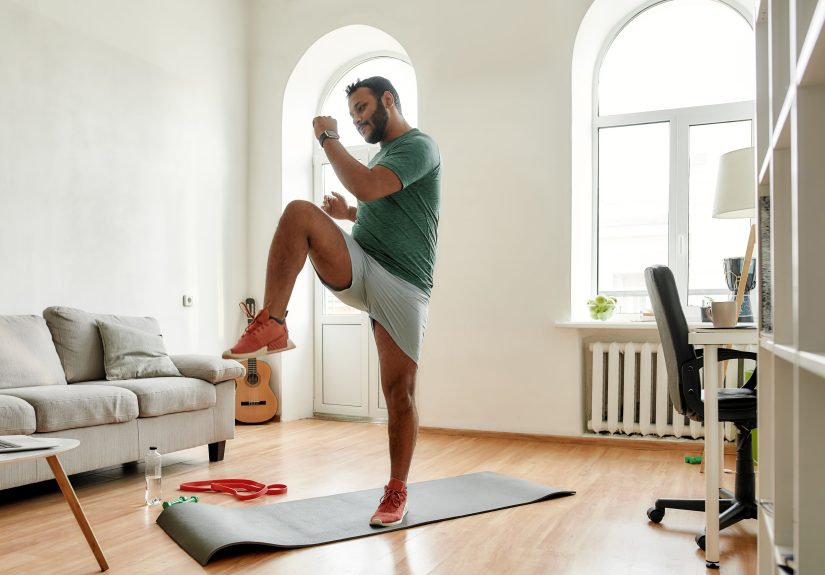
Stand tall and brace your core. Lift your right knee a few inches, pause, then lower it. Repeat on the left. Keep your hips level and avoid leaning backward. Use a chair or wall if balance feels shaky.
The slow march trains your abdominal muscles and hip flexors to work together while your spine stays steady. It also challenges balance in a beginner-friendly way. If your lower back arches as the knee lifts, reduce the height of the march.
Minute 4: Standing Bird Dog
Place your hands lightly on a wall or the back of a sturdy chair. Step back slightly. Extend your right leg behind you while reaching your left arm forward, if comfortable. Pause, return, and switch sides.
This standing version of the bird dog strengthens the glutes, back stabilizers, and deep core without requiring you to get on the floor. The goal is not height. The goal is control. Pretend there is a cup of coffee on your lower back and you are emotionally invested in not spilling it.
Minute 5: Side Reach With Core Brace
Stand tall with feet hip-width apart. Reach your right arm overhead and gently lean to the left. Return to center and switch sides. Keep the movement smooth and avoid collapsing into the lower back.
This move opens the sides of the torso and encourages gentle lateral mobility. It can feel especially helpful after long periods of sitting. Keep your ribs controlled and your hips steady. You should feel a stretch along the side body, not a pinch in the spine.
Minute 6: Standing Trunk Rotation
Cross your arms over your chest or hold your hands in front of your ribs. Brace lightly. Rotate your upper body to the right, keeping your hips mostly forward. Return to center and rotate left.
Everyday life includes rotation: reaching into the back seat, turning to grab a bag, or looking behind you when someone says your name in the grocery store. Controlled trunk rotation teaches your core to guide the movement instead of letting your lower back twist wildly like a garden hose.
Minute 7: Wall Press Knee Lift
Stand facing a wall, about arm’s length away. Press both palms into the wall at shoulder height. Brace your core and slowly lift one knee. Hold for two seconds, lower, then switch sides.
The wall press activates your upper body and core while the knee lift challenges pelvic stability. Keep your shoulders down and your ribs from flaring forward. This is a great low-impact move for people who want abdominal activation without crunches.
Minute 8: Hip Hinge With Hands on Thighs
Stand with feet hip-width apart and hands on your thighs. Soften your knees. Push your hips back as if closing a car door with your glutes. Slide your hands slightly down your thighs, then return to standing by squeezing your glutes.
The hip hinge is one of the most useful movement skills for back pain prevention. It teaches you to bend from the hips instead of rounding through the lower back. Use this pattern when picking up laundry baskets, grocery bags, or the dignity you dropped after sneezing too hard.
Minute 9: Standing Knee-to-Elbow Crunch
Place your hands behind your head or across your chest. Lift your right knee and gently bring your left elbow toward it. Return to standing and switch sides. Keep the movement small and controlled.
This standing core exercise targets the obliques and improves coordination. Avoid yanking your neck or rounding aggressively. If the twisting feels uncomfortable, replace this move with another slow core march.
Minute 10: Standing Cooldown and Back Release
Return to tall posture. Take slow breaths. Roll your shoulders gently. Place your hands on your hips and make small circles with your pelvis. Finish with three deep breaths, lightly bracing on each exhale.
The cooldown tells your nervous system that the workout is complete and that your back does not need to stay on high alert. Many people skip cooldowns because they look too simple. That is a mistake. Simple often works, and unlike complicated fitness gadgets, it does not require batteries.
How Often Should You Do This Standing Core Routine?
For mild stiffness or general back support, try this routine three to five times per week. If you are new to exercise or returning after pain, start with two or three days per week and see how your body responds. You can also use it as a movement break during the workday.
The best schedule is the one you can repeat. Ten minutes done consistently beats a heroic 90-minute workout performed once and then spoken about like ancient history. If your back feels better after the routine, that is useful feedback. If symptoms increase and stay worse, reduce intensity or consult a professional.
Common Mistakes That Can Make Back Pain Worse
Moving Too Fast
Speed can hide poor form. When your goal is back pain relief, slow movement is usually safer and more effective. Your core needs time to react, stabilize, and coordinate.
Holding Your Breath
Breath-holding can increase tension and make your body feel guarded. Keep breathing through every movement. A good rule: exhale during effort, inhale during reset.
Overarching the Lower Back
If your ribs flare and your lower back arches during knee lifts or reaches, reduce the range of motion. Think “ribs down, hips steady, spine long.”
Trying to Stretch Through Sharp Pain
A gentle stretch is fine. Sharp pain is a stop sign, not a motivational quote. Modify the movement or skip it.
Who Benefits Most From Standing Core Exercises?
A standing core workout can be helpful for office workers, beginners, older adults, busy parents, frequent drivers, and anyone who dislikes floor exercises. It is also practical for people who want to improve posture and balance while strengthening the muscles that support the lower back.
Standing exercises are especially useful because they connect core strength to daily movement. A strong core is not only for workouts. It helps when you carry groceries, climb stairs, walk the dog, garden, vacuum, and survive the suspiciously heavy suitcase you packed for a two-day trip.
Simple Ways to Make This Workout Easier or Harder
To make the routine easier, reduce knee height, keep both hands on a chair, shorten the range of motion, or perform only five minutes. You can also rest for 20 seconds between moves instead of 10.
To make it harder, slow each movement down, add a longer pause, lightly hold a water bottle during rotations, or repeat the 10-minute circuit twice. Only progress when your form stays clean and your back feels stable.
Daily Habits That Support Back Pain Relief
A standing core workout works best when paired with back-friendly habits. Change positions often during the day. Walk when you can. Use your hips when bending. Keep screens near eye level. Avoid sitting like a shrimp curled over a laptop, even if the shrimp community objects.
Hydration, sleep, stress management, and regular physical activity also matter. Back pain is rarely about one muscle or one bad movement. It often reflects a mix of strength, mobility, posture, workload, recovery, and lifestyle. The more gently consistent you are, the better your odds of long-term improvement.
Experience-Based Notes: What This Workout Feels Like in Real Life
People often expect a back-friendly core workout to feel dramatic. They imagine sweat dripping, music blasting, and a trainer yelling inspirational things about “digging deep.” In real life, a good standing core workout for back pain often feels surprisingly quiet. The first session may feel almost too easy, especially if you are used to thinking exercise must be exhausting to count. But the magic is in the control.
During the first few minutes, many beginners notice how much their posture changes when they simply breathe and brace. The ribs settle. The shoulders drop. The lower back stops trying to be the main character. That awareness can be eye-opening, especially for people who spend hours at a desk. A slow core march might reveal that one hip feels steadier than the other. A standing bird dog might show that balance is not quite as reliable as expected. This is not failure. This is information.
One common experience is that the workout feels better in the second half than at the beginning. The first two minutes may feel stiff, but after pelvic tilts, slow marching, and side reaches, the back often feels warmer and less guarded. That is one reason short movement breaks can be so useful during the day. You are not trying to crush your body into submission. You are reminding it that safe movement is available.
Another practical lesson: the hip hinge may be the most valuable move in the whole routine. People frequently bend from the waist without noticing, especially when loading a dishwasher, picking up shoes, or grabbing laundry. Practicing the hinge for one minute teaches the hips to do their job so the lower back does not become the household intern responsible for everything. Over time, this pattern can carry into daily life, which is where back pain prevention really counts.
The standing knee-to-elbow move is often the one people want to rush. It looks like a cardio exercise, so the temptation is to speed up. But for back relief, slower is usually better. When performed with control, it trains rotation and balance. When performed like a panicked flamingo, it mostly trains regret. Keep it smooth, small, and steady.
Consistency also changes the experience. On day one, the routine may simply feel like a gentle wake-up. After a week, posture may feel easier to maintain. After several weeks, everyday tasks may feel more supported. The goal is not to “blast” the abs. The goal is to build a core that quietly helps you move through life with less stiffness and more confidence.
The best part is how realistic the routine is. You can do it beside a desk, near a kitchen counter, in a hotel room, or while waiting for coffee to brew. It does not demand special clothes, complicated equipment, or the emotional readiness to lie on the floor and wonder when you last vacuumed. That convenience makes it easier to repeat, and repetition is where results usually live.
Conclusion
A 10-minute standing core workout to relieve back pain is not a miracle cure, but it can be a smart, gentle way to build support around your spine. By combining breathing, bracing, balance, hip control, and controlled rotation, this routine trains the muscles your back depends on every day.
Start slowly. Respect pain signals. Focus on clean movement. When done consistently, standing core exercises can help improve posture, reduce stiffness, support better bending and lifting mechanics, and make your back feel less like it is filing a complaint with management.
Note: For ongoing, severe, or worsening back pain, consult a qualified healthcare professional. Exercise should support recovery, not replace medical evaluation when symptoms suggest something more serious.