Table of Contents >> Show >> Hide
- Why 1925 Still Matters
- 1. Mussolini Made His Dictatorship Official in Italy
- 2. The Serum Run to Nome Became a Public Health Hero Story
- 3. The Tri-State Tornado Shocked the United States
- 4. Paris Put Art Deco on the World Stage
- 5. The Geneva Protocol Tried to Draw a Line Against Gas Warfare
- 6. Hitler Published Mein Kampf
- 7. The Scopes Trial Turned a Classroom Lesson Into a Global Debate
- 8. Syria’s Revolt and the Bombardment of Damascus Drew International Attention
- 9. The Locarno Treaties Raised Hopes for Peace in Europe
- 10. Reza Khan Became Reza Shah and Changed Iran’s Political Course
- What 1925 Was Really Telling the World
- Experiences of Looking Back at 1925 From a Century Later
Step into 1925 for a minute and you quickly realize something important: people a century ago were not living in some sepia-toned waiting room between World War I and the Great Depression. They were dealing with political strongmen, culture-shifting ideas, scientific arguments, public health emergencies, disasters, and diplomatic efforts that looked hopeful right up until history decided to be history again.
In other words, 1925 was busy. Very busy. The headlines of that year bounced from Italy to Syria, from Paris to Tennessee, from Arctic dog sled routes to European treaty tables. Some stories were thrilling, some were terrifying, and some were the sort of thing editors love because they combine science, courtroom drama, and enough public yelling to keep newspaper presses sweating.
This look back at the biggest events of 1925 is more than a nostalgia trip with old fonts. These stories help explain how the modern world was taking shape. They reveal why certain names still echo, why certain treaties still matter, and why one year in the middle of the Roaring Twenties deserves more respect than it usually gets. So let’s roll the newsreel and revisit 10 world events that made serious noise in 1925.
Why 1925 Still Matters
What makes these 1925 world events so fascinating is how many of them feel uncannily modern. Public health crises became media sensations. Court cases turned into culture wars. Design trends went global almost overnight. Dictators discovered the power of spectacle. International diplomacy promised peace while darker forces were already warming up backstage. If that sounds familiar, well, history has a wicked sense of humor.
1. Mussolini Made His Dictatorship Official in Italy
A loud speech, a shrinking democracy, and a very bad direction for Europe
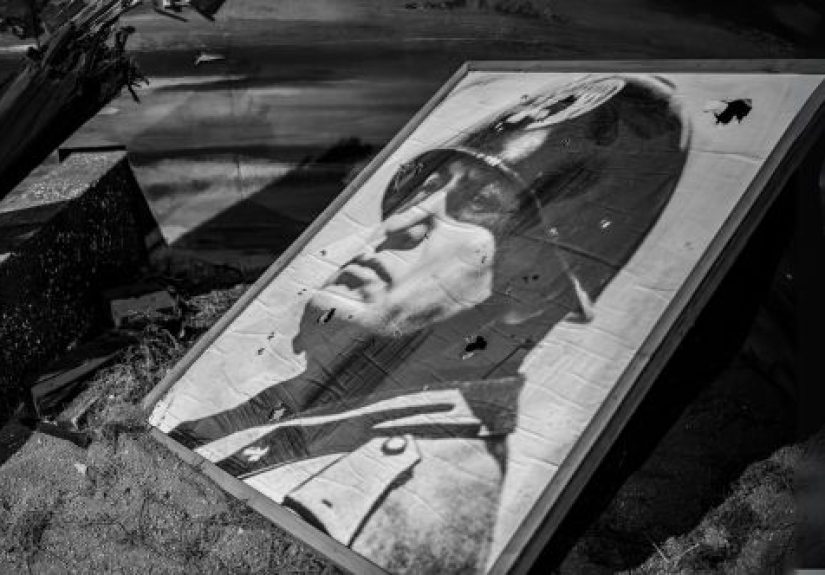
On January 3, 1925, Benito Mussolini effectively declared that Italy’s experiment with normal democratic politics was over. He had already been gaining power for years, but this was the moment when the gloves came off and the iron fist stepped into better lighting. From that point forward, Mussolini operated openly as dictator, styling himself Il Duce and tightening Fascist control over the state.
This mattered far beyond Italy. Mussolini became a model for authoritarian politics in Europe, showing how propaganda, intimidation, and political theater could dismantle democratic institutions piece by piece. The news value was huge because everyone could see that postwar Europe was still fragile. One of the biggest stories of 1925, then, was not just one man seizing power, but the realization that modern dictatorship had found a working template.
2. The Serum Run to Nome Became a Public Health Hero Story
When medicine, weather, and sled dogs collided, the whole country paid attention
In early 1925, Nome, Alaska faced a terrifying diphtheria threat. With the town iced in and supplies far away, a relay of mushers and sled dogs carried life-saving antitoxin across brutal winter conditions. The journey covered hundreds of miles through blizzards, gale-force winds, and temperatures cold enough to make your eyelashes feel like tiny glass ornaments.
The serum run became headline gold for good reason. It had urgency, danger, and genuine heroism. It also turned several mushers and dogs, especially Balto and Togo, into legends. But beneath the legend was a serious story about public health, logistics, and survival in remote communities. In an age before instant transport solved every crisis, the serum run showed how a race against disease could grip the public imagination just as strongly as war or politics.
3. The Tri-State Tornado Shocked the United States
A disaster so massive it rewrote what people thought a storm could do
On March 18, 1925, the Tri-State Tornado tore through Missouri, Illinois, and Indiana, leaving a level of destruction that still sounds almost unreal. It killed 695 people and carved a staggering path across the region. Entire communities were shattered. Schools collapsed. Business districts were flattened. Families were left searching ruins that had been homes only hours earlier.
It dominated the news because it was not merely a severe weather event; it was an event of national trauma. For many readers in 1925, the scale of the tornado was nearly impossible to picture. The storm became a grim reminder that even in an age obsessed with machines, radios, and progress, nature could still grab the front page and refuse to let go. It also helped shape how Americans talked about forecasting, disaster preparedness, and collective recovery.
4. Paris Put Art Deco on the World Stage
One exhibition made modern style look glamorous, geometric, and expensive in the best possible way
The Exposition Internationale des Arts Décoratifs et Industriels Modernes opened in Paris in 1925 and helped popularize what the world would come to call Art Deco. This was not a quiet design conference where people politely nodded at chairs. It was a cultural spectacle. The exhibition showcased architecture, interiors, furniture, fashion, and decorative arts that looked sleek, modern, and determined to make the future look fabulous.
Its influence spread fast. Designers, architects, retailers, and magazines picked up the style’s geometric confidence and polished glamour, and soon Art Deco was shaping everything from skyscrapers to radios to movie palaces. The reason this counted as major news in 1925 is simple: it captured the mood of the decade. After war and austerity, modern design arrived wearing sharp lines, shiny surfaces, and the confidence of someone who absolutely knows where the best table in the restaurant is.
5. The Geneva Protocol Tried to Draw a Line Against Gas Warfare
The world remembered World War I and tried, at least on paper, to behave better
In June 1925, countries signed the Geneva Protocol, which banned the use of chemical and biological weapons in warfare. The treaty grew out of the horror people still felt after World War I, when poison gas had turned battlefields into nightmares. By 1925, many governments understood that if modern war already had enough ways to be hideous, maybe adding clouds of choking chemicals was not a great civilizational achievement.
The protocol was important because it signaled an effort to establish limits in international warfare, even if those limits were incomplete and often ignored later. As a news story, it represented one of the year’s more hopeful headlines: nations trying to prevent future atrocity. It also reflected a broader theme of 1925, which was that the world was still wrestling with the legacy of the First World War and trying to decide whether the future would be governed by rules, revenge, or wishful thinking.
6. Hitler Published Mein Kampf
A book that did not look world-shaking at first, but absolutely was
In 1925, Adolf Hitler published the first volume of Mein Kampf, part autobiography and part political manifesto. At the time, it was one more alarming signal from the radical fringes of German politics. But with hindsight, it stands as one of the most chilling publications of the twentieth century because it laid out key elements of Nazi ideology in disturbingly plain terms.
That is what makes it one of the biggest world events of 1925. Not every major headline announces its future importance with trumpets and fireworks. Sometimes the story is a book, and the real horror is that many people can read it, shrug, and move on. The publication of Mein Kampf mattered because it revealed what Hitler believed long before he gained full power. History later proved that ignoring extremist ideas when they are still in print rather than in government is a very expensive mistake.
7. The Scopes Trial Turned a Classroom Lesson Into a Global Debate
Science, religion, law, and publicity all climbed into the ring together
The Scopes “Monkey Trial” in Dayton, Tennessee became one of the most famous legal dramas of the decade. John Scopes was prosecuted for teaching evolution in a public school, setting off a courtroom clash between Clarence Darrow and William Jennings Bryan. On paper, it was about one teacher and one law. In practice, it became a showdown over modern science, biblical interpretation, education, and the direction of American culture.
This story traveled well because it had all the ingredients of great media theater. It was dramatic, quotable, and easy to frame as old values versus new thinking. Reporters flooded Dayton. Radio helped spread the spectacle. Even people far outside the United States followed the case because it reflected a broader argument happening in many societies: how should tradition and modern knowledge coexist? The Scopes Trial made news in 1925 because it was never really just about one biology lesson. It was about who gets to define truth in public life.
8. Syria’s Revolt and the Bombardment of Damascus Drew International Attention
Anti-colonial resistance became one of the year’s most serious stories in the Middle East
In 1925, the Great Syrian Revolt broke out against French rule. What began with Druze resistance expanded into a broader uprising, and by October the violence had reached Damascus. French forces bombarded the city, turning a political crisis into a shocking international story. For many readers outside the region, the events in Syria were a harsh reminder that the postwar map of the Middle East had not created peace so much as a fresh set of resentments under imperial supervision.
The revolt mattered because it highlighted nationalism, colonial rule, and the growing demand for self-determination. Those themes would define much of twentieth-century global politics. The Damascus bombardment, in particular, showed how quickly an imperial administration could shift from governance to brute force. It was one of those 1925 headlines that signaled something bigger than the immediate event: the age of empires was still alive, but it was already being challenged in ways that would only intensify in the decades ahead.
9. The Locarno Treaties Raised Hopes for Peace in Europe
For one shining moment, diplomacy looked like it might actually be working
The Locarno agreements, negotiated in October and signed in December 1925, were greeted as a diplomatic breakthrough. Germany, France, Belgium, Great Britain, and Italy all took part in a set of arrangements meant to guarantee peace in western Europe and reduce postwar tensions. In the eyes of many contemporary observers, Locarno suggested that Europe might finally be stepping out of its bitter post-World War I hangover.
The reason it made major news is obvious: peace treaties tend to attract attention when everybody is still nervously eyeing the furniture after the last continental explosion. Locarno seemed to promise reconciliation, stability, and a new era of civilized dispute resolution. For a while, optimism even felt reasonable. That later events would expose these hopes as fragile does not make the story less important. In 1925, Locarno looked like the future. That is part of what makes it such a revealing headline today.
10. Reza Khan Became Reza Shah and Changed Iran’s Political Course
A dynastic shift in Tehran signaled a new era of centralization and reform
In 1925, Iran’s parliament elected Reza Khan as shah, beginning the Pahlavi dynasty. This was a major turning point in Iranian history. Reza Shah would go on to centralize power, strengthen the military, pursue modernization programs, and reshape the state in ways that left a long legacy. For contemporaries, the event mattered because it suggested that Iran was entering a new political chapter after years of instability and foreign pressure.
Internationally, the story drew notice because Iran sat at the crossroads of regional power politics. Any major leadership shift there had implications beyond its borders. The rise of Reza Shah fit a broader pattern visible throughout 1925: governments across the world were trying to modernize, consolidate authority, and define national identity under enormous internal and external pressure. Some did it through reform. Some did it through repression. Some, like Iran, did it through a complicated mix of both.
What 1925 Was Really Telling the World
Look across these 10 events and a pattern appears. The world of 1925 was trying to become modern faster than it could become stable. New technology thrilled people. New design gave them something stylish to believe in. International law tried to put guardrails on barbarism. But at the same time, dictators were rising, colonial violence was exploding, and extremist ideas were gaining platforms.
That tension is what makes 1925 such a fascinating year in world history. It was hopeful and ominous at once. It offered elegant exhibitions in Paris and rubble in Damascus, courtroom debate in Tennessee and authoritarian certainty in Rome, dog-sled heroism in Alaska and diplomatic optimism in Locarno. If the year had a message, it was this: modernity does not arrive as one neat package. It shows up carrying beauty, danger, brilliance, chaos, and at least one newspaper editor yelling for a bigger headline.
Experiences of Looking Back at 1925 From a Century Later
Why these century-old headlines still feel surprisingly alive
Reading about 1925 today is a strange experience in the best and worst ways. On one hand, it feels far away enough to seem almost theatrical. You can picture newspaper boys, courtroom sketches, grand speeches, steamships, and polished black cars pulling up outside government buildings. Everything sounds dramatic, formal, and slightly overstarched. Then you look closer, and the distance suddenly disappears.
You start with something light, like the Paris exposition that helped launch Art Deco, and think, “Ah yes, geometry, glamour, and the decorative confidence of an era that had clearly never met a beige throw pillow it liked.” Then you turn the page and land in Syria, where revolt and bombardment tell a story of empire, resentment, and people fighting over power, identity, and self-rule. Suddenly the past stops feeling antique and starts feeling familiar.
That is one of the most powerful experiences connected to the topic of major world events in 1925: the realization that the people living through them did not know what would matter most later. A treaty signed in Europe looked like a victory for peace. A manifesto published in Germany looked ugly but not yet world-destroying. A courtroom battle in Tennessee looked provincial, yet it echoed around the world because it touched a nerve that still has not gone numb.
There is also something humbling about seeing how human reactions barely change. People in 1925 worried about public health, argued about education, obsessed over political personalities, followed disasters with horrified fascination, and looked to culture for signs that life was improving. That is not ancient behavior. That is Tuesday.
The emotional texture of 1925 is especially striking. Some headlines carry hope: maybe diplomacy will work, maybe science and medicine will save lives, maybe new design really does mean a brighter future. Other headlines carry dread: maybe democracy is weaker than it looks, maybe violence is closer than we think, maybe the loudest people in the room are not the wisest. Reading those stories now creates an odd mix of admiration and unease. You admire the resilience, the ingenuity, the ambition. You feel uneasy because you already know where some of those roads lead.
And maybe that is why this topic stays compelling. A century later, 1925 does not feel like a dusty shelf of disconnected events. It feels like an early chapter of the world we still inhabit. The names have changed. The technology is much faster. The headlines arrive on glowing screens instead of crackling paper. But the core experience remains: human beings trying to make sense of crisis, possibility, conflict, and change while living too close to the moment to see the full shape of it.
That is the real gift of revisiting 10 world events that made the news in 1925. It is not just history trivia, and it is definitely not a museum walk through old headlines. It is a reminder that every era thinks it is uniquely complicated, while history keeps leaning over and saying, “That’s adorable.”