Table of Contents >> Show >> Hide
- 1) LiDAR “X-Ray Vision” Revealed a Massive Maya World Under the Jungle
- 2) A Viking Ship Burial Appeared on Radar Like a Ghost in the Soil
- 3) The World’s Oldest Figurative Cave Paintings Were Identified in Borneo
- 4) Burnt Crumbs Proved People Were Baking Bread Long Before Farming
- 5) Evidence of 13,000-Year-Old Beer Brewing Suggested Prehistoric Parties Had a Menu
- 6) A 73,000-Year-Old “Hashtag” Became the Oldest Known Drawing
- 7) The Black Sea Gave Up a Perfectly Preserved Ancient Greek Shipwreck
- 8) A Hybrid Child’s DNA Confirmed Neanderthals and Denisovans Were Not Just “Neighbors”
- 9) Bronze Age Plague DNA Suggested the Disease’s Story Is Olderand StrangerThan Expected
- 10) Texas Sites Added Weight to the Case for Pre-Clovis Americans
- 11) New Nazca Geoglyphs AppearedSome So Faint They Seemed Like Optical Illusions
- 12) Pompeii Offered a Clue That the Famous Eruption Date Might Be Wrong
- What These 2018 Discoveries Have in Common
- Experience: Following 2018’s Clues in Real Life (Without Owning a Time Machine)
- Wrap-Up
Archaeology is basically history’s version of detective workexcept your “witnesses” are charred crumbs, faint scratch marks,
and the occasional boat that refuses to rot like a normal, polite boat. In 2018, a string of major archaeological discoveries
landed like plot twists: jungle cities revealed by laser scans, ancient DNA that rewrote family trees, and clues that made
historians say, “Wait… that’s not how this was supposed to go.”
Below are 12 crucial archaeology findings of 2018 that didn’t just fill in blanksthey created brand-new ones.
Each discovery answered something… and immediately introduced a bigger, weirder question. (Classic.)
1) LiDAR “X-Ray Vision” Revealed a Massive Maya World Under the Jungle
In 2018, airborne LiDAR scanning peeled back Guatemala’s forest canopy and revealed tens of thousands of previously
hidden Maya structureshomes, terraces, defensive walls, causeways, and city-scale infrastructure. The landscape wasn’t just dotted
with ruins; it looked engineered.
Why historians are puzzled
If the Maya built at this scale, it suggests population sizes and political organization far beyond older estimates. But it also raises
a harder question: how did such a complex system sustain itself in a challenging environmentwithout collapsing sooner, or differently?
The map looks like a thriving machine… and historians still debate what fuel kept it running.
2) A Viking Ship Burial Appeared on Radar Like a Ghost in the Soil
Ground-penetrating radar (GPR) surveys in Norway revealed the outline of a large Viking ship buried beneath farmlandan enormous signal
that suggested a ship grave without the usual dramatic mound screaming, “Treasure here!” It was a reminder that major burials can hide
in plain sight for centuries.
Why historians are puzzled
Viking ship burials aren’t just funeralsthey’re political statements. So who was important enough to be sent off in a ship? And why
is the site configured the way it is (with other features nearby)? The burial hints at power, ritual, and local politics, but the details
are still frustratingly incompletelike finding a crown without the king.
3) The World’s Oldest Figurative Cave Paintings Were Identified in Borneo
Dating work published and widely reported in 2018 pushed the timeline of figurative cave art in Borneo back to at least ~40,000 years ago,
including paintings of animals (like wild cattle) and hand stencils. The art isn’t just oldit’s confident, deliberate, and recognizably
representational.
Why historians are puzzled
For a long time, Europe dominated the “origin story” of Ice Age art. Borneo complicates that storyline. Did figurative art emerge independently
in multiple regions? Did ideas travel with migrating groups? And why do styles shift over time in ways we can’t fully connect to climate,
population, or belief systems? The paintings are gorgeous… and stubbornly silent about their creators’ intentions.
4) Burnt Crumbs Proved People Were Baking Bread Long Before Farming
Archaeologists identified charred, bread-like remains at Shubayqa 1 in northeastern Jordandating to roughly 14,400 years ago. That’s thousands
of years before agriculture fully took over the region. Bread wasn’t supposed to show up that early, because bread is famously needy:
grinding, mixing, heating… it’s not exactly a “quick snack.”
Why historians are puzzled
If hunter-gatherers were making bread, what was the social or cultural payoff? Was bread a special-occasion foodstatus, ritual, community feasts?
Or does this hint that “pre-agriculture” life included more plant processing and planning than we assumed? The crumbs changed the timelineand
made motivation the new mystery.
5) Evidence of 13,000-Year-Old Beer Brewing Suggested Prehistoric Parties Had a Menu
Another 2018-reported finding: residue and microfossil evidence from stone mortars at Raqefet Cave (in today’s Israel) suggested Natufian people
may have brewed a beer-like beverage around 13,000 years agoagain, earlier than many tidy narratives prefer. Bread and beer showing up early is
either coincidence… or humanity being extremely on brand.
Why historians are puzzled
Was early brewing tied to ritual events, feasting, or funerary practices? If fermentation played a social role, it could mean that “farming happened
because food was needed” is only half the story. Maybe farming also happened because people wanted reliable ingredients for communal gatherings.
History’s oldest question might be: were we building civilization… or planning the world’s longest potluck?
6) A 73,000-Year-Old “Hashtag” Became the Oldest Known Drawing
A small silcrete flake from Blombos Cave in South Africa carried a cross-hatched pattern drawn in red ochredated to about 73,000 years ago and
announced in 2018 as the oldest known drawing. It’s minimal, abstract, and oddly modern-looking, like something doodled during a meeting that
should’ve been an email.
Why historians are puzzled
A drawing isn’t just a markit’s a decision. Was this symbol part of a broader “visual language”? A personal signature? A teaching tool?
A purely aesthetic impulse? We can measure the age and analyze the strokes, but meaning is the one artifact that never fossilizes.
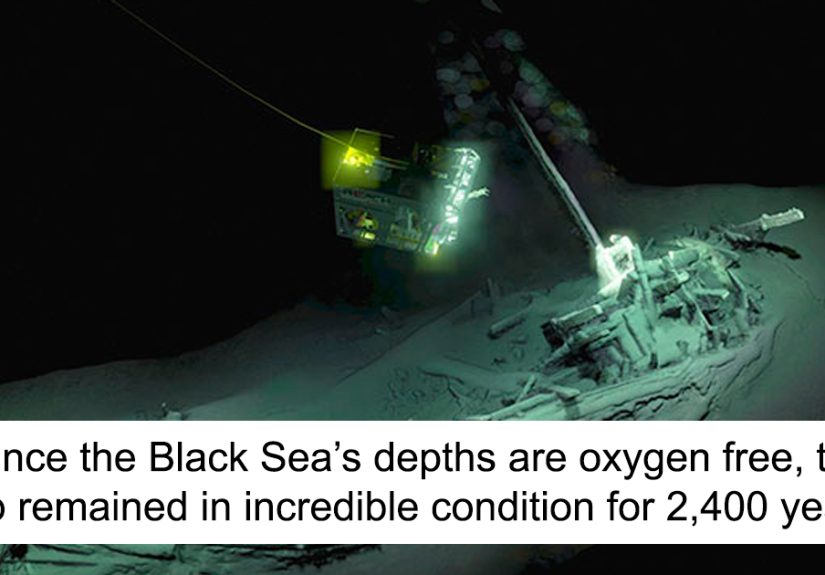
7) The Black Sea Gave Up a Perfectly Preserved Ancient Greek Shipwreck
In 2018, researchers announced the discovery of an ancient Greek merchant vessel deep in the Black Sea, remarkably intactmast, benches, and structure
preserved by oxygen-poor conditions. It looked less like a “wreck” and more like a time capsule someone forgot to return to the library.
Why historians are puzzled
The ship is a rare chance to compare real construction to ancient art and descriptions. But it also raises big questions: what exactly was it carrying,
what route was it sailing, and what events led it to sink so far offshore? One ship can clarify a thousand textbook diagramsand then challenge all the
assumptions behind them.
8) A Hybrid Child’s DNA Confirmed Neanderthals and Denisovans Were Not Just “Neighbors”
Ancient DNA work publicized in 2018 revealed a stunning fact: a bone fragment from Denisova Cave belonged to a teenage girl whose mother was a Neanderthal
and father a Denisovanmaking her a first-generation hybrid. This wasn’t vague “interbreeding happened at some point.” This was direct, personal proof.
Why historians are puzzled
If a first-generation hybrid existed, how common were these encounters? Were Neanderthals and Denisovans overlapping regularlysharing territory, tools,
and social networks? And what does that imply about how we define “species” in human evolution? The discovery makes the ancient world feel less like
separate lanesand more like a crowded intersection.
9) Bronze Age Plague DNA Suggested the Disease’s Story Is Olderand StrangerThan Expected
In 2018, ancient DNA studies reported evidence of Yersinia pestis (plague) in Bronze Age remains, including forms that hint at changes in transmission
over time. The timeline for plague’s evolution and spread became harder to summarize in a neat “then it arrived” sentence.
Why historians are puzzled
Plague isn’t just a medical eventit reshapes migration, labor, conflict, and even language. If plague (or plague-like strains) circulated earlier than once
assumed, historians must reconsider population changes and cultural shifts that were previously blamed on climate, war, or economics alone. The pathogen is
rewriting human history… from the inside.
10) Texas Sites Added Weight to the Case for Pre-Clovis Americans
Findings reported in 2018 from Central Texas sites (including the Gault area and related work) presented projectile points and stone tool traditions
dated thousands of years earlier than classic Clovis timelines. Instead of one tidy “first wave,” the evidence suggested multiple technologies and possibly
multiple migrations.
Why historians are puzzled
If people were present earlier, how did they arrivecoastal routes, inland corridors, or a mix? And why do some tool traditions appear and disappear
in patterns that don’t match a single migration story? Early America starts looking less like a chapter titled “The Beginning” and more like a bookshelf of
overlapping origins.
11) New Nazca Geoglyphs AppearedSome So Faint They Seemed Like Optical Illusions
In 2018, researchers announced newly identified Nazca and pre-Nazca geoglyphs in Peru, including figures and shapes that had become difficult to see
over time. With better surveying, some lines that once blended into the landscape re-emerged as deliberate designs.
Why historians are puzzled
The Nazca Lines have never settled into a single explanation: ritual pathways, water symbolism, astronomical markers, social signaling, or “all of the above.”
New geoglyphs expand the datasetbut also expand the debate. The more we find, the harder it is to pretend there was only one purpose behind a tradition
that lasted for generations.
12) Pompeii Offered a Clue That the Famous Eruption Date Might Be Wrong
In 2018, a charcoal inscription found at Pompeii pointed toward an autumn date for the eruption of Mount Vesuviussuggesting the disaster happened later
than the long-cited August timeline. It fit with other hints, like seasonal foods and clothing, but the inscription made the argument punchier: a date,
written on a wall, waiting nearly two thousand years to be noticed.
Why historians are puzzled
When a “known” date shifts, it ripples outward: trade schedules, harvest timing, political events, even how ancient writers were copied and translated.
The puzzle isn’t just what dayit’s why the older date stuck so hard, and how many other “settled facts” might be living on borrowed time.
What These 2018 Discoveries Have in Common
If 2018 taught archaeology anything, it’s that the past is not a single straight line. It’s a tangled ball of string someone’s cat has been playing with
for 40,000 years. New tools like LiDAR, advanced radiocarbon methods, and ancient DNA analysis don’t just add detailsthey expose entire hidden chapters.
And the more chapters we uncover, the more historians realize the “old story” was often based on the small fraction of evidence we could see.
Experience: Following 2018’s Clues in Real Life (Without Owning a Time Machine)
You don’t need to be in a trench with a trowel to feel the impact of archaeology discoveries in 2018. For a lot of people, the experience starts the same
way: you read a headline that sounds impossible“bread is older than farming,” “a shipwreck is perfectly preserved,” “lasers found a city under a jungle”
and you do that skeptical squint at your screen like the internet has lied to you before (because it has). But then you click, you read, and suddenly you’re
imagining human hands grinding wild grains, or painting animals on cave walls, or carving lines into desert soil so huge they only make sense from above.
One of the most relatable “archaeology experiences” is the way a discovery changes how everyday places feel. A museum visit hits differently after you learn
that a ship can survive 2,400 years intact in the Black Sea. You start staring at ship models and thinking, “That’s not a model. That’s somebody’s commute.”
Or you see a simple red pigment on a display label and remember the Blombos drawingthe idea that a few careful strokes could outlive empires. The experience
is oddly emotional: the past stops being “back then” and starts being “real people doing real things,” just with fewer parking lots.
Another common experience is the whiplash of timelines changing. People tend to carry mental shortcuts like “the Maya lived in temples” or “the first
Americans were Clovis” or “Pompeii erupted on this exact date.” When those shortcuts get challenged, you feel it like someone moved the furniture in your brain.
It’s not annoying in the long runit’s excitingbut the first reaction is usually: “Wait, then what else is wrong?” That’s the gateway drug to deeper history.
You start seeking context. You compare maps. You fall into rabbit holes about ancient trade routes, burial rituals, or how scientists date limestone crust over
cave paintings. Congratulations: you’re doing archaeology-adjacent behavior.
There’s also a fun “kitchen-table archaeology” experience that 2018 discoveries practically begged for. When you hear about 14,400-year-old bread and evidence
of early brewing, you inevitably start picturing prehistoric gatherings. What did those flatbreads taste like? What counted as “good beer” 13,000 years ago?
(The bar might’ve been: “It didn’t make the whole village sad.”) Even without recreating recipes, the mental exercise is powerful because it’s intimate.
It reminds you that the past wasn’t only wars and rulersit was meals, celebrations, experimenting, teaching, and sharing.
Finally, the most meaningful experience is realizing that archaeology is a living conversation, not a finished textbook. The 2018 findings didn’t “solve”
history; they made it bigger. And that can be comforting. It means there are still mysteries worth chasing, still questions that don’t have neat answers,
and still discoveries waiting in places as dramatic as a jungle canopyor as unglamorous as a field that happens to sit above a Viking ship.
Wrap-Up
The best archaeological discoveries don’t just tell us what happenedthey force us to reconsider what we thought was possible. In 2018, historians and
archaeologists got hit with a dozen reminders that the past is clever, complicated, and occasionally hilarious (bread before farming, really?). The puzzles
remain, but the thrill is the point: every answer is a doorway to a better question.