
Table of Contents >> Show >> Hide
- Before You Add Storage, Do This 10-Minute “Reality Check”
- Idea #1: Go Vertical with Floating Shelves (But Make Them Useful)
- Idea #2: Add Over-the-Toilet Storage (Cabinet, Ladder, or Shelves)
- Idea #3: Swap Your Mirror for a Medicine Cabinet (Preferably Recessed)
- Idea #4: Use the Back of the Door Like It Pays Rent
- Idea #5: Upgrade Under-Sink Storage with Pull-Out Bins and Stackers
- Idea #6: Add a Slim Rolling Cart for Flexible Storage
- Idea #7: Install a Towel Ladder or Leaning Rack (Stylish + Space Smart)
- Idea #8: Build (or Fake) a Shower Niche
- Idea #9: Use Adhesive or Suction Shelves for Renter-Friendly Storage
- Idea #10: Create Countertop “Zones” with Trays and Vertical Organizers
- Idea #11: Install a Peg Rail or Hook Strip for Daily Grab Items
- Idea #12: Put Drawer Dividers Inside Your Vanity (So It Stops Being a Junk Drawer)
- Idea #13: Use Corner Shelves to Turn Dead Space into Storage
- Idea #14: Add a Tall, Slim Cabinet (a.k.a. the “Tiny Bathroom Pantry”)
- Putting It All Together: A Small Bathroom Storage “Starter Plan”
- Experiences and Lessons People Commonly Learn When Organizing a Small Bathroom
- Wrap-Up: Small Bathroom, Big Storage Energy
A small bathroom has two moods: “cute and cozy” or “why is my toothbrush living on top of the toilet tank?”
If your space is the size of a postage stamp (and somehow still collects clutter like it’s a hobby), the fix
usually isn’t more stuffit’s smarter storage. The goal is simple: keep what you use, store it where you use it,
and stop letting every flat surface become a tiny-storefront display of half-used products.
These small bathroom storage ideas focus on the real MVPs of tiny spaces: vertical walls, dead corners, the back of
the door, and the often-chaotic under-sink zone. You’ll find renter-friendly options (hello, adhesive and suction),
upgrade-worthy solutions (built-ins and niches), and everyday tricks that make mornings smoother for everyone sharing
the room. Let’s maximize spacewithout turning your bathroom into a shelf museum.
Before You Add Storage, Do This 10-Minute “Reality Check”
1) Measure the “awkward zones”
In small bathrooms, an inch matters. Measure the width beside the vanity, the depth behind the door swing, and the
space above the toilet. You’ll avoid buying a “perfect” cabinet that’s perfect for someone else’s bathroom.
2) Sort into zones (so storage actually works)
Think in categories: daily skincare, hair tools, cleaning supplies, backup stock, towels. Storage succeeds when the
system matches your routine. Storage fails when everything goes into one bin labeled “misc,” otherwise known as
“future-me’s problem.”
3) Choose moisture-friendly materials
Bathrooms are humid. Favor sealed wood, metal, plastic, and washable fabric bins. If you love woven baskets, use
them for dry items (extra toilet paper, hand towels) and keep them away from direct splash zones.
Idea #1: Go Vertical with Floating Shelves (But Make Them Useful)
Floating shelves are a classic small bathroom storage move for a reason: they turn empty wall space into functional
real estate. Install a shelf above the toilet, next to the mirror, or over a towel bar. The trick is to store
“grab-and-go” items up top and hide the visual chaos in containers.
How to do it well
- Use matching jars or lidded bins for cotton rounds, hair ties, and backup toiletries.
- Keep one shelf “pretty” (a small plant or candle) so the room feels styled, not stuffed.
- Place frequently used items at eye level to reduce countertop clutter.
Example: A 24-inch shelf above the toilet can hold two labeled bins (first-aid + travel) and a small tray for daily skincare.
Idea #2: Add Over-the-Toilet Storage (Cabinet, Ladder, or Shelves)
The space above the toilet is basically a storage billboardif you use it wisely. You can choose an over-the-toilet
cabinet (more hidden storage), a ladder shelf (open and airy), or two to three wall-mounted shelves (sleek and minimal).
Pro tips
- Anchor tall units for safetyespecially in homes with kids or pets.
- Store bulkier items higher (extra towels), smaller daily items lower (in bins).
- Don’t overfill: leave breathing room to avoid the “closet exploded” look.
Idea #3: Swap Your Mirror for a Medicine Cabinet (Preferably Recessed)
A medicine cabinet is the superhero disguise of bathroom storage: it looks like a mirror but secretly holds all the
tiny things that love to scatterskincare, razors, floss, contact solution, the mini scissors that vanish every month.
If you can recess it into the wall, even betterit saves depth in a tight room.
What to store inside
- Daily essentials on the middle shelf (toothpaste, deodorant, moisturizer).
- Backup stock on the top shelf (but only what you actually use).
- Small bins to separate “his,” “hers,” or “mine-don’t-touch.”
Idea #4: Use the Back of the Door Like It Pays Rent
The back of the bathroom door is an underused storage zone with huge potential. Add an over-the-door organizer with
pockets for hair tools and skincare, or install hooks for towels and robes. This keeps essentials accessible without
stealing floor space.
Make it feel intentional
- Match hooks to your hardware finish (black, brass, chrome) for a cohesive look.
- Use slim organizers so the door still closes easily.
- Keep heavy bottles low to prevent sagging pockets and surprise door slams.
Idea #5: Upgrade Under-Sink Storage with Pull-Out Bins and Stackers
Under the sink can be either a tidy command center or a dark cave where cleaning spray goes to retire. The solution:
add a two-tier organizer or pull-out bins so you can reach the back without performing yoga.
How to organize the under-sink zone
- Use a U-shaped shelf or two separate bins to work around plumbing.
- Group items by function: cleaning, backups, hair, first-aid.
- Label bins. Yes, even if you “totally remember what’s in there.”
Example: One pull-out bin for hair products, one for cleaning supplies, and a small caddy for “daily refills” (hand soap, extra toothpaste).
Idea #6: Add a Slim Rolling Cart for Flexible Storage
If you have a few inches between the toilet and vanity (or beside the shower), a slim rolling cart is a space-saving
cheat code. It holds a surprising amount, moves when you need it, and tucks away when you don’t.
Best uses
- Extra toilet paper and tissues
- Skincare and hair products for multi-person bathrooms
- Guest towel stash (so guests aren’t digging under your sink like they’re on a treasure hunt)
Idea #7: Install a Towel Ladder or Leaning Rack (Stylish + Space Smart)
Traditional towel bars can feel crowded in small bathroomsespecially if towels don’t dry well. A towel ladder uses
vertical space, improves airflow, and adds a design moment. Leaning racks work well when wall space is limited and
you want something lightweight and removable.
Small-space tip
Use thinner, quick-dry towels (like Turkish-style towels) to reduce bulk and keep the room feeling open.
Idea #8: Build (or Fake) a Shower Niche
A built-in shower niche keeps bottles off the tub ledge and reduces the need for bulky caddies. If you’re remodeling,
it’s a high-impact upgrade. Not remodeling? You can “fake it” with a corner shelf, a recessed-style organizer, or
a tension pole systemespecially helpful in rentals.
What makes it work
- Limit products to what you actually use in the shower (your collection does not need a museum wing).
- Choose shelves with drainage to prevent soap scum build-up.
- Consider pump bottles for a cleaner, less cluttered look.
Idea #9: Use Adhesive or Suction Shelves for Renter-Friendly Storage
If drilling isn’t an option, adhesive and suction organizers can still add meaningful storageespecially on tile,
glass, and smooth surfaces. Use them in the shower for essentials, near the sink for toothbrushes, or beside the mirror
for skincare you want within reach.
Make it last
- Clean and dry the surface before applying (soap residue is the enemy).
- Keep weight light: think razors, face wash, cotton padsnot a full-size salon shampoo lineup.
- Choose designs with drainage holes in wet zones.
Idea #10: Create Countertop “Zones” with Trays and Vertical Organizers
Countertops get messy fast in small bathrooms because there’s nowhere for items to go. The solution isn’t always
clearing everythingit’s grouping items so they look purposeful. A tray corrals daily skincare, while a vertical
organizer keeps brushes, toothpaste, and tools standing instead of sprawling.
Countertop rules that actually work
- One tray per person (max), plus one shared zone for soap and tissues.
- Anything not used daily goes into a cabinet or bin.
- Keep the tray wipeablebathrooms are not a “delicate décor” environment.
Idea #11: Install a Peg Rail or Hook Strip for Daily Grab Items
Hooks aren’t just for towels. A peg rail or hook strip can hold a hair towel, robe, bath brush, loofah, or even a small
hanging basket. This adds storage without cabinets, and it keeps damp items off the counter.
Placement tip
Put hooks where your routine naturally happens: near the shower for towels, near the vanity for hair tools, and near
the door for robes.
Idea #12: Put Drawer Dividers Inside Your Vanity (So It Stops Being a Junk Drawer)
A small vanity drawer becomes chaos in about five minutes unless you give it structure. Drawer dividers and small bins
keep items separated, easy to find, and less likely to explode every time you reach for nail clippers.
Easy divider categories
- Dental (floss, toothbrush heads, whitening strips)
- Hair (ties, clips, pins)
- First-aid (bandages, ointment, tweezers)
- Tools (small scissors, razor refills, travel bottles)
Idea #13: Use Corner Shelves to Turn Dead Space into Storage
Corners are often wasted in small bathrooms because they feel awkward to style. Corner shelves solve that by
converting dead zones into usable storageperfect near the shower, above the toilet, or beside the mirror.
How to keep corner shelves from looking cluttered
- Use two matching baskets instead of five mismatched items.
- Stick to one “category” per shelf (like towels on one, backups on another).
- Keep the lowest shelf practical, the top shelf decorative.
Idea #14: Add a Tall, Slim Cabinet (a.k.a. the “Tiny Bathroom Pantry”)
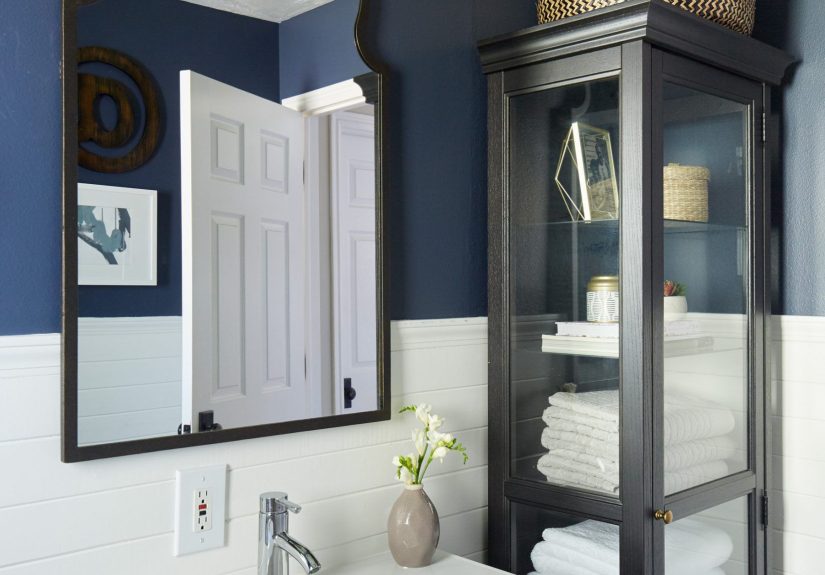
If your bathroom has even a narrow slice of wall space, a tall slim cabinet can be a game changer. It stores towels,
toiletries, and cleaning supplies in a vertical footprint. Look for cabinets with adjustable shelves so you can fit
everything from stacked washcloths to tall bottles.
Best placement spots
- Between vanity and shower (if there’s a gap)
- Near the door (if it doesn’t block swing space)
- In a corner that currently holds… nothing but disappointment
Putting It All Together: A Small Bathroom Storage “Starter Plan”
If you want quick wins without a full remodel, start here:
- Clear the counter using a tray + one vertical organizer.
- Fix under-sink storage with pull-out bins and labels.
- Use the door for hooks or a slim organizer.
- Claim vertical wall space with floating shelves or a medicine cabinet.
After that, decide whether you need more open storage (shelves, ladder rack) or more hidden storage (slim cabinet,
over-the-toilet cabinet). The right mix depends on your tolerance for visual cluttersome people love open shelves;
others want everything behind a door like it’s in witness protection.
Experiences and Lessons People Commonly Learn When Organizing a Small Bathroom
Small bathroom storage sounds like a simple puzzleuntil you actually try living with your solution for a week. One
of the most common experiences people report is that “more storage” doesn’t automatically mean “less mess.” The magic
comes from placement: storing things where your hands naturally reach during your routine. When daily items
are too high, too low, or too far from where you use them, they migrate right back to the countertop like homing pigeons.
Another real-world discovery: bathrooms have “traffic patterns.” If you share the space, you’ll notice bottlenecks
around the sink and mirror. That’s why zoning matters so much. When each person has a defined home baselike a
labeled bin in a cabinet or a dedicated traymorning chaos drops fast. People also find that creating a small
“reset routine” (30 seconds at night to put items back into zones) keeps the system stable. Without that reset,
even the best organizer can’t compete with a rushed weekday morning.
Many homeowners learn the hard way that humidity changes what works. Cardboard packaging gets soggy, metal can rust
if it isn’t coated, and fabric bins can start looking tired if they sit in splash zones. That’s why moisture-friendly
containers are such a quiet hero. Washable plastic bins under the sink, sealed containers for backups, and shelves with
drainage in the shower all reduce the “gross factor” that makes people abandon systems over time. A small detaillike
choosing a shelf that drainscan be the difference between “organized” and “why does this smell weird?”
Renter-friendly tools also come with a learning curve. Adhesive and suction shelves can be amazing, but people often
discover they work best when you treat installation like a mini project, not a quick slap-and-go. Cleaning the surface,
drying it fully, and respecting weight limits prevents the dreaded midnight crash (which is never fun, unless you
enjoy being jump-scared by your own shampoo). For renters, the most satisfying experience is finding solutions that
feel “custom” without permanent changeslike a slim rolling cart that fits perfectly into a weird gap or a tall cabinet
that turns a blank wall into a mini pantry.
A surprisingly common experience is realizing how much space gets wasted by packaging. Tall bottles, bulky boxes,
and awkwardly shaped items don’t stack well. Decanting can helprefillable pump bottles in the shower, matching jars
for cotton rounds, or smaller containers for daily-use items. Even if you don’t decant everything, simplifying the
“front row” of products creates the feeling of more space. People also learn to keep backups from breeding: limiting
duplicates (one backup shampoo, not five) frees storage instantly and makes restocking predictable instead of chaotic.
Finally, the most consistent lesson: storage should match your personality. If you love seeing everything, open shelves
and baskets will feel easy and natural. If visual clutter stresses you out, hidden storage is worth prioritizingeven if
it costs a bit more. The “best” storage idea is the one you’ll maintain without thinking about it. When your bathroom
works, mornings feel smoother, cleaning takes less time, and you stop buying duplicates because you can’t find what you
already own. That’s the real win: not just a prettier space, but a bathroom that behaves like it’s twice the size.
Wrap-Up: Small Bathroom, Big Storage Energy
Maximizing space in a small bathroom is mostly about using what you already havewalls, doors, corners, and vertical
heightwhile giving every category a predictable home. Start with the biggest pain points (countertop clutter and
under-sink chaos), then expand upward with shelves, cabinets, and smart accessories. You don’t need a bigger bathroom.
You need a bathroom with a better plan.



 Close
Close