
Table of Contents >> Show >> Hide
- Why Animal Superlatives Matter
- 17 Wild Animal Superlatives
- 1. Biggest Animal Ever: Blue Whale
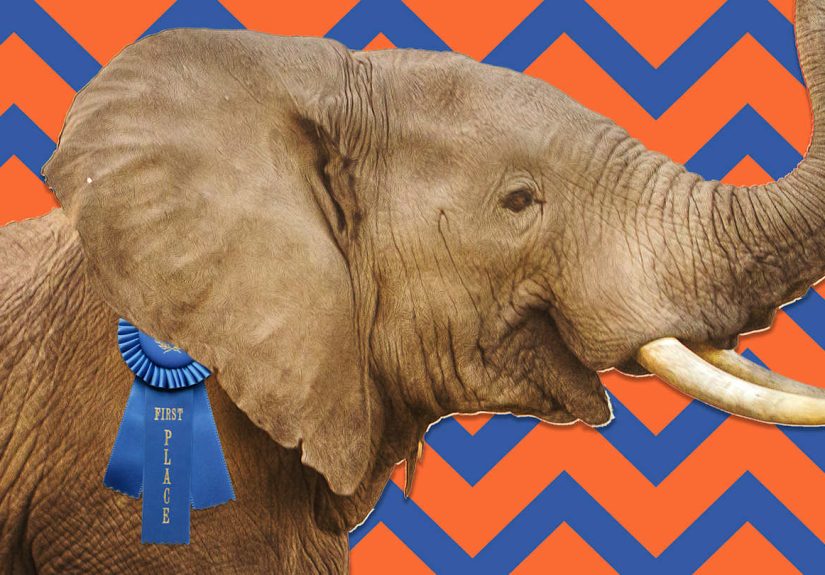
- 2. Largest Land Animal: African Elephant
- 3. Tallest Mammal: Giraffe
- 4. Fastest Land Animal: Cheetah
- 5. Fastest Animal in a Dive: Peregrine Falcon
- 6. Tallest Bird in North America: Whooping Crane
- 7. Smallest Bird in the United States: Calliope Hummingbird
- 8. Longest Wingspan of Any Living Bird: Wandering Albatross
- 9. Largest Sea Turtle: Leatherback Sea Turtle
- 10. Largest Living Reptile: Saltwater Crocodile
- 11. Heaviest Snake: Green Anaconda
- 12. Longest Snake: Reticulated Python
- 13. Largest Living Lizard: Komodo Dragon
- 14. Largest Wild Cat: Tiger
- 15. Largest Living Primate: Gorilla
- 16. Largest Rodent: Capybara
- 17. Largest Invertebrate: Colossal Squid
- What These Wild Animal Superlatives Really Teach Us
- Field Notes and Real-World Experiences With Animal Superlatives
- Conclusion
Nature does not do “subtle” when it feels like showing off. Sometimes it builds an animal so massive it makes buses look snack-sized. Sometimes it creates a bird so fast it turns gravity into a career move. And sometimes it makes a tiny hummingbird that looks like it could be blown off course by a strong sneeze, then sends it on an astonishing migration anyway.
That is the magic of wild animal superlatives. They give us a fun way to understand real biology. The biggest, fastest, tallest, heaviest, and most extreme creatures are not just trivia-night bait. Each record tells a story about evolution, habitat, survival, and the weirdly brilliant ways life adapts. A blue whale is huge because the ocean can support that size. A cheetah is fast because dinner often runs away. A saltwater crocodile is built like an armored canoe with opinions.
In this guide, we are counting down 17 animal superlatives that deserve a standing ovation, a respectful gasp, and maybe a documentary marathon. Some are giants of land and sea. Some are masters of the air. Others are reptilian overachievers that seem designed by a very enthusiastic fantasy writer. Together, they prove that wild animals have been winning the “most likely to amaze humans” award for a very long time.
Why Animal Superlatives Matter
Animal records are fun, but they are also useful. Superlatives help explain anatomy, behavior, and ecology in a way people remember. It is easier to appreciate the elegance of a giraffe’s cardiovascular system when you remember it is the tallest mammal on Earth. It is easier to understand migration when you realize even the smallest birds can travel incredible distances. And it is much easier to respect reptiles when you learn the largest lizard is not a myth, not a dinosaur, and definitely not in the mood for cuddles.
So let’s meet the champions, the oddballs, and the biological overachievers.
17 Wild Animal Superlatives
1. Biggest Animal Ever: Blue Whale
The blue whale is the undisputed heavyweight champion of life on Earth. Not just the biggest animal alive today, but the biggest animal known to have ever existed. That means it outclasses dinosaurs, ancient marine reptiles, and every giant beast your inner eight-year-old ever sketched in the margins of a notebook.
What makes the blue whale so astonishing is the contrast. This ocean giant feeds mainly on tiny krill. It is the biological equivalent of a school bus surviving on popcorn. Its enormous size works because seawater helps support its body and because the ocean can sometimes provide massive swarms of food. The result is a creature that feels almost fictional until you remember it is real, endangered, and still cruising through our oceans like the planet’s original megayacht.
2. Largest Land Animal: African Elephant
If the blue whale is the king of overall size, the African elephant is the ruler of solid ground. It is the largest land animal alive, and it carries that title with the kind of calm confidence that suggests it has nothing to prove. It does not need to run the fastest or leap the highest. It simply arrives, and the landscape adjusts its attitude.
Elephants are not just big; they are brilliantly engineered. Their trunks are multitools, their social bonds are complex, and their memory is famous for good reason. Their size helps protect them from most predators, but it also means they need huge amounts of food and water. That is one reason elephant conservation matters so much. When you protect elephants, you also protect the ecosystems large enough to sustain them.
3. Tallest Mammal: Giraffe
The giraffe wins the height contest without breaking a sweat. It is the tallest mammal in the world, a title earned by its extraordinary legs and famously long neck. A giraffe looks like nature got halfway through designing a horse, got inspired, and just kept going upward.
That height is not only for style points. It helps giraffes browse leaves high in trees that many other herbivores cannot reach. Their height also gives them a terrific view across open landscapes, which is useful when you would rather spot trouble before trouble spots you. Underneath the elegance is some serious biology: powerful hearts, specialized blood vessels, and adaptations that keep blood flowing efficiently from chest to head and back again. The giraffe is basically a walking lesson in vertical ambition.
4. Fastest Land Animal: Cheetah
The cheetah is what happens when evolution says, “Let’s build a sprint specialist and make it look fabulous.” This cat is the fastest land animal, capable of jaw-dropping bursts of speed that can turn a chase into a blur. But the real marvel is not just top speed. It is acceleration, balance, and control.
Cheetahs are built for explosive pursuits. Their flexible spines, long legs, lightweight frames, and gripping claws all work together like finely tuned racing equipment. Still, they cannot maintain those speeds for long. Sprinting at full power is exhausting, which means every hunt is a high-risk gamble. If the chase fails, the cheetah loses precious energy. That tension is part of what makes the animal so compelling. It is not just fast. It is vulnerable, precise, and stunningly specialized.
5. Fastest Animal in a Dive: Peregrine Falcon
The peregrine falcon is often celebrated as the fastest animal on Earth, and for good reason. In a hunting dive, called a stoop, it can rocket downward at astonishing speed. This is not normal bird behavior. This is feathered missile behavior.
Peregrines are built for aerial precision. Their pointed wings, streamlined bodies, and exceptional vision allow them to spot prey from far above, then fold into a steep dive with terrifying efficiency. They do not just rely on speed for drama. They use it to strike birds in midair with remarkable accuracy. If the cheetah is a race car, the peregrine is a fighter jet with attitude. Watching one hunt is one of the clearest reminders that nature can be elegant and ruthless at the same time.
6. Tallest Bird in North America: Whooping Crane
The whooping crane takes the title of tallest bird in North America, and it wears that honor like a runway model in wetlands. With its long legs, snow-white body, black wingtips, and striking red crown, this bird is impossible to ignore. It is graceful, dramatic, and deeply tied to one of North America’s most important conservation stories.
Whooping cranes nearly vanished in the twentieth century. Their recovery has required intensive habitat protection, monitoring, and cooperative conservation. That makes this superlative feel especially meaningful. The tallest bird in North America is not just impressive because of its size. It is impressive because it is still here, still migrating, and still reminding people that recovery is possible when science and protection work together.
7. Smallest Bird in the United States: Calliope Hummingbird
On the opposite end of the bird-size spectrum is the calliope hummingbird, the smallest bird in the United States. It is tiny enough to make a ping-pong ball seem a little overconfident. Yet this miniature marvel is anything but fragile in spirit.
Calliope hummingbirds are fiercely energetic and astonishingly capable. They hover, dart, feed on nectar and insects, and migrate far beyond what their size would suggest. That is what makes them so delightful. A bird this small feels like it should have a very simple life plan: stay near flowers and mind its business. Instead, it flies long distances and behaves like it has a packed schedule and no patience for larger birds. Tiny body, huge main-character energy.
8. Longest Wingspan of Any Living Bird: Wandering Albatross
The wandering albatross is the reigning champion of wingspan among living birds. When its wings are fully stretched, the span is so broad it looks less like a bird and more like a glider that came to life. It is built for ocean travel on a scale that seems almost unreasonable.
Albatrosses are masters of efficient flight. They can ride wind currents over vast stretches of ocean with minimal flapping, conserving energy in a way that makes human airlines look deeply disorganized. Their size, however, comes with tradeoffs. Takeoff can be awkward, and breeding success depends on fragile marine ecosystems. Still, as a symbol of freedom, endurance, and open-ocean mastery, the wandering albatross is hard to beat. It turns sky and sea into one long runway.
9. Largest Sea Turtle: Leatherback Sea Turtle
The leatherback sea turtle is the largest sea turtle in the world, and unlike its hard-shelled relatives, it has a flexible, leathery carapace. That alone would make it memorable. Add in deep diving and long-distance migration, and you have one of the ocean’s most remarkable reptiles.
Leatherbacks are built for life in motion. They travel extraordinary distances and dive to impressive depths while feeding largely on jellyfish. In a world where many marine predators chase fish or squid, the leatherback made a career out of eating floating gelatin. Respect. Its size helps with heat retention and endurance in cooler waters, allowing it to range farther than many other sea turtles. The leatherback is proof that ancient lineages can still produce some of the most impressive athletes on the planet.
10. Largest Living Reptile: Saltwater Crocodile
If prehistoric energy had a modern mascot, it would be the saltwater crocodile. This is the largest living reptile, and it looks exactly like something that has never once apologized for anything. Broad snout, armored body, serious jaws, and the general vibe of a floating medieval weapon.
Saltwater crocodiles are ambush predators, which means patience is one of their superpowers. They do not need dramatic chases when stealth and explosive force will do. Their size gives them a commanding place in estuaries, rivers, and coastal habitats across their range. People sometimes treat them like monsters, but they are better understood as apex predators with ancient design principles that still work alarmingly well. Dinosaurs may be gone, but the saltwater crocodile did not get the memo.
11. Heaviest Snake: Green Anaconda
The green anaconda is not always the longest snake, but it is the heaviest, and that distinction matters. This serpent is all muscle, mass, and swampy authority. If the reticulated python is the length legend, the anaconda is the bulk champion.
Its semi-aquatic lifestyle helps support its tremendous body weight. Water reduces the burden of carrying all that muscle, making it easier for an anaconda to move, wait, and strike. It is a constrictor, not a venomous snake, and it relies on strength and stealth rather than toxins. The green anaconda also shows why “biggest” can be a tricky word in biology. Length, mass, and overall volume do not always belong to the same species. Nature loves technicalities.
12. Longest Snake: Reticulated Python
The reticulated python takes the title for longest snake. It is the ruler of length, the tape-measure champion, the reptile that makes people instinctively step back and say, “Absolutely not.”
Reticulated pythons are powerful constrictors with beautifully patterned skin and a body plan that seems designed by someone who really trusted geometry. Their extreme length is impressive, but it also raises practical questions. How do you move efficiently? How do you hunt effectively? How do you remain hidden while being, well, enormous? The answer is a blend of patience, camouflage, and muscular control. The reticulated python proves that sometimes the winning strategy is simply becoming so long that everyone else loses confidence.
13. Largest Living Lizard: Komodo Dragon
The Komodo dragon is the largest living lizard, and unlike many animals with dramatic names, it completely lives up to the branding. It is huge, powerful, rough-scaled, and equipped with the kind of presence that makes nearby animals reconsider their life choices.
Komodo dragons are top predators in their native island habitats. They can scavenge, ambush, and overpower sizable prey, and they detect scent with extraordinary efficiency. What makes them especially fascinating is how much raw prehistoric charisma they pack into a modern reptile. You do not need a time machine to meet something that feels ancient. You just need a safe viewing distance from a Komodo dragon. Preferably a very safe viewing distance.
14. Largest Wild Cat: Tiger
The tiger is the largest wild cat in the world, and it combines size with the kind of visual flair that other predators can only envy. Orange coat, black stripes, powerful build, and a stare that suggests it has already judged the room.
Tigers are solitary, stealthy hunters that rely on power and surprise rather than group tactics. Their size helps them tackle large prey, but it also means they need large territories and healthy ecosystems. That makes them both majestic predators and conservation bellwethers. When tiger populations are in trouble, it often signals deeper habitat problems. The tiger’s superlative is not just about being the biggest cat. It is about representing the sheer grandeur of wild places that are big enough to hold one.
15. Largest Living Primate: Gorilla
Gorillas are the largest living primates, and they carry that distinction with a mix of power and surprising gentleness. Popular culture has not always been fair to them. In reality, gorillas are social, intelligent, and deeply family-oriented apes.
Their size is striking, especially in adult males, but what stays with people is often their behavior: careful parenting, subtle communication, and complex group dynamics. Seeing a gorilla up close can be humbling because the resemblance to us is impossible to ignore. Hands, expressions, social bonds, curiosity. Their superlative matters not only because they are the biggest primates, but because they remind us that strength and sensitivity are not opposites. Nature often combines them beautifully.
16. Largest Rodent: Capybara
The capybara is the world’s largest rodent, which is delightful because rodents are usually imagined as small, twitchy, and fond of stealing crumbs. Capybaras said, “What if we were the size of a large dog and also the chillest mammals at the pond?”
These semi-aquatic animals are social, adaptable, and famously calm around other species. Their size helps set them apart from smaller rodent relatives, but their popularity comes from personality. They look perpetually unbothered, like they have accepted life’s chaos and chosen peace. Under the meme-worthy exterior is a highly successful grazer that thrives in wet habitats. The capybara may not be the fiercest animal on this list, but in terms of public relations, it is doing extremely well.
17. Largest Invertebrate: Colossal Squid
The colossal squid is widely regarded as the largest invertebrate identified so far, and honestly, what a flex for an animal with no backbone. Deep-sea life already feels like science fiction, and the colossal squid adds a layer of full-on cosmic weirdness.
This animal is massive, elusive, and adapted for darkness. It reminds us that some of the most extreme superlatives on Earth are still hidden in places humans rarely see. The deep ocean is not just mysterious because it is hard to reach. It is mysterious because it keeps producing animals that make our imaginations look underprepared. The colossal squid is less a neat ending to this list and more a reminder that nature is still holding cards we have not seen yet.
What These Wild Animal Superlatives Really Teach Us
The biggest lesson from these wild animal superlatives is that every record comes with a tradeoff. Extreme size requires extreme food intake. Extreme speed burns extreme energy. Extreme height needs special blood pressure control. A huge wingspan is amazing in flight but awkward on the ground. Nature is not handing out trophies for fun. It is solving survival problems with bold designs.
That is why these animals deserve more than a passing “wow.” They deserve protection. The blue whale, whooping crane, leatherback sea turtle, tiger, and many others on this list are tied to conservation efforts that affect entire ecosystems. If we lose the record holders, we lose living proof of how creative evolution can be. And frankly, Earth gets less interesting when its wildest overachievers disappear.
Field Notes and Real-World Experiences With Animal Superlatives
One of the best things about learning animal superlatives is that they change the way ordinary wildlife experiences feel. You do not need to stand next to a blue whale or accidentally make eye contact with a saltwater crocodile to feel the impact of these animals. Sometimes the experience starts much smaller. You hear a hummingbird buzz past your ear and suddenly realize that one of the tiniest birds in the country can still behave like a fighter pilot. The world feels bigger and more detailed after that.
I have found that animal superlatives make zoos, aquariums, documentaries, and even quiet walks outside more memorable. A visit to an aquarium changes when you remember that leatherbacks cross entire oceans and dive into deep, dark water as casually as we step into a grocery store. A nature documentary about African grasslands hits differently when you know the giraffe is not just tall, but the tallest mammal alive, carrying a body that seems almost impossible until you understand the engineering behind it. Suddenly, every movement feels like a miracle in slow motion.
There is also something unforgettable about the emotional contrast these animals create. The largest rodent in the world is a capybara, and somehow that fact is both hilarious and charming. The largest wild cat is the tiger, which sounds exactly right, like nature cast the role perfectly. The fastest animal in a dive is the peregrine falcon, which turns the sky into a stage for breathtaking physics. You move from awe to laughter to respect in the space of a few minutes, and that emotional mix is part of what makes wildlife so addictive to learn about.
For many people, the first real experience with animal superlatives happens through storytelling. A teacher mentions the blue whale. A parent points out a hummingbird feeder. A ranger talks about cranes, turtles, or elephants. Those moments stick because they give shape to the wild. They turn “biodiversity” from a textbook word into a gallery of unforgettable champions. Kids remember the fastest. Adults remember the biggest. Everyone remembers the weirdest.
And then there is the conservation side, which can be surprisingly powerful in person. Reading that whooping cranes nearly disappeared is one thing. Seeing one in a photo or hearing about migration monitoring makes the story feel real. Learning that leatherbacks still cross oceans despite all the hazards we have put in their path can make even a simple beach walk feel more meaningful. Animal superlatives are not just flashy facts. They are entry points to empathy.
That may be the most valuable experience of all. The more you understand these record holders, the harder it becomes to treat wildlife as background scenery. A capybara becomes more than a meme. A gorilla becomes more than a symbol of brute force. A colossal squid becomes more than a sea monster headline. Each one becomes a living answer to a question evolution has been asking for millions of years: what is possible? Once you start seeing animals that way, the natural world stops feeling ordinary. It feels like the greatest long-running show on Earth, and every species is trying out for a different category.






 Close
Close