
Table of Contents >> Show >> Hide
- What Positive Affirmations Are (and What They Aren’t)
- The Science Behind Why They Can Help
- How to Make Affirmations Work (Without Feeling Like a Walking Poster)
- 20 Positive Affirmations for a Fulfilling Life
- A Simple 5-Minute Affirmation Routine
- Common Pitfalls (and How to Avoid Them)
- Conclusion: A Fulfilling Life Is Built in Small Moments
- Experiences: What Affirmations Look Like in Real Life (The Non-Instagram Version)
Your brain narrates your life like it’s a nature documentary. Sometimes it’s inspiring (“Look at them go!”).
Sometimes it’s… less flattering (“Observe the human forgetting their password again.”). Positive affirmations are a
way to gently take the microphone backwithout pretending you’re a flawless robot who wakes up at 5 a.m. to journal
on a mountaintop.
Used well, affirmations help you practice a healthier inner voice, reconnect with your values, and make small
choices that stack into a life that feels meaningful. Used poorly, they feel like trying to high-five a cactus.
Let’s do the first one.
What Positive Affirmations Are (and What They Aren’t)
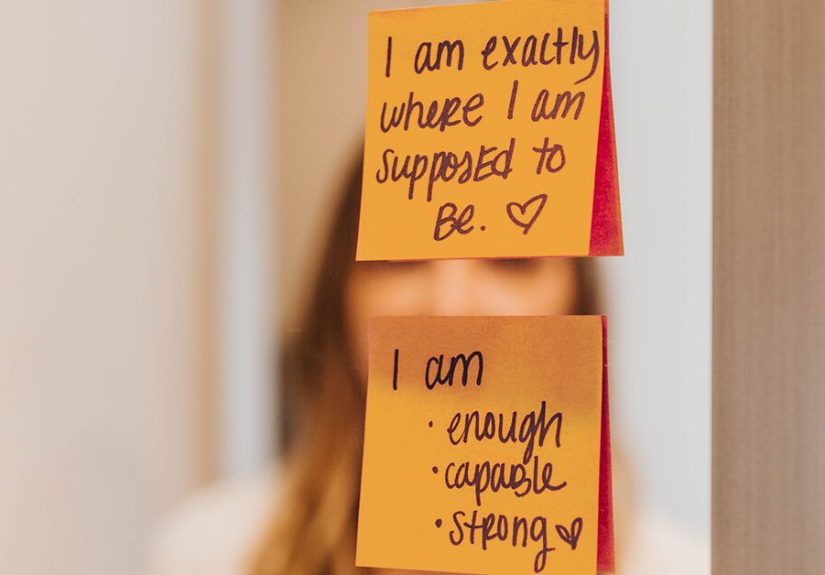
A positive affirmation is a short statement you repeat on purpose to reinforce a helpful belief, value, or identity.
Think of it as “training data” for your self-talk. Over time, repeated messages can shape how you interpret events,
how you handle stress, and what actions feel possible.
They are not magic spells
Affirmations don’t erase problems. They also don’t replace real support when you’re struggling. What they can do is
lower defensiveness, steady your mood, and help you act in line with who you want to beespecially when life gets loud.
In other words: affirmations don’t carry the groceries home, but they can help you stop arguing with the grocery cart.
The Science Behind Why They Can Help
1) Self-affirmation protects your “whole-self” view
In psychology, self-affirmation theory explains that when your self-image feels threatened (criticism, mistakes, rejection),
you may get defensive or shut down. Reflecting on important values can reduce that threat response, helping you think more clearly
and cope better. In plain English: remembering what matters to you makes “this one moment” feel less like “my entire identity.”
2) Positive thinking and self-talk are linked to resilience and health habits
Major medical organizations describe positive thinking and healthier self-talk as tools that support stress management
and copingoften alongside habits like gratitude, social connection, and taking practical steps during tough times.
No, optimism doesn’t grant superhero powers. But a more constructive mindset can make healthy choices easier to reach for.
3) Mindfulness + affirming values can make your brain more receptive
Mindfulness practices are widely studied for stress reduction and improved emotional regulation. When you combine calm attention
(mindfulness) with values-based statements (affirmations), you’re more likely to respond instead of react. In research settings,
affirming core values has been linked to greater openness to feedback and healthier behavior changebecause the message feels less threatening.
How to Make Affirmations Work (Without Feeling Like a Walking Poster)
Make them believable, not theatrical
If “I am unstoppable and perfect” makes you roll your eyes, your brain will treat it like spam. Try a bridge statement instead:
“I’m learning,” “I’m practicing,” or “I can take one step.” Believable affirmations build trust with yourself.
Anchor them to values and actions
The most powerful affirmations aren’t just about feeling better; they’re about living better. Pair each statement with one tiny action
(a text message, a 2-minute tidy, a glass of water, a deep breath, a difficult conversation). That’s how words become a life.
Use them when you’re calm, then when you’re challenged
Practice affirmations during low-stress moments firstso they’re available when stress hits. It’s like a seatbelt:
you don’t want to install it during the crash.
20 Positive Affirmations for a Fulfilling Life
Use these as written, or tweak them so they sound like you. The goal is a steady inner voice that helps you show up for your life.
-
“I am worthy of respect, including my own.”
Why it helps: Builds self-worth without needing outside approval.
Try it: Speak to yourself today the way you’d speak to a friend who’s trying. -
“I can do hard thingsone step at a time.”
Why it helps: Turns overwhelm into progress.
Try it: Pick the smallest next step (not the whole mountain). -
“My feelings are real, and they don’t run the whole show.”
Why it helps: Validates emotion while keeping your agency.
Try it: Name the feeling (“I’m anxious”) and choose one helpful action anyway. -
“I release what I can’t control and focus on what I can.”
Why it helps: Calms spirals and strengthens boundaries with reality.
Try it: Write two columns: “Can Control / Can’t Control.” Act on the first. -
“I choose progress over perfection.”
Why it helps: Perfectionism is just fear in a fancy coat.
Try it: Finish a “B+ version” today. Done beats deluxe. -
“I am allowed to rest without earning it.”
Why it helps: Counters burnout culture.
Try it: Take a 5-minute break and don’t narrate it as “being lazy.” -
“I can be kind and still have boundaries.”
Why it helps: Protects your time and energy without guilt.
Try it: Practice one respectful “no” (short, calm, no essay required). -
“I learn from mistakes instead of living inside them.”
Why it helps: Builds growth mindset and reduces shame loops.
Try it: Ask: “What’s the lesson?” then: “What’s the next move?” -
“I have something valuable to contribute.”
Why it helps: Strengthens purpose and confidence.
Try it: Share one idea, help one person, or create one small thing today. -
“I can handle discomfort without abandoning myself.”
Why it helps: Supports courage and self-trust.
Try it: Breathe slowly for 30 seconds before you respond to stress. -
“I choose thoughts that help me, not thoughts that haunt me.”
Why it helps: Encourages cognitive reframingwithout pretending you never worry.
Try it: Replace “I can’t” with “I can try,” then prove it with a tiny action. -
“I am becoming the person I want to be.”
Why it helps: Identity-based change tends to stick.
Try it: Do one “future me” habit: stretch, read 2 pages, tidy one surface. -
“I deserve relationships that feel safe and respectful.”
Why it helps: Reinforces healthy standards and self-protection.
Try it: Notice how you feel after an interaction: energized, neutral, or drained? -
“I can ask for help, and that is strength.”
Why it helps: Reduces isolation and builds resilience.
Try it: Send one simple message: “Can you help me with ___?” -
“I choose gratitude without ignoring reality.”
Why it helps: Gratitude works best when it’s honest, not forced.
Try it: List three specific things: “warm coffee,” “a friend’s joke,” “fresh air.” -
“I forgive myself for being human.”
Why it helps: Self-compassion supports steadier motivation than self-criticism.
Try it: Say: “Of course this is hard. Lots of people struggle with this.” -
“I bring calm to the moment I’m in.”
Why it helps: Helps regulate stress before it snowballs.
Try it: Relax your shoulders. Unclench your jaw. Yes, right now. -
“My time matters, and I spend it on purpose.”
Why it helps: Creates meaning through intentional choices.
Try it: Choose one priority for today and protect 20 minutes for it. -
“I am allowed to start againtoday.”
Why it helps: Builds resilience after setbacks.
Try it: Treat today like a reset button, not a courtroom. -
“I don’t need to be fearless to be brave.”
Why it helps: Normalizes fear while encouraging action.
Try it: Do the brave thing in the smallest possible version.
A Simple 5-Minute Affirmation Routine
Minute 1: Choose one affirmation for today
Pick the one you need most. Not the one that sounds best on a mugthe one that meets you where you are.
Minutes 2–3: Repeat it slowly and imagine a real situation
Picture a moment you’ll actually face (a difficult class, a tense conversation, a busy shift, a workout you’re avoiding).
Let the affirmation be your “script” for how you want to respond.
Minutes 4–5: Pair it with one tiny action
Actions make affirmations believable. If your affirmation is “I can do hard things,” your action might be:
open the document, put on shoes, send the email, wash the dish, start the timer.
Common Pitfalls (and How to Avoid Them)
Pitfall: Using affirmations to avoid feelings
If you use positivity to bulldoze sadness, anger, or fear, it backfires. Try validation first (“This is tough”),
then encouragement (“And I can take one step”).
Pitfall: Statements that clash with your current beliefs
If “I love myself completely” feels impossible today, try: “I’m learning to treat myself with more respect.”
Your brain accepts what feels trueor at least possible.
Pitfall: Expecting instant results
Think of affirmations like brushing your teeth: you don’t see a miracle after one session,
but consistency changes your long-term outcome. (Also, please brush your teeth.)
Conclusion: A Fulfilling Life Is Built in Small Moments
A fulfilling life isn’t one long highlight reel. It’s ordinary days guided by valuesshowing up, recovering, trying again,
and talking to yourself like someone you’re responsible for. Positive affirmations can support that work by shaping your inner dialogue,
lowering stress reactivity, and nudging you toward actions that match the person you want to become.
Start small: pick one affirmation, repeat it daily, and pair it with a tiny behavior. Over time, you’ll notice something powerful:
your life feels less like it’s happening to you and more like you’re participating on purpose.
Experiences: What Affirmations Look Like in Real Life (The Non-Instagram Version)
The first time most people try affirmations, it can feel awkwardlike making eye contact with your reflection and realizing your
reflection is also making eye contact. But then something subtle happens: you start noticing the moments when your inner voice is
unnecessarily harsh. That awareness alone is a big deal.
Take the student who keeps thinking, “I’m terrible at math.” They decide to try a bridge affirmation: “I can do hard thingsone step at a time.”
The next time homework gets confusing, they don’t suddenly become a human calculator. Instead, they stop the spiral.
They do one problem. Then one more. When they get stuck, they ask for help sooner (instead of waiting until panic o’clock).
After a couple of weeks, the grade might improvebut the bigger win is that their self-talk stops acting like a heckler in the front row.
Or consider someone who’s trying to set boundaries with friends and family. They’ve been “the reliable one” for so long that saying no feels like
committing a crime in broad daylight. They practice: “I can be kind and still have boundaries.” The first time they use it, they send a short message:
“I can’t make it tonight, but I hope you have a good time.” No long apology tour. Their heart pounds anyway. But afterward, something surprising happens:
the world doesn’t end. The relationship doesn’t explode. And even if someone reacts poorly, the person feels more anchored in self-respect.
That’s what a fulfilling life is made ofchoices that align with your values, not your guilt.
Here’s another classic: the pre-performance brain. Before a tryout, presentation, interview, or big conversation, many people rehearse disaster.
(“I’ll mess up, everyone will judge me, I will be remembered forever as the person who forgot what words are.”) A better script is:
“I don’t need to be fearless to be brave.” One person repeats it while tying their shoes. Another says it in the car.
A third mutters it like a movie hero… who is also slightly sweaty. They still feel nervous, but the nervousness isn’t in charge anymore.
They show up. They take the brave action in the smallest possible version: introduce themselves, start the first sentence, take the first swing.
Sometimes it goes great. Sometimes it goes okay. Either way, they leave with something priceless: evidence that they can handle discomfort without
abandoning themselves.
Over time, affirmations become less like “motivational quotes” and more like “instructions you trust.”
They don’t remove challenges. They change your relationship with challenges. And that shiftquiet, practical, repeatableis where fulfillment grows.







 Close
Close