Table of Contents >> Show >> Hide
- Quick Primer: What “Vaulted” Means (So You Don’t Design the Wrong Thing)
- Before You Pick an Idea: 5 Reality Checks That Save Money and Regret
- 20 Vaulted Ceiling Ideas That Create a Dramatic Look
- 1) Paint the Ceiling a Crisp White to Amplify Light
- 2) Go Moody Up Top for Instant Drama
- 3) Add Exposed Wood Beams for Rustic-Modern Character
- 4) Use Faux Beams When You Want the Look Without the Structural Drama
- 5) Wrap the Vault in Tongue-and-Groove Planks
- 6) Try Shiplap for a Clean, Graphic Ceiling Statement
- 7) Highlight the Ridge Beam Like It’s the Main Character
- 8) Install Skylights for a “Sunlight Falls From the Sky” Moment
- 9) Add Clerestory Windows That Follow the Roofline
- 10) Build a Gable-End “Window Wall” to Turn Height Into a View
- 11) Hang an Oversized Chandelier That’s Actually the Right Scale
- 12) Cluster Pendants at Staggered Heights for a Sculptural Look
- 13) Use Track Lighting to Aim Light Where the Ceiling Slopes
- 14) Add Recessed Lights Strategically (Not Like You’re Planting Corn)
- 15) Install Wall Sconces to “Fill In” the Middle Height
- 16) Add a Ceiling Fan With a Downrod to Improve Comfort
- 17) Extend a Fireplace or Chimney Up to the Peak
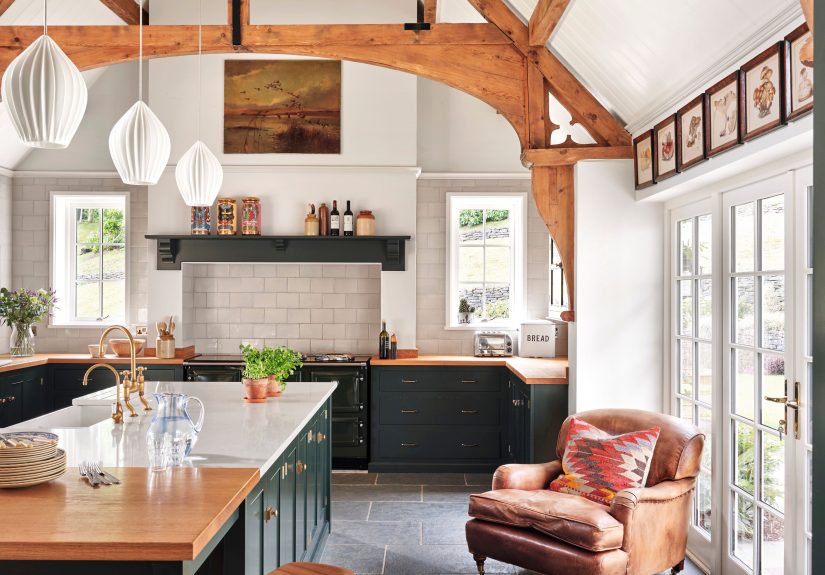
- 18) Showcase Trusses or a King-Post Detail for Architectural Wow
- 19) Add Wood Slats or Acoustic Panels for Texture and Better Sound
- 20) Treat the “Fifth Wall” Like Art With Pattern, Wallpaper, or a Mural
- Common Mistakes That Make Vaulted Ceilings Feel “Off”
- Real-World Experiences: What Vaulted Ceilings Feel Like After the “Wow” Wears Off (About )
- Conclusion
Vaulted ceilings are basically your home saying, “Look up. I’m fabulous.” Done right, they make a room feel bigger,
brighter, and more architecturallike you secretly hired a magazine stylist and a cathedral at the same time.
Done wrong… well, they can feel echo-y, drafty, and oddly empty, like your living room is waiting for a basketball game.
This guide gives you 20 vaulted ceiling ideas that reliably create drama (the good kind), plus practical tips on lighting,
color, beams, and proportionsso your ceiling doesn’t steal the show in a “why is it so awkward in here?” way.
Quick Primer: What “Vaulted” Means (So You Don’t Design the Wrong Thing)
“Vaulted ceiling” is an umbrella term for ceilings that rise above the standard flat height and create a sense of volume.
Some follow the roofline symmetrically (often called cathedral ceilings), while others can be asymmetrical, arched, curved,
or creatively “cut up” for a custom shape. Translation: vaulted is flexible, cathedral is usually symmetrical and roofline-driven.
Why it matters: the shape you have (or want) affects everythingbeam placement, lighting drop lengths, window options, HVAC strategy,
and how cozy the space feels once furniture moves in.
Before You Pick an Idea: 5 Reality Checks That Save Money and Regret
- Structure: New builds have more options; retrofits may require engineering and serious framing work.
- Temperature control: More air volume can mean tougher heating/coolingplan fans, zoning, or smart vents.
- Lighting: One sad ceiling light in the middle won’t cut it. Layer lighting or the room will feel dim.
- Scale: Furniture, art, and fireplaces often need to be taller or more substantial to “match” the ceiling.
- Acoustics: Hard surfaces + big volume = echo. Soft textiles and sound-absorbing finishes help.
20 Vaulted Ceiling Ideas That Create a Dramatic Look
1) Paint the Ceiling a Crisp White to Amplify Light
A white vaulted ceiling reflects daylight, makes the slope feel taller, and keeps the room airy. It’s especially powerful in
smaller spaces (like a bathroom or compact kitchen) where height is doing the heavy lifting for “wow.”
Try this: Pair white overhead with warm flooring (oak, maple, or even a soft-toned LVP) so the room doesn’t feel sterile.
2) Go Moody Up Top for Instant Drama
Dark paint or stain on a vaulted ceiling can look shockingly elegantlike a tuxedo for your roofline. The trick is balance:
make sure you have enough natural light or layered lighting so it reads “cozy-luxe,” not “cave.”
Best rooms for this: A den, bedroom, or great room with big windows and warm accent lighting.
3) Add Exposed Wood Beams for Rustic-Modern Character
Beams add rhythm and scale, breaking up an otherwise massive plane. They can lean modern farmhouse, mountain lodge, coastal,
or even midcentury depending on stain color and beam style.
Design tip: If your space feels “too tall,” beams visually lower the ceiling and make it feel grounded.
4) Use Faux Beams When You Want the Look Without the Structural Drama
If real timbers aren’t in the budget (or your ceiling isn’t thrilled about extra weight), high-quality faux beams still give the
same visual punch. This is a favorite move for retrofits where you want character without rebuilding your life.
Make it believable: Match the beam finish to something else in the roommantel, open shelving, or window trim.
5) Wrap the Vault in Tongue-and-Groove Planks
Tongue-and-groove (often pine or cedar) is one of the most timeless ways to make a vaulted ceiling feel intentionalespecially in
cabins, lake houses, and modern rustic spaces. It also adds texture without visual clutter.
Modern update: Use a lighter stain or a whitewashed finish to keep it fresh.
6) Try Shiplap for a Clean, Graphic Ceiling Statement
Shiplap reads crisp and architectural on a vault, especially when boards run parallel to the ridge. It’s a strong choice for
coastal, farmhouse, and transitional interiors.
Proportion hack: Narrower boards feel more refined; wider boards feel more casual and rustic.
7) Highlight the Ridge Beam Like It’s the Main Character
If your ceiling has a ridge beam, make it a feature: stain it darker than the ceiling, wrap it in reclaimed wood,
or give it a subtle contrast that draws the eye to the peak.
Why it works: Your eye loves a “spine” that organizes the whole room.
8) Install Skylights for a “Sunlight Falls From the Sky” Moment
Skylights are the cheat code for vaulted ceilings: they make the height feel purposeful and flood the upper volume with daylight.
In a kitchen or bath, it can feel like you renovated into a boutique hotel suite.
Practical note: Choose glazing and shades that help manage heat gain and glare.
9) Add Clerestory Windows That Follow the Roofline
High, slim windows tucked near the top of the vault keep privacy while bringing in consistent light. They’re also great for
highlighting a beam pattern or drawing attention to the ceiling shape without needing huge wall space.
Best vibe: Modern, midcentury-inspired, and Scandinavian interiors.
10) Build a Gable-End “Window Wall” to Turn Height Into a View
If your vaulted room ends in a tall triangular wall, consider stacking windows up the gable. It’s dramatic, yesbut it also makes
the ceiling feel connected to the outdoors instead of floating above the room like a separate planet.
Works especially well: Great rooms with scenic views, wooded lots, or mountain/lake settings.
11) Hang an Oversized Chandelier That’s Actually the Right Scale
Vaulted ceilings can swallow normal fixtures. A properly scaled chandelier (or big statement pendant) anchors the vertical space
and gives the room a focal point you can feel.
Rule of thumb: When in doubt, go bigger than your first instinctthen confirm clearances and hanging height.
12) Cluster Pendants at Staggered Heights for a Sculptural Look
Instead of one central fixture, use a cluster (three to seven pendants) at different lengths. This adds movement and turns your
lighting into artperfect over a dining table, stairwell, or entry.
Style tip: Keep shapes consistent for a clean look, or mix forms for a more eclectic statement.
13) Use Track Lighting to Aim Light Where the Ceiling Slopes
Vaults create tricky angles. Track lighting lets you direct light toward walls, art, beams, or seating zonesso the room feels
intentionally lit, not accidentally dim.
Best for: Contemporary spaces, galleries, and rooms with multiple “zones” (living + dining + reading corner).
14) Add Recessed Lights Strategically (Not Like You’re Planting Corn)
Recessed lighting can disappear into a vaulted ceiling nicely, but spacing matters. Use fewer fixtures, place them with purpose,
and pair them with lamps or sconces so the light feels warm and layered instead of clinical.
Upgrade: Choose adjustable gimbals to aim light along slopes and toward key features.
15) Install Wall Sconces to “Fill In” the Middle Height
A common vaulted-ceiling problem is light living only at the ceiling plane and the floor planeleaving a gloomy mid-zone.
Sconces solve that by adding warm light at eye level and making walls feel intentional.
Bonus: Sconces also help reduce echo-y vibes because they encourage softer, layered design choices.
16) Add a Ceiling Fan With a Downrod to Improve Comfort
Hot air rises, and vaulted ceilings give it a penthouse suite. A properly sized fan (hung at the right height) helps mix air
so the room feels more comfortable year-round.
Looks matter, too: Choose a fan that matches the ceiling’s stylesleek and modern, or warm and rustic.
17) Extend a Fireplace or Chimney Up to the Peak
In a vaulted great room, a standard-height fireplace can look oddly small, like it’s wearing a child-size hat. Extending the
surround, chimney, or stonework upward adds balance and creates a dramatic vertical anchor.
Design win: Pair with a substantial mantel or a tall art piece for a “centerpiece wall” effect.
18) Showcase Trusses or a King-Post Detail for Architectural Wow
Exposed trusses (or decorative truss elements) add instant craftsmanship. Even if they’re decorative, they give the ceiling a
reason to exist beyond “being tall.”
Great match: Modern farmhouse, lodge, coastal-beam styles, and even minimalist interiors craving texture.
19) Add Wood Slats or Acoustic Panels for Texture and Better Sound
If your room echoes, lean into finishes that absorb sound. Wood slats (with acoustic backing) or acoustic panels designed to look
like modern millwork can add a high-end feel while improving how the room sounds during normal life (movies, parties, “where is my phone?”).
Style note: Light oak slats = Scandinavian calm; darker walnut tones = modern, moody sophistication.
20) Treat the “Fifth Wall” Like Art With Pattern, Wallpaper, or a Mural
A vaulted ceiling is a giant canvas. Subtle stripes, a soft mural, or a wallpaper-like pattern can create drama without adding clutter.
This works especially well in bedrooms, powder rooms, and entrywaysplaces where you want a “moment.”
Keep it classy: If the ceiling is patterned, let walls stay calmer so your room doesn’t feel like it’s yelling.
Common Mistakes That Make Vaulted Ceilings Feel “Off”
- Too-small lighting: A tiny fixture floating in a tall room looks lost. Scale up or layer.
- No mid-level elements: Add tall bookcases, art, or drapery to visually connect floor to ceiling.
- Ignoring acoustics: Rugs, curtains, upholstered seating, and textured ceilings reduce echo.
- Unplanned HVAC: Without air movement, the ceiling keeps heat up high where nobody lives.
- Blank gable wall: A tall triangle of empty drywall can feel unfinishedconsider windows, art, or a feature wall.
Real-World Experiences: What Vaulted Ceilings Feel Like After the “Wow” Wears Off (About )
Living with a vaulted ceiling is a little like owning a big, friendly dog: it’s impressive, it gets attention, and it changes how you live in the space.
The first thing most people notice is how the room “breathes.” Even on an ordinary weekday, a vaulted living room feels less boxed-in, and natural light
tends to spread more evenlyespecially if you’ve got high windows or skylights. Mornings can feel brighter, and the room often looks better in photos,
which sounds silly until you realize half of modern life is “Why does my house look so good right now?”
Then come the practical surprises. Sound is a big one. In a tall, hard-surfaced room, conversations can bounce around, and TVs can feel louder than expected.
Many homeowners end up adding a larger area rug, thicker curtains, or more upholstered seatingnot just for style, but because the room literally feels calmer.
Even small moves (like textured pillows and fabric dining chairs) can make a noticeable difference.
Temperature is the next reality check. Vaulted ceilings can be comfortable, but they often need help staying that way. People frequently notice warm air pooling
near the top in winter or uneven cooling in summer, especially in open-concept great rooms. A well-placed ceiling fan (with the right drop length) becomes less
of a “decor choice” and more of a “this is how we survive.” Some households also find that adjusting vent direction, upgrading returns, or using smart thermostats
helps the room feel consistentbecause nobody wants a living room where the ceiling is tropical but the couch is Antarctica.
Maintenance is the sneaky one. Changing bulbs in a pendant light that hangs 14 feet up sounds like a fun hobby until it’s actually Tuesday night and you just
want the room to be bright again. People often switch to longer-lasting LED bulbs, add fixtures that can be lowered, or plan lighting so not everything depends
on one hard-to-reach centerpiece. Cleaning can also be a factordust and cobwebs love tall cornersso extension tools (or the occasional professional cleaning)
become part of the routine.
Design-wise, vaulted ceilings tend to “teach” you about scale. Tiny art can look like a postage stamp, short curtains can feel unfinished, and low bookcases may
suddenly seem unsure of themselves. Many homeowners end up adding taller drapery panels, larger statement art, or a more substantial fireplace surround so the room
feels balanced. The upside is that once the proportions click, a vaulted room often becomes the favorite hangout spotthe one guests drift into, the one that feels
special during holidays, and the one that makes everyday life look a little more cinematic.
Conclusion
Vaulted ceilings already bring instant dramabut the best results come from giving that height a purpose. Use beams or planks to add structure, windows or skylights
to invite light, and layered lighting to make the room feel warm at night. Most importantly, design for comfort and scale so the ceiling feels like part of the room,
not a separate universe floating above your furniture.