Table of Contents >> Show >> Hide
- What to Do First After a Cat Dies
- 1. Let Your Veterinarian Arrange Cremation
- 2. Choose Home Burial If It’s Legal and Safe
- 3. Use a Pet Cemetery or Professional Aftercare Service
- How to Choose the Right Option for Your Family
- Simple Memorial Ideas Aftercare Can Include
- Mistakes to Avoid
- Real Experiences People Often Share After Losing a Cat
- Final Thoughts
- SEO Tags
Losing a cat is heartbreaking. One minute they’re judging your life choices from the windowsill, and the next your home feels strangely quiet. In the middle of that grief, you may also have to make a practical decision fast: what should you do with your cat’s remains?
It’s a painful task, but it does not have to become a confusing one. In most cases, there are three straightforward, respectful options: let your veterinarian arrange cremation, choose home burial if it is legal and safe in your area, or use a pet cemetery or professional aftercare service. The best choice depends on your budget, your local laws, your emotional preferences, and whether your cat passed naturally or was euthanized.
This guide walks you through each option in plain English, without panic, without fluff, and without sounding like a robot that just discovered feelings. You’ll learn what to do first, how to compare the most common aftercare methods, and how to choose the option that feels right for your family.
What to Do First After a Cat Dies
Before choosing one of the three main options, take a breath and handle the immediate moment. If your cat died at home and you are unsure whether your cat has passed, call your veterinarian or an emergency clinic for guidance. If death has already been confirmed, place your cat on a clean towel or blanket in a cool, quiet place. If you need time to decide, keep the body cool while you contact a veterinarian, pet cremation provider, or local animal services office.
If the death was unexpected, you may also want to ask about a necropsy, which is the animal equivalent of an autopsy. This is not necessary for every family, but it can be helpful if you want answers about illness, toxins, trauma, or a sudden unexplained death.
Now let’s get to the three easiest and most common ways to handle a deceased cat.
1. Let Your Veterinarian Arrange Cremation
For many pet owners, this is the simplest and least stressful option. If your cat died at the veterinary clinic, or if you can bring your cat there afterward, the clinic can often coordinate aftercare for you. That means fewer phone calls, fewer logistics, and one less thing to manage while your heart is doing cartwheels in slow motion.
How cremation works
Veterinary cremation is usually offered in two main forms:
- Private cremation: Your cat is cremated individually, and the ashes are returned to you.
- Communal cremation: Your cat is cremated with other pets, and ashes are not returned.
Some areas also offer aquamation or hydrocremation, a water-based alternative to flame cremation. This option is becoming more available through veterinary schools and specialty aftercare providers.
Why cremation is often the easiest choice
Cremation is popular because it is flexible. You can keep the ashes in an urn, scatter them in a meaningful place where allowed, bury the ashes later, or create a memorial keepsake. It also avoids some of the legal and environmental concerns that can come with home burial.
It may be especially wise if your cat was euthanized. In those cases, drug residues can remain in the body, which may create risks for scavenging wildlife or other animals if the remains are buried or left accessible. Cremation usually removes that worry from the equation.
Questions to ask the clinic or aftercare provider
- Is this private cremation or communal cremation?
- Will my cat’s ashes be returned?
- How long will it take?
- What container or urn is included?
- Are paw prints, fur clippings, or memorial items available?
- Can you explain your identification and tracking process?
That last question matters. Reputable aftercare providers use tags, paperwork, and tracking systems so families know exactly what is happening. It may feel awkward to ask, but this is one of those moments when awkward is better than wondering forever.
Best for
This option is best for families who want the least complicated process, people who live in apartments or urban areas, and anyone who wants ashes returned for a memorial later.
2. Choose Home Burial If It’s Legal and Safe
Home burial can feel deeply personal. Many cat owners like the idea of laying their pet to rest in a backyard garden, under a favorite tree, or in a quiet corner where the afternoon sun falls just right. It can be comforting, intimate, and meaningful. It can also be a lovely disaster if you skip the legal and safety checks.
First, check local rules
Home burial laws vary by state, county, city, and even neighborhood. Some places allow it on private property under certain conditions. Others restrict it based on groundwater, flood zones, lot size, or public health rules. If you rent, your lease may also matter.
That means you should never assume backyard burial is automatically allowed just because your cousin in another state did it for her Labrador and posted a tasteful Instagram tribute.
When home burial may not be appropriate
Home burial may not be the best choice if:
- Your cat was euthanized and you have not confirmed burial is safe under local guidance
- Your yard floods, drains poorly, or sits near a water source
- You are planning to move soon
- Wild animals could dig up the site
- You live where burial rules are restrictive or unclear
How to handle a home burial respectfully
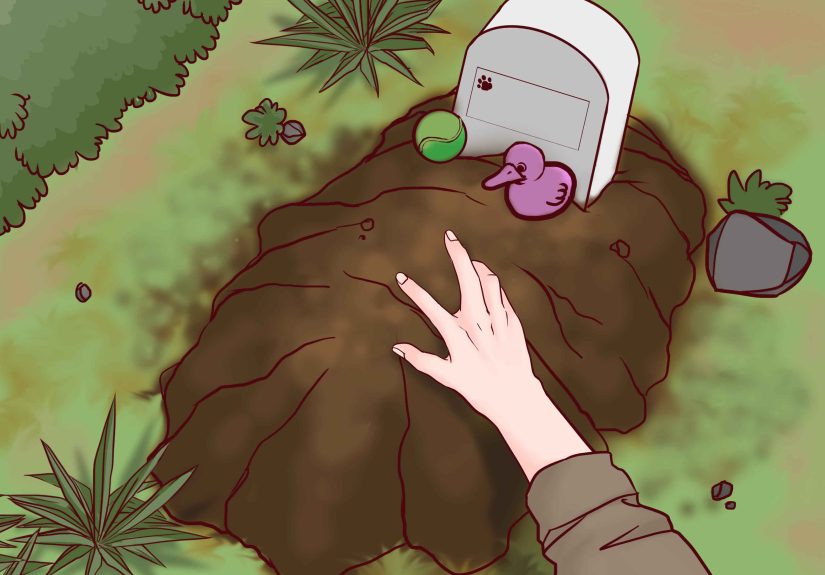
If home burial is legal and appropriate, choose a quiet location away from vegetable gardens, wells, streams, and drainage areas. Wrap your cat in a biodegradable blanket, towel, or burial shroud, or place them in a simple biodegradable box if local rules allow. Mark the location in a way that feels meaningful to you, whether that is a stone, a small plant, or a simple name marker.
Keep the tone gentle and practical. You are not building a pyramid. You are creating a peaceful resting place.
The emotional upside of home burial
For many families, home burial creates a physical place for mourning. Children may benefit from having somewhere to visit. Adults often do too, even if they pretend they are “just checking the tomatoes.” A dedicated memorial spot can make grief feel less abstract and give the loss a place to land.
Best for
This option is best for homeowners with legal clearance, enough private outdoor space, and a strong desire for a personal resting place close to home.
3. Use a Pet Cemetery or Professional Aftercare Service
If you want a formal, hands-off, highly respectful option, a pet cemetery or dedicated pet aftercare provider may be the right fit. This choice sits somewhere between cremation through a veterinarian and home burial. It often gives families more ceremony, more memorial options, and more structure.
What this option can include
- Ground burial in a pet cemetery
- Private or communal cremation
- Witnessed cremation in some facilities
- Urns, plaques, paw prints, and memorial jewelry
- Pickup from your home or veterinarian’s office
- Grief support resources or remembrance services
This route may cost more than the other options, but it can also relieve you of nearly every logistical step. For people who are overwhelmed, elderly, physically limited, or simply too devastated to manage phone calls and transportation, that support can be worth every penny.
How to choose a provider
Look for clear communication, transparent pricing, written descriptions of services, and a respectful tone. Ask how identification is handled, whether ashes are returned individually, how transportation works, and what memorial products are optional versus included.
If a provider becomes weirdly vague when you ask basic questions, trust your instincts. This is not the time for mystery pricing or “we’ll figure it out later” energy.
When a pet cemetery makes sense
A pet cemetery may be a strong choice if you do not want burial at home, but you still want a dedicated grave site you can visit. It can also be a meaningful option for long-time cat companions whose memory you want to honor in a more ceremonial way.
Best for
This option is best for families who want a formal memorial, people who cannot bury at home, and anyone who wants professional support from beginning to end.
How to Choose the Right Option for Your Family
There is no gold medal for grief logistics. The “best” option is the one that fits your emotional needs, your budget, and your practical reality.
Ask yourself these questions:
- Do I want ashes returned to me?
- Do I want a physical place to visit?
- Is home burial legal where I live?
- Was my cat euthanized, making cremation a safer route?
- Do I want to manage the process myself or hand it off to professionals?
- Will I still feel good about this choice six months from now?
If you feel stuck, choose the option that removes the most stress today. Grief already takes up enough space in the room.
Simple Memorial Ideas Aftercare Can Include
Handling the remains is only one part of saying goodbye. Many people also want a ritual, a tribute, or a keepsake. That is not silly. That is human. Or, more accurately, delightfully cat-parent human.
- Keep a clay or ink paw print
- Save a small clipping of fur
- Write a letter to your cat
- Plant flowers or a tree in their honor
- Create a photo book of your favorite moments
- Donate to a rescue or shelter in your cat’s name
- Hold a tiny memorial with family members
Memorials do not have to be elaborate. A candle, a story, and one very dramatic cry in the kitchen can count.
Mistakes to Avoid
- Waiting too long to make arrangements: If you are unsure, call your veterinarian first.
- Assuming backyard burial is legal everywhere: It is not.
- Forgetting euthanasia safety concerns: Ask about proper aftercare if euthanasia drugs were used.
- Choosing a provider without asking questions: Clear answers matter.
- Rushing into a choice because someone else says it is “best”: This is your cat, your grief, and your goodbye.
Real Experiences People Often Share After Losing a Cat
One of the most comforting things about grief is realizing that your reactions are normal. People respond differently when a beloved cat dies, but certain experiences come up again and again.
Many owners say the hardest part is how ordinary the day looks from the outside. The coffee still brews. Emails still arrive. A package still shows up on the porch. Meanwhile, the tiny creature who used to supervise all of it is suddenly gone. That contrast can feel surreal. Some people move into practical mode right away, calling the vet, asking about cremation, and making decisions quickly. Others freeze for a while because the task feels too real, as if making arrangements confirms the loss in a way their heart is not ready to accept.
Families who choose private cremation often describe relief when the process is handled by the veterinary clinic. They may still be devastated, but they do not have to transport the body, research providers, or make complicated choices while crying into a sweatshirt. When the ashes come back, there is often another emotional wave. People expect that moment to feel purely sad, but many say it also brings calm. Their cat is home again, in a different form, but home.
People who choose home burial frequently talk about the comfort of place. The backyard becomes more than a yard. It becomes a memory point. A patch of sunlight, a garden bed, or the base of a tree turns into a spot where grief and love can coexist. Years later, they still pause there. Some speak to their cat. Some just stand quietly. Some weed around the marker with great seriousness, because apparently even mourning can come with landscaping.
Those who use pet cemeteries or formal aftercare services often appreciate the ritual. A scheduled burial, a small ceremony, or even just a neatly written certificate can provide structure during a chaotic emotional moment. It says, in effect, this life mattered, this bond mattered, and this goodbye deserves care.
There is also the question nearly every cat owner asks at some point: “Am I overreacting?” The answer is no. Grief for a cat can be intense because cats are woven into routines so quietly and completely. They greet you, interrupt you, comfort you, and judge you from impossible heights. They are there during breakups, illnesses, moves, boring Tuesdays, and weird midnight snacks. Of course their absence is loud.
Another common experience is second-guessing. People wonder if they chose the right aftercare option, the right timing, the right memorial, the right everything. That is grief trying to bargain with reality. In truth, there is rarely one perfect choice. There is only the choice that seemed most loving and manageable at the time. That is enough.
What people remember most later is not the paperwork or the logistics. They remember the kindness of a vet tech, the softness of a blanket, the sound of a child saying goodbye, the comfort of a paw print, or the peace of finally deciding what to do. In other words, they remember love showing up in practical clothes.
Final Thoughts
The three easiest ways to handle the remains of a deceased cat are veterinarian-arranged cremation, home burial where it is legal and safe, and using a pet cemetery or professional aftercare service. Each option can be respectful. Each option can be loving. The right one is the one that fits your circumstances and helps you say goodbye with as much peace as possible.
If you are making this decision today, be gentle with yourself. You do not need to be perfectly composed, perfectly informed, or strangely efficient. You just need a path that honors your cat and supports your family. That is more than enough.