
Table of Contents >> Show >> Hide
- What Does It Mean to Become a Reverend?
- Way 1: Follow the Traditional Seminary and Denominational Ordination Path
- Way 2: Become a Reverend Through a Local Church, Independent Ministry, or Non-Denominational Network
- Way 3: Get Ordained Online for Weddings or Ceremonial Ministry
- How to Choose the Right Path
- Skills Every Reverend Needs
- Real-World Experiences: What Becoming a Reverend Actually Feels Like
- Conclusion
Becoming a reverend sounds wonderfully official, doesn’t it? One minute you are sitting in the third pew wondering who refills the tiny communion cups, and the next you are imagining yourself preaching, counseling, officiating weddings, leading community service projects, and owning at least one very serious-looking black folder. But the path to becoming a reverend is not one-size-fits-all. In the United States, “Reverend” is usually an honorific title used for ordained clergy, while the actual role may be pastor, minister, priest, elder, deacon, chaplain, or wedding officiant.
The good news is that there are several legitimate ways to become a reverend. The best path depends on your religious tradition, your goals, your education level, and what you want to do with your ordination. Are you hoping to lead a congregation full-time? Serve in a hospital or prison? Perform a wedding for your best friend without accidentally turning the ceremony into a legal cliffhanger? Each goal points to a different route.
This guide explains three common ways to become a reverend: pursuing traditional denominational ordination, becoming trained through a local church or ministry network, and getting ordained online for limited ceremonial or non-denominational purposes. We will cover the steps, requirements, advantages, cautions, and real-world experiences that can help you choose the right path with confidenceand maybe a little less panic.
What Does It Mean to Become a Reverend?
Before choosing a path, it helps to understand the title itself. “Reverend” is not usually a job description. It is a courtesy title for a person who has been ordained or otherwise recognized by a religious body. A person may be called Reverend Smith, but their role might be pastor, priest, minister, chaplain, elder, or officiant. Think of it like “Doctor”: the title tells you there is recognized training or authority, but you still need to know whether the person is a surgeon, professor, dentist, or the person who tells you not to Google your symptoms at 2 a.m.
In many Christian traditions, becoming a reverend involves a formal ordination process. Ordination is the public recognition that a person is set apart for religious leadership. It often includes theological education, mentoring, interviews, background checks, supervised ministry, and approval by a church board, bishop, presbytery, classis, synod, conference, or other governing body. The vocabulary changes by denomination, but the heart of the process is usually the same: calling, preparation, examination, and accountability.
Some people become reverends to serve full-time in churches. Others serve as volunteer ministers, chaplains, nonprofit leaders, spiritual directors, or wedding officiants. The route you choose should match the ministry you actually intend to practice. A weekend online ordination may be enough for a one-time wedding in some states, but it will not prepare you to counsel grieving families, administer sacraments in a denomination, or lead a congregation through conflict, budgets, theology, and the annual mystery of who moved the fellowship hall tables.
Way 1: Follow the Traditional Seminary and Denominational Ordination Path
The most established way to become a reverend is to enter a denomination’s formal ordination process. This is the route most people take if they want to become a pastor, priest, elder, deacon, or full-time minister in a recognized religious tradition. It is also the path most likely to be accepted across churches, seminaries, hospitals, military chaplaincy programs, and professional ministry settings.
Step 1: Discern Your Calling
Traditional ordination usually begins long before paperwork. It starts with discernment, which is a churchy word meaning “seriously figuring out whether this is really your calling.” You may feel drawn to preaching, teaching, pastoral care, justice work, worship leadership, or spiritual counseling. A healthy first step is to speak with your pastor, priest, rabbi, imam, spiritual director, or another trusted religious leader.
Most denominations do not want candidates who simply woke up one morning and thought, “A robe would really complete my look.” They want people whose calling has been tested in community. That means serving in your local congregation, receiving feedback, learning how to listen, and discovering whether ministry still sounds meaningful when it involves late-night hospital visits, committee meetings, and someone complaining that the coffee is too bold.
Step 2: Meet Denominational Requirements
Every denomination has its own requirements. For example, many mainline Protestant traditions use a formal candidacy or inquiry process. A candidate may need to be an active church member for a certain period, receive support from a local congregation, meet with a regional committee, complete interviews, pass background checks, and show evidence of spiritual maturity and leadership ability.
Some traditions require approval at multiple levels. The Episcopal Church often involves parish discernment, diocesan committees, postulancy, candidacy, and ordination. The United Methodist Church uses a candidacy process and requires approved theological education for elders and deacons. Presbyterian candidates may move through inquiry and candidacy under the care of a presbytery. Lutheran candidates usually work with a synod, seminary, and candidacy committee. The names may sound like a religious board game, but the purpose is serious: to ensure the candidate is prepared, supported, and accountable.
Step 3: Complete Theological Education
Many traditional paths require a Master of Divinity, commonly called an M.Div. This graduate degree often takes about three years of full-time study, though part-time and hybrid options are common. Coursework may include Bible, theology, ethics, church history, preaching, pastoral care, worship, leadership, counseling, and denominational polity. “Polity” means how a church is governed, which is less glamorous than preaching but very useful when someone asks whether the youth group can borrow the sanctuary fog machine.
Not every religious body requires the same degree. Some denominations accept alternative educational routes, local pastor licensing, certificate programs, supervised ministry training, or equivalent experience. However, if your goal is long-term ordained ministry, professional chaplaincy, or leadership in a traditional denomination, formal theological education is often the strongest foundation.
Step 4: Gain Supervised Ministry Experience
Classroom learning matters, but ministry is also learned by doing. Many ordination programs require field education, internships, supervised preaching, hospital visitation, community service, or clinical pastoral education. This is where candidates discover that people rarely need perfect theological footnotes during a crisis. They need presence, compassion, wisdom, and someone who can sit quietly without trying to fix everything in twelve seconds.
Supervised ministry gives mentors a chance to observe your gifts and growth areas. You may receive feedback on sermons, pastoral conversations, leadership style, conflict management, and emotional resilience. This can be humbling. It can also be exactly what shapes a sincere person into a trustworthy spiritual leader.
Step 5: Be Examined, Approved, and Ordained
Near the end of the process, candidates are often examined by a denominational body. This may include written statements of faith, theological exams, interviews, psychological evaluations, background checks, and a final vote. Once approved, a candidate may need to receive a call to a ministry position before ordination can happen. In many traditions, ordination is not simply a personal achievement; it is tied to service in a community.
This traditional path is best for people who want deep training, broad recognition, and long-term ministry. It takes time, effort, money, and patience, but it also provides accountability and formation. If you want to become a reverend who leads a congregation, administers sacraments, offers pastoral care, teaches doctrine, and serves with professional credibility, this is usually the most reliable route.
Way 2: Become a Reverend Through a Local Church, Independent Ministry, or Non-Denominational Network
The second way to become a reverend is through a local church, independent congregation, ministry association, or non-denominational network. This path can be more flexible than traditional denominational ordination, but it still should involve real training, mentorship, and accountability. “Independent” should not mean “I printed a certificate and now I’m everyone’s spiritual boss.” Please do not become the human version of a pop-up ad.
Who This Path Is For
This route may be a good fit if you serve in a non-denominational church, house church, community ministry, prison ministry, recovery ministry, campus ministry, or multicultural congregation that does not belong to a large denomination. Many independent churches ordain ministers internally after a period of service, training, and evaluation. Some ministry networks also credential pastors, missionaries, chaplains, and evangelists.
Local church ordination may be especially practical for people already serving in leadership. Maybe you preach occasionally, lead small groups, visit the sick, teach youth, direct outreach programs, or assist with worship. If the community recognizes your gifts and invites you into deeper responsibility, the church may create a path toward licensing or ordination.
Common Steps in Local Church Ordination
The process varies, but it often includes several core steps. First, you speak with church leadership about your sense of calling. Second, you enter a season of mentorship or training. Third, you serve in visible ministry roles. Fourth, leaders evaluate your character, doctrine, communication skills, and reliability. Fifth, the church or ministry board may vote to license or ordain you.
Some churches distinguish between licensing and ordination. A license may allow someone to preach, teach, or assist in ministry under supervision. Ordination usually represents a more permanent recognition of ministry authority. In some settings, candidates must complete Bible courses, ministry certificates, ethics training, child protection training, counseling basics, or leadership workshops.
Strengths of This Path
The biggest strength of this route is its connection to real community. You are not just learning theory; you are serving people who know you. A local church can observe whether you show humility, patience, compassion, and consistency. Those qualities matter because a reverend does not merely speak from a platform. A reverend walks with people through weddings, funerals, doubts, divorces, hospital rooms, baptisms, arguments, celebrations, and all the awkward potluck conversations in between.
This path can also be more accessible. Not everyone can pause life for a three-year seminary degree. Some people are bivocational, meaning they serve in ministry while also working another job. Others are called to specialized community service rather than traditional parish ministry. Local ordination can recognize those callings in a practical way.
Limitations to Consider
The challenge is recognition. An ordination from one independent church may not be accepted by another church, denomination, hospital, military branch, or professional chaplaincy organization. If you later want to transfer into a mainline denomination or become a board-certified chaplain, you may need additional education and endorsement.
That does not make local church ordination invalid. It simply means you should know what doors it opensand which doors may still require a key, a form, an interview, and possibly three references who answer emails promptly. Before choosing this route, ask what the credential allows you to do, whether it is recognized outside your church, and what standards are used to evaluate candidates.
Way 3: Get Ordained Online for Weddings or Ceremonial Ministry
The third way to become a reverend is through online ordination. This option is popular among people who want to officiate weddings, lead non-denominational ceremonies, or hold a ministerial credential through an open-membership religious organization. Online ordination can be fast, simple, and inexpensive. In some cases, it takes only a few minutes to apply.
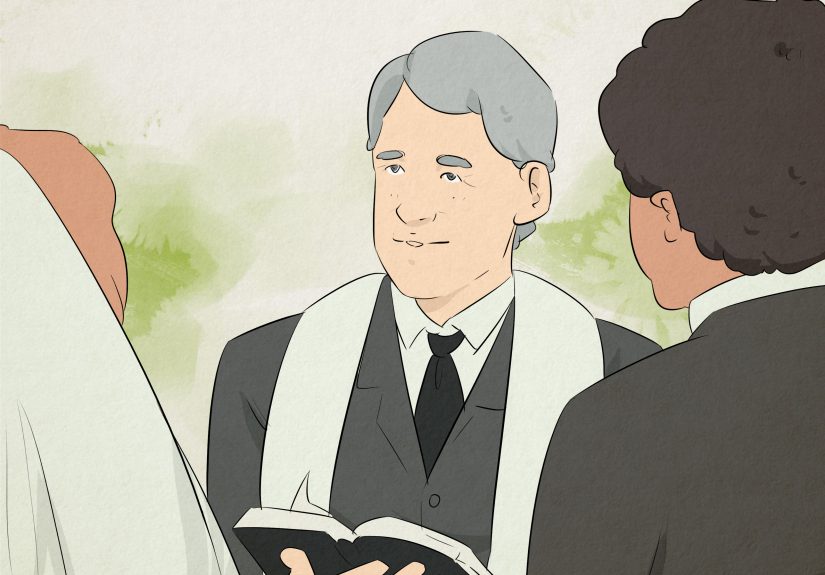
Online ordination is often used by friends or relatives asked to officiate a wedding. It can be meaningful, personal, and perfectly appropriate when done responsibly. A couple may prefer someone who knows their story rather than a stranger who mispronounces both last names and calls the groom “Brian” when his name is Brandon. However, online ordination comes with important legal and ethical considerations.
How Online Ordination Usually Works
Most online ordination organizations ask you to complete a form with your legal name, contact information, and sometimes a statement of agreement with the organization’s basic principles. After approval, you may receive confirmation of ordination and the option to order credentials, certificates, or letters of good standing. Some organizations provide ceremony scripts, state guides, and instructions for completing marriage licenses.
This route can make you a minister within that organization, but it does not automatically make you a trained pastor, counselor, theologian, or recognized clergy member in every context. It is best understood as a limited credential, especially useful for ceremonies such as weddings, memorials, blessings, or community rituals.
Check State and Local Wedding Laws
If your goal is to officiate a wedding, the most important step is not just getting ordained. It is confirming the law in the state, county, city, or municipality where the wedding will happen. Marriage laws in the United States vary widely. Some states are permissive. Some require registration. Some local governments ask for proof of ordination or a letter of good standing. Some places are strict about online ordinations.
For example, California generally allows ordained ministers to perform marriages without a statewide minister registration process. New York City requires marriage officiants to register with the City Clerk before performing ceremonies in the city. Virginia courts have historically been strict and may not recognize online ordinations from certain organizations. Tennessee has had specific statutory language and legal controversy involving online ordinations. The practical lesson is simple: contact the local marriage license office before the ceremony, not after Aunt Linda has already thrown rice.
Prepare Like a Professional
Even if online ordination is quick, officiating a wedding should not be casual. You are helping create a legally significant and emotionally important moment. Learn the couple’s expectations, write or adapt a ceremony script, practice out loud, confirm pronunciation, understand the marriage license process, and know who must sign what. Bring a printed copy of the ceremony. Bring a backup pen. Bring two backup pens, because pens apparently vanish when exposed to wedding music.
Also be honest about your role. Do not claim credentials you do not have. If you are ordained online to officiate a wedding, say that plainly. If a couple asks for premarital counseling and you are not trained, refer them to a qualified counselor or clergy member. Integrity is part of ministry, even when the ministry lasts twenty minutes and includes a flower arch.
How to Choose the Right Path
The best way to become a reverend depends on your destination. If you want to lead a congregation in a traditional denomination, choose the seminary and denominational path. If you are already serving in an independent church or community ministry, explore local church ordination with strong mentorship. If you want to officiate a wedding or serve in a limited ceremonial role, online ordination may be enoughbut only after you verify local legal requirements.
Ask yourself five questions before you begin:
- Do I want to serve full-time, part-time, or occasionally?
- Do I need recognition from a denomination, hospital, school, prison, or government office?
- Am I prepared for theological education and supervised ministry?
- Who will mentor, evaluate, and hold me accountable?
- What legal requirements apply if I plan to officiate weddings?
Becoming a reverend is not only about receiving a title. It is about becoming the kind of person people can trust with sacred moments. That requires character, compassion, communication skills, emotional maturity, and the ability to keep showing up when ministry is less like a movie montage and more like folding chairs after an event.
Skills Every Reverend Needs
No matter which route you choose, certain skills matter. A reverend should be able to speak clearly, listen deeply, handle confidential information, respect boundaries, and serve people from different backgrounds. Public speaking helps, but so does the ability to sit quietly with someone who is grieving. Leadership helps, but so does humility. Knowledge helps, but so does knowing when to say, “I do not know, but I will walk with you.”
Ethics are essential. Ministers often meet people at vulnerable moments: illness, death, marriage, family conflict, spiritual doubt, addiction, and major life transitions. A reverend must avoid manipulation, respect consent, maintain confidentiality where appropriate, and refer people to licensed professionals when issues go beyond pastoral care. Good ministry does not try to be everything. It knows when to collaborate.
Administrative skills also matter more than many candidates expect. Clergy may manage budgets, schedules, volunteers, building use, legal forms, pastoral records, weddings, funerals, staff meetings, and community partnerships. If you thought ministry was only sermons and candlelight, surprise: spreadsheets may also be part of your spiritual formation.
Real-World Experiences: What Becoming a Reverend Actually Feels Like
People often imagine becoming a reverend as a single dramatic moment: hands laid on your shoulders, a prayer spoken over you, perhaps a robe, perhaps a certificate, perhaps someone’s grandmother crying in the front row. That moment can be powerful. But the lived experience is usually built from many smaller moments that test whether the title has substance.
One common experience is the surprise of being trusted before you feel ready. A person pursuing ordination may begin by teaching a class, visiting someone in the hospital, or offering a short reflection at a service. Suddenly, someone shares a painful story and waits for a response. In that moment, you realize ministry is not about sounding impressive. It is about being present, careful, and kind. Many future reverends learn that silence can be more pastoral than a paragraph of advice.
Another experience is discovering how much feedback shapes you. Seminary professors may challenge your assumptions. Mentors may point out that your sermon had three endings and somehow none of them landed the plane. A church committee may ask hard questions about your theology, leadership style, or emotional resilience. This can feel uncomfortable, but it is not meant to crush you. It is meant to form you. A reverend who cannot receive correction will struggle to guide others with grace.
People who become reverends through local church ministry often describe a slow confirmation of calling. They do not always have one lightning-bolt moment. Instead, they notice patterns. People ask them for prayer. Leaders invite them to teach. They feel alive when serving others. They also feel the weight of responsibility. Over time, the community begins to say, “We see this gift in you.” That communal recognition can be deeply meaningful because ministry is not self-appointed celebrity. It is service recognized by others.
Those who pursue online ordination for weddings often have a different but still memorable experience. The first ceremony can be nerve-racking. You worry about the rings, the license, the vows, the microphone, the weather, and whether your voice will crack during the emotional part. Then the couple looks at each other, the guests grow quiet, and the moment becomes real. Many online-ordained officiants discover that even a short ceremony deserves reverence, preparation, and care.
There are also practical lessons. Always check legal requirements early. Always get names pronounced correctly. Always keep ceremony notes organized. Never assume the venue coordinator knows the marriage license rules. Never joke too much during vows unless the couple specifically wants that style. And never underestimate how meaningful it is when a trusted person helps mark a sacred transition.
For traditional clergy, the experiences become broader and deeper. You may preach on Sunday, visit a hospital on Monday, lead a funeral on Wednesday, meet with a couple on Thursday, and attend a budget meeting where everyone has opinions about copier paper. Ministry combines the holy and the hilariously ordinary. A reverend may bless a newborn in the morning and unclog the church kitchen sink in the afternoon. Both can be acts of service, though one usually smells better.
The most important experience is learning that becoming a reverend is not the finish line. Ordination begins a new chapter of responsibility. The title may open doors, but character keeps them open. People remember whether you listened, whether you showed up, whether you told the truth, whether you handled conflict with care, and whether your public words matched your private conduct. A good reverend continues learning long after the certificate is framed.
Conclusion
There are three main ways to become a reverend: the traditional seminary and denominational path, the local church or independent ministry path, and the online ordination path for weddings or ceremonial service. Each route can be meaningful when matched to the right purpose. The traditional path offers deep formation and broad recognition. The local church path emphasizes community-based calling and practical service. The online path can work well for limited ceremonial roles, especially weddings, when local laws are followed carefully.
The wisest approach is to begin with your goal. If you want lifelong pastoral ministry, seek strong theological education and denominational accountability. If you are serving in an independent ministry, pursue mentorship and clear standards. If you want to officiate one wedding, get ordained through a reputable organization and verify the marriage rules where the ceremony will happen. Becoming a reverend is not just about getting a title; it is about serving people well when life feels sacred, messy, joyful, painful, and sometimes all of the above before lunch.







 Close
Close