Table of Contents >> Show >> Hide
- Why 10 Minutes Works (Yes, Really)
- Way #1: 10-Minute HIIT (High-Intensity Interval Training) That Doesn’t Hate You Back
- Way #2: Full-Body Strength Circuit (No Gym, No Excuses)
- Way #3: “Movement Snacks” (Sneaky Fitness for Busy Humans)
- How to Choose Your 10-Minute Plan (and Stick With It)
- Make 10 Minutes Count: Technique, Intensity, and Recovery
- Common Questions (Because Your Brain Will Try to Negotiate)
- Real-World Experiences: What 10 Minutes a Day Feels Like (About )
- Conclusion: Ten Minutes Today Beats “Someday”
You know what’s harder than working out? Starting a workout. The good news: you don’t need a 90-minute gym saga
complete with a dramatic protein-shaker finale. If you’ve got 10 minutes, you’ve got enough time to improve your fitness,
build strength, and feel less like a folded lawn chair every time you stand up.
This article breaks down three practical, science-backed approaches to a 10-minute workoutwith specific routines,
beginner-friendly modifications, and a plan to help you stay consistent. No gimmicks. No “just wake up at 4 a.m.” speeches.
Just real-life, quick workouts that actually fit into your day.
Why 10 Minutes Works (Yes, Really)
Most major health organizations recommend weekly targets for aerobic activity and muscle strengtheningbut the key detail
people miss is this: you can break exercise into smaller chunks. It doesn’t have to happen in one glorious,
uninterrupted block of time.
When you exercise for 10 minutes, you’re still training your heart, lungs, muscles, and nervous system. The magic comes from
three things:
- Consistency: Ten minutes daily beats an ambitious plan you “start Monday” forever.
- Intensity (when appropriate): Short workouts can be very effective when effort is dialed in.
- Progression: Tiny workouts add up when you gradually make them harder over time.
Think of 10-minute workouts as “fitness deposits.” Small deposits still grow the accountespecially when you stop withdrawing
with long stretches of inactivity.
Way #1: 10-Minute HIIT (High-Intensity Interval Training) That Doesn’t Hate You Back
HIIT alternates brief bursts of hard effort with short recovery periods. It’s popular for a reason: it’s
time-efficient, flexible, and can improve cardiovascular fitness. The trick is keeping it appropriately intense
and not turning every interval into a personal grudge match.
The 10-Minute HIIT Timer
You’ll do 1 minute warm-up, 8 minutes intervals, and 1 minute cool-down.
Set a timer (or use an interval app) and follow this structure:
- Minute 1 (Warm-up): March in place → arm circles → easy squats (slow, controlled).
- Minutes 2–9 (Intervals): 40 seconds “work,” 20 seconds “easy pace” x 8 rounds.
- Minute 10 (Cool-down): Slow walk in place + deep breathing.
Pick 4 moves and rotate them across the 8 rounds. Here are solid options:
- Low impact: fast march + strong arm swings, step jacks, squat-to-chair, incline mountain climbers (hands on a counter).
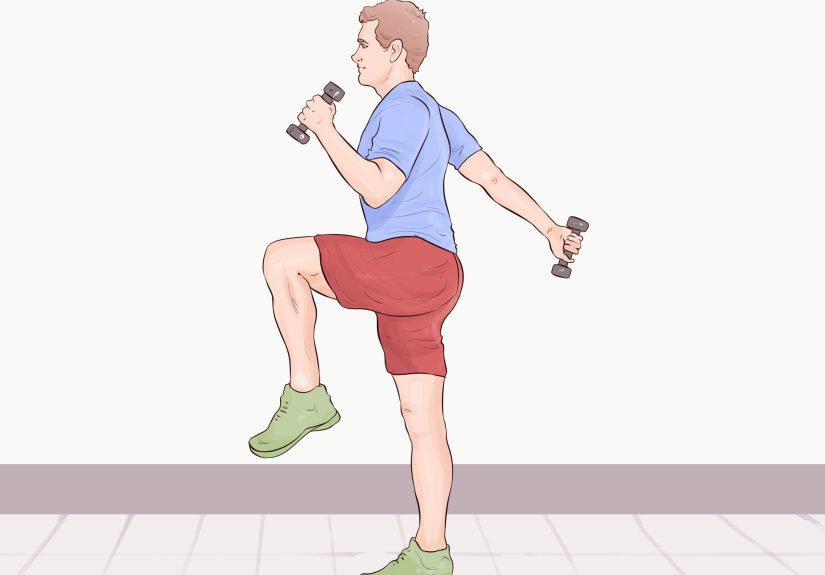
- Medium impact: jumping jacks, high knees, skaters, mountain climbers.
- Spicy: burpees (or “no-push-up burpees”), squat jumps, tuck jumps (if your joints approve).
How Hard Should It Feel?
Use a simple scale called RPE (Rate of Perceived Exertion), from 1 to 10:
- Work intervals: aim for RPE 7–9 (challenging; talking in full sentences is tough).
- Easy pace: RPE 3–4 (you recover, breathing settles).
If you’re brand new, postpartum, returning after time off, or managing a health condition, start with RPE 6–7 and longer
recovery (30 seconds work / 30 seconds easy). The point is to build, not break.
Why This Works
Intervals let you spend a small amount of time at a higher effort, which can drive improvements in cardio fitnesswithout
needing a long workout. Your heart rate rises, your muscles work harder, and you get a lot of “training stimulus” per minute.
Best for: busy schedules, improving conditioning, people who like variety.
Not ideal for (without modifications): acute injuries, uncontrolled blood pressure, or anyone who feels pain (not effort) during impact moves.
Way #2: Full-Body Strength Circuit (No Gym, No Excuses)
Cardio is great, but strength training is the secret sauce for feeling capable in daily lifecarrying groceries, climbing stairs,
and surviving the emotional damage of moving furniture. Building muscle also supports metabolism and long-term function.
The best 10-minute strength workouts focus on big, “compound” movements that train multiple muscles at once.
Here’s a full-body circuit you can do with just bodyweight (or add a dumbbell/band if you have one).
10-Minute Strength Circuit (2 Rounds)
Set a timer for 40 seconds work / 20 seconds rest. Do 5 moves, then repeat once.
Total: 10 minutes.
-
Squat (Lower-body push)
Beginner: sit-to-stand from a chair.
Harder: slow tempo squats (3 seconds down). -
Push-up (Upper-body push)
Beginner: hands on a counter or wall.
Harder: floor push-ups or pause at the bottom. -
Hip hinge (Posterior chain)
Option A: good mornings (hands on hips, push hips back).
Option B: glute bridges on the floor. -
Row pattern (Upper-body pull)
Beginner: band rows anchored in a door (safe setup).
No band? towel rows around a sturdy post, or slow “reverse snow angels” lying face down. -
Core (Anti-movement)
Option A: plank (knees down if needed).
Option B: dead bug (slow, controlled).
Make It Progress (Without Making It Miserable)
Choose one progression each week:
- Add 1–2 reps per set.
- Slow the tempo (more control = more challenge).
- Use a slightly harder variation (incline push-up → lower incline → floor).
- Add a light weight (a backpack works in a pinch).
Strength gains come from repeating the basics consistentlykind of like saving money, except the interest is “opening jars
without negotiations.”
Best for: building muscle, joint support, posture, long-term fitness.
Way #3: “Movement Snacks” (Sneaky Fitness for Busy Humans)
If 10 consecutive minutes feels impossible, you can still get fit by spreading movement across your day.
This approach is often called exercise snackingshort bursts of activity (from 30 seconds to a few minutes)
sprinkled into normal life.
The benefit isn’t just burning a few calories. It’s also breaking up long sitting periods, nudging your heart rate up,
and making movement feel normal instead of a special event that requires a motivational playlist and a life coach.
The “5 x 2 Minutes” Daily Plan
Do five mini-sessions of two minutes each. Set a reminder if needed. Here’s a sample day:
- Snack #1 (Morning): 2 minutes of mobility (arm circles, hip circles, easy lunges).
- Snack #2 (Mid-morning): 2 minutes of brisk stairs or fast walking.
- Snack #3 (Lunch): 2 minutes of squats or chair stands (steady pace).
- Snack #4 (Afternoon): 2 minutes of incline push-ups + standing rows (band/towel).
- Snack #5 (Evening): 2 minutes of core (dead bug, plank, or bird dog).
Want a simpler version? Just do one minute before meals: brisk stairs, fast walking, or bodyweight squats.
It’s short enough that your brain can’t talk you out of itwhich is honestly half the battle.
Best for: beginners, busy schedules, people who hate “workouts” but like feeling better.
How to Choose Your 10-Minute Plan (and Stick With It)
The “best” workout is the one you will do regularly. Use this cheat sheet:
- If you want better cardio fitness: pick HIIT 2–4x/week (or brisk intervals).
- If you want strength and tone: pick the strength circuit 3–5x/week.
- If your schedule is chaotic: pick movement snacks daily.
A Simple 7-Day 10-Minute Schedule
- Mon: Strength circuit
- Tue: HIIT (low impact if needed)
- Wed: Movement snacks (spread out)
- Thu: Strength circuit (different variations)
- Fri: HIIT (or brisk intervals outside)
- Sat: Movement snacks + mobility
- Sun: Easy walk + stretching (still counts)
If that looks like a lot, remember: this is 10 minutes. You’ve spent longer deciding what to watch on streaming services.
Make 10 Minutes Count: Technique, Intensity, and Recovery
1) Don’t Skip the “Warm-up Vibes”
You don’t need a 15-minute warm-up for a 10-minute session, but you do need a minute to ramp up:
marching, easy squats, gentle dynamic movements. It reduces that “my body is not consenting” feeling.
2) Use the Talk Test
For cardio intervals, you should be breathing hard during work sets. If you can casually debate pizza toppings, you’re not
working very hard. If you can’t say a single word, ease off a notch.
3) Recovery Is Part of Training
Ten minutes doesn’t require a nap schedule, but your results improve when you prioritize sleep, hydration, and reasonable
nutrition. Also: if something hurts (sharp pain, joint pain), stop and modify. “No pain, no gain” is a motivational quote,
not a medical guideline.
Common Questions (Because Your Brain Will Try to Negotiate)
“Can you really get fit in 10 minutes a day?”
You can definitely improve your fitness, strength, and energy with 10 minutes a dayespecially if you’re currently doing
little to nothing. As you get fitter, you may choose to add time, but you don’t need to start big to start seeing benefits.
“Should I do HIIT every day?”
Most people do better with HIIT 2–4 times per week, mixed with strength work and lighter movement days.
Daily high-intensity sessions can increase fatigue and make consistency harder.
“What if I’m a total beginner?”
Perfect. Start with the strength circuit using chair squats and incline push-ups, or do movement snacks. Keep the intensity
moderate, focus on good form, and build gradually.
“Do I need equipment?”
No. Bodyweight workouts can be very effective. If you want to level up later, a resistance band and a pair of adjustable
dumbbells are versatile, space-friendly options.
Real-World Experiences: What 10 Minutes a Day Feels Like (About )
When people commit to 10 minutes a day, the first “result” is usually not a six-pack or a heroic montage. It’s something far
less glamorous and far more useful: momentum. The hardest part is often getting over the mental speed bump of
“I don’t have time,” and 10 minutes lowers that barrier enough that you actually start.
Week 1 tends to feel surprisingly… honest. You notice what’s tight, what’s weak, and what makes you breathe like
you just sprinted through an airport. Many beginners report mild soreness (especially after strength circuits), but it’s usually
the “I did something” soreness, not the “I broke myself” sorenessassuming you keep the intensity appropriate and use modifications.
People often find they sleep a bit better on days they move, even if the session is short, because their body finally gets a
clear signal that it’s allowed to be active.
By Week 2, the workout stops feeling like a negotiation. That’s huge. You’re no longer asking, “Do I have the
willpower?” You’re asking, “Which 10-minute option am I doing today?” This is also when many people notice small, sneaky wins:
climbing stairs without holding your breath, getting up from a chair with less effort, carrying bags with more confidence, or
feeling less stiff after sitting. None of these are flashy, but they’re exactly what “getting fit” looks like in real life.
Weeks 3–4 are where people often start craving progression. The first time you choose a lower incline for push-ups,
add a second round of squats, or bump your HIIT work interval from 30 seconds to 40, it feels like leveling up in a video game
except you’re the character and you don’t need to buy downloadable content. Many people report improved mood and energy during
the day, especially with movement snacks, because short bursts can break up the “brain fog” that comes with long sitting stretches.
Another common experience: your identity shifts. Not in a dramatic “I am now a fitness influencer” way, but in a
quiet, powerful way: “I’m someone who moves every day.” That identity makes it easier to stay consistent when life gets messy.
And life will get messy. Ten minutes is flexible enough to survive travel, deadlines, kids, weather, and the occasional couch
that whispers your name.
Finally, people often discover what they actually enjoy. Some love HIIT because it’s fast and sweaty; others prefer strength
circuits because they feel capable; many swear by movement snacks because they feel like cheating (the good kind). The best
long-term strategy is the one you can repeat without resentment. Ten minutes a day is not a punishmentit’s a minimum effective
dose that teaches your body (and brain) that you’re in the habit of taking care of yourself.
Conclusion: Ten Minutes Today Beats “Someday”
If you want to get fit but time is your enemy, make it a smaller enemy. Ten minutes is enough to build cardiovascular fitness
with intervals, improve strength with a full-body circuit, or boost daily energy with movement snacks. Start where you are, keep
it simple, and let consistency do the heavy lifting.
Pick one method for the next seven days. Put it on your calendar. Set a timer. Do the workout badly if you have tobecause “bad
consistency” still beats “perfect intention.”