Table of Contents >> Show >> Hide
- First, the truth about “overnight” lice removal
- Way #1: Use an FDA-approved over-the-counter lice treatment correctly tonight
- Way #2: Choose a faster single-application option when OTC treatment fails or you want the most efficient route
- Way #3: Do a serious wet-combing session tonight if medication is not the right fitor to boost any treatment
- What to clean tonight so lice do not come right back
- What not to do, even if a neighbor swears by it
- When to call a healthcare professional
- How to keep head lice from coming back
- The bottom line
- Common real-life experiences with head lice: what the first night is actually like
If you found head lice at 9:47 p.m., first: breathe. Second: step away from the internet rabbit hole that wants you to coat everyone in mayonnaise and call it medicine. Head lice are annoying, itchy, stubborn little freeloaders, but they are not a sign of poor hygiene, and they do not mean your house has turned into a biohazard movie set.
The good news is that you can make serious progress tonight. The less-good news is that the phrase “get rid of head lice overnight” is a little optimistic. In real life, the fastest effective plan is usually a same-night treatment plus smart follow-up, because some products kill live lice better than eggs, and eggs that survive can hatch later. So this article gives you the three most practical, evidence-based ways to tackle lice fast, safely, and without turning your bathroom into a science fair.
First, the truth about “overnight” lice removal
If you have an active head lice infestation, your goal tonight is simple: kill the live lice, remove as many eggs as possible, and stop the problem from circling back next week like an unwanted sequel. That means choosing a treatment that actually works, using it exactly as directed, and avoiding the common mistakes that make families think lice are “impossible” when the real problem was under-dosing, skipping repeat treatment, or using a remedy with more internet fame than science.
Before you start, make sure you are dealing with actual lice. Dandruff, product buildup, lint, and random scalp debris love to pretend they belong in this conversation. A live crawling louse is the clearest sign. Nits close to the scalp can also matter, but old nits farther down the hair shaft are often already dead or empty. In other words, not every tiny speck is a declaration of war.
Way #1: Use an FDA-approved over-the-counter lice treatment correctly tonight
If you want the fastest do-it-right-now option, start with an over-the-counter head lice product that is made for humans, labeled for head lice, and used exactly according to the package. This is the most practical first move for many families because it is accessible, familiar, and often effective when the directions are followed to the letter.
What usually falls into this category
Most over-the-counter products use one of two active ingredients: permethrin 1% or pyrethrins combined with piperonyl butoxide. These are common first-line options. They typically work well on live lice, but some do not reliably kill every egg. That means the product may do the heavy lifting tonight, while a repeat treatment several days later finishes the job.
How to make it work better tonight
- Read the label before the bottle touches the bathroom counter. Seriously. Lice products are not “close enough” products.
- Do not use conditioner before treatment. Conditioner can interfere with how some lice medicines coat the hair and scalp.
- Apply enough product to fully saturate the scalp and hair. Half a bottle spread across three heads is not thrift. It is optimism.
- Leave it on for the exact recommended time. Not five minutes because the child is wiggly, and not three extra hours because more sounds heroic.
- Rinse as directed, ideally over a sink. This helps keep the medicine from running over the rest of the skin.
- Use a nit comb after treatment. Even when combing is not strictly required, it can help remove dead lice, eggs, and your lingering emotional resentment.
After treatment, do not panic if you still see a few slow-moving lice within several hours. Some products take time to fully finish the job. What you do not want is to immediately reapply medicine on the same night without instructions telling you to do that. If lice still seem fully active later, or the product clearly failed, the smarter move is to switch strategies rather than piling on more chemicals.
Best for
This route is best for families who need a same-night solution, want to start with the simplest evidence-based option, and are treating school-age children or adults with a clearly confirmed lice problem.
Big mistakes to avoid
- Using two lice products at once.
- Using more than the recommended amount.
- Skipping the repeat treatment if the label says one is needed.
- Treating everyone in the house “just in case” without checking for lice.
- Using flea shampoo, random essential oil blends, or household chemicals that do not belong anywhere near a human scalp.
Way #2: Choose a faster single-application option when OTC treatment fails or you want the most efficient route
If you want the closest thing to an “overnight” advantage, this is the category to know. Some newer options can work in a single application, which is why they are often the most appealing choice for families who are tired, busy, or already lost one round to resistant lice.
These options are not a free-for-all. Some are over the counter, some are prescription, and some are age-specific. But when used correctly, they can be more convenient than older products that almost always require a second treatment.
Examples of fast, often one-application treatments
Ivermectin 0.5% lotion is a notable option because it is designed for head lice and is approved for people as young as 6 months. One major reason it gets attention is convenience: many people need only one application. That makes it attractive when families want less combing, less repeating, and fewer bathroom negotiations.
Spinosad topical suspension is another strong option for people 6 months and older. It is often used as a prescription treatment and is known for killing lice effectively, including eggs, which means nit combing may not be required. Translation: less midnight hair archaeology.
Malathion lotion may also be used in certain cases, especially when other treatments have not worked. But it comes with a giant flashing warning label: it is flammable. That means no smoking, no blow-drying, no curling iron, no candles, and no casual “let’s just finish getting ready for bed” styling session anywhere near it.
When this route makes the most sense
- You used an over-the-counter product correctly and it did not work.
- You strongly suspect treatment-resistant lice.
- You want a faster, lower-hassle treatment plan.
- You are dealing with a child who is unlikely to cooperate for repeated treatments and endless combing.
When to talk to a healthcare professional first
Talk to a doctor or pharmacist before treating very young children, during pregnancy or breastfeeding, if the scalp is badly irritated, or if you are unsure what product is safe for the person involved. Also get help if you have already tried several treatments and the lice keep staging a comeback tour. At that point, the issue may be resistance, reinfestation, or simply that the first product was never the right fit.
Way #3: Do a serious wet-combing session tonight if medication is not the right fitor to boost any treatment
Wet combing is the most hands-on option, and yes, it can feel like a tiny, tedious full-time job. But it remains one of the most useful tools you have, whether you use it alone or pair it with medication. It is especially helpful when you want a no-nonsense mechanical method to remove live lice and eggs from the hair tonight.
How wet combing works
You wet the hair, divide it into small sections, and use a fine-toothed lice comb from the scalp to the ends, wiping the comb after every pass. The goal is not elegance. The goal is extraction. Wet hair slows lice down, and section-by-section combing makes it easier to see what you are dealing with.
Why it helps
Wet combing can physically remove lice and some nits right away. It is also useful when a product has already been applied, because it helps clear out the aftermath and reduces the chance that missed bugs hang around long enough to rebuild their tiny empire.
The catch
Wet combing rarely succeeds as a one-and-done miracle by itself. It usually needs to be repeated every few days for at least a couple of weeks if you are using it as the main strategy. But as a same-night action step, it is one of the most effective things you can do with a bright light, a good comb, and more patience than you wanted to need today.
Best for
- Infants too young for many common lice medications.
- People who cannot use a certain product safely.
- Families who want to combine medication with mechanical removal.
- Anyone who likes proof and wants to literally see progress on a paper towel.
What to clean tonight so lice do not come right back
You do not need to deep-clean your entire home like royalty is visiting. Head lice live on human heads, not in your baseboards plotting strategy. Still, a little targeted cleaning is smart.
Do this tonight
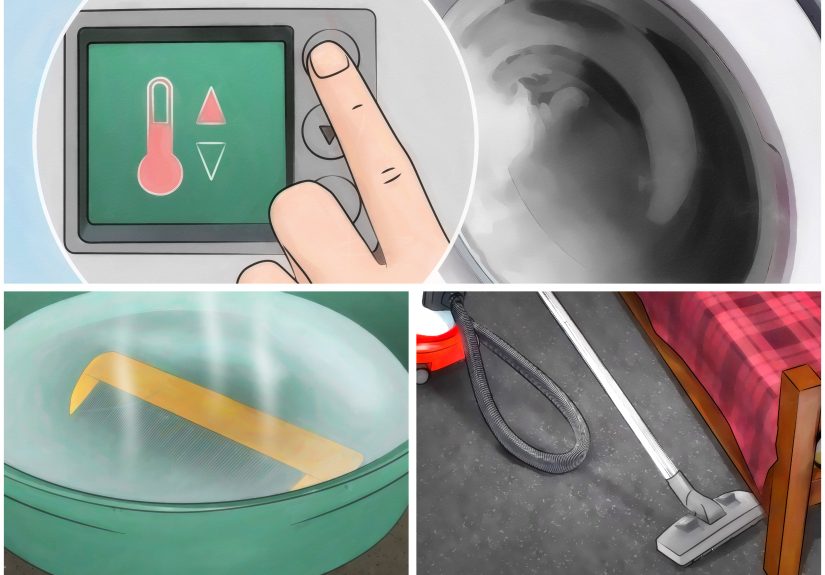
- Wash clothing, pillowcases, sheets, towels, and hats used in the last two days.
- Use hot water and high heat drying when possible.
- Soak combs and brushes in hot water.
- Vacuum places where the affected person sat or lay, such as couches and car seats.
- Seal non-washable items in a plastic bag for two weeks.
The keyword here is targeted. You do not need foggers, fumigant sprays, or a dramatic 2 a.m. stuffed-animal exile unless something was used very recently and cannot be washed. Over-cleaning does not make you more effective. It just makes you tired and weirdly angry at laundry.
What not to do, even if a neighbor swears by it
- Do not use gasoline, kerosene, or anything flammable.
- Do not use pet flea products on people.
- Do not assume mayonnaise, butter, olive oil, or petroleum jelly are proven solutions.
- Do not use a blow dryer to “cook” lice out of the hair.
- Do not keep retreating with product after product without a plan.
- Do not blame hygiene, parenting, or the innocent dog.
Head lice spread mostly through direct head-to-head contact. They do not jump, they do not fly, and they do not care whether the hair is clean, curly, long, short, expensive, or freshly highlighted. They are rude, but they are not sophisticated.
When to call a healthcare professional
You should get expert help if:
- The person is under 2 months old.
- You are not sure the problem is really lice.
- The scalp is raw, infected, or very irritated from scratching.
- You used an over-the-counter product correctly and live lice remain.
- You are pregnant, breastfeeding, or treating someone with special medical needs.
- You need help choosing between OTC and prescription options.
How to keep head lice from coming back
The real battle is not just killing lice tonight. It is avoiding a rematch next week. Check everyone in the household carefully, especially close contacts and bed-sharing family members. Avoid sharing hats, brushes, hair accessories, and headphones that touch the hair. Teach kids to avoid hair-to-hair contact during sleepovers, sports, and group selfies that involve a suspicious amount of head stacking.
Also remember this: old nits can remain in the hair after successful treatment. That does not automatically mean the treatment failed. What matters most is whether live crawling lice are still present.
The bottom line
If you want to get rid of head lice overnight, the smartest strategy is not a magic home remedy. It is one of these three evidence-based approaches: use an FDA-approved over-the-counter treatment correctly tonight, move to a faster single-application option when needed, or do a thorough wet-combing session to physically remove lice and eggs. Then back it up with practical cleaning and the right follow-up timing.
That is the part nobody loves hearing, but it is the truth: beating head lice is usually less about a miracle and more about precision. The families who win are not the ones who buy the most products. They are the ones who use the right product, the right way, at the right time. Lice are persistent, but they are not unbeatable. And yes, you can absolutely start turning this around tonight.
Common real-life experiences with head lice: what the first night is actually like
For many families, the head lice story begins the same way: a child starts scratching during homework, bedtime, or the exact moment you were planning to do absolutely nothing else. You take a look, see something tiny move, and suddenly the evening changes from “maybe tea and a show” to “why am I standing in the bathroom with a flashlight and a fine-tooth comb?” That first moment is usually a mix of disgust, panic, and confusion, which is understandable. Head lice are emotionally louder than they are medically dangerous.
One of the most common experiences is the guilt spiral. Parents often wonder whether they missed something, whether the house is not clean enough, or whether everyone at school will somehow know by morning. In reality, lice are incredibly common among children, especially those between preschool and elementary school age. Families who are usually calm, organized, and medically sensible can still feel instantly frazzled because lice are one of those problems that feel personal even when they are not.
Another common experience is discovering that the child is far less bothered than the adult. The parent is Googling active ingredients like it is a final exam, while the kid is asking whether they can still have waffles tomorrow. That mismatch is normal. Adults tend to imagine the worst-case scenario; children are often just itchy and mildly annoyed that someone is interrupting bedtime.
There is also the very real frustration of combing. Wet-combing sounds simple until you are doing it on thick, curly, long, tangled, or extremely dramatic hair at 10:30 p.m. Families often describe the first session as slow, messy, and weirdly emotional. Some children cry because the scalp is tender. Some parents cry because they just found the third louse and were hoping it was lint. And some households discover that the person with the best lice-combing skills is not the parent at all, but the calm grandparent, the detail-loving older sibling, or the one friend who shows up with clips, patience, and a terrifying level of confidence.
A surprisingly common experience is relief after the first proper treatment. Once a family moves from panic to a clear plan, the whole situation feels more manageable. The bathroom still looks like a tiny salon exploded, but at least there is a system: treat, comb, wash the recent linens, check siblings, and move on. That shift matters. Head lice become much less overwhelming once people understand that they are a nuisance problem, not a moral failure or medical emergency.
Families also frequently talk about the “phantom itch” period after treatment. Even after lice are gone, everyone in the house suddenly feels itchy for a day or two, mostly because lice have now become the main character of the week. That sensation is common. So is repeatedly checking the scalp under every lamp in the house. A little vigilance is smart. Turning lice checks into a full-contact hobby is less helpful.
In the end, the most universal head lice experience is this: the first night feels bigger than the problem actually is. Once treatment starts and the mystery is gone, families usually realize they can handle it. It is inconvenient, yes. It is gross, absolutely. But it is also fixable, and often much more manageable than people fear in that first panicked moment.