Table of Contents >> Show >> Hide
- Why Joint Tape Matters in Drywall Finishing
- Choosing the Right Drywall Tape Before You Start
- 1. Use Joint Tape to Finish Flat Drywall Seams
- 2. Use Joint Tape to Reinforce Inside Corners
- 3. Use Joint Tape for Drywall Repairs, Cracks, and Patch Edges
- When Not to Use Standard Joint Tape
- Pro Tips for a Better Drywall Tape Finish
- Experience Matters: What Real Drywall Work Teaches You About Joint Tape
- Conclusion
If drywall finishing had a mascot, it would probably be joint tape: humble, easy to overlook, and absolutely dramatic when ignored. Skip it, misuse it, or bury it under a mountain of mud, and your wall will let you know. Usually by cracking, bubbling, or telegraphing seams right through your fresh coat of paint like a tiny home-improvement revenge plot.
The good news is that joint tape is not complicated once you understand what it actually does. Its job is to reinforce vulnerable areas in drywall so the compound doesn’t crack, separate, or sink over time. The better news? You don’t need a contractor’s trailer full of tools to use it well. You just need the right type of tape, the right compound, and enough patience to stop telling yourself, “One giant coat should do it.” It should not.
In this guide, we’ll cover the three most practical ways to use joint tape for drywall: finishing flat seams, reinforcing inside corners, and repairing cracks or patch joints. Along the way, we’ll break down when to use paper tape, when mesh tape makes more sense, and where people usually go wrong. If you’ve ever stared at a roll of tape and thought, “This feels too flimsy to matter,” welcome. You’re about to see why it matters a lot.
Why Joint Tape Matters in Drywall Finishing
Drywall panels meet at seams, corners, and repair edges. Those are the weak spots. Joint compound alone can fill those areas, but it is not meant to act like structural reinforcement all by itself. Tape adds strength, helps bridge slight movement, and gives the mud something to bond around so the finished surface stays smoother and more stable.
For most interior drywall work, you’ll run into two common tape options: paper tape and fiberglass mesh tape. Paper tape is the classic choice and is favored for most seams and nearly all inside corners because it folds cleanly and resists stretching. Mesh tape is self-adhesive, which makes it faster for certain repairs and simple seams, but it is thicker and can be more prone to visible buildup if you get heavy-handed with compound. It also commonly performs best when paired with setting-type compound, often called “hot mud.”
Before getting into the three main uses, one quick clarification: ordinary joint tape is typically not the star of outside corners. Those are usually finished with corner bead or paper-faced corner products. So if you’re planning to tape every corner in the room the same way, this is your friendly intervention.
Choosing the Right Drywall Tape Before You Start
Paper Tape
Paper tape is best for flat seams and inside corners. It requires a bed of wet joint compound underneath because it is not self-adhesive. The payoff is a flatter finish, stronger reinforcement in many standard drywall applications, and easier folding into corners thanks to the factory crease.
Fiberglass Mesh Tape
Mesh tape sticks directly to the wall, which speeds things up. It’s especially handy for patching cracks, small repairs, and some seam work. Because it is thicker than paper, it can leave more of a hump if you don’t feather your coats wide enough. It’s also commonly paired with setting-type compound for stronger results.
What Else You’ll Need
Have these basics ready: joint compound, a mud pan, a 4- to 6-inch drywall knife, a wider 10- to 12-inch knife for later coats, sanding sponge or fine sandpaper, utility knife, and primer. If you’re using mesh tape for repairs, setting-type compound is usually the smarter choice for the first coat.
1. Use Joint Tape to Finish Flat Drywall Seams
This is the most common use for joint tape and the one most DIYers think of first. Flat seams appear where two sheets of drywall meet on a wall or ceiling. Done right, the seam disappears. Done wrong, it becomes a decorative ridge that catches sunlight and your regret.
Best Tape for Flat Seams
Paper tape is usually the best choice for flat drywall seams because it lays flatter and offers reliable reinforcement. Mesh tape can also be used in some situations, especially by DIYers who like the convenience of self-adhesive application, but it often requires more careful feathering to avoid a raised seam.
How to Tape a Flat Seam
Start by making sure the seam is clean and free of dust or loose paper. If there are gaps larger than they should be, prefill them and let that compound harden before taping. Next, apply a thin, even bed coat of joint compound over the seam using a 4- or 6-inch knife. Don’t pile it on. You want enough mud to bond the tape, not enough to start a sculpture.
Lay the paper tape over the wet compound and gently press it into place with your knife. Start near the center and work outward toward each end to squeeze out air bubbles and excess mud. The tape should sit flat with good contact underneath. If you press so hard that the mud disappears entirely, you may starve the tape and weaken the bond. If you leave too much mud, you risk bubbles and a bulky seam.
Once the tape is embedded, apply a thin coat over it and feather the edges. Let it dry fully. Then apply a wider second coat, followed by a still wider third coat if needed. Each coat should extend farther beyond the seam to blend it into the surrounding drywall. This gradual widening is what helps a seam vanish instead of announcing itself every time light hits the wall at an angle.
Common Flat Seam Mistakes
One big mistake is overlapping strips of tape where they don’t need to overlap. That creates bumps. Another is using coats that are too thick. Thick coats shrink more, dry slower, and make sanding much more miserable than it needs to be. A third mistake is failing to feather the joint wide enough, especially on butt joints, which usually need more finesse than tapered factory edges.
2. Use Joint Tape to Reinforce Inside Corners
Inside corners are where drywall finishing gets a little more theatrical. These joints need tape not just for strength, but also for shape. You’re trying to create a crisp, straight line where two surfaces meet, and that’s exactly where paper tape shines.
Best Tape for Inside Corners
Paper tape is the preferred option for most inside corners because it has a center crease that lets it fold neatly. That fold helps the tape sit tightly into the angle of the corner without fighting you. Mesh tape can be used in some specialty situations, but for standard inside corners, paper is usually the cleaner and more predictable option.
How to Tape an Inside Corner
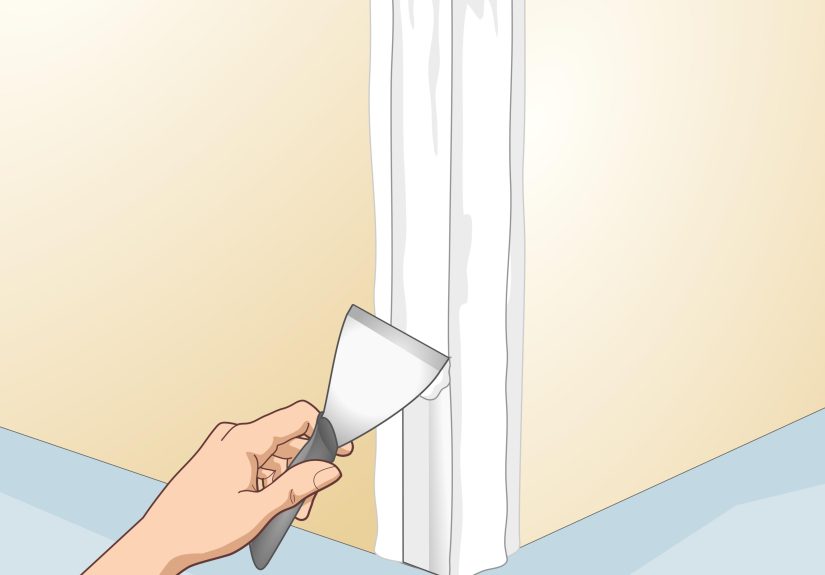
Apply a thin layer of joint compound to both sides of the corner. Cut a strip of paper tape to length and crease it along the center fold if needed. Press the tape into the corner, then use your knife to embed it with light, controlled strokes. The goal is good contact and a straight line, not a mud avalanche.
After the tape is seated, wipe away excess compound and let the first coat dry. For the next coat, many finishers coat one side of the corner at a time to avoid dragging mud across the other side. Once one side dries, coat the other. This takes a bit longer, but it helps keep the corner crisp instead of rounded, lumpy, or mysteriously resembling a frosted pastry.
How to Keep Inside Corners Looking Sharp
Use less compound than you think you need. Heavy buildup in the corner can lead to hairline cracking and ugly ridges. Also, don’t overwork the tape after it’s embedded. Repeated passes with the knife can pull it loose or shift it off center. And if you’re finishing a room with strong side lighting from large windows, be extra careful with feathering and sanding because corners and seams show more under raking light.
3. Use Joint Tape for Drywall Repairs, Cracks, and Patch Edges
The third major use for joint tape is repair work. This includes stress cracks, patch seams, and transitions where new drywall meets old. In these situations, tape is what helps prevent the repair from cracking again and announcing itself six weeks later like an unwanted sequel.
Best Tape for Repairs
Fiberglass mesh tape is often a favorite for repairs because it is self-adhesive and easy to center over a crack or patch seam. It’s especially useful for small to medium repairs where speed and convenience matter. For stronger results, many pros use setting-type compound over mesh tape for the first coat. Paper tape can also be used for repairs, especially where a flatter finish is important or when movement may be a concern.
How to Tape a Crack
For a drywall crack, first remove loose material and widen the crack slightly if needed so you can clean it out properly. Then apply mesh tape centered over the crack, or use paper tape embedded in a bed coat if that’s your preferred method. Cover the tape with compound, feathering the edges several inches beyond the repair. Let it dry or set, then apply additional thin coats until the patched area blends into the wall.
How to Tape Around a Patch
When patching a hole with a drywall insert, tape the seams around the patch after it is secured. Mesh tape is convenient here because you can stick it directly over the joints before applying compound. The key is to center the tape over every seam and extend your finish coats wide enough that the patch doesn’t leave a visible box outline on the wall.
When Repairs Fail
If a crack keeps returning, the issue may not be your tape job. Recurring cracks can point to framing movement, truss uplift, moisture issues, or a loose panel. Tape is reinforcement, not magic. It can improve the finish, but it can’t solve underlying structural problems by sheer optimism.
When Not to Use Standard Joint Tape
Standard flat joint tape is not the best solution for every edge. Outside corners usually call for metal corner bead, vinyl bead, or paper-faced corner bead products. These are designed to create a durable, straight corner that can handle bumps and daily wear. Likewise, cement board joints and specialty wall systems often require tapes and compounds made specifically for those materials. In other words, drywall tape is useful, but it is not a universal cure-all living a secret double life.
Pro Tips for a Better Drywall Tape Finish
Use Thin Coats
Several thin coats nearly always outperform one heavy coat. Thin layers dry more evenly, shrink less, and are easier to feather and sand.
Watch Your Compound Type
Ready-mixed all-purpose or taping compound works well with paper tape for many standard jobs. If you’re using fiberglass mesh tape, especially on repairs, setting-type compound is often the safer choice.
Keep Knives Clean
Dried chunks of compound on your knife edge will drag lines through wet mud and make your finish rougher than it needs to be.
Prime Before Painting
Fresh joint compound and drywall paper absorb paint differently. Primer helps even out porosity and improves the final appearance, especially over repaired areas.
Experience Matters: What Real Drywall Work Teaches You About Joint Tape
If you spend enough time around drywall, you learn that joint tape is one of those materials that looks boring on the shelf and deeply important on the wall. The first lesson most people learn is that tape is less about covering a seam and more about controlling movement. A seam can look perfect on day one with just mud, but the wall has opinions of its own. Changes in temperature, humidity, minor framing movement, and even a little settling can turn an untaped joint into a visible crack line faster than expected.
Another real-world lesson is that beginners often blame the tape when the actual problem is technique. Paper tape gets accused of bubbling, but many bubbles come from poor mud coverage underneath or from overworking the tape while embedding it. Mesh tape gets blamed for humps, but that usually happens when the finish coats are too narrow or too heavy. The tape matters, yes, but the knife work matters just as much.
Experience also teaches you that different rooms expose bad drywall work in different ways. A hallway with overhead lighting may forgive a slightly clumsy seam. A living room with large windows and strong afternoon sunlight will expose every ridge, lap, and sanding scratch like a crime-scene spotlight. That’s why seasoned finishers often widen their final coats more than beginners expect. They know the wall has to look flat, not just be flat in theory.
There’s also a practical rhythm to taping drywall that only becomes obvious after doing it. Flat seams are usually the confidence builders. Inside corners are where patience gets tested. Repairs are where creativity enters the chat. Sometimes a crack needs mesh tape and setting compound for speed. Sometimes an old wall needs careful paper tape work because you want the flattest possible finish. Sometimes the smartest move is not more mud, but stopping to prefill a gap, reset a loose screw, or cut away torn drywall paper before continuing.
One of the most useful lessons from experience is learning when to leave the surface alone. New drywall finishers tend to keep fussing with wet compound, trying to make it perfect immediately. Ironically, that often makes the finish worse. The better approach is to embed the tape cleanly, smooth the coat, and let drying time do its job. The second and third coats are where refinement happens. The first coat is just the foundation.
And finally, real experience teaches respect for the boring details: dust control, dry times, clean tools, sharp knife edges, and primer before paint. None of that is glamorous. None of it makes for thrilling before-and-after social content. But those details are usually what separate a repair that disappears from one that keeps introducing itself every time somebody walks into the room.
So yes, joint tape is a small material. It comes in a roll, costs relatively little, and looks like something you could underestimate. But on a finished wall, it does a big job. Use it well on seams, corners, and repairs, and your drywall will look smoother, last longer, and cause far fewer dramatic surprises.
Conclusion
Joint tape is one of the simplest materials in drywall finishing, but it does some of the heaviest lifting. Use paper tape for most flat seams, rely on it again for clean inside corners, and turn to mesh tape for many crack and patch repairs when speed and convenience matter. Match the tape to the job, pair it with the right compound, and build your finish with thin, controlled coats.
That approach is what helps drywall look finished instead of merely covered. And that’s the whole point. A good tape job doesn’t call attention to itself. It quietly makes the wall look like it was always meant to be that smooth.