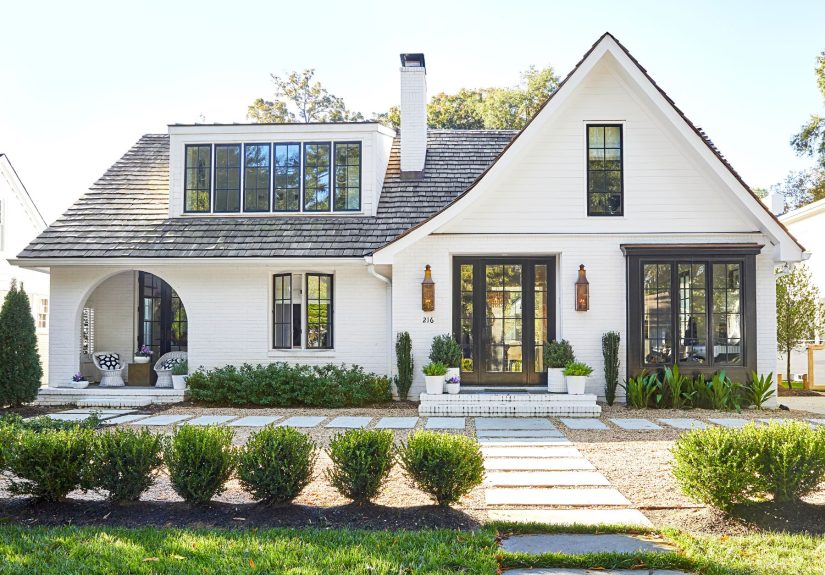
Table of Contents >> Show >> Hide
- Quick Index of Styles
- How to Identify a House Style in 30 Seconds
- Colonial & Early American Classics
- Revival Era & Historic Showstoppers
- Arts & Crafts and Early-20th Workhorses
- Suburban Staples & Modern Icons
- Regional Vernacular Favorites
- Conclusion
- Real-World Experiences: What Living With These Styles Actually Feels Like (and Why It Matters)
- SEO Tags
House styles are basically architecture’s version of “teams”—except your roofline doesn’t trash-talk your neighbor’s roofline
(usually). Whether you’re buying, renovating, or just doom-scrolling listings for fun, knowing the major popular house styles
helps you read a home in seconds: roof shape, window proportions, materials, and those “extra” details that scream
I was built in 1926 and I have opinions.
One note before we start: real houses don’t always behave. Renovations, additions, and trend-of-the-week updates
can turn a pure style into a delightful hybrid. If your place looks like a Colonial married a Craftsman and raised a Ranch,
congratulations—you live in America.
How to Identify a House Style in 30 Seconds
When people say “I love that style,” they’re usually reacting to a handful of repeatable clues. Try this quick scan:
start at the roofline, then read the symmetry, then check materials, and finally spot the
“signature move” (columns, half-timbering, stucco + tile, a big front porch, etc.). Most architectural home styles
are basically a consistent recipe with regional seasoning.
- Roof: steep vs low, gabled vs hipped, dormers or no dormers
- Facade: symmetrical “formal” vs asymmetrical “storybook chaos”
- Windows: tall and narrow, grouped bands, grids/muntins, arches
- Details: columns, brackets, exposed beams, parapets, porches
Colonial & Early American Classics
1) Colonial
The “classic American house” look: orderly, practical, and quietly confident. Colonial homes usually feel balanced and
rectangular, with a centered front door and evenly spaced windows.
- Symmetrical front facade
- Centered entry, simple trim
- Gabled roof, shutters common
2) Georgian
Think Colonial, but with a slightly fancier handshake. Georgian homes lean hard into symmetry and proportion, often with
brick exteriors and a more formal, “I went to finishing school” vibe.
- Strict symmetry and balance
- Brick facade, classical details
- Multi-pane windows in rows
3) Federal
Federal style is lighter and more delicate than Georgian, popular in the early U.S. era. Look for refined details around the
entry—especially elegant fanlights or oval window motifs.
- Graceful entry detailing
- Fanlight/elliptical accents
- Symmetry, restrained ornament
4) Cape Cod
Cape Cods are the cozy overachievers of American house styles: compact, efficient, and charming without trying too hard.
They’re often one-and-a-half stories, with dormers that add light and breathing room.
- Steep roof, small overhang
- Dormers on the front
- Simple, symmetrical layout
5) Saltbox
Saltboxes look like someone gently pushed the back of the roof down—on purpose. That long rear slope helped shed weather and
added space, creating an unmistakable asymmetrical roof profile.
- Long, sloped rear roof
- Asymmetrical side silhouette
- Central chimney is common
6) Dutch Colonial
The giveaway is the roof: Dutch Colonials often wear a gambrel roof (barn-like shape) that boosts attic space. The result is
practical volume with a distinctive “smile” in profile.
- Gambrel roof (two slopes)
- Flared eaves sometimes
- Centered doorway, symmetry
7) French Colonial
Common in flood-prone regions, French Colonial homes often sit raised with broad porches or galleries. They’re built for heat,
humidity, and the kind of summer that makes iced tea a survival tool.
- Raised living level
- Deep porches/galleries
- Hipped roof, tall doors
8) Spanish Colonial
Spanish Colonial style brings warmth to the curb: stucco walls, red clay roof tiles, and arched openings that feel like a permanent
vacation (even when you’re just taking out the trash).
- White/light stucco walls
- Red clay tile roof
- Arches, iron and tile accents
9) Greek Revival
If your house looks like it could host a philosophy lecture on the front porch, you’re in Greek Revival territory. Big columns and
strong symmetry are the headline acts.
- Temple-like columns
- Pedimented gable fronts
- Bold, classical proportions
Revival Era & Historic Showstoppers
10) Neoclassical
Neoclassical homes are grand and formal, borrowing heavily from Greek and Roman inspiration. They’re symmetrical, impressive, and
not shy about announcing the front door with columns.
- Full-height columns common
- Symmetrical, “monument” feel
- Decorated pediments and trim
11) Gothic Revival
Gothic Revival is the drama kid of home architecture—pointy, vertical, and romantic. Look for steep gables, arched windows,
and ornate trim that seems one thunderstorm away from a novel.
- Steep gables, vertical emphasis
- Pointed arches/arched windows
- Decorative vergeboard (“gingerbread”)
12) Italianate
Italianate homes often feel tall and stylish, with narrow windows and prominent eaves. Bracketed cornices are a common tell—like
the house is wearing a fancy hat.
- Bracketed, overhanging eaves
- Tall, narrow windows
- Porches with ornate supports
13) Queen Anne
Queen Anne is the Victorian umbrella’s most recognizable show-off: asymmetrical facades, turrets, textures, and porches that practically
beg for a rocking chair and a plot twist.
- Asymmetry, complex rooflines
- Turrets, bays, wraparound porches
- Mixed materials and colors
14) Tudor Revival
Tudor Revival homes look like they’re auditioning to be an English countryside cottage—in suburban America. The steep roof,
decorative half-timbering, and tall windows sell the story.
- Steep gables, cross-gables
- Half-timber + stucco/brick
- Tall, narrow multi-pane windows
15) French Country
French Country homes mix elegance with a lived-in warmth. They often feature steep roofs, arched openings, and a balanced facade
that feels “estate” without being icy.
- Steep hipped roof
- Arched windows/doors
- Stone/brick/stucco textures
16) Cottage / Storybook
Storybook cottages are deliberately charming: irregular shapes, steep roofs, and details that look hand-drawn in the best way.
If your front door is arched, it might be trying to befriend you.
- Steep roof, quaint scale
- Arched doors, whimsical details
- Asymmetry, cozy proportions
17) Farmhouse (Traditional + Modern)
Farmhouse style started as practical rural design: simple forms, porches, and no-nonsense materials. The modern version keeps the
gabled silhouette but often adds crisp contrasts (hello, black windows).
- Simple gabled massing
- Porch as a “must-have”
- Board-and-batten or lap siding
Arts & Crafts and Early-20th Workhorses
18) Craftsman
Craftsman homes celebrate visible structure and honest materials. They’re famous for welcoming porches, chunky columns, and interior
woodwork that makes you want to whisper, “they don’t build them like this anymore.”
- Low roof, wide eaves
- Exposed rafters/beams
- Tapered porch columns
19) Bungalow
Bungalows are compact, efficient, and big on charm. Usually one to one-and-a-half stories, they often feature a deep front porch and a
roofline that feels sheltering rather than towering.
- Small scale, 1–1.5 stories
- Deep front porch
- Dormers are common
20) Prairie
Prairie style leans horizontal: long lines, low roofs, and an “open to the landscape” attitude. It’s architectural calm, designed to
feel grounded and cohesive rather than ornate.
- Strong horizontal emphasis
- Low-pitched roof, overhangs
- Grouped windows in bands
21) American Foursquare
Foursquares are the efficient “box with benefits.” Their shape maximizes space on tight lots, usually with two stories, a hipped roof,
and a front porch that means business.
- Boxy two-story form
- Hipped roof + center dormer
- Wide front porch
22) Mediterranean Revival
Mediterranean Revival pulls from coastal Europe: stucco walls, tile roofs, arches, and balconies. It’s built to look breezy and
sun-friendly, especially in warm climates.
- Stucco exterior, tile roof
- Arches, courtyards, balconies
- Ornamental iron or stonework
23) Mission Revival
Mission Revival is inspired by historic Spanish missions, especially in the American West. Look for smooth stucco walls, red tile roofs,
and signature curved parapets that make the roofline unmistakable.
- Curved parapet roofline
- White stucco + red tile
- Arches, arcades, bell-tower hints
24) Spanish Colonial Revival
Spanish Colonial Revival modernizes Spanish Colonial cues with showier detail: arched windows, courtyards, decorative tile, and wrought
iron. It’s romantic, textured, and built for indoor-outdoor living.
- Stucco, red tile roof
- Arches + wrought-iron accents
- Courtyard/patio emphasis
Suburban Staples & Modern Icons
25) Ranch
Ranch homes are famously livable: typically one story, long and low, with an easy flow and a casual vibe. They boomed in the mid-20th century
and basically invented “walk in with groceries without climbing Everest.”
- Single-story, low profile
- Open plan, simple lines
- Big picture windows/slider doors
26) Split-Level
Split-levels stack space in half-flights: main living area, bedrooms up, bonus room down. From the street they often look asymmetrical, like
the house is mid-step (which, honestly, it is).
- Staggered floors, short stairs
- Asymmetrical facade
- Efficient on sloped lots
27) Midcentury Modern
Midcentury Modern is clean, open, and obsessed with light. Expect big glass, strong indoor-outdoor connections, and a “less fuss, more function”
approach that still looks effortlessly cool.
- Flat/low roof, clean lines
- Large glass and open layouts
- Post-and-beam vibe
28) Art Deco / Streamline Moderne
Art Deco is geometry with swagger: stepped forms, crisp symmetry, and stylized motifs. Streamline Moderne is its sleeker cousin, favoring curves
and horizontal lines that feel like a vintage train in house form.
- Geometric (or rounded) forms
- Vertical accents or banding
- Decorative motifs, glossy materials
29) Modern & Contemporary
“Modern” usually nods to modernism: minimal ornament, strong forms, and lots of glass. “Contemporary” means current trends: mixed materials,
energy-smart design, and clean lines that evolve as tastes change.
- Simple shapes, minimal trim
- Large windows, open interiors
- Mixed materials (wood/metal/stucco)
30) A-Frame
A-frames are unmistakable: steep triangle roofs that often run nearly to the ground. They’re great at shedding snow and making every weekend feel
like a cabin getaway (even if you’re still answering emails).
- Triangle “A” silhouette
- Big front-facing glass
- Loft-like interior volume
Regional Vernacular Favorites
31) Log Cabin
Log cabins are the original American “build it with what you’ve got” solution. The structure is the aesthetic: stacked logs, simple forms, and a
warm, rustic character that feels timeless.
- Log walls as structure
- Simple, compact footprint
- Porch or stoop common
32) Adobe / Pueblo Revival
Adobe and Pueblo Revival homes are built for heat: thick walls, small openings, and flat roofs. Pueblo Revival often features projecting wooden
beams (vigas) and earth-toned finishes that blend into the landscape.
- Thick stucco/adobe walls
- Flat roof, parapets
- Vigas and rounded corners
33) Shotgun House
Shotgun houses are narrow and linear, with rooms arranged one behind another. They’re closely tied to Southern cities (especially New Orleans),
designed for tight lots and natural cross-ventilation.
- One room wide footprint
- Rooms in a straight line
- Front porch, minimal hallway
Conclusion
The best part about learning popular house styles is that it makes your world sharper: you’ll notice roof pitches, window patterns,
and porch proportions the way foodies notice basil. And once you can name what you’re seeing, you can make smarter choices—whether you’re
shopping, remodeling, or simply arguing (lovingly) with a listing that calls a 1960s split-level “rustic modern farmhouse.”
Use these 33 styles as a field guide, not a rulebook. Homes evolve, neighborhoods mix eras, and the most interesting houses are often the ones that
break a few stylistic “rules” while still keeping a clear architectural backbone.
Real-World Experiences: What Living With These Styles Actually Feels Like (and Why It Matters)
People don’t fall in love with a house style because of a textbook definition. They fall in love because a style changes how daily life works—how
light moves, where shoes pile up, and whether your living room can handle both a holiday gathering and a Tuesday night pizza box. Below are the
kinds of “experience-based” truths homeowners, buyers, and renovators tend to discover once the honeymoon phase meets real life.
Porches are personality tests. In a Craftsman, the porch is an outdoor living room: wide steps, sturdy columns, and the sense that
it’s perfectly normal to wave at neighbors like you’re in a feel-good movie. In a Farmhouse, the porch is practically a mission statement—simple,
welcoming, and ready for muddy boots and a package delivery. In a Colonial, the entry can feel more formal: a centered door, maybe a small stoop or
portico, and a vibe that says, “Please knock like you mean it.”
Rooflines affect your comfort (and your maintenance budget). Steep roofs like Cape Cod, Tudor Revival, and A-Frame are great at
shedding rain and snow, but they also create those charming sloped ceilings that make furniture placement a game of Tetris. Flat-roof traditions like
Adobe/Pueblo Revival can feel wonderfully cool and grounded, but you’ll care a lot about drainage details and roof upkeep. Translation: beauty is real,
and so is gravity.
Layouts quietly shape your habits. Ranch homes get a reputation for being “easy,” and it’s not just marketing. One-level living
simplifies everything from carrying laundry to hosting friends, and the flow tends to be straightforward. Split-levels, meanwhile, create natural
zones—great if you want a quieter bedroom level and a separate hangout space, less great if you discover you own 47 things that must travel
between floors daily (hello, chargers). Shotgun houses can be surprisingly breezy, but privacy is a learned skill when rooms line up like dominoes.
Windows are mood setters. Midcentury Modern and Modern/Contemporary homes often feel bright and expansive because glass is doing a lot
of work. That can be magical in the morning and slightly less magical when you realize you now have opinions about window coverings. Tudor Revival’s
smaller, taller windows and heavier materials can feel cozy and protected—perfect for “library energy,” but sometimes darker inside. Mediterranean
and Spanish-influenced homes often balance light with shade using arches, deep openings, and courtyards, which can make hot climates feel far more livable.
Renovation surprises are style-specific. Craftsman and Bungalow owners often discover the joy (and occasional puzzle) of built-ins,
original trim, and vintage layouts. The good news: character. The bad news: matching old woodwork can turn you into a detective. Midcentury homes often
hide their own surprises—like structural systems that make removing a wall more complicated than your favorite home makeover show suggests. And
if you buy a historic Revival-era home (Greek, Gothic, Italianate, Queen Anne), you may inherit gorgeous details that also require careful maintenance.
The reward is huge, but the learning curve is real.
Neighborhood context matters more than people expect. A pristine Queen Anne in a district of other Victorians feels like it belongs.
The same house surrounded by glassy Contemporary builds can feel like a time traveler—not bad, just different. Buyers often enjoy styles more when
the surrounding streetscape supports them: porch culture in older neighborhoods, wide lots for Ranch homes, or desert landscapes that make Adobe/Pueblo
Revival look like it grew there naturally (because it basically did).
Finally, the most useful “experience” tip is this: don’t just identify a style—identify the lifestyle it implies. Do you want formal rooms or an
open plan? Do you crave symmetry or characterful quirks? Do you want a low-maintenance exterior or are you genuinely excited about decorative trim and
historically accurate paint colors? When your answers match the architecture, the house stops being a pretty shell and starts feeling like home.