
Table of Contents >> Show >> Hide
If your closet currently looks like a clothing-themed escape room (“find the black tee without waking the avalanche”), you’re in the right place.
These closet organization ideas are designed for real life: busy mornings, tiny closets, shared spaces, and that one shelf where
socks go to start new civilizations. We’ll cover smart closet storage solutionsfrom hangers and shelving to shoes and habitsso your
closet stays tidy without requiring a personality transplant.
The Closet Reset That Makes Everything Easier
Step 1: Declutter like a rational adult (with snacks)
Before buying a single bin, do the quick edit. If it’s stained, itchy, or makes you feel like you’re cosplaying as someone who owns a yachtlet it go.
Decluttering first prevents you from “organizing” items you don’t even want. (That’s just clutter with a label maker.)
- Keep: fits now, you wear it, you like it.
- Store: seasonal or occasional, but truly used.
- Donate/Sell: duplicates, “maybe someday,” or anything that sparks regret.
Step 2: Measure once, avoid rage twice
Grab a tape measure and note: closet width, depth, rod height, and shelf spacing. This helps you choose organizers that actually fit.
It also prevents the classic mistake of buying bins that are 0.5 inches too wideaka the difference between “organized” and “why do I bother.”
Step 3: Create zones (so your closet stops freelancing)
Think in zones: hanging (tops, dresses, coats), folding (knits, tees), shoes,
accessories, and a small daily-use zone near eye level. Zoning is the secret sauce of
wardrobe organization because it makes “putting things away” a one-step task instead of a scavenger hunt.
34 Closet Organization Ideas for Clutter-Free Spaces
Hanging Zone Upgrades (Ideas 1–10)
-
Switch to slim, matching hangers.
Bulky mismatched hangers waste space and make your closet look chaotic. Slim velvet or thin-profile hangers fit more garments and keep items from sliding off. -
Group clothes by category, then color.
Put tops with tops, pants with pants, dresses with dresses. Color-ordering is optionalbut it’s an easy way to spot what you actually own (and stop buying “another identical navy sweater”). -
Add a second hanging rod for short items.
If you hang mostly shirts, skirts, and folded-over pants, double-hanging instantly increases capacity. Keep long items (coats, dresses) on a single tall rod. -
Use a valet rod (or foldaway rail) for outfit planning.
A pull-out valet rod creates a “staging area” for tomorrow’s outfit, dry-cleaning pickup, or air-drying. It’s tiny, but it removes a surprising amount of morning chaos. -
Try cascading hooks for vertical hanging.
Great for tanks, bras, camis, or lightweight tops. Use them thoughtfullycascading is awesome until it becomes a dangling fabric chandelier. -
Upgrade your pants game with multi-tier hangers.
Multi-bar pants hangers keep trousers visible and wrinkle-reduced. Bonus: you’ll stop forgetting about the pair you actually love. -
Create a “work week” mini section.
Dedicate a small rod area to Monday–Friday essentials (or gym gear, scrubs, school uniforms). It’s less “decision fatigue,” more “grab-and-go.” -
Protect special-occasion pieces with garment bags.
Keeps dust off suits, formal dresses, and delicate fabrics. Clear-front garment bags make it easy to see what’s inside without unzipping a mystery. -
Install a hook rail for bags and grab items.
A wall-mounted rail with sturdy hooks handles backpacks, totes, hats, and beltsespecially helpful if your closet floor currently functions as a bag parking lot. -
Add a tension rod for scarves or “in-between” storage.
In a reach-in closet, a tension rod on a side wall can hold scarves on rings, small handbags, or tomorrow’s outfit accessories without drilling.
Shelves, Drawers, and Bins That Actually Work (Ideas 11–20)
-
Use shelf dividers to stop folded stacks from melting.
Shelf dividers are the difference between “neat piles” and “a soft landslide.” Use them for sweaters, jeans, tees, or handbags. -
Line shelvesespecially wire shelving.
Shelf liner (or solid shelf panels) creates a smooth surface so bins slide easily and small items don’t wobble or snag. -
Choose bins based on visibility.
Use clear bins for items you forget exist (swimsuits, workout gear) and opaque bins for visual calm (spare linens, sentimental items).
Labels make both types behave. -
Label like a future version of you will be tired.
Labels should be obvious and specific: “Winter Hats” beats “Accessories.” Your future self deserves clarity. -
Try file-folding for tees and knits.
File-folding makes everything visible in one glance. It’s like turning your drawer into a menu instead of a rummage box. -
Use drawer dividers for small items.
Socks, underwear, bras, ties, and workout accessories stay separated, which means you won’t be digging for one sock like it’s a rare artifact. -
Add pull-out baskets for flexible storage.
Pull-out wire or mesh baskets work beautifully for pajamas, leggings, towels, or “stuff I wear but don’t want to fold perfectly.” -
Slide in under-shelf baskets.
Under-shelf hanging baskets add an extra “drawer” without any installation. Great for clutches, scarves, or folded tees. -
Use stacking shelf inserts for vertical separation.
Add shelf risers to create two levels for folded items or bins. This is a small-closet organization hero move. -
Keep a donation bag inside the closet.
When you try something on and it’s a “no,” drop it straight into the donation bag. This prevents the “closet re-clutter boomerang.”
Shoes, Bags, and Accessories Without the Chaos (Ideas 21–28)
-
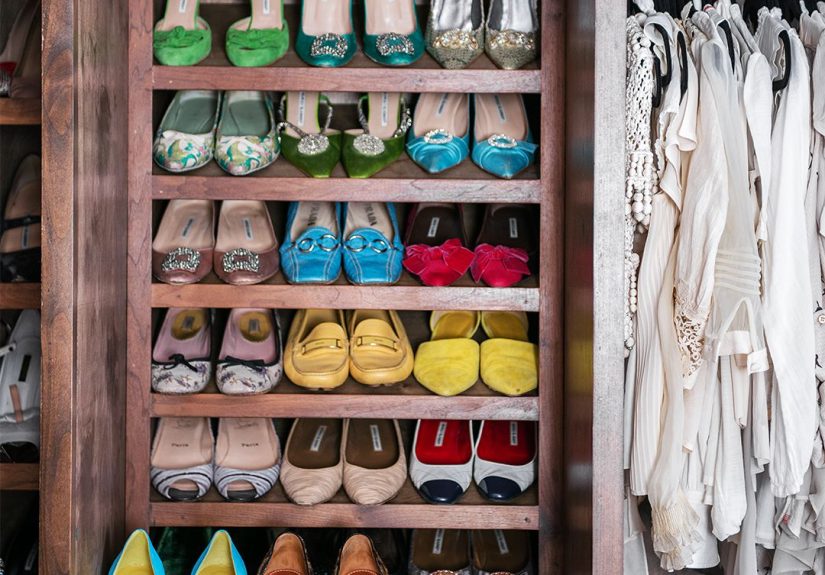
Store shoes in clear, labeled boxes (or drop-front boxes).
Clear boxes help you see options quickly. Labeling avoids the “two identical black flats, zero matched pairs” situation. -
Use a slanted shoe shelf or rack.
Slanted shelves display shoes so you can actually see what you own. Standard racks work toojust avoid piling shoes in the dark like they owe you money. -
Hang an over-the-door organizer.
Yes, it’s great for shoes. It’s also fantastic for hair tools, socks, sunscreen, belts, or rolled-up tanks. Multi-use = less clutter elsewhere. -
Use shelf dividers for purses and totes.
Stand bags upright like books. Dividers keep them from toppling into a “leather domino effect.” -
Add hooks for hats and caps.
A simple hook strip keeps hats visible and off shelves. If you’re a cap person, you’ll be shocked how much space this saves. -
Create a small jewelry station.
Use a hanging jewelry organizer, a shallow drawer insert, or a tray system. The goal: no more untangling necklaces like you’re solving a puzzle for bragging rights. -
Corral sunglasses and watches in a tray.
A divided tray (on a shelf or inside a drawer) keeps daily-wear accessories visible and protected. It also makes mornings smoother. -
Give “daily essentials” a landing zone.
A small basket for keys, wallet, lint roller, and fragrance keeps these items from migrating across your home like they’re on tour.
Small Closet + Rental-Friendly Wins (Ideas 29–32)
-
Use Command hooks and caddies for no-drill storage.
Great for renters: add hooks for bags, a small caddy for accessories, or a hanging spot for tomorrow’s outfit without permanent hardware. -
Add a rolling cart under the hanging zone.
If you have space beneath shirts, slide in a slim rolling cart for folded tees, gym gear, or accessories. It’s basically a movable drawer set. -
Bring in a freestanding garment rack for overflow.
If your closet is bursting, a simple rack can hold “in-season favorites” while your closet stores off-season or occasion-wear.
This works especially well in apartments with limited closet space. -
Use the top shelf like a “seasonal hotel.”
Store out-of-season items up high in labeled bins or vacuum bags. Keep a small folding step stool nearby so this storage stays usable, not mythical.
Maintenance Habits That Keep It Clutter-Free (Ideas 33–34)
-
Adopt the “one in, one out” rule.
When you buy a new item, donate or sell one similar item. This simple rule prevents slow closet creep (the sneakiest kind of clutter). -
Do a two-minute nightly reset (seriously).
Hang up what’s on the chair, toss laundry where it belongs, and return the “I’ll deal with it later” items to their zones.
Two minutes a day beats two hours on a Saturday.
How to Choose the Right Closet Storage Solutions
Not every closet needs a full renovation. If you’re deciding where to spend effort (and money), prioritize items that improve
visibility and access: slim hangers, dividers, bins with labels, and a layout that matches how you actually get dressed.
- Mostly hanging wardrobe? Add a second rod, valet rod, and better hangers.
- Mostly folding wardrobe? Use shelf dividers, baskets, and drawer organization.
- Shoe-heavy closet? Go for racks, slanted shelves, or door storage.
- Shared closet? Split zones clearlyleft/right or top/bottomand label bins so the system survives real life.
What to Avoid (So You Don’t “Organize” Yourself Into More Work)
Some organizers look amazing online but turn into maintenance traps. If a solution requires constant refolding, perfect stacking, or a PhD in bin alignment,
you’ll abandon it. Choose tools that match your habitsbecause the best closet organization ideas are the ones you’ll keep using after the novelty wears off.
- Overstuffed bins that become “junk drawers with handles.” Keep categories simple.
- Too many micro-categories (“summer casual tops” vs. “casual summer tops”). If you need a map, it’s too much.
- Organizers without a home. Every tool needs a zone, or it becomes clutter itself.
Conclusion
A clutter-free closet isn’t about perfectionit’s about making your mornings easier and your space calmer. Start with one zone (hanging, shoes, or accessories),
pick 5–7 ideas from the list, and build momentum. Once your closet has clear zones, the right hangers, and a couple of easy habits,
it becomes less “chaos closet” and more “I actually know where my stuff is.”
Real-World Closet Organization Experiences (The Kind You’ll Recognize)
Here’s what tends to happen when people try to organize a closet: they start with big dreams, buy three matching bins, and then get distracted by a sentimental
hoodie from 2013. Totally normal. The trick is to plan for real behavior, not fantasy behavior. In practice, the most successful closet upgrades are the ones
that reduce decision-making and remove friction from daily routines.
For example, in a small reach-in closet, the “double rod + slim hangers” combo is often the moment everything clicks. Suddenly, shirts and skirts aren’t fighting
for the same three inches of space. Add a single shelf divider and a labeled bin for gym gear, and the closet stops being a messy storage cave and becomes a
functioning system. People usually report the same unexpected benefit: they can see what they own. That visibility alone cuts down on duplicate purchases
(“Oh, I already have five striped tees. Interesting.”).
Shared closets bring their own dramamostly in the form of silent resentment over hanger theft. The fix that tends to work best is dividing the closet into
clearly defined zones: left/right sides, or top/bottom, plus separate bins for accessories. It sounds almost too simple, but it prevents “blended piles,” which
are the first step toward chaos. A small tray for daily essentials also makes shared spaces smoother; when keys and wallets have a home, they stop migrating
to the nearest flat surface like they’re seeking freedom.
Shoe-heavy closets are another classic situation. The pattern is predictable: shoes start neatly, then slowly turn into a floor heap. A basic shoe rack helps,
but the real upgrade is choosing a method that matches your habits. If you like quick visibility, a slanted rack or clear front boxes work well. If you’re
more “out of sight, out of mind,” you’ll do better with a door organizer for everyday pairs and a labeled bin system for the rest. The goal isn’t to store
every shoe like it’s a museum exhibitit’s to make the shoes you actually wear easy to grab and easy to put away.
The most relatable experience of all? Maintenance. Even the prettiest closet will backslide if putting things away feels annoying. That’s why the “two-minute
nightly reset” is such a game changer. People who adopt it don’t magically become tidierthey simply stop letting mess compound. Hang up the jacket, return the
belt, toss laundry in the right place, and you’ve prevented tomorrow’s bigger cleanup. If you want a closet that stays organized, don’t aim for perfection.
Aim for easy. Easy systems survive real life.





 Close
Close