Table of Contents >> Show >> Hide
- What Is a 3D Mammogram?
- How Does a 3D Mammogram Work?
- Is a 3D Mammogram Better Than a 2D Mammogram?
- Who Should Consider a 3D Mammogram?
- What to Expect Before a 3D Mammogram
- What Happens During the Exam?
- Does a 3D Mammogram Hurt?
- Are There Risks?
- Understanding Your Results
- 3D Mammogram vs. Ultrasound vs. MRI
- Real-World Experiences: What People Often Notice
- Conclusion
Quick note: This article is for educational purposes and should not replace medical advice from your healthcare provider.
A 3D mammogram, also called digital breast tomosynthesis, sounds like something that should come with movie glasses and popcorn. Thankfully, it is not that dramatic. It is an advanced breast imaging test that uses low-dose X-rays to create thin, layered images of breast tissue. Instead of looking at the breast as one flat picture, the radiologist can scroll through the tissue layer by layer, a bit like flipping through a very important photo album.
For many people, the big questions are simple: How does a 3D mammogram work? Is a 3D mammogram better than a regular mammogram? Does it hurt? What should I expect? The short answer is that 3D mammography can give doctors a clearer view, may reduce unnecessary callbacks, and can be especially helpful for people with dense breast tissue. But it is not magic, it is not perfect, and it does not replace a conversation with your doctor about your personal breast cancer risk.
What Is a 3D Mammogram?
A 3D mammogram is a breast cancer screening or diagnostic imaging test. Like a traditional 2D mammogram, it uses low-dose X-rays to look for changes in breast tissue, including masses, calcifications, asymmetry, and other findings that may need closer evaluation.
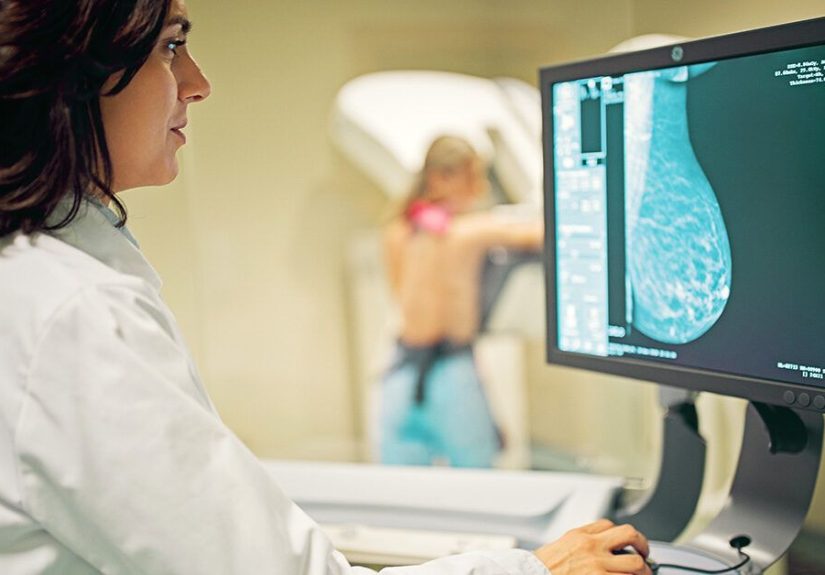
The difference is in how the images are captured. A standard 2D mammogram takes images from a few fixed angles, creating flat pictures. A 3D mammogram takes multiple images from different angles as the X-ray arm moves in an arc over the compressed breast. A computer then reconstructs those images into thin slices, allowing the radiologist to examine the breast tissue in greater detail.
Think of a 2D mammogram as looking at the cover of a thick book. A 3D mammogram lets the radiologist open the book and examine the pages. That layered view can make it easier to separate normal overlapping tissue from areas that look suspicious.
How Does a 3D Mammogram Work?
Step 1: Breast positioning
During the exam, a trained mammography technologist positions one breast at a time on the imaging plate. Another plate gently but firmly compresses the breast. Compression is not anyone’s idea of a spa treatment, but it matters. It spreads out the tissue, reduces motion, lowers the amount of radiation needed, and helps create sharper images.
Step 2: Image capture
For a 3D mammogram, the machine captures multiple low-dose X-ray images from different angles. The breast usually remains compressed for only a few seconds during each image set. The process feels very similar to a regular mammogram, though the machine may move slightly differently.
Step 3: Computer reconstruction
The system uses the images to build a 3D-like view of the breast. The radiologist can review thin slices of tissue, often about a millimeter at a time, depending on the system. This helps reduce the confusion caused by overlapping tissue, which is one of the biggest limitations of traditional mammography.
Step 4: Radiologist interpretation
A radiologist examines the images and compares them with prior mammograms when available. Previous images are extremely helpful because breast tissue patterns can be unique, like fingerprints with more anxiety and fewer detective shows.
Is a 3D Mammogram Better Than a 2D Mammogram?
For many patients, 3D mammography offers advantages over 2D mammography. Studies and clinical use have shown that it can improve cancer detection and reduce false-positive results. A false positive happens when something looks concerning on the screening exam but turns out not to be cancer after more imaging or testing.
That matters because fewer false positives can mean fewer callbacks, fewer extra images, fewer biopsies that are not needed, and fewer days spent imagining every possible worst-case scenario while refreshing your patient portal.
Why 3D mammography may be more accurate
Breast tissue can overlap on a flat 2D image. Overlapping tissue may hide a small cancer, or it may create a shadow that looks suspicious even when nothing dangerous is there. With 3D mammography, the radiologist can look through the tissue in layers. This can make real abnormalities easier to see and normal tissue easier to recognize.
Benefits for dense breasts
Dense breast tissue contains more fibrous and glandular tissue and less fatty tissue. On a mammogram, dense tissue appears white. Unfortunately, many cancers also appear white. This creates the classic “white snowball in a snowstorm” problem.
3D mammography can be especially helpful for people with dense breasts because the layered images provide more separation between tissues. In the United States, mammography reports now include breast density information, helping patients and providers discuss whether additional screening such as ultrasound, MRI, or contrast-enhanced mammography may be appropriate.
Does 3D mammography find all breast cancers?
No screening test finds every cancer. A 3D mammogram improves visibility, but it cannot guarantee detection. Some cancers are difficult to see, some grow between screenings, and some people need additional imaging based on risk factors, symptoms, family history, genetics, or breast density.
Who Should Consider a 3D Mammogram?
A 3D mammogram may be used for routine breast cancer screening in people with no symptoms. It may also be used as a diagnostic mammogram when someone has a breast lump, nipple discharge, focal pain, skin changes, or an abnormal finding on a screening mammogram.
People who may particularly benefit from 3D mammography include:
- People with dense breast tissue
- People who have been called back after previous mammograms
- People at higher-than-average risk of breast cancer
- People whose doctors want a more detailed view of a specific area
- People who have access to 3D mammography as part of routine screening
Screening recommendations vary by organization. In general, many U.S. guidelines recommend that average-risk women begin regular mammography at age 40, though the recommended frequency may differ. Some guidelines suggest every two years, while others recommend annual screening. People at higher risk may need to start earlier or add other tests. Your best screening schedule depends on your age, personal risk, family history, genetics, prior biopsies, breast density, and doctor’s guidance.
What to Expect Before a 3D Mammogram
Schedule wisely
If you still have menstrual periods and your breasts tend to be tender, try not to schedule your mammogram the week before your period. The week after your period may be more comfortable.
Skip deodorant and lotions
On the day of the exam, avoid deodorant, antiperspirant, powder, lotion, perfume, or cream on your chest or underarms. Some products contain particles that can show up on the image and mimic tiny calcifications. Nobody wants their deodorant to get a starring role in a medical report.
Bring prior images
If you had mammograms at another facility, ask that your prior images be sent before your appointment. Comparison with older images can help the radiologist decide whether a finding is new, stable, or worth additional evaluation.
Wear a two-piece outfit
You will need to undress from the waist up, so wearing a two-piece outfit makes the process easier. Jewelry around the neck may also need to be removed.
What Happens During the Exam?
At the imaging center, you will change into a gown. The technologist will ask about symptoms, breast surgery, implants, hormone use, pregnancy possibility, family history, and prior mammograms. Then you will stand in front of the machine while the technologist positions your breast.
Each breast is compressed for a short time while the images are taken. The compression may feel tight, awkward, or briefly painful. Most people describe it as uncomfortable rather than unbearable. The entire appointment often takes about 20 to 30 minutes, while the actual compression time is much shorter.
If you have breast implants, tell the facility when scheduling and remind the technologist at the appointment. Special implant-displacement views may be needed to see as much breast tissue as possible.
Does a 3D Mammogram Hurt?
A 3D mammogram can be uncomfortable because compression is still required. Pain varies from person to person. Breast tenderness, anxiety, positioning, breast size, prior surgery, and timing in the menstrual cycle can all affect comfort.
To make the experience easier, take slow breaths, relax your shoulders, and tell the technologist if the pressure feels too intense. The technologist needs good images, but they also want you to get through the exam without feeling like you wrestled a kitchen appliance.
Are There Risks?
3D mammography uses low-dose radiation. The dose may be similar to or slightly higher than standard 2D mammography, depending on the equipment and whether synthetic 2D images are created from the 3D data. For most people, the benefit of detecting breast cancer early outweighs the small radiation risk.
Other possible downsides include cost, insurance coverage differences, limited availability in some areas, and the possibility of false positives or false negatives. Even with better imaging, some people still need extra views, ultrasound, MRI, or biopsy.
Understanding Your Results
After the exam, a radiologist reviews the images and sends a report to your healthcare provider. You should also receive a patient-friendly summary. Results may say that the mammogram is negative, benign, probably benign, suspicious, or needs additional imaging.
If you are called back, do not panic. A callback does not mean you have cancer. It often means the radiologist needs a closer look at an area that was unclear. This is especially common when there are no prior mammograms for comparison.
Your report may also include your breast density category. If your breasts are dense, ask your doctor what that means for your personal screening plan. Dense breasts are common, but they can make mammograms harder to read and may increase breast cancer risk.
3D Mammogram vs. Ultrasound vs. MRI
A 3D mammogram is not the same as a breast ultrasound or breast MRI. Each test has a different role.
3D mammography is often used as a primary screening tool. It is good at detecting calcifications and many early breast cancers.
Breast ultrasound uses sound waves and may be used to evaluate a lump, check whether a mass is solid or fluid-filled, or provide additional screening in some people with dense breasts.
Breast MRI uses magnetic fields and contrast material. It is often recommended for people at high risk, such as those with certain genetic mutations or a very strong family history.
The best test is not always the fanciest test. It is the test that matches your risk, symptoms, breast density, and medical history.
Real-World Experiences: What People Often Notice
For many people, the emotional part of getting a 3D mammogram starts before the appointment. The calendar reminder pops up, and suddenly the brain becomes an overenthusiastic screenwriter. “What if they find something?” “What if it hurts?” “What if I accidentally wear deodorant?” The good news is that the appointment is usually faster and more routine than people expect.
One common experience is surprise at how professional and practical the process feels. The technologist has usually done this thousands of times. What feels deeply personal to the patient is a normal medical workflow to the imaging team. That can actually be comforting. You are not expected to know how to stand, where to put your arm, or what direction to face. The technologist guides you through it like a very calm choreographer.
Another common reaction is, “That was uncomfortable, but it was over quickly.” Compression can feel strange because the positioning is not exactly how anyone stands in everyday life. The pressure may be intense for a few seconds, then it releases. Some people feel sore afterward, especially if their breasts were already tender. Wearing a comfortable bra and avoiding a high-impact workout immediately after can help.
People with dense breasts often feel relieved to learn that 3D mammography may give the radiologist a better view. Dense breast tissue can make screening more complicated, and receiving a breast density notice can sound alarming. But dense breasts are common. The notice is not a diagnosis; it is information. It is a useful reason to have a thoughtful conversation with your doctor about risk and whether additional imaging makes sense.
Callbacks are another part of the experience that can create stress. Many patients hear “additional imaging” and immediately assume the worst. In reality, callbacks are often about clarification. Maybe the radiologist saw overlapping tissue. Maybe there is a spot that needs magnified views. Maybe the prior images were unavailable. A callback is not a verdict; it is a closer look.
Some people also notice that 3D mammography feels more reassuring because the technology sounds more detailed. That reassurance is understandable, but it is still important to stay realistic. A normal mammogram is excellent news, but it does not mean you should ignore a new lump, nipple discharge, skin dimpling, or persistent focal pain. Symptoms deserve medical attention even after a recent normal screening.
The best experience often comes from preparation. Schedule at a comfortable time, skip deodorant, bring prior images, ask questions, and tell the technologist if you are nervous. You do not have to be brave in a dramatic movie-trailer way. You only have to show up, breathe, and get through a few seconds of pressure for information that can matter a great deal.
Conclusion
A 3D mammogram is an advanced form of breast imaging that creates layered views of breast tissue. It can improve visibility, reduce unnecessary callbacks, and help radiologists find cancers that may be hidden on traditional 2D images, especially in dense breasts. The exam feels similar to a standard mammogram: brief compression, low-dose X-rays, and a short appointment that can provide important information about breast health.
Is it better? For many people, yes, especially when dense tissue or overlapping structures make breast imaging more challenging. But 3D mammography is not perfect, and it is not the only tool. Your age, risk factors, symptoms, breast density, and medical history should guide your screening plan. When in doubt, ask your healthcare provider what type of mammogram is best for you and how often you should be screened.