
Table of Contents >> Show >> Hide
- Why iMovie Is Still a Smart Choice for Beginners
- 1) Quick Timeline Trimming (The Fastest Way to Clean a Clip)
- 2) Split a Clip at the Playhead (The Real “Cut” Move)
- 3) Pre-Trim Before Adding Clips (The “Work Smarter” Method)
- 4) Precision Trimming on Mac (Clip Trimmer + Precision Editor)
- Common Mistakes When Cutting and Trimming in iMovie
- A Simple Editing Workflow You Can Use Today
- Real Editing Experience: What Actually Happens When You Use These 4 Methods
- Final Thoughts
If you’ve ever opened iMovie, stared at a clip, and thought, “Cool… but how do I chop out the part where I accidentally filmed my shoes for 11 seconds?” you’re in the right place.
iMovie is one of the easiest video editors to learn, but it still hides a few powerful tools in plain sight. The good news: you don’t need a film degree, a giant editing keyboard, or a dramatic “director” scarf to make clean edits. You just need a few reliable moves.
In this guide, you’ll learn 4 simple ways to cut, split, and trim video in iMovie on Mac, iPhone, and iPad. We’ll cover quick trims, split cuts, pre-trimming clips before you add them, and precision editing for cleaner results. I’ll also share practical workflow tips, common mistakes to avoid, and a real-world editing experience section at the end to help you edit faster with less frustration.
Why iMovie Is Still a Smart Choice for Beginners
Before we start slicing clips like a sushi chef, let’s give iMovie some credit. It’s still one of the best beginner-friendly video editors because it keeps the core workflow simple: import clips, drag them into a timeline, trim, split, add titles, and export. That sounds basic, but “basic” is exactly what most people need when making vlogs, tutorials, school projects, family videos, short reels, or product demos.
iMovie also does a nice job of helping you grow. You can start with simple cuts and trims, then move into transitions, titles, voiceovers, speed changes, and even more advanced effects later. In other words, iMovie is great for learning the grammar of editing before you jump into more complex tools.
Now let’s get into the four editing methods that matter most.
1) Quick Timeline Trimming (The Fastest Way to Clean a Clip)
Best for: Removing extra seconds at the beginning or end of a clip, tightening awkward pauses, cleaning up “dead air.”
This is the most common edit you’ll make in iMovie, and honestly, it’s the one you’ll use all the time. If your clip starts too early, ends too late, or just drags, timeline trimming fixes it in seconds.
How to Trim on Mac
In iMovie on Mac, go to your timeline and hover over the beginning or end of a clip until the trim pointer appears. Then drag the clip edge:
- Drag outward to make the clip longer (if unused footage exists)
- Drag inward to make the clip shorter
This is the fastest way to tighten a scene. If your talking-head clip starts with you reaching for the camera and ends with you walking off-screen, just trim both ends and keep the good part.
How to Trim on iPhone or iPad
On iPhone or iPad, tap the clip in the timeline and drag the yellow trim handles on either side. It’s super visual and beginner-friendly. If the handle won’t move, it usually means there’s no extra footage available on that end of the clip.
Quick example: Let’s say you recorded a 20-second clip of your dog, but only 8 seconds are actually cute and usable (sorry, camera shake). Trim the front and back until only the best 8 seconds remain.
Pro Tip: Zoom In Before Trimming
If your cut feels “almost right” but still a little off, zoom in on the timeline first. On Mac, you can zoom in from the View menu or with the keyboard shortcut. On iPhone/iPad, pinch open on the timeline. Zooming gives you more visual detail, which makes trimming much more precise.
2) Split a Clip at the Playhead (The Real “Cut” Move)
Best for: Cutting out a mistake in the middle of a clip, inserting B-roll, changing titles between scenes, or breaking one long clip into smaller pieces.
Trimming only edits the edges. But what if the mistake is in the middle? That’s where Split Clip comes in.
Think of splitting like making a clean slice at a specific point. Once the clip is split into pieces, you can delete the bad part, move sections around, or apply different effects to each section.
How to Split on Mac
- Select the clip in the timeline
- Move the playhead (the vertical line) to the exact spot where you want to cut
- Choose Modify > Split Clip or press Command-B
That shortcut alone is worth memorizing. If you remember only one keyboard command in iMovie, make it Command-B. It saves so much time.
How to Split on iPhone or iPad
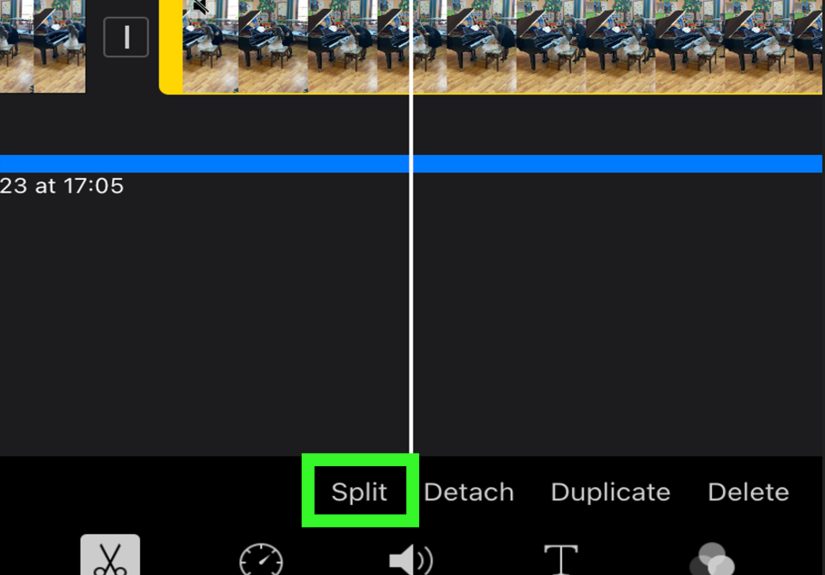
On mobile, place the playhead where you want the cut, tap the clip, then use the Actions menu and tap Split. There’s also a gesture shortcut: tap the clip and swipe down across the playhead like you’re slicing the clip with your finger. It’s surprisingly satisfying.
How to Cut Out a Bad Section
Here’s the practical move most people actually need:
- Split at the start of the mistake
- Split again at the end of the mistake
- Select the middle chunk
- Delete it
Done. You just performed a clean cut.
Example: In a tutorial video, you say “Click the settings button”… and then spend 6 seconds looking for the settings button. Split before the pause, split after the pause, delete the awkward search, and your edit suddenly looks way more professional.
3) Pre-Trim Before Adding Clips (The “Work Smarter” Method)
Best for: Building projects faster, reducing clutter in your timeline, and avoiding extra edits later.
This is the method beginners often skip and then wonder why their timeline looks like a spaghetti monster made of footage.
Instead of dumping full-length clips into your project and fixing everything later, you can trim parts before adding them.
Pre-Trim on iPhone or iPad
When you’re choosing media for a new iMovie project on iPad or iPhone, tap a clip and drag the yellow handles on the preview to select only the portion you want. Then add just that selected section to the timeline.
This is a huge time-saver. If you filmed 10 short clips for a travel montage, you can quickly grab the best moments from each one before they ever hit the timeline.
Why This Helps
- Your timeline stays cleaner
- You spend less time trimming later
- It helps you think like an editor from the start
It also forces a good habit: choose your best moments first. Editing gets easier when you’re working with good material instead of trying to “rescue” every second you shot.
Bonus Mac Alternative: Range-Based Trimming
On Mac, iMovie also gives you more precise trimming tools beyond simple drag-to-trim. One useful option is selecting a range and trimming to that selection. It’s especially handy when you know exactly which part of a clip you want to keep and want iMovie to trim the rest in one move.
If you edit a lot of screen recordings, lectures, or gameplay clips, this method can save you a ton of repetitive edge-dragging.
4) Precision Trimming on Mac (Clip Trimmer + Precision Editor)
Best for: Frame-level control, smoother scene changes, cleaner audio transitions, and edits that don’t feel “choppy.”
If quick trimming is a butter knife, this is the chef’s knife.
iMovie on Mac includes two tools that are incredibly useful once you’re past the beginner stage:
- Clip Trimmer (for more exact start/end trimming)
- Precision Editor (for fine-tuning the point between two clips)
Using the Clip Trimmer
Select a clip in the timeline and open the Clip Trimmer (from the Window menu). The clip trimmer shows the active part of the clip and the unused footage around it. That makes it much easier to trim confidently because you can actually see what you’re cutting from both sides.
You can also drag from the center of the clip in the clip trimmer to keep the same duration while shifting the selected content left or right. This is incredibly useful when the clip length is correct, but the moment you chose is slightly off.
Example: Your clip is 4 seconds long and fits your music beat perfectly, but the best facial expression happens half a second earlier. Instead of changing the clip length, slide the selected content inside that 4-second window.
Using the Precision Editor
The Precision Editor is where iMovie starts acting like a much fancier editor. It lets you fine-tune the exact point where one clip ends and the next begins. You can also adjust transitions and even move audio edit points separately (if waveforms are enabled).
This is how you create smoother edits that feel intentional instead of abrupt.
For example, if someone starts speaking in Clip B just a tiny bit too late, you can adjust the edit point so the transition feels more natural. Or you can let audio carry over slightly from one clip to the next (a classic trick that makes cuts feel smoother).
Don’t worry you don’t need to memorize professional jargon here. Just think of the Precision Editor as your “make it feel better” tool.
Common Mistakes When Cutting and Trimming in iMovie
1. Trimming Too Tight
Beginners often trim every pause so aggressively that the video feels rushed. Leave tiny bits of breathing room, especially in tutorials and interviews. Fast is good. Robotic is not.
2. Splitting Without Zooming In
If you split while zoomed way out, your cut can land a little early or late. Zoom in before important cuts, especially around speech and action moments.
3. Ignoring Audio
A video cut can look perfect and still feel wrong if the audio jumps harshly. If you’re on Mac, use waveforms and precision tools to smooth things out. Even simple edits feel more polished when audio transitions are clean.
4. Keeping Every Clip
You do not need to use all your footage. That’s not editing that’s hoarding. Keep what supports the story and cut the rest.
A Simple Editing Workflow You Can Use Today
If you want a no-stress process, use this order:
- Pre-trim your best moments before adding clips (especially on iPhone/iPad)
- Arrange clips in rough order
- Trim edges to tighten timing
- Split clips to remove mistakes or insert extra shots
- Use precision tools on Mac only where needed (don’t overdo it)
- Preview the full video and fix anything that feels slow or awkward
This workflow keeps you moving. The biggest editing mistake isn’t bad trimming it’s getting stuck over-editing one tiny clip while the rest of the project sits unfinished.
Real Editing Experience: What Actually Happens When You Use These 4 Methods
Let’s talk about the real experience of editing in iMovie, because this is where people either fall in love with editing… or start whispering threats at their laptop.
The first time most people edit a video in iMovie, they do one of two things: they either trim everything from the timeline (which works, but takes forever), or they split clips like a maniac and end up with 47 tiny pieces they can’t keep track of. I’ve seen both. I’ve also done both. It’s part of the journey.
What changes everything is realizing that each of the four methods has a job.
Quick timeline trimming is your daily driver. You’ll use it constantly for cleaning starts and ends. This is the tool that removes the “okay, are we recording?” moments and the extra second where the camera keeps rolling after the action is done. It feels simple, but once you get good at it, your videos immediately look tighter and more confident.
Splitting clips is where you start thinking like an editor instead of just a person chopping video. Splitting lets you shape the rhythm of the story. You can remove a stumble in the middle of a sentence, cut out a random interruption, or insert a reaction shot at exactly the right moment. This is also the step where people start saying things like, “Whoa, that actually looks legit.”
Pre-trimming is the underrated hero. When you’re editing on an iPhone or iPad, pre-trimming before adding clips saves an absurd amount of time. It also helps mentally, because your timeline stays clean. Instead of looking at a huge messy project and feeling overwhelmed, you see a focused set of usable clips. That one change makes editing feel less like chaos and more like assembly.
Precision trimming on Mac is the point where your videos stop feeling “home video” and start feeling intentional. The Clip Trimmer helps when a clip is almost right but not quite. The Precision Editor helps when the cut between two clips feels clunky and you can’t tell why. Usually, the answer is timing. Half a second early. A little audio overlap. A transition too long. Tiny changes, big difference.
One of the best things about iMovie is that it teaches editing habits you’ll use forever: trim the fat, cut on purpose, and keep the story moving. Even if you eventually switch to a more advanced editor, the instincts you build here still apply.
Also, a quick confidence boost: editing is supposed to feel a little messy at first. Everyone makes awkward cuts. Everyone leaves weird pauses in version one. Everyone exports a video, watches it back, and immediately spots five things they missed. That’s normal. The trick is to keep going, not to get stuck trying to make the first pass perfect.
If you practice these four methods for even a few projects, you’ll notice a huge difference. Your edits will be faster, your cuts cleaner, and your videos much more watchable. And yes, you’ll probably start judging the pacing of every video you watch online. Welcome to the club.
Final Thoughts
If you only remember one thing from this guide, make it this: great editing is mostly trimming and splitting well. Fancy effects are optional. Clean timing is not.
Use timeline trimming for speed, split clips for real cuts, pre-trim to stay organized, and precision tools on Mac when you want smoother results. That combination is more than enough to make polished videos in iMovie for YouTube, school, work, social media, or personal projects.
Start simple, keep your cuts intentional, and don’t be afraid to do a second pass. iMovie is built for exactly that.






 Close
Close