Table of Contents >> Show >> Hide
- What Makes an Entryway Feel “Done”?
- Furniture and Layout Wins
- Storage That Looks Good (And Actually Works)
- Lighting and Mood Upgrades
- Walls, Floors, and Color Moves
- Mirrors and Visual Tricks for Small Entryways
- Decor That’s Not Just “Stuff on a Table”
- No Foyer? Small Entryway Ideas That Still Feel Big
- Mudroom-Ready Ideas for Busy Households
- Quick First-Impression Checklist
- Conclusion
- Real-World Entryway Experience ()
Your entryway has exactly one job: greet people like it’s happy to see them. (Even when you’re not.)
It’s the first space guests experience and the last place you see before sprinting out the door with one shoe on.
The best entryway ideas balance function (where do the keys live?) with vibes (why does this feel like a dentist lobby?).
Whether you have a grand foyer, a narrow hallway, or a “front door that opens directly into the living roomsurprise!”
you can create an entry that feels intentional, organized, and genuinely welcoming. Below are 40 practical, style-forward
ideas (with a little humor, because you deserve it) to help your home make a great first impression.
What Makes an Entryway Feel “Done”?
Before we jump into the list, here’s the quick design math that works in almost every home:
- A landing zone: A place to drop keys, mail, sunglasses, and whatever mysterious object you’re holding.
- A path: Clear floor space so people can enter without performing interpretive dance around shoes.
- A focal point: A mirror, art, light fixture, or accent wall that says, “Yes, I meant to do this.”
- Containment: Storage that hides clutter or at least makes it look like you tried.
- Lighting: Warm, layered light makes even a small entryway feel more expensive than it was.
Furniture and Layout Wins
-
1. Use a Slim Console Table (Even a Narrow One)
A console table instantly signals “entryway” and gives you a surface for keys, a lamp, and a little decor.
In tight foyers, go for a skinny profile so the walkway stays clear. -
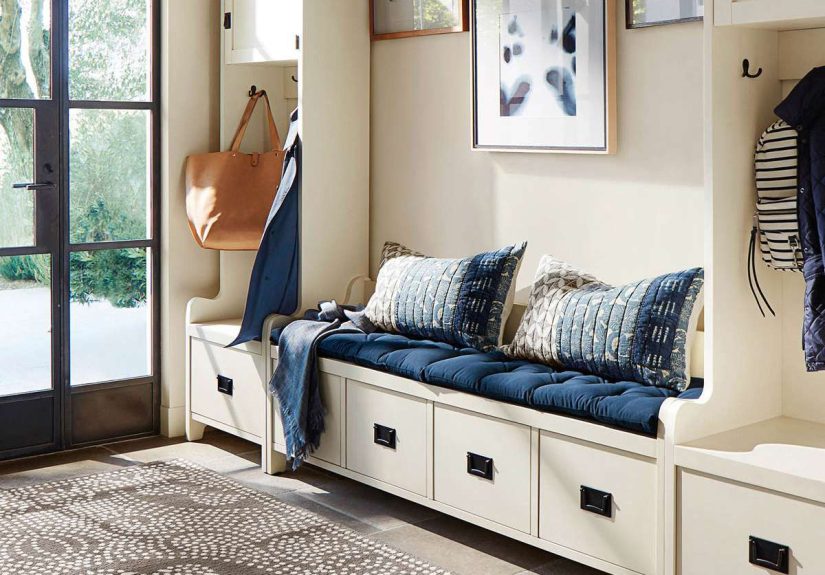
2. Add a Storage Bench That Earns Its Keep
A bench gives guests somewhere to sit and gives you shoe storage below (or inside, if it’s a lift-top).
Bonus: it discourages the “stand-on-one-leg-while-tying-shoes” morning routine. -
3. Try a Floating Shelf as a “Mini Console”
No floor space? Mount a sturdy floating shelf for keys and a small bowl. Pair it with hooks above and you’ve built a functional
entry zone out of basically nothing. -
4. Anchor the Area With a Runner (Long Hallway Edition)
A runner defines the entry path, adds softness, and protects floors in high-traffic zones. Choose a durable, easy-clean option
(low pile is your friend when doors swing open). -
5. Create Symmetry for Instant “Designer Energy”
If you have space, place matching sconces, lamps, or baskets on either side of a focal point. Symmetry reads as calm and intentional
the interior design equivalent of making your bed.
Storage That Looks Good (And Actually Works)
-
6. Define “Drop Zones” for Every Category
Use the “zones” approach: one spot for keys, one for bags, one for shoes, one for mail. When items have a home, clutter stops breeding
like rabbits. -
7. Go Vertical With Hooks and Wall Rails
Wall hooks are the MVP of small entryway decor. Add a rail with multiple hooks for coats and bags, and mount it at heights that match
your household (yes, even kid-height hooks). -
8. Add Closed Storage to Hide the “Real Life”
Closed cabinets, drawers, or baskets conceal the chaoscharging cords, dog leashes, spare hatswhile keeping essentials within reach.
A tidy entryway is often just “clutter with a lid.” -
9. Install a Wall-Mounted Mail Sorter
Mail piles are the gateway clutter. A wall organizer lets you sort immediately: “keep,” “pay,” “recycle,” and “why did they send me this?”
-
10. Add Shoe Trays (Because Weather Happens)
A boot tray protects floors from wet shoes and snow salt and makes cleanup easier. Choose something easy to rinse, and suddenly your entryway
becomes less of a science experiment.
Lighting and Mood Upgrades
-
11. Layer Lighting: Overhead + Accent
Overhead lights alone can feel harsh. Add a table lamp on a console or a plug-in sconce to create a warmer welcome and better nighttime visibility.
-
12. Swap the Builder Fixture for a Statement Pendant
If your entry has a ceiling box, use it. A pendant or lantern instantly elevates a foyer and becomes a focal point that doesn’t take up floor space.
-
13. Use Warm Bulbs (Your Entryway Is Not an Interrogation Room)
Warm light makes your home feel cozy and flatteringespecially in a small entryway. This is the simplest “why does this look nicer?” upgrade.
-
14. Add Motion-Sensor Night Lighting
Place a motion-sensor light near the floor or under a bench for late-night arrivals. It’s practical, safety-friendly, and makes your entry feel thoughtfully designed.
-
15. Highlight Art or a Mirror With Picture Lighting
A small picture light (battery or wired) over a mirror or artwork adds polish. It creates a boutique-hotel vibe without requiring a boutique-hotel budget.
Walls, Floors, and Color Moves
-
16. Paint the Front Door a Bold Color (Inside Counts Too)
A colored door interior becomes a design moment the second you walk in. It’s an easy way to add personality without redoing the whole entryway.
-
17. Try Wallpaper Where It’ll Get Noticed
Entryways are perfect for statement wallpaper because it’s a small area with big impact. Choose patterns that fit your styleclassic, modern, whimsical, moody.
-
18. Add Wainscoting or Beadboard for Texture
Wall paneling adds depth and protects high-traffic walls from scuffs. Paint it the same color as the wall for subtle sophistication or contrast for drama.
-
19. Use a Washable Paint Finish in High-Touch Zones
Entryways take hits: bags, shoes, elbows, mystery smudges. A wipeable finish makes maintenance easier and keeps your first impression looking fresh.
-
20. Make the Floor a Feature With Tile (Or a Great-Looking Rug)
Patterned tile creates instant character. If replacing flooring isn’t in the cards, use a bold runner or layered doormats to get the same “designed” feel.
Mirrors and Visual Tricks for Small Entryways
-
21. Hang an Oversized Mirror to Open Up the Space
A big mirror bounces light and makes a narrow foyer feel larger. It’s also the last-chance outfit check that can save you from a “tag still on shirt” moment.
-
22. Use an Arch Mirror for Instant Softness
Arched mirrors add a gentle shape that contrasts with all the rectanglesdoors, consoles, frames. They look especially good in modern and transitional entryways.
-
23. Place a Mirror Opposite a Window (Light Booster)
If your entry has any natural light, reflect it. Positioning a mirror across from a window visually brightens the entry and helps the whole front area feel more open.
-
24. Choose Glass or Acrylic Furniture for Airiness
In very tight spaces, transparent pieces feel lighter. A glass console or acrylic stool gives you function without making the entryway feel crowded.
-
25. Use a Monochrome Palette to Calm Visual Clutter
Too many colors can make a small entryway feel chaotic. A simple palette (with one accent) keeps the look crisp and lets textures do the talking.
Decor That’s Not Just “Stuff on a Table”
-
26. Style the Console Like a Pro: Tall + Medium + Small
Use a simple formula: something tall (lamp or vase), something medium (frame or plant), something small (tray for keys). It looks curated, not cluttered.
-
27. Add a Catchall Tray That Looks Intentional
The secret to a tidy entryway is giving small items a designated landing pad. Choose a tray you like seeing every daybecause you will.
-
28. Hang Meaningful Art (Not Just “Generic Beige Landscape”)
Your entry sets the tone for the home. Pick art that reflects your personality: a bold print, family photo, vintage map, or something that makes guests smile.
-
29. Bring in a Plant for Instant Life
Even one plant softens the space and makes it feel cared for. If light is low, choose a hardy option or a realistic faux that won’t scream “plastic.”
-
30. Add Scent Subtly (Welcome, Not “Candle Store”)
A light diffuser or gentle candle scent makes your home feel inviting. Keep it subtleyour entryway should say “hello,” not “I have opinions about fragrance.”
No Foyer? Small Entryway Ideas That Still Feel Big
-
31. Fake a Foyer With a Rug + Light + Console
If your front door opens into a larger room, create an “entry zone” using a rug, a small table, and a dedicated light source. Boundaries make it feel real.
-
32. Use a Tall, Narrow Shoe Cabinet
Slim shoe storage cabinets keep footwear contained without sticking out into the walkway. They’re ideal for apartments or narrow hallways where every inch matters.
-
33. Install a Ledge Shelf for Keys and Frames
A picture ledge doubles as a mini landing zone for a key dish and a few small frames. It adds personality and keeps surfaces minimal.
-
34. Put a Small Stool Under a Console (Tucks Away)
Need seating but don’t have space? Slide a compact stool underneath a console table. Pull it out for shoes, tuck it back in when guests arrive.
-
35. Use Door-Back Storage for Tiny Spaces
Over-the-door hooks and organizers can hold bags, scarves, or dog gear without taking up wall space. It’s a quiet way to add storage where none exists.
Mudroom-Ready Ideas for Busy Households
-
36. Build a “Family Station” With Labeled Bins
Give each person a bin or basket for daily essentialshats, gloves, school stuff. Labels turn “where is it?” into “oh, there it is.”
-
37. Add Cubbies for Bags and Shoes
Cubby systems keep items separated and easy to grab. Pair with a bench for comfort and a shoe tray below for mess control, especially in wet seasons.
-
38. Rotate Seasonal Gear (Your Entryway Is Not a Storage Unit)
Swap out heavy coats, boots, and accessories by season. Keeping only what you use right now reduces visual clutter and makes the entryway easier to maintain.
-
39. Create a “Dog Zone” (Leash, Treats, Towels)
If you walk a dog, store leash and bags near the door, plus a towel for rainy days. It keeps the rest of the house cleaner and makes walks less chaotic.
-
40. Add Durable, Easy-Clean Materials Where It Matters
Use wipeable rugs, sturdy baskets, and scuff-resistant finishes. A high-traffic entryway doesn’t need to be preciousjust well planned.
Quick First-Impression Checklist
- Is there a clear place for keys, mail, and sunglasses?
- Can someone take off shoes without balancing like a flamingo?
- Do coats and bags have a home (hooks, closet, rail, or baskets)?
- Is lighting warm and welcoming, not harsh?
- Is there one focal point (mirror, art, wallpaper, pendant) that feels intentional?
Conclusion
The best entryway design isn’t about having a massive foyer or a magazine-perfect staircase.
It’s about making the space work for real lifeshoes, mail, bags, weather, pets, kids, guestswhile still looking like you meant it.
Start with one high-impact change (a runner, a mirror, better lighting, a bench with storage), then build from there.
With a few smart entryway ideas, you’ll get a front-of-house moment that feels polished, welcoming, and refreshingly functional.
Real-World Entryway Experience ()
If you’ve ever tried to “just set it down for a second” in the entryway, you already know how clutter becomes a lifestyle.
The most common experience homeowners describe isn’t a lack of styleit’s a lack of systems. The good news: entryways respond incredibly well
to small, practical upgrades, because the problems are usually predictable (keys vanish, shoes multiply, mail stacks up, coats migrate).
One of the biggest “aha” moments people report is what happens after adding a simple catchall tray and a hook strip. It’s almost comical:
keys stop teleporting, bags stop landing on the kitchen counter, and mornings feel less like a scavenger hunt. The tray doesn’t have to be fancy.
It just has to be consistent. When the tray becomes the default landing spot, your brain stops negotiating with itself. You walk in, you drop keys,
you move on with your life. That tiny ritual is the difference between “always messy” and “mostly under control.”
Another common experience shows up in households with kids (or adults who behave like kids when it comes to backpacks): the height of storage matters.
Installing hooks at kid height sounds too obvious to be impactfuluntil you watch a child actually hang their own backpack for the first time.
It’s not a miracle, but it is a nudge toward order. Pair those hooks with labeled bins, and suddenly the entryway becomes a launchpad instead of a dumping ground.
The experience tends to be the same: the fewer steps it takes to put something away, the more likely people are to do it.
Rugs are another “I didn’t expect this to matter so much” upgrade. A runner can change the entire vibe of a narrow hallway entryway.
People often describe feeling like their home became warmer overnightbecause textiles soften sound, add color, and visually define the space.
Practically, a durable rug also takes the hit from wet shoes and daily traffic. The key experience here is choosing the right kind:
a low-pile, easy-clean runner prevents tripping and makes the entry feel finished instead of fussy.
Lighting is the quiet hero. Many entryways rely on one overhead light that’s either too dim or too harsh. Adding a lamp (or plug-in sconce)
creates a welcoming glow that makes everything look more intentionalart, mirrors, even the coat rack. Homeowners often say their entryway suddenly felt “expensive,”
even though the biggest change was simply switching to warmer bulbs and adding a second light source. It’s also a safety win for evening arrivals.
Finally, the most relatable experience: entryways don’t stay perfect. They stay functional when you edit regularly. Rotating seasonal gear,
tossing worn-out items, and keeping only the current essentials is what makes a “Pinterest entryway” possible in real life. The goal isn’t perfection.
It’s a space that welcomes you home and helps you leave the house without chaos. That’s a great first impressionfor guests and for you.