Table of Contents >> Show >> Hide
- Things to Consider Before Planting Any Maple
- 1. Red Maple (Acer rubrum)
- 2. Japanese Maple (Acer palmatum and cultivars)
- 3. Sugar Maple (Acer saccharum)
- 4. Paperbark Maple (Acer griseum)
- 5. Silver Maple (Acer saccharinum)
- How to Choose the Right Maple Tree for Your Yard
- Real-Life Experiences with Maple Trees in the Yard
- Conclusion: Choosing Your Maple Tree Match
If you’ve ever looked at your yard and thought, “This would look better with a dramatic fall color change,” you’re basically asking for a maple tree. Maples are classic shade trees, famous for their fiery autumn foliage, iconic hand-shaped leaves, and those whirlybird “helicopter” seeds kids (and plenty of adults) love. With more than 130 maple species in the world, though, choosing the right one for your yard can feel like speed dating at the garden center.
To make things easier, we’ll walk through five of the best types of maple trees for home landscapesred maple, Japanese maple, sugar maple, paperbark maple, and silver mapledrawing on expert advice from gardening publications, university extensions, and arborists across the United States. We’ll cover how big each tree gets, what growing conditions it prefers, and what you should know before you plant it near your front walk or under the power lines.
Things to Consider Before Planting Any Maple
Before we dive into specific types of maple trees, it helps to think about the big-picture questions every homeowner should ask:
1. How much space do you really have?
Some maples stay compact and behave nicely in small yards or even containers; others grow 60 feet tall with root systems that wander further than your Wi-Fi signal. Most maple species fall somewhere between USDA hardiness zones 3 and 9, but mature size and canopy spread can vary dramatically. Always check the expected height and width on the plant tag or nursery description before you commit.
2. Sun, soil, and climate
Most maple trees prefer well-drained, slightly acidic soil and full sun to partial shade. Japanese maples and some ornamental species appreciate protection from hot afternoon sun, while larger shade maples can tolerate a wider range of conditions. Plant in early spring or early fall so roots can establish before weather extremes hit.
3. Roots, sidewalks, and foundations
Maples are somewhat shallow-rooted; that’s why you often see surface roots near older trees. Those roots help the tree anchor itself and access oxygen, but they can interfere with lawn mowing or crack sidewalks if planted too close. Fast-growing species like silver maple are especially notorious for this, so placement matters.
4. Maintenance and health
Like all trees, maples can develop issues such as leaf spot, tar spot, or powdery mildew, especially in humid climates or compacted soils. Choosing a species suited to your region and giving it proper spacing, watering, and mulching will go a long way toward keeping it healthy.
Now, let’s meet five standout maple trees that can bring color, shade, and serious style to your yard.
1. Red Maple (Acer rubrum)
If maple trees had a “most popular” superlative, the red maple would win. Native to the eastern half of the United States, red maples are adaptable, tough, and beautifulpretty much the golden retrievers of shade trees.
Quick profile
- Mature size: Typically 40–70 feet tall with a 30–50-foot spread.
- USDA zones: Generally zones 3–9.
- Best features: Red flowers in late winter, red stems and buds, and vibrant red (sometimes yellow or orange) fall foliage.
Why your yard will love it
Red maple is a fast to moderate grower that fills in quickly, making it a great choice if you’d like shade in your lifetimenot just in your grandchildren’s. It tolerates a wide range of conditions, from moist lowlands to drier slopes, which is why it shows up in so many suburban neighborhoods and parks.
The tree’s red “theme” runs year-round: red twigs in winter, reddish new leaves in spring, green leaves with red petioles in summer, and blazing color in fall. If you want a classic maple tree look with multi-season interest, this species is hard to beat.
Things to watch for
Red maples have relatively shallow roots, so give them generous space away from sidewalks, patios, and driveways. In alkaline soils, they can develop nutrient deficiencies (like iron chlorosis), so a soil test before planting is smart. In very wet or very compacted sites, root problems or limb breakage during storms can occur, so planting in well-drained soil with room to grow is ideal.
2. Japanese Maple (Acer palmatum and cultivars)
Japanese maples are the artists of the maple worldsmaller, sculptural, and full of personality. Available as upright trees, arching shrubs, and weeping forms, they come in colors ranging from lime green to deep burgundy, often changing shades through the seasons.
Quick profile
- Mature size: Usually 6–25 feet tall depending on variety.
- USDA zones: Commonly zones 5–8 (some cultivars slightly more cold- or heat-tolerant).
- Best features: Finely cut or palmate leaves, dramatic fall color, graceful structure, and suitability for containers or small yards.
Why your yard will love it
Because they stay relatively compact, Japanese maples are easy to fit into foundation plantings, courtyards, or even large pots on a patio. Many homeowners use them as focal points near entryways or as accent trees in mixed beds. Their foliage often emerges in shades of red, pink, or chartreuse, deepens or changes in summer, and then goes full fireworks display in fall.
For small urban yards where a full-size shade maple would be overwhelming, a Japanese maple offers a “mini” maple experiencebeauty without the massive canopy.
Things to watch for
Japanese maples prefer well-drained, slightly acidic soil and protection from scorching afternoon sun, especially in hotter climates. Leaf scorch is common if the tree dries out or bakes in reflected heat from pavement or south-facing walls. A layer of mulch around the root zone helps moderate soil temperature and retain moisture (but keep mulch away from the trunk).
Because many cultivars are grafted, it’s worth buying from a reputable nursery so you get the size, color, and form promised on the tag.
3. Sugar Maple (Acer saccharum)
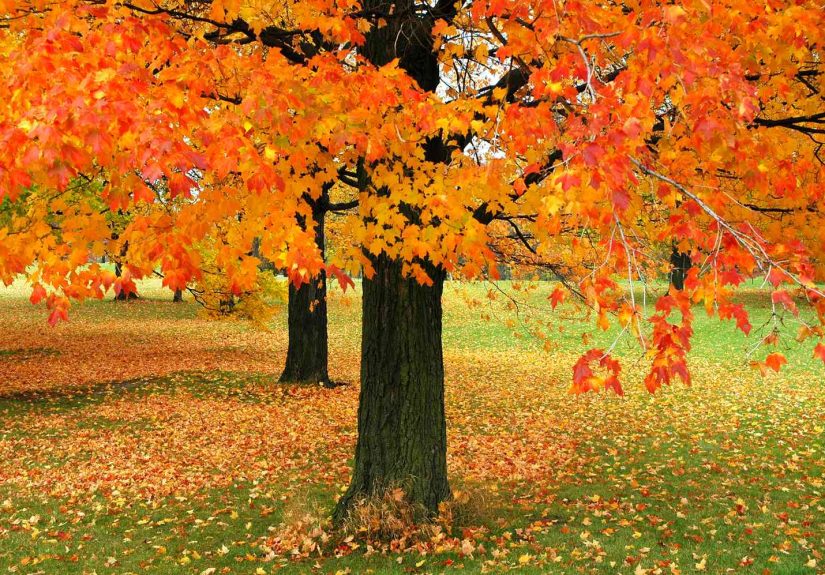
If you picture classic New England fall color, with hillsides blazing orange and gold, you’re probably imagining sugar maples. This species is the primary source of maple syrup, but even if you never tap the tree, it’s an outstanding shade and specimen tree for larger properties.
Quick profile
- Mature size: Typically 60–75 feet tall or more with a broad canopy.
- USDA zones: Generally zones 3–8, thriving in cooler climates.
- Best features: Classic maple shape, dense shade, and brilliant yellow-orange to red fall foliage.
Why your yard will love it
Sugar maple is ideal if you want a long-lived, stately shade tree and you have room for it to spread out. In the right conditions, it forms a strong central trunk with well-spaced branches, casting a big pool of shade on patios, playsets, or outdoor seating areas. Gardeners and tree enthusiasts consistently rank sugar maple among the top trees for fall color.
In colder regions, sugar maple also tends to be more resilient than some ornamentals, shrugging off winter storms that might damage smaller or more delicate trees.
Things to watch for
Sugar maples want well-drained, slightly acidic soil and don’t love urban conditions like compacted soil, road salt, or heavy pollution. In hot, dry climates or heavily compacted lawns, they may struggle. Because the canopy gets large, you’ll want to plant this species far from structures and overhead wiresthis is a “center of the yard” tree, not a “next to the driveway” tree.
4. Paperbark Maple (Acer griseum)
If you’re short on space but big on style, paperbark maple is your new best friend. This small ornamental maple may not tower over your roofline, but its bark alone can steal the entire show in your landscape.
Quick profile
- Mature size: Typically 20–30 feet tall with a similar spread.
- USDA zones: Often listed for zones 4–8.
- Best features: Cinnamon-colored bark that peels in thin curls, attractive three-lobed leaves, and late, long-lasting fall color.
Why your yard will love it
The exfoliating bark of paperbark maple looks good all year but is especially striking in winter when the tree is leafless. The curling strips catch light and create texture, turning a plain bed into a four-season focal point. Its modest height makes it perfect for small front yards, near patios, or as part of a mixed border with shrubs and perennials.
As a bonus, paperbark maple tends to be slow to moderate in growth, so it’s less likely to outgrow its space overnight. For homeowners who want an ornamental maple without constant pruning, that’s a big plus.
Things to watch for
Paperbark maple prefers well-drained soil and consistent moisture, especially while establishing. It can be hard to propagate, so trees are often more expensive than common shade maplesthink “investment piece” rather than bargain rack. Once established, though, it’s relatively low-maintenance and rewards you with decades of bark drama and warm fall color.
5. Silver Maple (Acer saccharinum)
Silver maple is the speed freak of the maple worldfast-growing, big, and dramatic. It gets its name from the silvery undersides of its deeply lobed leaves, which shimmer in the breeze and put on an impressive show during summer storms.
Quick profile
- Mature size: Commonly 50–70 feet tall, sometimes more.
- USDA zones: Typically zones 3–9.
- Best features: Very fast growth, good shade, showy leaves, and strong fall color.
Why your yard might love it
If you’re starting with a bare new lot and want shade fast, silver maple delivers. It’s widely available, relatively inexpensive, and tolerant of a range of soils. In large properties or along the back of a lotwhere there’s plenty of space and limited hardscapeit can provide cooling shade and classic maple aesthetics.
Things to watch for (and take seriously)
Here’s the catch: silver maple has a very shallow, aggressive root system. Those roots can lift sidewalks, crack driveways, and compete with lawn grass or garden plants. The wood can also be somewhat brittle, making branches more likely to break in storms if the tree is poorly pruned or stressed.
If you decide to plant a silver maple, give it generous roomat least 10 or more feet from sidewalks, driveways, and foundations, and even farther is better. Regular structural pruning by a qualified arborist while the tree is young can help reduce storm damage later on.
How to Choose the Right Maple Tree for Your Yard
Still not sure which type of maple tree deserves a spot on your property? Use these quick guidelines:
- Small yard or courtyard? Choose a Japanese maple or paperbark maple. They offer big visual payoff with modest size and work beautifully as “front door” or patio focal points.
- Need a large shade tree with great fall color? Red maple or sugar maple are excellent choices where you have plenty of space, especially in temperate climates with well-drained soil.
- Want super-fast shade? Silver maple will get you there, but only if you plant it well away from structures and hardscape and you’re prepared to manage roots and pruning.
- Care about four-season interest? Japanese maple and paperbark maple shine in spring, summer, fall, and even winter with their branching structure and bark texture.
Whichever variety you choose, plant your maple at the correct depth (root flare at or slightly above soil level), water it deeply during the first few years, and mulch the root zone to protect those shallow roots and keep the soil moist.
Real-Life Experiences with Maple Trees in the Yard
Maples aren’t just botanical Latin names on plant tagsthey become part of your everyday life once they’re in your yard. Here are some practical, experience-based insights that don’t always make it onto the glossy nursery sign.
The “instant shade” silver maple story
Many homeowners fall in love with silver maple for a very understandable reason: it grows fast. Within just a few years, a sapling can turn into a real tree with a canopy large enough to cool your deck or living room windows. People often notice their summer energy bills drop once a mature maple shades the south or west side of the house.
But that speed comes with trade-offs. As silver maples age, surface roots become more noticeable, and mowing around them gets tricky. In older neighborhoods, you’ll see buckled sidewalks and patched driveways right where silver maples were planted too close decades earlier. If you’re set on this species, personal experience from many long-time homeowners says: plant it further back on the property line, where those roots can run free without becoming a tripping hazard or concrete-cracking machine.
Living with a big sugar or red maple
Large shade maples like sugar and red maple change the personality of a yard. In summer, patios become cooler, kids gravitate toward the hammock under the branches, and suddenly everyone wants to sit outside with a book. In fall, the raking sessions can be epic, but so can the leaf piles. Homeowners often describe the yearly leaf show as a neighborhood eventpeople stop to take photos, dogs disappear into leaf mountains, and a simple front yard feels like a park.
The other reality: big trees mean big responsibility. Regular inspections for dead limbs, periodic pruning, and occasionally professional help after a storm are just part of maple ownership. The payoff is worth it for many people, especially when they realize how much shade trees improve property value, curb appeal, and even the perceived size of an outdoor space.
The quiet joy of Japanese and paperbark maples
On the other end of the spectrum are the smaller ornamental maples. Home gardeners often talk about Japanese maples the way some people talk about artthey’re not just plants; they’re living sculptures. A single tree can anchor a whole front-yard design, framed by low shrubs and groundcovers. Because they’re at eye level, you notice the fine textures and subtle color changes almost daily.
Paperbark maples inspire similar devotion, especially in regions with cold winters. When the perennials have disappeared and the lawn is asleep, the peeling cinnamon bark still catches the afternoon light. People who have grown paperbark maple for years often say they appreciate it most in January and February, when everything else looks gray. That kind of four-season interest is hard to put a price on.
Practical maintenance lessons
Over time, maple owners tend to pick up a few universal lessons:
- Mulch is your friend. A simple 2–3-inch ring of mulch (kept away from the trunk) keeps roots cooler, reduces weeds, and makes mowing around the trunk much easier.
- Respect the drip line. Avoid piling soil or building hardscape (like patios) right up against the trunk. The area under the canopy is prime root territorycompaction here can stress even a mature tree.
- Prune with a plan. Light, regular pruning while the tree is young creates a safer, more attractive structure than waiting years and then hacking away big limbs. For major cuts or large trees near the house, bringing in an arborist is money well spent.
- Plant once, enjoy for decades. The biggest “experience tip” is simply to think long-term at planting time. Give your maple enough space, choose a species suited to your climate and soil, and your future self will thank you every fall when the canopy lights up.
Conclusion: Choosing Your Maple Tree Match
Maple trees are popular for good reasonthey bring shade, seasonal color, and structure to a yard in a way few other trees can match. Whether you’re drawn to the bold color and adaptability of red maple, the refined beauty of Japanese maple, the iconic presence of sugar maple, the four-season bark of paperbark maple, or the rapid growth of silver maple, there’s a maple that can fit your space and style.
Think about your yard’s size, your climate, and how quickly you want shade, and then choose the type of maple tree that matches your priorities. Plant it well, give it a little care, and in a few years you’ll wonder how your yard ever looked complete without it.