
Table of Contents >> Show >> Hide
- 1. Halloween Was Once Wrapped in Real Fear, Not Just Fake Cobwebs
- 2. Halloween Pranks Could Turn Into Actual Public Chaos
- 3. Old Halloween Costumes and Decorations Were Fire Hazards Waiting to Happen
- 4. Halloween Treats Were Not Always a Candy Wonderland
- 5. Some Old Halloween Games Were Weird, Superstitious, and Honestly a Little Rude
- Why Halloween Became Less Terrible Over Time
- Experience Notes: What the Terrible Old Halloween Teaches Us Today
- Conclusion
Today, Halloween is the season of pumpkin spice, porch skeletons, candy debates, and adults pretending that “just one more fun-size bar” is a reasonable life choice. But Halloween was not always the bright, goofy, neighborhood-friendly celebration we know now. For much of its long history, the holiday carried a darker edge: fear of wandering spirits, dangerous pranks, fire hazards, odd matchmaking rituals, and enough social chaos to make a town council reach for the aspirin.
The funny thing is that many of the Halloween traditions we love were born from things people once genuinely feared. Costumes, jack-o’-lanterns, trick-or-treating, haunted houses, and even the phrase “trick or treat” all have roots in older customs that were not necessarily cute. They were sometimes messy, risky, superstitious, and downright annoying. In other words, Halloween used to be terrible in exactly the way history often is: fascinating from a distance, but not something you would want happening on your front lawn at midnight.
Let’s wander through five ways Halloween used to be terribleand why modern Halloween, for all its plastic spiders and questionable candy corn opinions, is a major upgrade.
1. Halloween Was Once Wrapped in Real Fear, Not Just Fake Cobwebs
Modern Halloween fear is mostly recreational. You buy a ticket to a haunted attraction, scream at a teenager in a werewolf mask, and then go home to eat nachos. Earlier versions of Halloween were different. The season was tied to ancient autumn festivals, especially Samhain, which marked the transition from harvest time into the darker part of the year. For communities facing cold weather, food shortages, disease, and long nights, this seasonal shift was not just atmospheric. It was serious business.
The “thin veil” was not just a spooky metaphor
In older Celtic traditions, the boundary between the world of the living and the world of spirits was believed to grow thin around this time of year. That idea sounds poetic now, but imagine actually believing that ghosts, fairies, or harmful supernatural beings might be roaming near your home. Suddenly, Halloween is less “cute ghost cookie” and more “please do not let the invisible chaos goblin ruin the livestock.”
Bonfires, disguises, and offerings were not merely festive decorations. They were ways to manage fear. People lit fires, wore masks or costumes, and left food or drink as offerings. These practices eventually helped shape Halloween costumes and trick-or-treating, but the original mood was not exactly “family photo shoot in matching pumpkin pajamas.” It was protection, appeasement, and survival.
Even the jack-o’-lantern had a creepier past
Before pumpkins became the cheerful orange mascot of fall, people in parts of Ireland and Scotland carved turnips or other root vegetables into eerie faces. These lanterns were sometimes used to ward off spirits or frighten neighbors. If you have never seen a carved turnip lantern, picture a tiny haunted potato with dental problems. Pumpkins, which became more common in North America, were easier to carve and much more photogenic. History really did us a favor there.
2. Halloween Pranks Could Turn Into Actual Public Chaos
The phrase “trick or treat” sounds adorable now because the “trick” usually means a child in a dinosaur costume will stare at you silently until you provide chocolate. But earlier Halloween mischief was not always harmless. In the 19th and early 20th centuries, Halloween in some American communities became known for pranks, vandalism, and disorder.
Young people soaped windows, removed gates, rang doorbells, overturned outhouses, damaged property, blocked roads, and generally treated the neighborhood like a low-budget disaster movie. Some pranks were silly. Others crossed the line into expensive, dangerous, and deeply irritating. There is a big difference between “boo!” and “your wagon is now on the roof.”
“Mischief Night” was more than a cute phrase
In some regions, the night before Halloween or Halloween itself became associated with mischief. Names varied by place: Mischief Night, Devil’s Night, Cabbage Night, Goosey Night, and other local terms. The details changed, but the theme was similar: teenagers and young adults used the season as permission to cause trouble.
By the 1920s and 1930s, the problem became serious enough that civic leaders, parents, and newspapers began pushing for organized Halloween activities. Community parties, parades, and haunted houses were promoted partly to keep young people busy and away from destructive pranks. In that sense, the modern haunted house was not just a spooky attraction. It was also a clever social containment device: “Please come scream indoors instead of destroying public property.”
Trick-or-treating helped tame the chaos
One reason trick-or-treating became popular in the United States was that it gave Halloween a structure. Children could dress up, visit neighbors, and receive treats. Adults could participate by handing out candy instead of waking up to find their porch furniture mysteriously relocated. The ritual turned potential conflict into a transaction: you give kids sweets, and they do not become tiny masked agents of property damage.
This does not mean every old Halloween prank was wicked. Many were playful and creative. But when mischief became vandalism, Halloween could be less charming folk tradition and more municipal headache with lanterns.
3. Old Halloween Costumes and Decorations Were Fire Hazards Waiting to Happen
Today’s Halloween safety advice often focuses on reflective tape, battery-operated candles, and flame-resistant costumes. That advice exists for a reason. Earlier Halloween celebrations relied heavily on open flames, homemade decorations, paper materials, long costumes, and masks that were not exactly designed by a safety engineer.
Imagine a child in a flowing paper costume walking past a candlelit jack-o’-lantern on a crowded porch. Now imagine that porch also has dried cornstalks, crepe paper, and excited children running in six directions. Congratulations: you have invented a festive insurance claim.
Open flames were everywhere
Before LED candles and battery-powered lanterns, jack-o’-lanterns were commonly lit with real candles. Candles also appeared in windows, party games, decorations, and spooky displays. In an era of flammable fabrics and homemade costumes, fire was one of Halloween’s least charming traditions.
Costumes were often made from whatever was available: old sheets, paper, cotton, gauze, or loose fabric. Masks could block vision. Shoes might not fit the costume. Capes could drag. Even today, safety experts warn families about flame resistance, visibility, choking hazards, and tripping risks. In the past, those risks were often higher because materials and safety standards were less developed.
Halloween parties had their own hazards
Old-fashioned Halloween parties often included games involving candles, mirrors, apples, dark rooms, and blindfolds. Some were harmless fun, but others now look like a committee met and asked, “How can we combine romance, superstition, and poor lighting?”
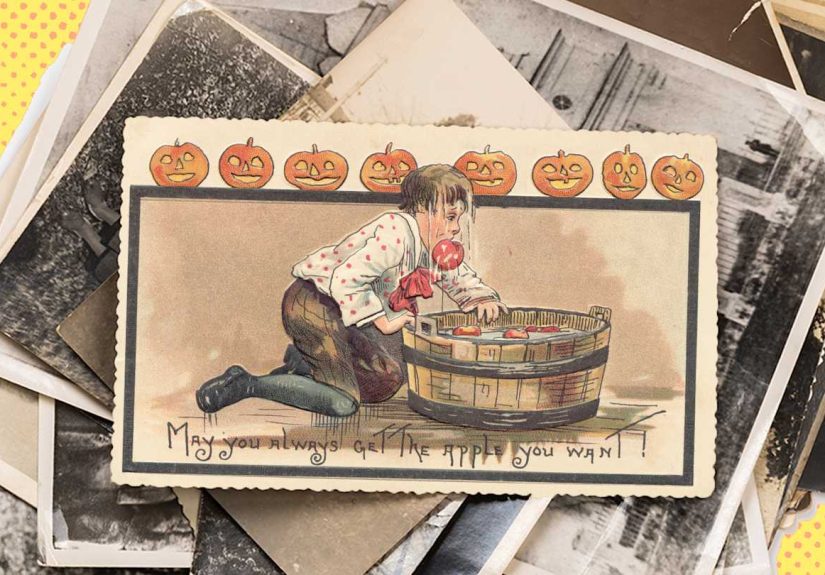
Bobbing for apples, for example, was once a popular party activity. It may sound quaint, but putting multiple faces into the same tub of water is not exactly a public health triumph. Add heavy costumes, crowded rooms, candles, and excited guests, and old Halloween parties could be surprisingly risky.
4. Halloween Treats Were Not Always a Candy Wonderland
Modern trick-or-treating is a highly organized candy economy. Kids compare chocolate bars. Parents inspect wrappers. The neighborhood quietly ranks houses by treat quality. But Halloween treats were not always so predictable, individually wrapped, or child-centered.
Older customs such as souling and guising involved people going door to door for food, coins, or small offerings. In some traditions, visitors might sing, perform, pray for the dead, or wear disguises. The exchange had a social or religious meaning long before it became a candy run sponsored by miniature peanut butter cups.
Food customs could be awkward and unequal
In medieval and early modern traditions, poorer people might visit wealthier homes and receive food in exchange for prayers or performances. While that helped inspire later door-to-door customs, it also reflected real poverty and social inequality. Halloween-style begging was not always a playful childhood adventure. Sometimes it was tied to need.
When Halloween customs crossed into North America and changed over time, treats varied widely. Children might receive nuts, fruit, coins, homemade goods, or whatever a household had on hand. Commercial candy became more central later, especially as packaged sweets became affordable, widely available, and convenient.
Candy panic became its own Halloween problem
Another way Halloween became terribleat least for parents’ blood pressurewas the rise of fear around tampered candy. Stories about poisoned treats, razor blades, and dangerous strangers became a major part of modern Halloween anxiety. Serious cases involving random strangers have been extremely rare, and many widely repeated stories turned out to be rumors, misunderstandings, or crimes involving someone known to the victim rather than anonymous neighbors.
Still, the fear changed the holiday. Parents were told to inspect candy, avoid homemade treats from unknown houses, and discard anything unwrapped or suspicious. That advice is sensible, but the panic also added a layer of suspicion to a holiday built on knocking at strangers’ doors. Halloween became a strange mix of community trust and parental detective work: “Happy Halloween! Now let’s examine this chocolate under interrogation lighting.”
5. Some Old Halloween Games Were Weird, Superstitious, and Honestly a Little Rude
Halloween was not always focused on monsters. In the 19th and early 20th centuries, many Halloween parties revolved around fortune-telling, romance, and marriage predictions. Young women, in particular, were encouraged to play games meant to reveal their future husbands. The holiday became a strange seasonal dating app powered by apples, mirrors, nutshells, and questionable logic.
Romantic fortune-telling could get intense
Some old Halloween games asked participants to peel an apple in one long strip and toss the peel over the shoulder. The shape it formed was supposed to reveal the first initial of a future spouse. Other games involved looking into mirrors by candlelight, walking backward, or using nuts to predict romantic compatibility. Compared with modern dating, this may not sound much worse, but at least apps do not usually require you to stand in a dark room hoping a ghostly husband appears in reflective glass.
These games reveal a lot about social expectations. Halloween gave young people a playful way to talk about love and marriage, but it also reinforced pressureespecially on womento think of romance as destiny. The fun came with a side order of social anxiety.
Superstitions could be cruel or exclusionary
Old Halloween imagery also leaned heavily on witches, black cats, ghosts, and symbols of bad luck. While many of these images are now part of the holiday’s charm, they came from older fears and stereotypes. Witches were often depicted as ugly, dangerous, or socially threatening. Black cats were linked to superstition. Unmarried women, outsiders, and unusual people could be treated as spooky figures rather than full human beings.
That does not mean every old Halloween image was malicious. Vintage postcards and party traditions can be beautiful, strange, and artistically fascinating. But they also remind us that the past was not automatically wholesome. Sometimes “old-fashioned Halloween” came with old-fashioned prejudice, fear, and a truly impressive commitment to making single people uncomfortable at parties.
Why Halloween Became Less Terrible Over Time
The good news is that Halloween changed. Communities found ways to transform fear, mischief, and disorder into organized fun. Trick-or-treating became more child-centered. Schools, churches, clubs, and neighborhood groups hosted parties and parades. Commercial candy made treats easier and safer to distribute. Fire safety improved. Costumes became more visible and regulated. Parents became more aware of traffic risks, allergies, choking hazards, and safe routes.
Most importantly, Halloween became a shared community ritual. It still has spooky roots, but the modern version is often about creativity, neighborliness, and controlled chaos. The ghosts are fake. The skeletons are plastic. The scariest thing on many porches is the price of full-size candy bars.
Halloween’s terrible past also explains why the holiday remains so interesting. It is not just a candy night. It is a cultural mashup of ancient seasonal fears, Christian observances, immigrant traditions, urban mischief, commercial creativity, folklore, and family fun. That messy history gives Halloween its personality. A perfectly tidy holiday would never have produced jack-o’-lanterns, haunted houses, fake graveyards, or inflatable dragons wearing witch hats.
Experience Notes: What the Terrible Old Halloween Teaches Us Today
Looking at the old Halloween makes modern celebrations feel a lot more intentional. The best Halloween experiences today borrow the excitement of the past without dragging along the worst parts. A neighborhood Halloween party, for example, can keep the thrill of costumes, storytelling, and nighttime adventure while avoiding vandalism, unsafe flames, and awkward fortune-telling rituals that make everyone named “Mildred” feel personally targeted.
One useful lesson is that structure makes Halloween better. When communities organize trunk-or-treat events, school parades, porch decorating contests, haunted trails, or family-friendly festivals, they are doing what earlier towns learned the hard way: give seasonal energy somewhere fun to go. Without structure, mischief can spill into trouble. With structure, the same energy becomes creativity. A teenager who might once have thrown eggs at a fence can now design the best zombie makeup on the block. That is progress, and also much easier to clean up.
Another experience-based takeaway is that safety does not have to ruin the mood. Reflective tape, flashlights, glow sticks, and battery candles can actually make Halloween look better. A glowing candy bucket is more fun than an invisible one. LED candles let jack-o’-lanterns shine without turning a porch into a fire-risk exhibit. Face paint can be more expressive than a mask that makes a child walk into a mailbox. Modern safety tools do not make Halloween boring; they keep the spooky parts pretend.
Food traditions also show how Halloween has matured. In the past, treats were inconsistent and sometimes tied to begging, scarcity, or social obligation. Today, families can think more carefully about allergies, choking hazards, and moderation. A good Halloween experience does not require a child to eat half a pillowcase of candy before bedtime, although many children will present strong legal arguments in favor of doing exactly that. Parents can sort candy, trade unsafe items, save favorites, and still let the night feel magical.
The social side matters too. Halloween works best when it feels welcoming. Old Halloween sometimes reinforced fear of outsiders, unmarried women, immigrants, or anyone considered strange. Modern Halloween has the chance to do the opposite. It can be a night when people celebrate difference: superheroes, ghosts, princesses, robots, vampires, dinosaurs, historical figures, and one kid who insists on being a traffic cone. Inclusive Halloween events help turn old superstition into shared imagination.
Finally, Halloween’s terrible history reminds us that fun is often built by editing the past. We keep the costumes but lose the dangerous disguises. We keep the lanterns but replace the open flames. We keep the door-to-door excitement but add adult supervision and candy checks. We keep the spooky stories but leave behind the real fear. That is the secret of Halloween’s survival: it changes costumes every generation. The holiday used to be terrible in many ways, but it also gave us the raw materials for one of America’s most creative celebrations. The trick was learning which traditions deserved a treatand which ones needed to stay buried.
Conclusion
Halloween used to be terrible in ways that are almost hard to imagine now. It was shaped by real fears of spirits and winter, rough door-to-door customs, destructive pranks, unsafe costumes, open flames, food worries, and strange fortune-telling games. Yet those rough edges helped create the holiday we recognize today. Modern Halloween is safer, sweeter, more organized, and more inclusive because generations of families and communities learned how to turn fear into fun.
So the next time you see a glowing pumpkin, a superhero with a candy bucket, or a skeleton lounging on someone’s porch like it owns the mortgage, remember: Halloween has come a long way. It used to be smoky turnips, vandalized streets, and romantic apple-peel prophecies. Today, it is mostly chocolate, costumes, and decorative cobwebs that somehow stay up until Thanksgiving. That is not just seasonal fun. That is historical improvement.





 Close
Close