Table of Contents >> Show >> Hide
- Before You Start: The 60-Second Setup That Makes Every Method Easier
- Way #1: The Cup-and-Cardboard Slide (The Classic “Catch & Release” Move)
- Way #2: The Towel Drop-and-Scoop (For Speedy Climbers and Awkward Corners)
- Way #3: The “Herd It Into One Exit” Method (No Touching, No Sprinting)
- Way #4: The Soft Net Catch (Fast, Controlled, Great for Walls)
- Way #5: The Glove-and-Support Hold (Only If You Must Handle It)
- After the Catch: Release, Cleanup, and “Please Don’t Come Back” Prevention
- Common Questions (Because Lizards Love FAQs)
- Extra: Real-World “Experiences” and What Usually Works (500+ Words)
- Conclusion
A lizard in the house is usually a tiny, accidental roommateone who pays rent in mosquito control and then
panics when it realizes your living room does not, in fact, have a nice sun-warmed rock. The goal here isn’t revenge.
It’s a quick, humane catch-and-release that doesn’t involve sticky glue boards, drama, or you doing interpretive dance
with a broom.
This guide covers five trap-free methods that work on most small indoor visitors (geckos, anoles, skinks, fence lizards,
etc.), plus the “aftercare” steps that keep everyone healthier (including you) and helps prevent an encore
performance.
Before You Start: The 60-Second Setup That Makes Every Method Easier
Lizards are fast, lightweight, and easily stressed. A tiny bit of prep turns “impossible” into “done in two minutes.”
1) Calm the room
- Close interior doors to shrink the lizard’s “escape map.”
- Turn off ceiling fans (a gust can send your target into a new zip code).
- Dim the lights if possiblemany lizards chill out when the room is less bright.
2) Gather the right “catch kit”
- Clear container (cup, deli container, plastic bin, or glass jar).
- Stiff paper (cereal-box cardboard, thin cutting mat, junk mail, or an index card taped together).
- Soft towel (hand towel or small bath towel).
- Optional: disposable gloves, an aquarium net, flashlight/headlamp.
3) Safety note (not scaryjust smart)
Reptiles can carry germs like Salmonella. You don’t need hazmat gear, but you do want to wash
hands well afterward and avoid touching your face mid-mission. If young kids, older adults, pregnant people, or anyone
immunocompromised is in the home, be extra careful and keep the interaction minimal.
4) The “don’t do this” list
- Don’t use glue traps (they’re cruel and often lead to injury or death).
- Don’t grab a lizard by the tail. Many species can drop their tail when stressed.
- Don’t chase it around the whole house like it owes you money. Cornering calmly works better than sprinting.
Way #1: The Cup-and-Cardboard Slide (The Classic “Catch & Release” Move)
If you learn only one technique, make it this one. It’s fast, humane, and requires zero lizard-handling skills.
Best for
- Lizards on floors, counters, walls (if you can reach), or windows
- Small-to-medium house geckos/anoles
- Anyone who prefers “no-touch” solutions
How to do it
- Approach slowly with the container held low and steady. Sudden overhead movement = instant sprint.
-
Cover the lizard with the container in one smooth motion. If it’s on a wall,
angle the container so the rim meets the surface flush. - Slide the cardboard under the rim, keeping it snug against the surface so the lizard can’t slip out.
- Flip the container while maintaining pressure between container and cardboardlike turning a pancake, but less delicious.
- Carry it outside, set the container down, and gently lift the edge of the cardboard to give it an exit.
Pro tips
- Clear containers reduce panic because you can keep track of where the lizard is inside.
- If your “cardboard” is flimsy, double it up or tape two pieces together for stiffness.
-
If the lizard is on a textured wall and the rim won’t seal, try a container with a slightly flexible rim (thin plastic)
or move to the towel method below.
Real-life example
Kitchen counter gecko at 10 p.m.? Put a cup over it, slide a cereal-box panel underneath, and escort it to a bush outside.
Minimal chaos, maximum dignity.
Way #2: The Towel Drop-and-Scoop (For Speedy Climbers and Awkward Corners)
When a lizard is on curtains, behind a plant, under a cabinet lip, or generally acting like it trained for parkour,
a towel is your gentle “pause button.”
Best for
- Lizards on fabric (curtains), uneven surfaces, or near clutter
- Situations where a container can’t get a clean seal
- People who need a method that works even when the lizard moves fast
How to do it
- Hold the towel open with both hands like a little curtain.
- Drop it gently over the lizard (aim to cover it fully, not smack it).
- Gather the towel edges so the lizard stays inside the “tent.” Keep your grip relaxedno squeezing.
- Guide the lizard into a container by placing the container opening against the towel and letting the lizard walk in.
- Release outside as usual.
Pro tips
- Use a soft, medium-weight towel. Too thin = escape artist; too heavy = unnecessary stress.
- If the lizard is on a wall, start the towel from below and lift upward, so it “falls” into the fabric instead of bolting upward.
- Keep the towel away from your face afterward until you wash it (basic hygiene win).
Way #3: The “Herd It Into One Exit” Method (No Touching, No Sprinting)
Think of this as polite crowd control. You aren’t chasing the lizardyou’re reorganizing its choices until “go into the box”
becomes the easiest option.
Best for
- Lizards in open rooms that keep darting away
- People who don’t want to get close
- When the lizard is on the floor and you can control the space
How to do it
- Close doors to block routes to bedrooms, closets, and under-everything.
- Remove floor clutter if you can (shoes, bags, laundry pilesaka “lizard hotels”).
- Place a box or container on its side with the opening facing the lizard’s likely path.
-
Use a broom, yardstick, or a piece of cardboard as a “moving wall” behind the lizardslowly narrowing
where it can go. - Once it goes into the box/container, slide cardboard over the opening and carry it outside.
Pro tips
- Move in slow, steady arcs, not jabs. Jabbing screams “predator!”
- If it freezes, that’s not failurethat’s your opening. Place the container calmly and finish.
- If it keeps heading toward a specific wall, it might be aiming for a crack or warm appliance. That’s useful intel for prevention later.
Way #4: The Soft Net Catch (Fast, Controlled, Great for Walls)
A small aquarium net or butterfly net is a trap-free tool that lets you catch a lizard quickly without pinning it under
something heavy.
Best for
- Lizards high on walls/windows where a cup is awkward
- Skittish lizards that bolt when you get close
- Anyone who wants a “one-and-done” capture
How to do it
- Position the net slightly in front of the lizard’s head (where it’s likely to run).
- Move the net forward in one smooth motion until the lizard is inside.
- Twist the net handle slightly to close the opening (not tightjust enough so it can’t slip out).
- Transfer to a container by placing the container opening against the net and gently guiding the lizard in.
- Release outside in a sheltered spot.
Pro tips
- A net with soft mesh reduces the chance of snagging toes.
- Don’t swing like you’re playing tennis. Controlled movement is kinder and more effective.
- If you only own a fishing net with coarse mesh, use the towel method instead.
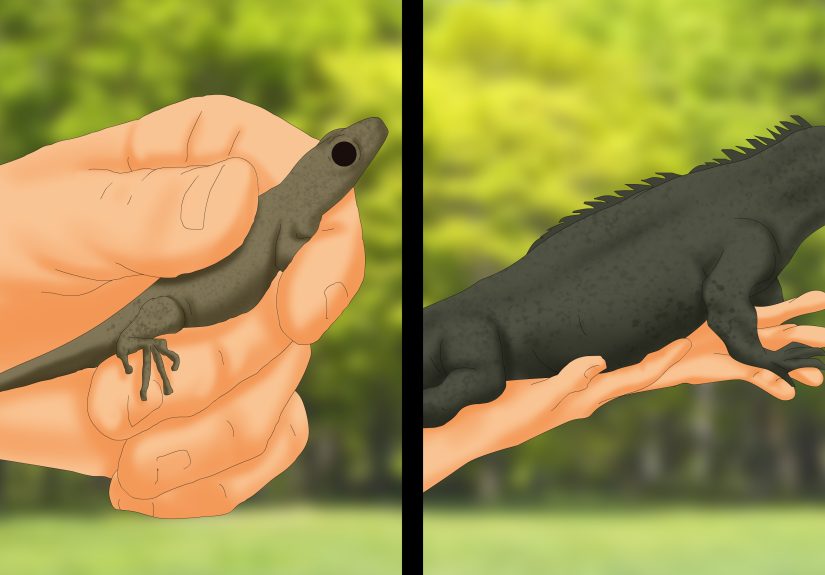
Way #5: The Glove-and-Support Hold (Only If You Must Handle It)
Most of the time, you don’t need to touch the lizard at all. But if it’s in a tight spot (behind a fridge, inside a closet track,
or under an appliance lip), gentle handling can be the quickest, safest solutionif you do it correctly.
Best for
- Lizards stuck in tight spaces where tools can’t reach
- When the lizard is calm or moving slowly
- People comfortable with brief, careful contact
How to do it (humane handling basics)
- Wear disposable gloves (better hygiene, better grip, less stress for everyone involved).
- Scoop, don’t pinch: slide fingers under the body so the lizard is supported. Think “tiny skateboard,” not “tiny claw machine.”
- Support the whole body with a second hand if needed. Avoid squeezing the ribs or belly.
- Never lift by the tail. Tail loss is a defense response and can be stressful and risky.
- Place it into a container (or directly outside) gently and promptly.
When NOT to handle
- If you suspect it could be a venomous species (rare indoors, but possible in the Southwest).
- If it’s unusually large, aggressive, or you can’t confidently support it.
- If local rules prohibit handling/relocating certain wildlife in your area.
Special caution: The Gila monster is a venomous lizard native to parts of the U.S. It’s not a typical “house guest,”
but if you’re in desert regions and see a thick-bodied, beaded-looking lizard with bold patterning, give it space and contact local professionals.
If a bite happens, seek medical advice immediately.
After the Catch: Release, Cleanup, and “Please Don’t Come Back” Prevention
Where to release it
For an accidental indoor visitor, releasing it outside in a sheltered area (near shrubs, rocks, or ground cover) is usually best.
Avoid tossing it into the wide open like you’re launching a paper airplane. Put it down gently so it can hide.
Important: Wildlife relocation rules vary by state, and moving animals far away can be stressful for them. When in doubt,
release it on your own property (or very nearby) or contact local wildlife authorities for guidance.
Hygiene (quick but worth it)
- Wash hands thoroughly with soap and water after the catch.
- If you used a towel, wash it (especially if it contacted droppings).
- Wipe down any surfaces with droppings using normal household cleaning practices.
Stop the sequel: simple prevention that actually works
Most indoor lizards are there for one of three reasons: gaps, bugs, or cozy hiding spots.
Fix those and you’ll see fewer surprise sprints across the wall.
- Seal entry points around doors, windows, pipes, and vents. Even small gaps can be enough.
- Repair screens and add door sweeps if daylight is visible under exterior doors.
- Reduce insects (their food source): keep lights from attracting bugs near doors/windows and manage indoor pests.
- Declutter near walls (stacks of boxes, unused planters, and “mystery corners” make excellent hideouts).
Common Questions (Because Lizards Love FAQs)
What if I can’t find it again?
Close doors, check warm, hidden spots (behind appliances, near windows, under furniture edges), and try again later.
Many lizards become more active at dawn/dusk. A flashlight can help you spot eye-shine or movement.
Is it okay to keep it as a pet?
If it’s a wild native lizard, keeping it may be illegal or harmful to the animal. If it’s clearly a pet species
(or you suspect someone lost one), contact local animal control, a reptile rescue, or a vet clinic that handles exotics.
Don’t release a pet reptile into the wild.
Do lizards bite?
Small house lizards rarely cause more than a mild pinch if handled roughly. Use the container/towel/net methods and you’ll likely avoid bites entirely.
Extra: Real-World “Experiences” and What Usually Works (500+ Words)
Below are a few common scenarios people run intobasically the greatest hits of “Why is there a lizard in that place?”
along with the approaches that typically save the most time (and dignity).
The Midnight Kitchen Counter Sprint
This one starts with a snack run and ends with you making direct eye contact with a gecko like you’ve interrupted a very private moment.
The instinct is to grab the nearest objectusually a sandaland try to “shoo” it. The problem? Shoe-based herding is loud, chaotic,
and tends to launch the lizard into a new hiding spot behind the toaster (which is apparently a luxury condo for reptiles).
What usually works faster is the cup-and-cardboard slide: lights slightly dimmed, doors closed, cup down smoothly, cardboard under,
then a calm escort outside. The whole thing can take less time than your microwave would’ve needed to reheat pizza.
The Curtain Climber
A lizard on curtains has exactly two life goals: go up and go behind the fabric. If you try to “cup” it on a wavy curtain,
you’ll get a sloppy seal and a lizard that teleports to the other side of the room. This is where the towel drop shines.
A soft towel turns “vertical escape route” into “temporary blanket fort,” and once it’s covered, you can gather the edges gently
and guide it into a container. People worry the towel will hurt itdone correctly, it’s often less stressful than repeated failed grabs.
The Laundry Room Standoff
Laundry rooms are warm, full of hiding gaps, and (somehow) always have something leaning against the wall. If a lizard darts behind the washer,
you can spend 45 minutes moving appliances or you can play smarter: close the door, reduce the room’s clutter, then set up the “herd into one exit”
plan. Place a box on its side near the wall, use a piece of cardboard as a slow-moving barrier, and give the lizard one obvious “safe” path
(into the box). It’s surprisingly common for the lizard to choose the darkest, most sheltered optionwhich, conveniently, is the one you placed there.
You didn’t trap it; you just offered it the best real estate in the room and then escorted it outside.
The Wall-Hugging Blur
Some lizards do that thing where they stay tight to the wall and move in burstslike a tiny, scaly Roomba with anxiety.
If you keep missing with a cup, a soft net can be the cleanest solution. The trick is not to swing. You position the net where it wants to go,
then move forward smoothly so it runs into the net. After that, transferring to a container is easy and keeps handling minimal.
People who try a net for the first time often say, “Oh. That was… shockingly reasonable.” Exactly.
The “I Have Guests in Ten Minutes” Panic
If speed matters, don’t waste time hunting for the “perfect” tool. A plastic food container and a cereal box can solve most situations.
Close doors, pick the method that matches the lizard’s location (cup-and-cardboard for flat surfaces, towel for awkward spots, net for walls),
and commit to slow, deliberate movements. The funny part is that moving calmly often catches the lizard faster than frantic chasingbecause frantic
chasing convinces it your home is a predator-themed obstacle course.
Conclusion
Catching a lizard without a trap is mostly about two things: controlling the space and choosing the right tool.
Start by closing doors and calming the room, then pick a methodcup-and-cardboard, towel drop, herding, net, or gentle gloved handling.
Release it in a sheltered outdoor spot, wash up afterward, and seal the entry points so your next “visitor” stays outside where it belongs.
Quick, humane, and no glue boards required. Everyone wins.