
Table of Contents >> Show >> Hide
- Core Sacred Signs and Protective Egyptian Symbols
- Royal Power, Kingship, and Identity
- Solar, Temple, and Eternal-Life Symbols
- Animal and Deity Symbols in Egyptian Mythology
- Soul, Afterlife, and Cosmic Order
- Why These Ancient Egyptian Symbols Still Matter
- Experiences of Encountering Egyptian Symbols in the Modern World
- SEO Tags
Ancient Egypt did not do boring. This was a civilization that looked at birds, beetles, crowns, reeds, snakes, rivers, and even a nicely looped rope and said, “Excellent. Let’s make that sacred.” The result is one of the richest visual languages in human history. Egyptian symbols were not just decorative flourishes carved onto tomb walls for style points. They carried real meaning about life, kingship, protection, rebirth, cosmic order, and the terrifying possibility that your heart might betray you in the afterlife.
That is why ancient Egyptian symbols still fascinate people today. They show up in jewelry, tattoos, museum galleries, movies, book covers, and enough home decor to fill a small pyramid. But behind the modern obsession is something deeper: these symbols were part of a complete worldview. For the ancient Egyptians, images were powerful. A symbol could protect the dead, strengthen a ruler, call on a god, or help maintain maat, the divine balance of truth, order, and justice.
This guide breaks down 57 of the most important Egyptian symbols and their meanings in plain English. Some are famous, like the ankh and the Eye of Horus. Others are less flashy but just as important, such as the shen ring, the menat necklace, and the ba bird. Together, they reveal how Egyptian hieroglyphics, royal insignia, sacred animals, and funerary imagery created a visual system that was elegant, complex, and surprisingly memorable. In other words, ancient Egypt had elite branding long before marketing teams existed.
Core Sacred Signs and Protective Egyptian Symbols
1. Ankh
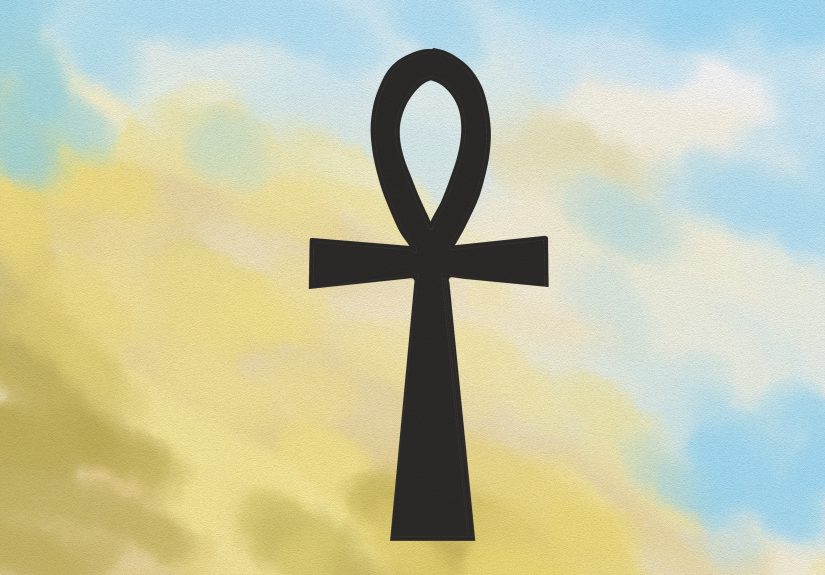
The ankh is the classic Egyptian symbol of life. Gods often hold it out to kings and the dead, as if handing over breath, vitality, and divine permission to keep existing.
2. Djed Pillar
The djed symbolizes stability, endurance, and lasting strength. Later Egyptians linked it to the backbone of Osiris, which gave it a powerful association with resurrection.
3. Was Scepter
The was scepter represents dominion, authority, and power. It appears in the hands of gods and rulers, making it the ancient Egyptian version of “I am absolutely in charge here.”
4. Eye of Horus (Wedjat)
This symbol means protection, healing, wholeness, and restoration. Because Horus’s injured eye was magically restored, the wedjat became a favorite amulet for both the living and the dead.
5. Eye of Ra
Closely related to solar power, the Eye of Ra symbolizes divine fury, protection, and the active force of the sun god. It protects, but it can also absolutely ruin your day.
6. Scarab
The scarab beetle stands for rebirth, transformation, and the daily renewal of the sun. Egyptians connected its rolling motion with the sunrise and the god Khepri.
7. Tyet (Isis Knot)
The tyet, often called the Isis knot, symbolizes the goddess Isis and her protective power. It was especially common in funerary contexts where safety in the afterlife mattered a lot.
8. Shen Ring
The shen ring is a loop with no visible end, symbolizing eternity, protection, and everything enclosed by the sun’s path. Think of it as the ancient Egyptian symbol for forever.
9. Sa Symbol
The sa sign literally means protection. It was worn as an amulet and often appears with protective deities, especially those associated with childbirth and safeguarding the vulnerable.
10. Nefer Sign
The nefer symbol means beauty, goodness, and perfection. It could suggest moral goodness, physical beauty, or simply that something was excellent by Egyptian standards.
11. Feather of Maat
This feather represents truth, justice, balance, and cosmic order. In the afterlife, a person’s heart was weighed against it, which is a stressful performance review even by modern standards.
12. Heh Symbol
The Heh sign symbolizes infinity, millions of years, and endless time. It is one of the clearest Egyptian symbols for eternity and long-lasting existence.
Royal Power, Kingship, and Identity
13. Cartouche
A cartouche is an oval rope enclosure around a royal name. It symbolized protection and identified the king in a way that was both political and sacred.
14. Serekh
The serekh is an early royal emblem displaying a king’s name within a palace facade. Often topped by Horus, it emphasized that kingship had a divine foundation.
15. Crook
The crook symbolizes leadership, guidance, and the king’s duty to care for his people like a shepherd. It is royal power with a paternal spin.
16. Flail
The flail represents royal authority, fertility, and the ruler’s power to command. Paired with the crook, it balances care with control, which sounds familiar in politics.
17. Red Crown
The Red Crown stands for rule over Lower Egypt, the northern region. It signaled territorial authority and helped visualize Egypt’s political geography in one dramatic headpiece.
18. White Crown
The White Crown symbolizes Upper Egypt, the southern region. Like the Red Crown, it declared the king’s power, just with a different zip code.
19. Double Crown
The Double Crown combines the Red and White Crowns to symbolize rule over all Egypt. It is the clearest emblem of national unity under a single pharaoh.
20. Blue Crown (Khepresh)
The Blue Crown is often associated with royal action and public authority. Although once nicknamed the “war crown,” it appeared in many settings beyond battle.
21. Atef Crown
The Atef Crown, usually linked to Osiris, symbolizes divine rulership, resurrection, and sacred authority. It adds a strong afterlife vibe to royal imagery.
22. Nemes Headdress
The striped nemes headdress is a royal symbol worn by pharaohs. It signaled kingship, status, and the unmistakable message that this person was not waiting in line.
23. Uraeus
The rearing cobra worn on the forehead symbolizes divine protection and royal legitimacy. It was believed to strike enemies of the king and ward off danger.
24. False Beard
The ceremonial false beard represented kingship and divine status. Pharaohs wore it not because Egypt needed fashion risks, but because it linked them to the gods.
Solar, Temple, and Eternal-Life Symbols
25. Sun Disk
The sun disk symbolizes the sun god, divine light, and the life-giving force of creation. It is one of the most basic and powerful images in Egyptian religion.
26. Winged Sun Disk
This temple symbol combines the sun disk with protective wings. It represents divine kingship, celestial power, and protection over sacred entrances and spaces.
27. Benben Stone
The benben symbolizes creation, first light, and the primeval mound that rose from chaos. It is a foundational image in Egyptian creation theology.
28. Pyramid
The pyramid symbolizes royal ascension, burial, and the connection between earth and the sky. It also reflects a king’s hope for eternal life and cosmic renewal.
29. Obelisk
Obelisks symbolize solar energy, sacred permanence, and royal devotion. Their pointed tops were associated with the sun’s rays and the cult of Ra.
30. Lotus
The lotus symbolizes rebirth, renewal, and creation because it opens with daylight and closes at night. It became a poetic image of life returning again.
31. Papyrus
Papyrus symbolizes Lower Egypt, fertility, growth, and life along the Nile. It also represents writing, administration, and the practical genius of Egyptian civilization.
32. Solar Barque
The solar barque symbolizes the sun god’s journey across the sky and through the underworld. It expresses movement, renewal, and the daily victory over darkness.
33. Sistrum
The sistrum is a ritual rattle associated with Hathor. It symbolizes joy, music, sacred celebration, and the power to soothe or awaken divine forces.
34. Menat Necklace
The menat is linked to Hathor and symbolizes fertility, joy, music, femininity, and blessing. It functioned as both jewelry and sacred ritual equipment.
Animal and Deity Symbols in Egyptian Mythology
35. Falcon
The falcon symbolizes Horus, kingship, vision, and sky power. It became one of the strongest visual signs of divine rulership in ancient Egypt.
36. Vulture
The vulture symbolizes protection and motherhood, especially through the goddess Nekhbet. It often appears hovering protectively over kings and sacred figures.
37. Cobra
The cobra represents sovereignty, protection, and fiery divine force. In royal imagery it is both a warning sign and a supernatural bodyguard.
38. Ibis
The ibis symbolizes Thoth, wisdom, writing, and calculation. It is basically the bird version of a very organized librarian with cosmic responsibilities.
39. Jackal
The jackal symbolizes Anubis, embalming, cemeteries, and guidance into the afterlife. Its desert habits made it a natural guardian of burial spaces.
40. Cat
The cat symbolizes Bastet, domestic protection, grace, fertility, and controlled power. Egyptians admired cats for being elegant, useful, and mildly terrifying when necessary.
41. Lioness
The lioness symbolizes Sekhmet, war, fierce protection, plague, and divine wrath. She is the kind of symbol that says, “Yes, nurturing exists, but consequences do too.”
42. Cow Horns and Sun Disk
This image, associated with Hathor and later Isis, symbolizes motherhood, beauty, fertility, femininity, and celestial nourishment.
43. Ram
The ram symbolizes virility, creative power, and divine strength, especially in relation to Amun and Khnum. It often signals generative energy and authority.
44. Crocodile
The crocodile symbolizes Sobek, strength, military power, fertility, and the dangerous side of the Nile. Reverence and caution came as a package deal.
45. Frog
The frog symbolizes fertility, birth, and renewal through the goddess Heqet. Because frogs appear in abundance after flooding, they became natural symbols of life emerging.
46. Bennu Bird
The bennu bird symbolizes rebirth, creation, and solar renewal. It is often described as a prototype for later phoenix traditions.
47. Bee
The bee symbolizes kingship, Lower Egypt, order, and productive energy. It appears in royal titulary and reminds us that symbolism can be tiny but still politically effective.
Soul, Afterlife, and Cosmic Order
48. Ka
The ka is the life force or vital essence of a person. In the afterlife it needed offerings, which is one reason tombs were so carefully equipped.
49. Ba
The ba represents personality, mobility, and the individual spirit. It is often shown as a human-headed bird able to move between worlds.
50. Akh
The akh symbolizes the transformed, effective spirit made glorious after death. It suggests a successful afterlife rather than simple survival.
51. Heart
The heart symbolized thought, memory, conscience, and identity. Unlike modern people, Egyptians did not give the brain much credit for intelligence.
52. Scales of Judgment
The scales symbolize moral testing in the afterlife. A balanced heart meant admission to eternal life; a failed test meant a very bad meeting with Ammit.
53. Canopic Jars
These jars symbolize preservation, protection, and the careful preparation of the body for eternity. They held internal organs needed for the afterlife journey.
54. Four Sons of Horus
Imsety, Hapy, Duamutef, and Qebehsenuef symbolized divine guardianship over the organs of the dead. Together they formed a protective funerary system.
55. Sphinx
The sphinx symbolizes royal power, intelligence, protection, and controlled strength. With a human head and lion body, it projects authority with zero subtlety.
56. Hieroglyphs
Hieroglyphs symbolize sacred writing, magical speech, and the power of language to make things present. For Egyptians, writing was never just ink on a surface.
57. The Nile
The Nile symbolizes life, abundance, renewal, and divine generosity. Without it, ancient Egypt would have been mostly sand and regret.
Why These Ancient Egyptian Symbols Still Matter
What makes Egyptian symbols so enduring is not just their beauty. It is their clarity. The ankh looks alive. The scarab looks active. The lotus looks like a fresh beginning. The cartouche feels protective even before you know what it means. Egyptian artists created images that worked visually first and intellectually second, which is one reason they still land so strongly with modern readers, designers, and museum visitors.
They also matter because they reveal how ancient Egyptians understood the world. Life was precious but fragile. Death was real but not final. Power required divine approval. Order had to be maintained. Protection could come from gods, images, words, objects, and rituals working together. When you study Egyptian symbols and meanings, you are really studying a civilization’s deepest anxieties and greatest hopes.
In that sense, these symbols are more than historical curiosities. They are a map of how one of the world’s greatest civilizations tried to explain existence itself. Not bad for a culture that could make a beetle, a feather, and a loop of rope feel spiritually loaded.
Experiences of Encountering Egyptian Symbols in the Modern World
One of the most interesting things about Egyptian symbols is how different they feel when you meet them outside a textbook. On a screen, the Eye of Horus can seem like just another famous icon, something halfway between mythology and graphic design. In a museum gallery, though, it changes. You notice how often it appears, how carefully it is placed, and how small many of the amulets actually are. That shift matters. A symbol that looks flashy online starts to feel intimate in person. You realize someone wore it, carried it, trusted it, and expected it to work.
That is often the first real experience people have with ancient Egyptian imagery: surprise at how practical it was. These were not abstract ideas floating around in philosophy class. Symbols lived on necklaces, rings, coffins, cosmetic items, furniture, temple walls, gaming boards, and statues. The ankh was not merely decorative. The scarab was not random insect appreciation. The cartouche was not a cute frame around a name. Each object did a job. It protected, identified, blessed, reinforced, or transformed. Once you see that, ancient Egyptian art stops feeling distant and starts feeling deeply human.
There is also a strange thrill in learning the meanings one by one. The first time you realize that a lotus suggests rebirth, or that the djed implies stability, or that the feather of Maat stands for truth and justice, Egyptian art becomes easier to read. A tomb painting turns into a message system. A piece of jewelry becomes theology in miniature. Even people who do not know hieroglyphics start to recognize patterns. You begin to spot a cobra and think protection. You see a falcon and think kingship. You see a jackal and immediately understand that the scene has something to do with death, embalming, or the journey beyond it.
There is a reason these symbols continue to inspire artists, writers, jewelers, and travelers. They are bold without being clumsy and mysterious without being meaningless. They reward curiosity. A modern viewer can appreciate their visual impact first, then discover layers of mythology, politics, and religion underneath. That layered experience is part of the magic. Egyptian symbols are accessible enough to attract beginners but deep enough to keep historians, archaeologists, and obsessive museum-goers fascinated for years.
They also create a rare emotional response: awe mixed with recognition. Ancient Egypt can seem impossibly remote, yet its symbols deal with familiar concerns. People still want health, protection, justice, identity, beauty, remembrance, and some reassurance that life means more than chaos. That is why these images keep resurfacing in modern culture. They speak to fears and hopes that never fully go away. The details are ancient, but the emotional logic is not.
In the end, the experience of studying Egyptian symbols is less about memorizing 57 meanings and more about learning to see. Once you understand the visual language, every wall relief, funerary mask, amulet case, or temple carving becomes richer. The symbols stop being ornaments and start acting like voices from the ancient world. And honestly, when a civilization can still communicate across thousands of years with a bird, a beetle, a snake, and a looped cross, that is not just impressive. That is unforgettable.




 Close
Close