Table of Contents >> Show >> Hide
- 1. Know whether your tomato is determinate or indeterminate
- 2. Start pruning after flower clusters appear
- 3. Remove suckers strategically, not recklessly
- 4. Remove lower leaves to improve airflow and reduce disease
- 5. Support pruning with the right training system
- 6. Keep your tools and hands clean
- Common pruning mistakes that can shrink your harvest
- Real-world experience: what gardeners often learn after one tomato season too many
- Conclusion
- SEO Tags
Tomato plants have one special talent beyond making summer sandwiches better: they grow like they have absolutely no respect for personal space. One week your plant looks tidy and innocent. Two weeks later it resembles a leafy octopus gripping a cage, swallowing a stake, and plotting to take over the pepper bed. That vigorous growth is part of the charm, but it is also why smart pruning can make such a big difference.
If you prune tomato plants the right way, you can improve airflow, reduce disease pressure, direct energy into better fruit production, and make harvesting easier. Notice the phrase the right way. Pruning is helpful, but it is not a license to turn your tomato into a bare stick with trust issues. Over-pruning can reduce shade, stress the plant, and leave fruit exposed to sunscald. The best approach is selective, gentle, and based on the kind of tomato you are growing.
That last part matters a lot. Indeterminate tomatoes keep growing, flowering, and fruiting all season, so they benefit most from regular pruning. Determinate tomatoes grow to a set size and produce most of their crop in a shorter window, so they need much less pruning. Get that distinction right, and you are already ahead of many gardeners who attack every tomato plant with the same pair of pruners and a little too much enthusiasm.
Below are six simple pruning tips that can help you grow healthier tomato plants and enjoy a cleaner, bigger, more manageable harvest.
1. Know whether your tomato is determinate or indeterminate
Before you pinch a single sucker, identify your tomato type. This is the pruning decision that drives every other one.
Indeterminate tomatoes
These are the vining, season-long producers. Varieties such as many heirlooms, cherry tomatoes, and popular slicers keep growing until frost or disease shuts them down. Because they keep making new stems and foliage, they respond well to regular pruning. Removing selected suckers and extra leaves can help the plant put more energy into fruit development and keep the canopy from becoming a humid jungle.
Determinate tomatoes
These are the more compact, bush-type tomatoes that hit a set size and then focus on a concentrated flush of fruit. They usually need only light cleanup pruning. If you over-prune a determinate plant, you may cut away growth that would have carried flowers and fruit. In other words, that “helpful” haircut can become an accidental harvest reduction.
A good rule of thumb is simple: prune indeterminate tomatoes regularly, prune determinate tomatoes sparingly. If your plant tag disappeared months ago in a tragic spring thunderstorm, look up the variety name before you start. Five minutes of detective work can save a whole season of regret.
2. Start pruning after flower clusters appear
Timing matters. Tomato plants do not need aggressive pruning the minute they leave the nursery. Wait until the plant is established and the first flower clusters appear. At that point, it is easier to see the main stem, side shoots, and fruiting structure. You are no longer guessing. You are editing.
The best time of day to prune is in the morning after dew has dried. Dry plants are less likely to spread disease during handling, and morning cuts tend to dry faster. Avoid pruning when foliage is wet from rain, overhead watering, or heavy humidity. Wet leaves plus open wounds is not the kind of combination you want to encourage in tomato season.
Also, go after small suckers early. Once those shoots are just a few inches long, they are easy to pinch off with your fingers. Let them grow too large, and removing them creates a bigger wound, more plant stress, and one of those “well, that escalated quickly” gardening moments.
For indeterminate tomatoes, a light pruning every week or two is usually more effective than one dramatic hack job. For determinate types, you may only need one tidy-up session plus occasional removal of damaged or diseased leaves.
3. Remove suckers strategically, not recklessly
Suckers are the small shoots that form in the angle between the main stem and a leaf branch. Left alone, each sucker can become another stem with leaves, flowers, fruit, and even more suckers. That sounds productive, and sometimes it is, but too many suckers can create a crowded plant with poor airflow, more disease risk, and fruit hidden in a thicket worthy of a nature documentary.
How to prune suckers
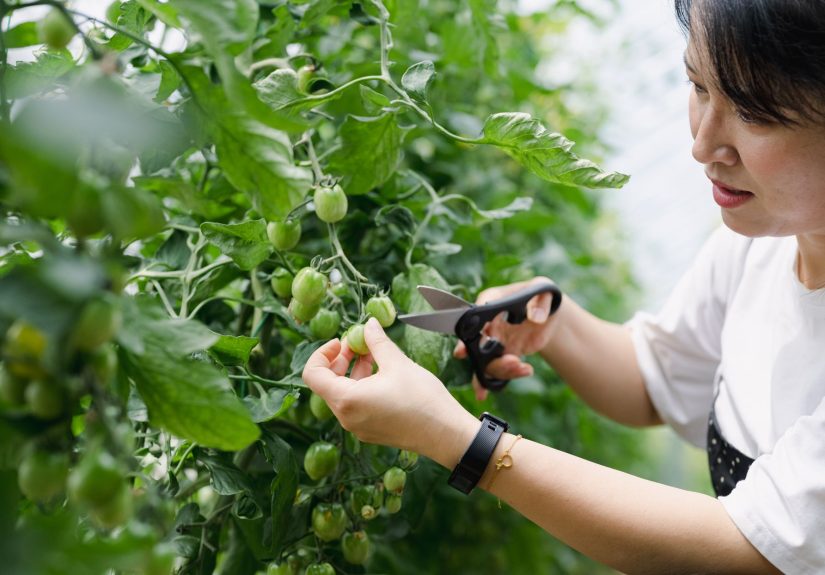
Pinch off small suckers with your thumb and forefinger. If they are larger, use clean, sharp pruners. On a staked indeterminate plant, many gardeners keep one main stem or two main stems. If you want a two-stem plant, keep the strong sucker just below the first flower cluster and remove many of the others as they appear. This gives you a productive plant without letting it become chaotic.
How much is too much?
Do not strip out every leafy side shoot just because you can. Tomatoes still need enough foliage to feed the plant and shade developing fruit. Severe pruning can increase fruit size and sometimes speed ripening, but it can also reduce total yield or expose fruit to too much sun. Think of pruning as a way to manage growth, not erase it.
If you grow tomatoes in cages, you can prune more lightly than you would with a single-stake system. Caged plants often do well with some sucker removal and a general thinning of crowded growth, rather than constant, strict pruning. The support system and the pruning strategy should work together like a good doubles team.
4. Remove lower leaves to improve airflow and reduce disease
If you do only one kind of pruning all season, make it this one. The lowest leaves on tomato plants are often the first to run into trouble because they sit closest to the soil. When rain or irrigation splashes soil upward, fungi and bacteria can hitch a ride onto those leaves. Lower foliage also tends to trap humidity and reduce airflow around the base of the plant.
As your tomato grows, remove leaves that touch the soil or droop close to it. Then gradually maintain a clean lower section of stem. Many gardeners clear the bottom 6 to 12 inches, or prune up to just below the first fruit cluster, depending on plant size and training system. The goal is not to create a naked trunk for dramatic effect. The goal is to reduce splash, improve air circulation, and keep the base of the plant easier to inspect.
This is especially helpful in humid climates, rainy periods, and crowded raised beds where fungal issues love to party. It also makes watering at soil level much easier, which is another win for tomato health.
While removing lower leaves, keep an eye out for yellowing, spotted, or obviously damaged foliage anywhere on the plant. If a leaf looks like it has given up on life, it does not need to stay for sentimental reasons. Remove it cleanly and move on.
5. Support pruning with the right training system
Pruning works best when it is paired with tomato support. A beautifully pruned plant that flops onto the ground is still a mess. Stakes, cages, Florida weave systems, and overhead strings all influence how much and how often you should prune.
Staked tomatoes
Single-stake systems usually require the most pruning. These plants are often trained to one or two main stems. That keeps the plant upright, tidy, and easier to harvest. It also helps direct energy into fewer fruiting branches, which can mean earlier and larger fruit.
Caged tomatoes
Cages usually require less intensive pruning because the cage supports more branching. For many home gardeners, this is the easiest system: remove lower leaves, eliminate obviously crowded or diseased growth, and thin some suckers instead of obsessing over every one.
Trellised tomatoes
In high tunnels or serious vegetable gardens, overhead strings or trellises are often used for indeterminate tomatoes. These systems pair especially well with consistent pruning because they are built for vertical growth and easy access.
Whatever system you use, do not wait until the plant is enormous to support it. Installing a stake or cage after the plant turns into a tomato tumbleweed is possible, but it will test both your patience and your vocabulary.
6. Keep your tools and hands clean
Pruning creates wounds, and wounds are openings. If you move from plant to plant with dirty hands or unsanitized pruners, you can spread disease faster than gossip at a family cookout.
Wash your hands or use hand sanitizer while working. If you are using pruners, clean off visible sap and debris first, then disinfect the blades. Rubbing alcohol is a convenient option for many home gardeners, and diluted bleach solutions are also commonly used when handled properly. If a plant shows signs of disease, sanitize before moving to the next one.
This step is not glamorous. Nobody posts a dramatic slow-motion reel of wiping pruner blades. But clean tools are one of the simplest ways to protect your tomato patch. In gardening, boring habits often produce the best results.
Common pruning mistakes that can shrink your harvest
Pruning helps, but only when it is balanced. Here are the mistakes most likely to backfire:
Pruning determinate tomatoes too hard
These plants already have a set fruiting plan. Remove too much growth, and you may remove future tomatoes right along with it.
Letting suckers get huge
Big suckers take more energy from the plant and leave bigger wounds when removed. Small, frequent pruning is easier on both you and the tomato.
Removing too many leaves
Leaves are the plant’s solar panels. Cut away too much, and you reduce the plant’s ability to support fruit. You also increase the chance of sunscald on exposed tomatoes.
Ignoring the weather
Pruning wet plants raises disease risk. Pruning during extreme heat can also stress plants. Choose dry, moderate conditions whenever possible.
Real-world experience: what gardeners often learn after one tomato season too many
One of the most common experiences gardeners talk about is discovering that tomato pruning is less about bravery and more about restraint. In the beginning, many people are afraid to remove anything. Every sucker looks promising. Every extra branch feels like future salsa. So the plant is left alone, and by midsummer it becomes a dense wall of stems, tangled leaves, hidden fruit, and mystery moisture. The tomatoes may still grow, but picking them becomes a treasure hunt, airflow drops, and disease often shows up sooner than expected.
The opposite experience happens, too. A gardener reads that pruning helps and decides that if a little is good, a lot must be great. Suddenly the plant has been stripped into a minimalist sculpture with five leaves, two fruit clusters, and a very uncertain future. The tomatoes ripen, yes, but the fruit may sunburn, the plant may stall, and the overall harvest can disappoint. That is usually the season when people learn the golden rule: prune for balance, not perfection.
Another real lesson comes from comparing tomato varieties side by side. Gardeners who grow both determinate and indeterminate plants often notice that the indeterminate types respond beautifully to steady pruning. They stay taller, neater, easier to tie, and easier to harvest. Meanwhile, the determinate plants often seem happiest with lighter cleanup, mostly at the bottom of the plant and around damaged growth. This is where experience becomes more valuable than rigid rules. Once you have watched two different tomato habits grow through one summer, the pruning logic starts to click.
Support systems also teach fast lessons. Gardeners using sturdy cages often find they can relax a bit. The cage holds the plant, the branches have room, and pruning becomes mostly about airflow and sanitation. But anyone who tries to grow a vigorous indeterminate tomato on a single stake without keeping up with suckers quickly learns that the plant can turn into a floppy, top-heavy giant. In that setup, small weekly pruning sessions save a lot of frustration later.
Many gardeners also discover that the lower-leaf cleanup is one of the most valuable habits in the whole garden. It does not feel dramatic, but it often makes the patch look healthier and more manageable almost immediately. Watering is easier. Mulching is easier. Spotting yellow leaves, pests, or cracked fruit is easier. It is one of those maintenance tasks that quietly pays off over time.
And then there is the emotional experience of the first really good harvest after learning how to prune correctly. The fruit is easier to see. The plants are easier to walk around. Harvesting feels less like wrestling a hedge and more like actually gardening. That is why seasoned growers often describe tomato pruning as a habit that gets better every year. You stop following rules mechanically and start reading the plant: this sucker stays, that one goes, these bottom leaves are done, this crowded center needs a little breathing room. Once you reach that point, pruning stops feeling intimidating and starts feeling like one of the most satisfying parts of tomato care.
Conclusion
Pruning tomato plants is not about forcing them into some perfect magazine shape. It is about helping the plant do its job better. Start by identifying whether your tomato is determinate or indeterminate. Prune after flowering begins. Remove suckers selectively, clean up lower leaves, match your pruning to your support system, and keep tools sanitized. Do that consistently, and you will usually end up with healthier plants, easier harvesting, better airflow, and a harvest that is not just bigger-looking, but genuinely more usable and rewarding.
In other words, prune with purpose, not panic. Your tomato plants will thank you with fewer jungle vibes and more sandwich material.