Table of Contents >> Show >> Hide
- Why 2024 Exterior Paint Colors Feel Different
- 1. Warm Earth Browns
- 2. Soft Silver-Grays
- 3. Calm Blue-Greens
- 4. Honeyed Warm Neutrals
- 5. Creamy Off-Whites
- 6. Modern Soft Black
- 7. Blue Statement Shades
- How to Choose the Right Exterior Paint Trend for Your Home
- Experience-Based Tips: What Homeowners Learn After Trying These 2024 Exterior Paint Trends
- Final Thoughts
If your home’s exterior is looking a little tired, 2024 is serving up the perfect excuse to finally retire that “safe” paint color you picked in a panic five years ago. This year’s exterior paint color trends feel warmer, richer, and more personal than the icy grays and overly stark whites that dominated for so long. Homeowners still want timeless curb appeal, but they also want a house with a pulse.
That means earthy browns are back, blue-greens are acting suspiciously charming, creamy whites are replacing flat builder-grade white, and soft black is still having its dramatic main-character moment. The best part? These trends are flexible. You do not need a sprawling modern farmhouse or a Pinterest-perfect porch to make them work. You just need the right shade in the right place.
Below, you’ll find seven exterior paint color trends worth trying in 2024, along with practical ideas for where each one works best, what it pairs with, and how to keep your paint project from becoming a cautionary tale told at backyard barbecues.
Why 2024 Exterior Paint Colors Feel Different
The biggest shift in 2024 is balance. Homeowners are moving away from harsh, one-note exteriors and leaning into colors that feel connected to nature, architecture, and regional light. In plain English: houses are looking less like blank cubes and more like actual homes.
Instead of choosing between “boring neutral” and “wild statement,” 2024 exterior paint trends sit in the sweet spot. Many of the most appealing shades have soft undertones, subtle warmth, and enough personality to feel current without looking dated by next spring.
1. Warm Earth Browns
Brown is having a glow-up, and honestly, it was overdue. The muddy, flat browns of the past have been replaced by richer, more architectural shades that feel grounded and sophisticated. Think espresso, cocoa, bark, and dark walnut rather than “old filing cabinet.”
Warm brown works especially well on contemporary homes, cabins, mountain homes, and houses with natural wood or stone details. It blends beautifully into landscapes and makes a home feel settled into its surroundings instead of dropped onto the lot by helicopter.
Why it works
Brown adds warmth without being flashy. It also plays nicely with black windows, cedar accents, bronze light fixtures, and matte metal roofing. If you want a color that feels current but not trendy in a “what was I thinking?” way, this is a smart choice.
Best places to use it
Full siding, board-and-batten exteriors, shutters, garage doors, and trim accents. On modern or rustic homes, a dark brown exterior can look polished and expensive in a quiet, confident way.
Try it with
Cream trim, natural wood front doors, black hardware, and warm stone. If your landscaping includes ornamental grasses, evergreens, or native plantings, brown will look even better.
2. Soft Silver-Grays
Gray is not gone. It just got better manners. In 2024, the gray that works outside is softer, lighter, and less cold than the steel-toned grays that ruled for years. Silver-gray has enough neutrality to stay classic, but enough softness to keep your house from looking like a corporate office park.
This color trend is ideal for homeowners who want broad appeal. It complements brick, wood, stone, and composite materials, making it one of the easiest shades to use across different architectural styles.
Why it works
Silver-gray reflects light beautifully and has a timeless, adaptable quality. It can read crisp on a Colonial, airy on a coastal home, and clean-lined on a modern ranch. It is the diplomatic neutral of exterior paint colors.
Best places to use it
Main siding, lap siding, shake accents, and trim. It is especially useful when your roof, driveway, or masonry already has cool undertones and you need the whole exterior to feel cohesive.
Try it with
Bright white trim for contrast, charcoal shutters for depth, or a dark blue front door for a classic-but-not-boring finish.
3. Calm Blue-Greens
If there is one color family that perfectly captures the 2024 mood, it is blue-green. These shades sit right between coastal blue and soft sage, giving homes a calm, fresh, outdoorsy look. They feel restful, but not sleepy. Cheerful, but not cartoonish. Basically, they are the rare overachievers of the paint world.
Blue-green is especially effective for doors, shutters, porch ceilings, and trim details, but the right muted version can also work on siding. This trend is popular because it adds color without looking loud.
Why it works
Blue-green shades echo the sky, plants, and water, which makes them feel naturally at home on an exterior. They also flatter a wide range of materials, from white brick to cedar shingles to painted clapboard.
Best places to use it
Front doors, shutters, porch ceilings, window boxes, and accent siding. It is a great entry point for homeowners who want to experiment with color but are not ready to paint the whole house aubergine and explain themselves later.
Try it with
Warm white siding, sandy beige stone, brass fixtures, and natural wood porch furniture. It also looks lovely with muted gray roofs and dark bronze lighting.
4. Honeyed Warm Neutrals
Warm neutrals are replacing the tired beige-versus-gray debate with something much more interesting. In 2024, honeyed neutrals, yellow-beige tones, and soft champagne-inspired hues are showing up on exteriors because they feel welcoming, sunny, and easier to live with than stark white.
This is the trend for homeowners who want curb appeal with a little optimism. These colors brighten a facade without screaming for attention. They are subtle, but they do not disappear.
Why it works
Honeyed neutrals can act like a true neutral while still adding warmth. They help homes feel inviting, especially in neighborhoods where cool grays and flat whites dominate. In the right natural light, they can make a house look softly illuminated even on overcast days.
Best places to use it
Main siding, stucco, trim, and porch railings. These shades are especially strong on bungalows, cottages, traditional homes, and homes with mature landscaping.
Try it with
White trim, gray-blue doors, terracotta planters, and medium wood tones. If your house gets lots of direct sun, test this carefully so it reads warm and elegant instead of too yellow.
5. Creamy Off-Whites
White exteriors are still popular, but 2024 favors softer whites with creamy, buttery, or slightly warm undertones. In other words, this is not the era of blinding hospital white. A creamy off-white feels cleaner, richer, and more livable outdoors.
This trend is especially useful if you love a classic exterior but want it to feel layered instead of flat. Warm whites also help architecture stand out by adding softness and dimension rather than hard contrast.
Why it works
Creamy off-white flatters brick, stone, wood, and greenery. It is versatile enough for everything from a farmhouse to a Colonial to a ranch house. It also gives you room to play with accent colors, since nearly everything pairs well with it.
Best places to use it
Whole-house exteriors, trim, columns, shutters, and soffits. It is particularly effective on homes with traditional lines, where the goal is elegance rather than drama.
Try it with
Soft black doors, muted green shutters, warm bronze lights, and natural wood furniture. The result feels classic, welcoming, and quietly upscale.
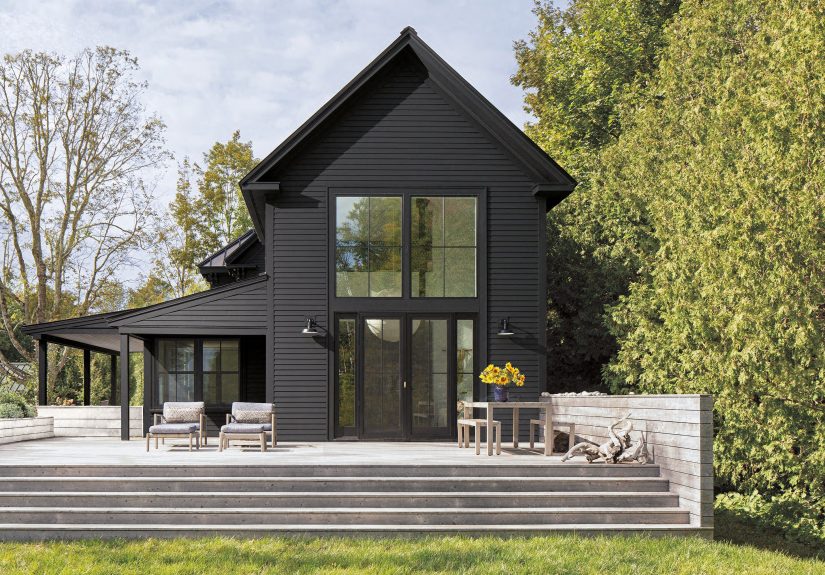
6. Modern Soft Black
Black exteriors are not exactly new, but in 2024 they are evolving. The best versions are not cold, flat jet black. They are softer blacks with brown, charcoal, or earthy undertones. That subtle warmth makes them feel more architectural and less like the house is auditioning for a superhero reboot.
Soft black works beautifully on modern homes, farmhouses, and renovations with wood accents. It is bold, yes, but it can still be surprisingly flexible when balanced with the right trim and texture.
Why it works
A near-black exterior adds contrast, depth, and instant visual drama. It highlights clean lines, sharp rooflines, and modern windows. It also pairs exceptionally well with raw or stained wood, which softens the look and keeps it from feeling too severe.
Best places to use it
Full siding, garage doors, shutters, and front doors. If painting the entire exterior black feels like a leap, start with trim or a statement door and see how committed you feel after a week.
Try it with
Natural cedar, creamy white trim, brushed brass hardware, and lush greenery. The contrast is strong, but the overall effect can still feel warm and welcoming.
7. Blue Statement Shades
Blue is one of the most interesting exterior paint color trends of 2024 because it shows up in multiple moods. On one end, there are airy sky blues that feel calm and breezy. On the other, there are deeper blue-violet and oceanic shades that add energy and character. That range gives homeowners options, whether they want subtle charm or more of a “yes, I meant to do that” statement.
These blues work particularly well on front doors, shutters, and accents, but they can also shine on siding when the home’s architecture supports a more expressive look.
Why it works
Blue feels familiar enough to be safe, but still colorful enough to stand out. Lighter sky blues create an easygoing, peaceful exterior. Deeper blue-violet shades feel richer and more modern, especially when paired with crisp trim and natural materials.
Best places to use it
Front doors, shutters, porch ceilings, gables, or full siding on cottages, Colonials, and coastal-inspired homes. Deep blue can also look fantastic on brick that has been painted or limewashed.
Try it with
White or cream trim, soft gray stone, light wood, and polished nickel or matte black fixtures. If you want a colorful exterior without going too far off-road, blue is the friendly route.
How to Choose the Right Exterior Paint Trend for Your Home
Before you commit to a color because it looked dreamy on someone else’s house online, pause. Exterior paint is not lipstick. You cannot wipe it off with a tissue and pretend it never happened.
Check your fixed elements
Look at your roof, brick, stone, driveway, and landscaping first. These are the non-negotiable elements that your paint color needs to work with, not against.
Test in real daylight
Paint large sample boards and look at them in morning, afternoon, and evening light. Exterior colors almost always look lighter and brighter outdoors.
Match the architecture
A moody black might look stunning on a modern farmhouse, while a creamy off-white may be the better fit for a traditional Colonial. The trend should support the home’s style, not argue with it.
Use accents strategically
If a full-color commitment feels risky, use a trend color on the front door, shutters, porch ceiling, or trim. It is a lower-stakes way to update curb appeal without repainting the entire house.
Experience-Based Tips: What Homeowners Learn After Trying These 2024 Exterior Paint Trends
One of the biggest lessons homeowners learn is that undertones matter far more than the color name on the swatch. A gray that looks soft and elegant in the store can suddenly turn icy on a north-facing wall. A creamy off-white can look dreamy in the morning and surprisingly yellow by late afternoon. A moody black can feel chic on sample day and a little intense once the entire house is coated in it. That does not mean the trend is wrong. It means the lighting, surroundings, and scale always get the final vote.
Another common experience is that the most successful exteriors rarely rely on one color alone. The homes that look polished usually have a main body color, a trim color, and one accent color working together. Even subtle combinations make a difference. A warm white with a soft black front door feels more layered than a single flat white everywhere. A silver-gray house with a blue-green porch ceiling feels intentional and relaxed. A dark brown exterior with cedar details feels richer than brown paint by itself.
Homeowners also tend to discover that trends work best when they are filtered through the reality of the neighborhood. That does not mean every house needs to blend in like it joined a witness protection program. It just means context matters. A dramatic black exterior might look incredible in a wooded setting or on a modern home, but on a sunny street filled with light brick ranches, it may feel heavier than expected. Meanwhile, a honeyed neutral or creamy off-white can stand out in a softer, friendlier way while still feeling current.
There is also the maintenance factor, which people sometimes ignore until the first season changes. Dark colors can show dust, pollen, and sun fade more quickly depending on climate and exposure. Very light colors can reveal dirt near entryways and foundation lines. Blue-greens and mid-tone earth shades often land in a practical sweet spot because they disguise normal wear a bit better while still adding personality.
Perhaps the most useful real-world takeaway is this: the trend you love most is not always the one you should use everywhere. Plenty of homeowners fall in love with a bold shade, then end up happiest using it as an accent. Deep blue on a front door, soft black on shutters, or blue-green on the porch ceiling can deliver all the charm of a trend without requiring a full-house leap of faith.
And finally, people almost always appreciate warmth more than they expected. In 2024, that is exactly why warm browns, creamy whites, honeyed neutrals, and softened blacks feel so right. They make a home look cared for, comfortable, and visually connected to the outdoors. That is what good curb appeal really is: not just a prettier house, but a house that feels like it belongs exactly where it stands.
Final Thoughts
The best exterior paint color trends of 2024 are not about choosing the loudest shade on the board. They are about creating a home that feels welcoming, current, and true to its architecture. Warm earth browns add richness, silver-grays keep things versatile, blue-greens bring calm, honeyed neutrals add sunlight, creamy off-whites soften the classics, soft black delivers drama, and blue statement shades offer personality without chaos.
If you are planning to repaint this year, start with the trend that feels most natural for your home rather than the one that looks most dramatic on your phone screen. A successful exterior paint color is not just trendy. It is flattering, practical, and strong enough to make you smile every time you pull into the driveway.