
Table of Contents >> Show >> Hide
- The Big Idea: SaaS Success Is Not About Looking Impressive
- Lesson One: Sales Matters More Than Fundraising in the Early Climb
- Lesson Two: Your First Sales Hires Are Not Just Employees, They Are Multipliers
- Lesson Three: Training Breaks Before Most Founders Realize It
- Lesson Four: Content Works, but Only If It Is Actually Good and Actually Consistent
- Lesson Five: Pick a Real ICP or Prepare to Suffer Creatively
- Lesson Six: Winning SaaS Companies Obsess Over Retention, Not Just New Logos
- Lesson Seven: Pricing Is a Growth Lever, Not a Footer Link
- So, How Do You Actually Succeed in SaaS?
- A Practical Operator’s Checklist
- Experience in the Trenches: What This Looks Like in Real SaaS Life
- Conclusion
If you spend enough time around SaaS founders, you start hearing the same magical phrases repeated like startup bedtime stories: raise more capital, hire a killer VP, build pipeline, post on LinkedIn, optimize CAC, find product-market fit, and somehow do all of it before lunch. The problem is that most of this advice sounds great on a podcast and gets much messier the second payroll is due.
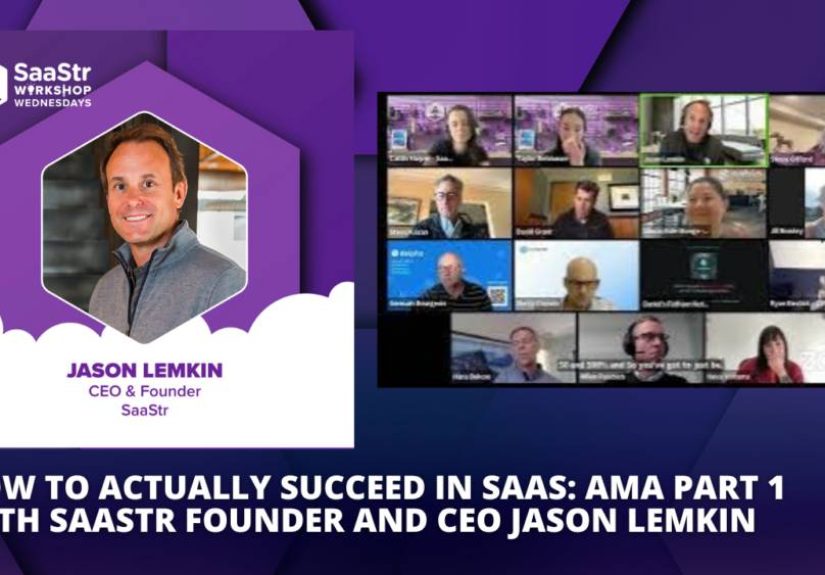
That is why Jason Lemkin’s AMA landed so well. The message was not shiny. It was not “hack your way to $100 million ARR with three AI prompts and a cold brew.” It was much more useful than that. His view of SaaS success comes down to a stubborn, unglamorous truth: the companies that win usually get really good at selling, training, retaining, and communicating value long before they get famous for any of it.
This article takes the core themes from that AMA and expands them into a practical playbook for founders, operators, and early growth teams. The goal is simple: translate the conversation into what actually matters if you want to build a SaaS company that survives the awkward teenage years between “this demo is promising” and “we finally have a repeatable business.”
The Big Idea: SaaS Success Is Not About Looking Impressive
One of the strongest lessons from Lemkin’s approach is that success in SaaS rarely starts with looking polished. It starts with being effective. Founders often overvalue appearances in the early stages: a fancy sales leader from a famous logo, a polished deck, a shiny pricing page, a content calendar so pretty it belongs in a museum. Yet none of that matters if customers are not buying, staying, and expanding.
That is the central tension in early SaaS. You can look bigger than you are, or you can learn faster than everyone else. The second option is usually the one that leads somewhere. In practice, that means spending less time performing scale and more time building repeatability.
Real SaaS momentum tends to show up in boring but beautiful forms: demos that convert more consistently, onboarding that gets customers to value faster, reps who can explain the product without causing physical pain, content that attracts the right buyers, pricing that matches actual outcomes, and customer success teams that prevent churn before it starts acting like a smoke alarm.
Lesson One: Sales Matters More Than Fundraising in the Early Climb
Lemkin’s point about sales is refreshingly direct. Funding can buy time, but it cannot manufacture demand. If you do not know how to sell the product, more capital may simply help you lose money at a more professional pace.
That sounds harsh, but it is also liberating. A founder does not need perfect financial engineering in the early days. They need proof that someone with a real budget has a painful enough problem to pay for the solution. That is why founder-led sales remains so important from zero to the first meaningful stretch of revenue. At that stage, sales is not just revenue generation. It is product discovery, positioning research, objection mapping, and market education rolled into one chaotic human process.
The best founders use those early calls to learn the language of the buyer. They discover which pain points are urgent, which features are irrelevant, which competitors keep showing up, and what kind of promise the market is actually willing to believe. This is not glamorous work. It is, however, the stuff that turns a product into a business.
A lot of founders make a classic mistake here: they assume a brand-name sales executive can arrive and “professionalize” revenue before the company has enough signal. That can backfire badly. If the market is still unclear, the founder still owns the deepest insight into the customer, the product, and the story. Handing that too early to someone with a polished résumé can create the illusion of progress while the pipeline quietly turns into compost.
The practical takeaway is simple. Before you optimize sales, prove that sales works. Close early customers yourself. Learn the objections. Refine the pitch until it sounds less like theory and more like relief. Then, and only then, start building the machine.
Lesson Two: Your First Sales Hires Are Not Just Employees, They Are Multipliers
Lemkin also makes an uncomfortable but important point: the difference between a mediocre and great sales hire can be enormous. In SaaS, a strong early sales leader does not merely close more deals. They increase revenue per lead, shorten the path to competence for new reps, tighten the playbook, and raise the confidence level of the entire go-to-market motion.
That is why early sales hiring should not be treated like filling seats. You are not hiring for headcount. You are hiring for signal amplification. Great people make the system smarter. Weak people create noise, consume founder energy, and make it harder to figure out whether the product or the process is broken.
The trap is hiring the person with the best logo instead of the person with the best fit. In early SaaS, you usually want someone who believes in the product, understands the customer problem, and can operate without a giant brand behind them. Someone who sold successfully at a huge company may still fail in a startup if they are used to inherited demand, giant enablement teams, and a market that already knows why it should care.
Early hires need curiosity, adaptability, and enough grit to hear “not now” eighty-seven times without suddenly deciding they should become a coffee roaster in Vermont.
Lesson Three: Training Breaks Before Most Founders Realize It
One of the most practical ideas in the AMA is that founder-led training tends to stop scaling after the first few reps. The founder can personally coach two or three people. After that, the wheels start wobbling. Everyone has different messaging, different discovery habits, different follow-up quality, and wildly different interpretations of what the product does. Before long, you no longer have a sales team. You have a jazz ensemble with no sheet music.
This is where many SaaS teams stall. They hire more people because growth is the goal, but they do not build the system that makes additional people productive. The answer is not just to “work harder.” It is to operationalize what good looks like.
That means creating onboarding materials, talk tracks, call review loops, objection handling libraries, demo standards, and clear handoffs between SDRs, AEs, onboarding, and customer success. Enterprise sales especially demands this discipline because the rep is not just selling software. They are selling expertise, workflow change, implementation confidence, and future trust.
If your reps are still learning by osmosis, the company is fragile. A repeatable SaaS business requires repeatable enablement. This is one of those boring truths that separates a real revenue engine from a collection of enthusiastic improvisers.
Lesson Four: Content Works, but Only If It Is Actually Good and Actually Consistent
Lemkin’s advice on content is delightfully brutal: mediocre outsourced content does not move the needle. He is right. SaaS content is full of articles that feel like they were assembled by a committee of exhausted robots trying not to offend a keyword spreadsheet.
What actually works is content with expertise, a point of view, and a consistent cadence. Founder-led content is especially powerful because it scales the same thing good founders already do in sales: explain the problem clearly, teach the market, and build trust before the meeting starts.
That is why the best SaaS content often feels less like marketing and more like useful pattern recognition. It helps the reader understand a pain point, make a decision, avoid a mistake, or see around a corner. It does not merely announce that your solution is “innovative,” “AI-powered,” and “next-generation,” which is marketing speak for “we are hoping adjectives will do the heavy lifting.”
Consistency matters just as much as quality. A strong webinar series, regular founder posts, practical guides, customer stories, and opinionated educational content can compound over time. Done right, content reduces friction in the funnel. Prospects understand the category sooner. Buyers trust the team faster. Reps spend less time explaining the basics. The founder’s point of view becomes part of the company’s distribution engine.
There is also a strong strategic angle here. Content is a market test. If nobody engages with your best ideas, your messaging may be fuzzy, your niche may be wrong, or your ICP may still be too broad. Good content is not just demand generation. It is feedback.
Lesson Five: Pick a Real ICP or Prepare to Suffer Creatively
Many SaaS companies struggle not because the product is terrible, but because the company is trying to sell to “everyone with a workflow.” That is not an ideal customer profile. That is a cry for help.
The most successful SaaS businesses get specific. They know which buyer feels the pain most acutely, which team has budget, which use case creates urgency, and which segment stays longest. Precision is what makes messaging sharper, sales more repeatable, onboarding more relevant, and retention easier to predict.
A narrow ICP can feel scary because it appears to shrink the market. In reality, it usually sharpens the company’s ability to win. Once you can predictably land and expand in one segment, growth gets easier. Without that focus, every demo becomes custom theater, every feature request looks equally urgent, and every quarter feels like a new experiment disguised as a strategy.
In other words, broad targeting often looks ambitious but behaves expensive.
Lesson Six: Winning SaaS Companies Obsess Over Retention, Not Just New Logos
This is where the adult version of SaaS starts. It is one thing to acquire customers. It is another thing to keep them, grow them, and make expansion feel natural. That is why net revenue retention, gross retention, churn, and customer success matter so much.
If customers leave quickly, the product promise is off, onboarding is weak, pricing is misaligned, or the wrong accounts were sold in the first place. If customers stay and expand, the company is creating durable value. That is not just a finance story. It is evidence of product-market fit that has survived contact with reality.
High-performing SaaS businesses often reach stronger outcomes by getting better at expansion inside existing accounts, not simply by stuffing the top of the funnel forever. Cross-sell, upsell, seat growth, product adoption, pricing clarity, and customer education all play a role here. The best companies understand that retention is not a rescue function. It is a growth function.
This also changes how you evaluate “success.” A flashy quarter with new logo growth can hide a future churn problem. A more disciplined company may grow slightly slower on the surface while building a healthier engine underneath. In SaaS, sustainable growth often looks less dramatic in the moment and much more impressive two years later.
Lesson Seven: Pricing Is a Growth Lever, Not a Footer Link
Pricing and packaging are often neglected because they feel dangerous. Founders worry that touching pricing will upset customers, confuse the sales team, or reveal that the original model was basically a guess wearing a blazer. But pricing is one of the clearest ways to align the product with value.
Strong SaaS pricing makes customers feel they are paying for outcomes, progress, or meaningful usage. Weak pricing penalizes them for growing, creates procurement confusion, or leaves expansion revenue stranded on the table. If you want more efficient growth, pricing deserves regular attention.
The healthiest SaaS operators revisit packaging, value metrics, and monetization assumptions far more often than struggling teams do. They ask whether the entry tier reduces friction, whether premium tiers reflect differentiated value, whether the usage metric feels fair, and whether pricing supports expansion instead of resisting it.
In plain English: if customers love the product but your packaging makes them squint, pricing is not an admin task. It is a growth problem.
So, How Do You Actually Succeed in SaaS?
You succeed by doing the unsexy things better than most teams are willing to do them. You sell before you scale. You hire for fit, not just résumé fireworks. You train systematically. You create content with actual expertise. You define a real ICP. You obsess over retention. You fix pricing before blaming the market. You treat customer success as part of the revenue engine. And you keep listening long after the first signs of traction show up.
The through line is discipline. Not sterile corporate discipline, but founder discipline. The kind that says no to noise, resists vanity metrics, and keeps the company pointed toward repeatable value creation. In a category famous for hype, that kind of clarity is a competitive advantage.
A Practical Operator’s Checklist
- Close enough early deals yourself to understand what buyers actually care about.
- Hire sales people who can win without a giant company brand doing the persuasion for them.
- Build onboarding and training before adding too many reps.
- Create founder-led content that teaches, not just promotes.
- Get painfully specific about your ideal customer profile.
- Track churn, expansion, and payback with the same seriousness you give pipeline.
- Review pricing and packaging regularly instead of treating them like sacred relics.
- Make customer success part of growth, not just post-sale cleanup.
Experience in the Trenches: What This Looks Like in Real SaaS Life
Here is the part most founders eventually learn the expensive way: SaaS success rarely feels like a smooth upward curve while you are living through it. It feels more like controlled chaos with occasional moments of clarity. One week you think the positioning is finally working because three prospects say, “This is exactly what we need.” The next week all three go silent because legal got involved, budget froze, or the buyer changed jobs and apparently took your pipeline with them.
What separates companies that make it is not the absence of this chaos. It is how they respond to it. The best SaaS teams turn every awkward moment into a lesson. They listen to lost deals instead of decorating internal meetings with optimism. They watch where onboarding stalls. They notice when customers love the product but do not expand. They notice when sales calls are strong but retention is weak, which usually means the wrong promises were made. They notice when content gets traffic but no qualified pipeline, which usually means they are attracting curiosity instead of intent.
In practical terms, succeeding in SaaS often means building a company that learns faster than it burns. That sounds simple, but it changes behavior. Founders get on calls instead of hiding behind dashboards. Sales leaders coach deals instead of just reporting them. Marketing builds assets that help close business instead of just making the website look busier. Customer success becomes the team that protects future revenue, not the team that inherits avoidable disappointment.
There is also a human side that does not get enough airtime. Early SaaS is emotionally weird. You can have a decent product, smart people, and a respectable market and still spend months feeling like you are one bad quarter away from becoming a cautionary LinkedIn post. That is normal. The trick is not to confuse uncertainty with failure. Most of the hard part is staying focused long enough to turn scattered wins into a system.
And that system is usually built from repetition. The founder tells the same story a hundred times until the market starts repeating it back. The team refines onboarding until time-to-value gets shorter. The company publishes useful content every week until prospects start showing up already convinced. The pricing gets adjusted until buyers stop hesitating at the wrong moment. The customer success motion matures until renewals stop feeling like a hostage negotiation.
That is what “actually succeeding” in SaaS looks like from the inside. Not magic. Not luck. Not endless fundraising as a substitute for operational truth. Just deep customer understanding, disciplined execution, and enough consistency to let compounding finally do its job.
Conclusion
If there is one lesson to take from Jason Lemkin’s AMA, it is this: SaaS success is built by operators, not spectators. The founders who win are the ones who stay close to customers, treat sales as a learning function, invest in training before scale breaks them, and create content and systems that compound over time.
In other words, you do not succeed in SaaS by sounding like a SaaS founder. You succeed by becoming the sort of company that customers trust, reps can sell, and existing accounts want to grow with. Everything else is decoration.






 Close
Close