
Table of Contents >> Show >> Hide
- The pipeline improved. The power structure did not keep up.
- The motherhood penalty wears a white coat too
- The second shift does not end when clinic ends
- How inequity shows up in careers, pay, and promotion
- Bias does not have to be loud to be damaging
- Why this matters beyond fairness
- What real support for physician-moms actually looks like
- Why physician-moms keep going anyway
- Experiences from the inside: what being a physician-mom can actually feel like
- Conclusion
- SEO Tags
Being a doctor is already a little like starring in a workplace drama where the script changes every 12 minutes, the coffee is never hot enough, and somebody is always asking for “just one quick thing.” Being a mom, meanwhile, is a full-time role with no sign-out sheet, no protected time, and absolutely no respect for your calendar invite. Put those two jobs together, and you get one of the most revealing stress tests in modern medicine: the life of the physician-mom.
The hard truth is that medicine has made progress on gender representation, but it still has a long way to go on gender equity. Women now make up a large and growing share of the physician workforce, yet leadership, compensation, scheduling power, parental leave, and day-to-day workplace culture still do not work equally well for everyone. For physician-moms, those gaps are not abstract policy problems. They show up in who gets interrupted, who gets promoted, who gets judged for leaving on time, who gets asked to “be flexible,” and who is somehow expected to produce excellent patient outcomes while pumping breast milk between clinic slots and answering school texts about a missing lunchbox.
This is what makes the phrase gender inequities in medicine feel too tidy for the real experience. For many women physicians, especially mothers, inequity is not one dramatic event. It is a pileup of smaller frictions: assumptions that pregnancy is inconvenient, skepticism about ambition after childbirth, fewer leadership opportunities, more unpaid emotional labor, less control over schedules, and a constant tug-of-war between being seen as committed at work and present at home. It is the classic “you can have it all” line, followed immediately by a system designed as if nobody has children.
The pipeline improved. The power structure did not keep up.
One of the biggest myths in medicine is that the problem is basically solved because more women are entering the field. That is a comforting story, but not a complete one. Yes, the pipeline has changed. Women are now a major force in medical school and academic medicine. But pipelines do not automatically produce equity. If more women enter medicine while the rules of advancement remain built around an older, less caregiving-heavy model of success, then the bottleneck simply moves higher up the ladder.
That is exactly what physician-moms often run into. The system applauds the arrival of women in medicine, then quietly rewards a career pattern that still assumes someone else is handling the home front. Promotions, committee work, speaking opportunities, research productivity, and networking tend to favor people with more control over their time and fewer caregiving interruptions. Motherhood does not erase talent, drive, or clinical skill. It does, however, collide with a professional structure that often treats uninterrupted availability as a proxy for excellence.
In plain English, medicine is better at welcoming women into training than it is at redesigning leadership and advancement around the reality of working parenthood. So physician-moms do not just face a “mom problem.” They face an institutional design problem.
The motherhood penalty wears a white coat too
The phrase motherhood penalty sounds academic, but the real-world version is easy to spot. A physician announces a pregnancy and suddenly people start wondering, sometimes silently and sometimes not, whether she is still “all in.” A new mother takes leave and returns to work under a cloud of assumptions: less serious, less available, less promotable, more complicated. A father in medicine may be seen as responsible and admirable. A mother in medicine is still too often seen as logistically difficult.
This bias can begin early. During training, many women physicians report pressure to time pregnancy around rotations, boards, call schedules, or fellowship applications, as if childbirth were a neat little administrative preference rather than a biological and family reality. In some specialties, the message is not even subtle. Delay kids. Do not make waves. Be grateful anyone covered for you. Smile while doing all of that, preferably.
And then comes leave. On paper, many organizations now offer parental leave policies. In practice, the experience can still be chaotic, inconsistent, or stingy. Physician-moms may feel pressure to return early, stay connected while on leave, or make up clinical and academic work later. The policy exists, but the culture whispers that using it fully is career-risky. That kind of contradiction is exhausting because it forces women to decode what is officially allowed versus what is quietly punished.
Returning to work is often where the cracks widen
The return-to-work phase is one of the clearest windows into gender inequity. This is where lofty diversity statements meet the realities of clinic scheduling, productivity targets, call expectations, and lactation support. Many physician-moms return ready to work and eager to reclaim their professional rhythm, only to find that the system has no real patience for postpartum needs.
Breastfeeding and pumping are a perfect example. In theory, the need is predictable and medically normal. In practice, too many physician-moms still face inadequate space, insufficient time, awkward scheduling, or the sense that every pumping break is a small apology to the institution. That is not just inconvenient. It sends a message about whose body and whose caregiving labor are treated as legitimate in the workplace.
When a hospital can coordinate a trauma response in minutes but cannot figure out protected pumping time for a board-certified physician, the issue is not capability. It is priority.
The second shift does not end when clinic ends
Another reason being a physician-mom can feel uniquely heavy is that the workday rarely ends at the hospital door. Many women physicians carry what sociologists call the “second shift”: childcare, logistics, school forms, meal planning, emotional management, elder care, and the endless domestic project management that keeps a household functioning. In medicine, this collides with charting, inbox work, prior authorizations, patient messages, and after-hours documentation.
That means physician-moms are often balancing two invisible workloads at the same time. One is the official workload everyone sees. The other is the hidden one that nobody counts but everybody depends on.
And it is not just time. It is cognitive load. Remembering a patient’s medication history while also remembering pajama day, the pediatric dental appointment, and whether the babysitter can stay late is not a cute “women multitask better” stereotype. It is mental strain. The myth that women are naturally better at managing it all is part of the inequity because it turns overload into an expectation.
This is also why discussions of physician burnout cannot stop at resilience tips. Burnout is not just about individual coping. It is about workload, control, culture, and whether the system offloads its dysfunction onto the people most likely to absorb it. Telling physician-moms to meditate more while leaving the structure untouched is basically handing someone a scented candle in a house with a leaking roof.
How inequity shows up in careers, pay, and promotion
Gender inequity in medicine is not only emotional. It is financial and professional. Women physicians continue to face pay gaps, and the gap often deepens around the years when family building and early parenting are most intense. Some of this gets explained away with specialty choice, hours, or practice setting. But even after accounting for many of those variables, disparities remain. That matters because compensation is not just about money. It affects long-term wealth, loan repayment, retirement, bargaining power, and how institutions signal value.
Promotion follows a similar pattern. Academic medicine, in particular, tends to reward output that depends on protected time, sponsorship, travel, and uninterrupted availability. Physician-moms may lose momentum not because they lack ability, but because they are doing excellent clinical work while navigating leave, caregiving, and a culture that too often treats flexibility as a personal favor rather than a professional necessity.
Then there is what some women describe as “office housework.” Committee service, mentoring, culture-building, emotional support for trainees, and patient communication often fall more heavily on women physicians. These contributions matter enormously, but they are not always rewarded like grants, titles, or billable production. So physician-moms can end up doing more of the work that keeps organizations humane while receiving less of the credit that moves careers forward.
In other words, the scoreboard still favors what is easy to count over what is essential to care.
Bias does not have to be loud to be damaging
Some of the most persistent inequities are not dramatic enough to make headlines. They live in tone, assumptions, and accumulated doubt. A physician-mom gets asked whether she really wants a leadership role “with little kids at home.” A man with children gets congratulated on being ambitious. A woman leaves at 5:30 to make daycare pickup and is seen as less dedicated. A male colleague leaves for a child-related obligation and is seen as admirably involved. Same act. Different interpretation. Same old story.
Subtle bias is powerful precisely because it can be denied. Nobody said mothers are less capable. Nobody wrote “not leadership material” in an email. Instead, opportunities drift elsewhere. Recommendations become softer. Assumptions harden. A woman physician may not even be told she is being sidelined; she is simply not imagined into the next role.
That becomes even more complicated for physician-moms who are also navigating racial bias, disability bias, immigrant identity, or other forms of marginalization. Gender inequity is not experienced the same way by everyone. For some women, motherhood bias stacks on top of existing barriers, making the climb steeper and the scrutiny harsher.
Why this matters beyond fairness
This issue is often framed as a women’s issue, but it is really a workforce issue, a leadership issue, and a patient care issue. Medicine cannot afford to train talented physicians and then push them toward attrition, reduced hours, stalled advancement, or chronic burnout because the system refuses to modernize. When physician-moms leave academia, step back from leadership, or decide the structure is not worth the personal cost, the profession loses expertise, mentorship, continuity, and diversity of perspective.
Patients lose too. Teams lose too. Trainees definitely lose too. When the women doctors around them keep disappearing, younger physicians get the message that motherhood and meaningful advancement are still uneasy roommates in medicine.
There is also a credibility issue. Health care organizations regularly tell patients that family, postpartum recovery, breastfeeding, and mental health matter. If those same organizations fail to support physician-moms in those exact areas, the hypocrisy is hard to miss. Medicine should not be preaching family-centered care with one hand while undermining physician families with the other.
What real support for physician-moms actually looks like
If organizations are serious about fixing gender inequities, they need more than panel discussions and inspirational posters. They need structural changes. Real equity looks like paid parental leave that is clear, usable, and culturally supported. It looks like reliable coverage plans so leave does not become a guilt trip. It looks like protected lactation time and proper space without the scavenger hunt. It looks like schedule flexibility that does not permanently sideline careers.
It also means compensation transparency. If institutions refuse to show how pay is determined, inequity can hide in plain sight for years. Transparent salary bands, regular equity reviews, and promotion criteria that do not quietly reward nonstop availability would go a long way.
Mentorship matters, but sponsorship matters more. Physician-moms do not just need advice on how to survive. They need leaders who actively nominate them for roles, advocate for equitable evaluations, and stop equating leadership with constant physical presence. A brilliant physician is still brilliant even if she occasionally has to leave for daycare pickup.
And yes, men matter in this conversation. Gender equity gets much farther when caregiving is treated as a normal professional reality for all parents, not a women-only accommodation. Normalizing leave for fathers and partners helps remove the stigma that parenting is somehow a female workplace disruption.
Why physician-moms keep going anyway
For all the inequities, physician-moms continue to show up with astonishing skill and stamina. They build trust with patients, lead teams, teach residents, publish research, run departments, comfort families, and somehow remember that spirit week requires mismatched socks on Thursday. Many become exceptional leaders precisely because motherhood sharpens their empathy, efficiency, boundary-setting, and sense of purpose.
That does not mean motherhood should be romanticized as a magical source of superpowers. Nobody needs another article praising women for “doing it all” while ignoring the cost. But it is worth saying that physician-moms are not succeeding because the system is easy. They are succeeding despite systems that still make too many basic parts of working parenthood harder than they need to be.
The goal should not be to admire women for enduring inequity gracefully. The goal should be to remove inequity so endurance is no longer the job requirement.
Experiences from the inside: what being a physician-mom can actually feel like
A physician-mom’s experience often begins with a strange split-screen feeling. In one frame, she is the competent professional everyone trusts: the attending, the hospitalist, the surgeon, the pediatrician, the internist. In the other frame, she is a mother moving through a world that still acts surprised that both identities belong to the same person at the same time. She may spend the morning counseling a patient about postpartum recovery and the afternoon calculating whether she has enough time between appointments to pump before the daycare closes. It is not that she cannot do both. It is that she is forced to do both inside systems designed as if one of those roles is invisible.
There is also the performance pressure. Many physician-moms feel they have to be unusually polished to avoid feeding stereotypes. If they are decisive, they may be called intense. If they ask for flexibility, they may worry they look less committed. If they leave on time, they feel watched. If they stay late, they pay for it at home. Sometimes the emotional burden is not one big crisis, but the constant self-monitoring: Am I disappointing my team? Am I disappointing my kids? Am I allowed to be tired, or do I need to turn this into another lesson in resilience?
Then there is the guilt, which shows up like an uninvited consultant with terrible advice. Guilt at work for needing family accommodations. Guilt at home for thinking about unfinished charts. Guilt for liking work. Guilt for resenting work. Guilt for wanting ambition and bedtime stories in the same life. Physician-moms often become experts at functioning while emotionally cross-examined by impossible standards.
But there is another side to these experiences too. Many physician-moms describe becoming more efficient, more intentional, and less interested in performative busyness. They learn to protect time with unusual discipline. They become clearer about which meetings matter, which tasks can wait, and which metrics are mostly decorative nonsense wearing a tie. Motherhood can strip away the fantasy that a good doctor must be endlessly available and replace it with something healthier: presence, focus, and limits.
It can also deepen the work itself. A physician-mom who has navigated fertility questions, pregnancy, postpartum recovery, sick children, or caregiving chaos may bring new depth to patient care. Not because motherhood is required for empathy, but because lived experience can sharpen it. Many patients feel this. They sense steadiness, humanity, and a doctor who understands that bodies and families do not follow clean schedules.
Still, nobody should have to earn dignity through overperformance. Physician-moms should not need to be inspirational just to be treated fairly. Their experiences point to something bigger than individual grit. They reveal where medicine still confuses tradition with excellence, and endurance with professionalism. The stories of physician-moms are not side notes to the profession. They are diagnostic clues. They show exactly where the system is underperforming, exactly where culture lags behind reality, and exactly what must change if medicine wants to keep the talented women it worked so hard to train.
Conclusion
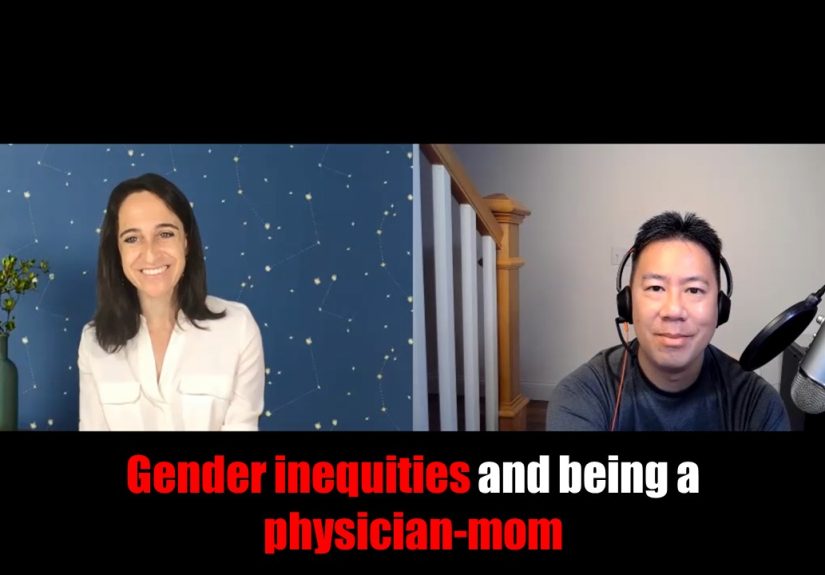
Gender inequities and being a physician-mom is not a niche conversation. It is one of the clearest ways to see what medicine still gets wrong about work, value, caregiving, and leadership. The problem is not that physician-moms lack commitment. It is that too many institutions still define commitment in ways that ignore how modern families actually function.
The good news is that these inequities are not mysterious. The patterns are visible: bias around motherhood, weak leave culture, poor lactation support, lower schedule control, promotion gaps, burnout, and a stubborn pay divide. That means the solutions are visible too. Medicine can build better policies, better culture, and better leadership expectations. It can stop treating motherhood as a disruption and start recognizing it as a normal part of a physician workforce that has already changed.
Until then, physician-moms will keep doing what they have always done: caring for patients, caring for families, and carrying more than they should have to. They deserve more than admiration for surviving it. They deserve a profession finally willing to meet them halfway.





 Close
Close