
Table of Contents >> Show >> Hide
- What Are Chia Seeds, Exactly?
- Why Chia Seeds Get So Much Attention
- Top Chia Seed Benefits Worth Knowing
- How to Start Eating Chia Seeds Without Regretting Your Enthusiasm
- How to Cook with Chia Seeds
- Common Mistakes to Avoid
- Easy Ways to Add Chia to Your Week
- Are Chia Seeds Worth It?
- Real-World Experiences with Chia Seeds in Everyday Cooking
- Conclusion
If a food could win an award for “most likely to look tiny and then completely take over your breakfast,” chia seeds would have this thing locked up. These little black-and-white seeds have gone from health-food-store sidekick to mainstream pantry staple, and honestly, they earned it. They are easy to use, surprisingly versatile, and packed with nutrients that make dietitians nod approvingly while the rest of us just wonder how something so small can turn a smoothie into pudding overnight.
The buzz around chia seeds is not just internet wellness confetti. Chia seeds offer fiber, plant protein, minerals, and omega-3 fats in a compact package. Better yet, they are mild enough to sneak into everything from oatmeal to muffins without hijacking the flavor. That means you get nutritional value without your lunch tasting like a lawn clipping. Always a win.
In this guide, we will break down the real chia seed benefits, explain what they can and cannot do, and show you exactly how to cook with them in ways that are practical, tasty, and easy enough for a Tuesday morning when your coffee has not even kicked in yet.
What Are Chia Seeds, Exactly?
Chia seeds come from the Salvia hispanica plant, which is native to Mexico and Central America. They have been eaten for centuries, but today they are best known for their nutrient density and their strange but useful talent: when mixed with liquid, they absorb it and form a gel-like coating. That texture is the reason chia works so well in puddings, jams, smoothies, and as a binder in baking.
Unlike some “superfoods” that require a scavenger hunt, a ceremonial spoon, and a personality change, chia seeds are straightforward. You can buy them whole, keep them in your pantry, and stir them into foods you already eat. No mystical chanting required.
Why Chia Seeds Get So Much Attention
Chia seeds have a strong nutritional reputation because a relatively small serving delivers a lot. About 2 tablespoons, or 1 ounce, provides roughly 140 calories, around 10 grams of fiber, about 5 grams of protein, and useful amounts of minerals like calcium, magnesium, phosphorus, iron, and zinc. They also contain alpha-linolenic acid, or ALA, which is a plant-based omega-3 fat.
That combination matters. Fiber helps support digestion and fullness. Protein can help make meals feel more satisfying. Minerals help round out the diet. And omega-3 fats are part of an overall heart-conscious eating pattern. Chia seeds are not magic dust, but they are one of those rare ingredients that can genuinely improve the nutritional profile of ordinary meals with almost zero effort.
Top Chia Seed Benefits Worth Knowing
1. They are an easy way to boost fiber intake
Most people do not exactly wake up each morning shouting, “I must eat more fiber!” But maybe they should. Fiber supports digestive health, helps keep things moving, and can make meals feel more filling. Since chia seeds pack a lot of fiber into a small serving, they are one of the easiest pantry foods for bumping up your daily intake.
This is one reason chia shows up in breakfast foods so often. Add a spoonful to yogurt, overnight oats, or a smoothie, and suddenly your breakfast has more staying power. Instead of feeling hungry again an hour later and staring emotionally into a vending machine, you may feel satisfied for longer.
2. They provide plant-based omega-3s
Chia seeds are especially known for ALA omega-3 fats. If you eat a plant-forward diet, or you simply want more variety in your healthy fat sources, chia is a smart addition. It is worth noting that the omega-3s in chia are not the same as the EPA and DHA found in fish, so chia should be seen as a useful plant source, not an exact substitute for every omega-3 function in the diet.
Still, this is one reason chia seeds are so popular in heart-conscious meal plans. A tablespoon here, a tablespoon there, and your oatmeal starts acting like it has a master’s degree in nutrition.
3. They can help make meals more satisfying
Thanks to their mix of fiber, healthy fats, and protein, chia seeds can help add staying power to snacks and meals. The gel texture they form with liquid also adds body and thickness, which can make foods feel more substantial. That is one reason chia pudding feels like an actual breakfast instead of a sad compromise.
For people trying to build better eating habits, this matters. Foods that are more satisfying can make it easier to stick with balanced meals instead of constantly grazing on random snack foods that somehow disappear in six minutes.
4. They are a simple upgrade for plant-based eating
If you are trying to eat more whole plant foods, chia seeds are about as low-drama as it gets. They fit into vegan, vegetarian, dairy-free, and gluten-free eating styles with very little adjustment. They also work as an egg substitute in some baking recipes, which makes them extra useful when you are working around allergies, dietary preferences, or the classic problem of opening the fridge and discovering you have everything for muffins except eggs.
5. They add nutrients without a strong flavor
One of chia’s biggest strengths is that it does not scream for attention. It has a mild flavor, so it blends into sweet and savory dishes without making the whole recipe taste “healthy” in a suspicious way. This makes chia seeds perfect for busy households, picky eaters, or anyone who wants nutrition to quietly do its job while dinner minds its business.
How to Start Eating Chia Seeds Without Regretting Your Enthusiasm
There is one golden rule with chia seeds: start reasonably. Because they are high in fiber, going from zero chia to “I just dumped a quarter cup into everything I own” may not be the smoothest idea. Increase fiber gradually and drink enough fluids. Chia absorbs liquid and expands, which is useful in recipes but something to respect, not challenge like it is a competitive sport.
A practical starting point is 1 tablespoon a day, then working up to 2 tablespoons if it agrees with you. Also, when using chia dry, it helps to mix it thoroughly into foods with moisture, or soak it first for recipes where a softer texture is better.
How to Cook with Chia Seeds
This is where chia seeds go from “healthy ingredient” to “oh, wait, this is actually useful.” You do not need chef-level skills. You just need liquid, a spoon, and the willingness to trust a seed that looks like it belongs in a craft project.
Make chia pudding
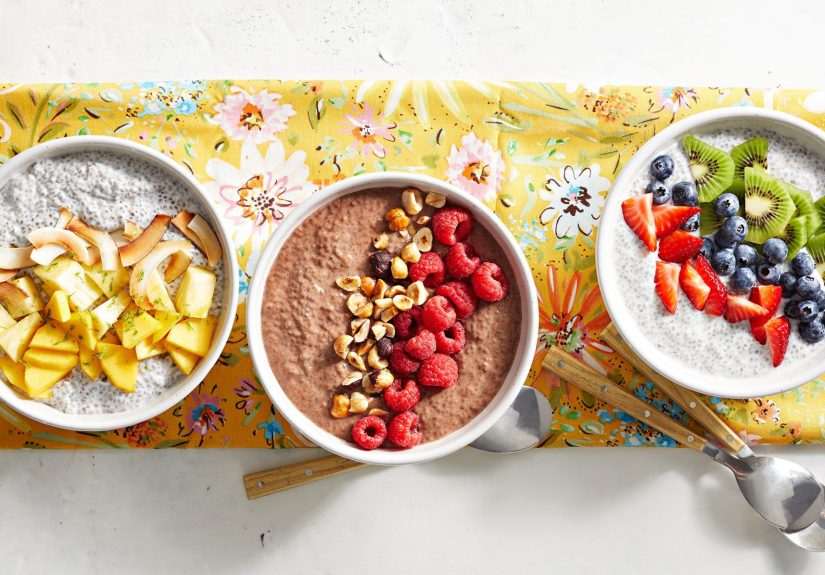
Chia pudding is the gateway recipe for a reason. Mix chia seeds with milk or a milk alternative, add a little sweetener if you like, and let it sit until it thickens. A common starting ratio is about 2 tablespoons of chia seeds to 1/2 cup of liquid for a single serving, or 1/4 cup chia to 1 cup liquid for a larger batch. Stir, let it sit a few minutes, stir again to prevent clumps, then refrigerate until thick.
Flavor ideas include vanilla and berries, cocoa and banana, cinnamon and apple, or mango and coconut. Top with nuts, fruit, or yogurt for extra texture. If the texture bugs you, blend it before chilling for a smoother result.
Stir them into oatmeal or overnight oats
Chia seeds fit beautifully into oats. In hot oatmeal, they add texture and a little body. In overnight oats, they help everything thicken into that creamy, spoonable consistency people keep posting online as if they discovered fire. Add 1 to 2 teaspoons per serving if you want a modest effect, or 1 tablespoon if you want a thicker texture and more fiber.
Blend them into smoothies
Chia seeds can make smoothies thicker and more filling. You can add them dry and blend immediately, or soak them first if you prefer a softer texture. This works especially well in berry smoothies, banana smoothies, green smoothies, and post-workout blends that need a little nutritional backup.
Sprinkle them over yogurt, cereal, and salads
This is the simplest way to use chia seeds. Sprinkle a spoonful over Greek yogurt, cold cereal, cottage cheese, or salad. Since the flavor is mild, they mostly add crunch at first and then soften as they sit. It is a quick upgrade for breakfast or lunch when you want better nutrition without more cooking.
Use them in baking
Chia seeds can be stirred into muffin batter, pancake batter, waffles, granola bars, breads, and cookies. Whole seeds add a little texture. Ground chia can be easier to blend into softer baked goods. If you want to use chia as an egg substitute, mix 1 tablespoon chia seeds with 3 tablespoons water and let it sit for about 5 minutes until it becomes gel-like. That mixture can replace one egg in recipes where the egg mainly acts as a binder.
Turn fruit into quick chia jam
One of the smartest uses for chia seeds is homemade jam. Mash warm berries or other soft fruit, stir in chia seeds, and let the mixture thicken. The chia helps create a spreadable texture without needing the long cooking process of traditional jam. Spread it on toast, swirl it into yogurt, or spoon it onto oatmeal. Suddenly breakfast feels suspiciously organized.
Add them to soups and savory dishes
Chia seeds are not just for sweet recipes. Because they are mild, you can stir a small amount into soup, sprinkle them over grain bowls, or add them to veggie burgers and meatballs as a binder. Just use a light hand. This is not the moment to turn tomato soup into wallpaper paste.
Common Mistakes to Avoid
- Using too much too fast: More is not always better. Start small and build up.
- Skipping liquid: Chia absorbs a lot of moisture. Give it enough liquid in recipes.
- Not stirring pudding twice: Stir once when mixing, then again after a few minutes so you do not get a weird chia brick at the bottom.
- Expecting dessert from plain seeds and water: Add flavor. Vanilla, cocoa, fruit, cinnamon, and citrus help a lot.
- Treating chia as a miracle cure: It is a healthy ingredient, not a substitute for an overall balanced diet.
Easy Ways to Add Chia to Your Week
- Monday: Stir 1 tablespoon into overnight oats.
- Tuesday: Blend 1 tablespoon into a berry smoothie.
- Wednesday: Sprinkle 2 teaspoons over yogurt with fruit.
- Thursday: Make a quick chia jam for toast or oatmeal.
- Friday: Add chia to pancake batter.
- Saturday: Prep chia pudding for the weekend.
- Sunday: Toss a spoonful into homemade granola or energy bites.
Are Chia Seeds Worth It?
Yes, especially if you want one affordable, shelf-stable ingredient that can make everyday meals a little more nutritious without creating a lot of work. Chia seeds are rich in fiber, offer plant-based omega-3s, contribute protein and minerals, and play well with both sweet and savory foods. That combination makes them one of the most practical health-food staples around.
No, they will not transform your life in one spoonful. But they can absolutely make breakfast, snacks, and baking smarter, more satisfying, and more interesting. For such a tiny ingredient, that is a pretty impressive résumé.
Real-World Experiences with Chia Seeds in Everyday Cooking
One of the most common experiences people have with chia seeds is skepticism at the beginning. The first look is usually some version of, “These tiny things are supposed to improve my breakfast?” Then the second reaction comes after they sit in liquid for 20 minutes and morph into something between tapioca and kitchen wizardry. Chia has a learning curve, but it is a very forgiving one. Once you understand that the seeds need time and liquid, they suddenly become one of the easiest ingredients in the pantry.
Many people first try chia in pudding form because it feels simple and safe. Milk, chia, a little vanilla, maybe some cinnamon, and into the fridge it goes. The next morning, the texture is either delightful or a tiny surprise, depending on expectations. People who love it tend to describe it as creamy, spoonable, and convenient. People who do not love it right away often find that blending the mixture creates a much smoother result. That single trick can turn a “maybe not” into a repeat breakfast.
Another very common experience is using chia in smoothies and immediately realizing it quietly makes them better. A thin smoothie becomes thicker. A snack becomes more filling. A rushed breakfast becomes something that can actually hold you over until lunch. For busy people, this is where chia seeds really shine. They do not demand much effort, but they make quick meals feel more complete.
Home cooks also tend to appreciate how adaptable chia is. Some people love it in overnight oats because it helps create that thick, chilled texture that feels almost like dessert. Others prefer sprinkling it over yogurt, where it adds subtle crunch before softening. Bakers often like the egg-substitute trick, especially in muffins, pancakes, and quick breads. It is not perfect for every recipe, but in the right one, it works surprisingly well and can save a grocery trip.
There is also the meal-prep factor. Chia seeds are popular with people who want food that behaves itself in the refrigerator. Chia pudding keeps well. Chia jam can be made in a small batch and used all week. Overnight oats with chia hold their texture nicely. In a world where many homemade foods seem to become sad and mysterious after 24 hours, chia recipes are refreshingly cooperative.
Of course, the experience is not always glamorous. Some people add too much the first time and end up with a pudding so thick it could patch drywall. Others toss dry chia into something without enough liquid and wonder why the texture feels awkward. And yes, nearly everyone has at least one moment of discovering a clump of seeds at the bottom of a jar because they forgot the second stir. Consider it a rite of passage.
But once the basic technique clicks, chia seeds tend to become one of those ingredients people keep coming back to. Not because they are trendy, but because they are useful. They help busy mornings, easy snacks, simple baking, and better meal prep. They fit into healthy routines without acting precious. And in the kitchen, that may be the greatest compliment of all.
Conclusion
Chia seeds are small, but they bring a lot to the table: fiber, plant-based omega-3s, protein, minerals, and culinary flexibility. They can thicken pudding, boost smoothies, improve oatmeal, support meal prep, and even step in as a baking binder when needed. Best of all, they do all that without demanding fancy techniques or a complete pantry makeover.
If you want a smart, simple ingredient that makes healthy eating easier, chia seeds are worth the scoop. Start small, use enough liquid, play with flavors, and let these tiny overachievers earn their place in your kitchen.



 Close
Close