Table of Contents >> Show >> Hide
- 1. Is This Really an Underdog Story, or Just a Power Fantasy in Glasses?
- 2. Why Does the Movie Confuse Social Rejection With Moral Superiority?
- 3. Why Are Women So Often Treated Like Trophies Instead of People?
- 4. How Did the Film Ever Treat Deception and Sexual Misconduct as a Punchline?
- 5. Why Does the “Date the Nerd” Myth Sound So Sweet and Work So Badly?
- 6. Is the Movie Satirizing Fraternity Culture, or Secretly Dreaming of Winning It?
- 7. Why Are So Many Stereotypes Stuffed Into a Movie About Acceptance?
- 8. Why Are the Adults on This Campus So Spectacularly Useless?
- 9. Do the Nerds Ever Actually Become Better Than the Bullies?
- 10. What Kind of Masculinity Is the Movie Actually Selling?
- 11. Why Did So Many People Laugh Then and Cringe Now?
- 12. Can a Movie Be Culturally Important and Morally Hard to Defend?
- Why This Movie Still Sparks Debate
- Extended Reflection: The Experience of Revisiting Revenge of the Nerds Today
- Conclusion
- SEO Tags
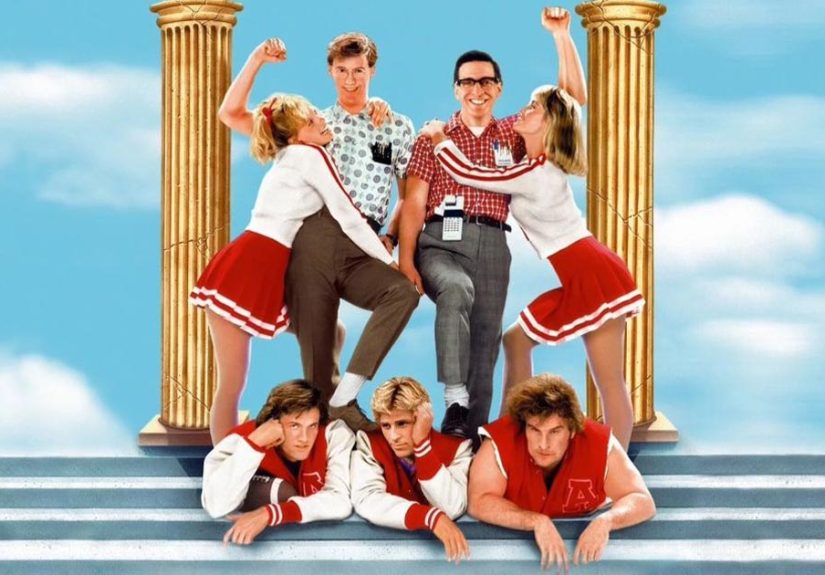
“Revenge of the Nerds” is one of those 1980s college comedies that arrives with a giant grin, a pocket protector, and the confidence of a movie that assumes you are absolutely going to cheer for the underdogs. For years, plenty of viewers did. It had the classic setup: smug jocks, bullied outsiders, a campus war, and a victory parade for the misfits. That formula helped turn it into a cult favorite and a recognizable piece of nerd culture history.
But rewatching the film today feels a little like opening a time capsule and discovering it is full of old pizza, broken calculators, and several legal concerns. Beneath the underdog fantasy is a movie that raises some deeply uncomfortable questions about consent, masculinity, women, race, social status, and what pop culture once treated as harmless fun. It is still historically important as an influential college comedy, but influence and innocence are not the same thing.
So instead of pretending this is just a goofy campus romp, let’s do the more interesting thing: ask the 12 nightmarish questions the movie leaves behind. Some are funny in a dark way. Some are surprisingly serious. All of them help explain why Revenge of the Nerds remains famous, debated, and more than a little unsettling.
1. Is This Really an Underdog Story, or Just a Power Fantasy in Glasses?
At first glance, the movie looks like a standard underdog comedy. The nerds are mocked, displaced, and treated like human lint by the campus elite. That makes it easy to root for them. But the movie quietly swaps “these guys deserve dignity” for “these guys deserve whatever they want.” That is a very different message.
A good underdog story is about fairness. This movie often feels like it is about entitlement. Instead of challenging the rules of a rotten social system, the nerds frequently seem eager to conquer it and collect the same rewards the jocks already enjoy. In other words, the movie is not always asking whether power is unfair. It is often asking who gets to hold it.
2. Why Does the Movie Confuse Social Rejection With Moral Superiority?
One of the strangest things about Revenge of the Nerds is its assumption that being unpopular automatically makes someone better. The jocks are crude, arrogant, and aggressive, so the film treats the nerds as morally enlightened by default. That would be charming if the movie did not repeatedly undermine its own argument.
Being excluded can make a character sympathetic. It does not make that character kind, respectful, or wise. The film leans hard on the old “nice guys finish first eventually” fantasy, but it rarely stops to ask whether these particular guys are actually nice. That gap is where much of the movie’s discomfort lives. It wants applause for intelligence while avoiding accountability for behavior.
3. Why Are Women So Often Treated Like Trophies Instead of People?
For a film that claims to champion outsiders, it gives women shockingly little interior life. Many female characters are framed less as full participants in campus life and more as prizes in a social video game. The nerds want access to the same women the jocks seem to control, and the movie often presents that goal as noble rather than alarming.
That is part of what makes the film feel so dated in the worst way. The central conflict is supposedly about class, status, and cruelty on campus, yet women repeatedly become symbolic property in that battle. They are used to prove masculinity, reward persistence, or validate nerd triumph. The movie says, “respect the outsiders,” but too often forgets to say, “and respect women too.”
4. How Did the Film Ever Treat Deception and Sexual Misconduct as a Punchline?
This is the question that haunts nearly every modern discussion of the movie. One of its most infamous scenes is not merely awkward by today’s standards; it is a major reason the film is now described as having aged badly. A moment the movie frames as comic victory reads, to many modern viewers, as a clear violation of consent.
That matters because it changes the whole moral chemistry of the story. Once a movie plays something this serious for laughs, the underdog glow burns off fast. What remains is a disturbing example of how some 1980s sex comedies normalized behavior that would now be recognized as coercive, deceptive, and deeply harmful. It is not a small flaw. It is the movie’s biggest alarm bell.
5. Why Does the “Date the Nerd” Myth Sound So Sweet and Work So Badly?
Revenge of the Nerds helped popularize a fantasy that still hangs around pop culture: the idea that overlooked smart guys are automatically superior romantic partners. It is the cinematic cousin of “give him a chance, he’s probably a genius.” The problem is obvious once you say it out loud. Intelligence is not the same as empathy, and awkwardness is not the same as decency.
The film packages nerd identity as hidden virtue, as if social rejection itself proves emotional depth. But plenty of rejected people are generous, and plenty are not. This movie blurs that distinction until it practically disappears. The result is a weird romantic logic in which being denied attention becomes evidence that you are owed it.
6. Is the Movie Satirizing Fraternity Culture, or Secretly Dreaming of Winning It?
The film clearly wants to mock campus hierarchies. Greek life, athletic privilege, and shallow popularity all get skewered. Yet the nerds do not really reject that world. They build their own version of it. They want recognition, status, entry, and public victory. The movie’s idea of revolution is often less “burn down the system” and more “please let us sit at the cool table.”
That is what makes the satire slippery. True satire exposes a broken culture. This movie also seems enchanted by the very rules it pretends to mock. It criticizes fraternity power while chasing fraternity legitimacy. By the end, it feels less like a rejection of toxic campus values and more like a rerouting of them through nerd branding.
7. Why Are So Many Stereotypes Stuffed Into a Movie About Acceptance?
Here is one of the film’s most baffling contradictions: it argues for tolerance while leaning heavily on broad stereotypes. Several supporting characters are written as exaggerated types, and the humor often depends on reducing them to a single trait, accent, gimmick, or visual punchline. That undercuts the film’s supposed generosity almost immediately.
The movie wants credit for assembling a coalition of outsiders, but too often it treats those outsiders as novelty acts. Instead of exploring difference with warmth, it turns difference into a joke machine. That may have passed more easily in 1984, but today it feels like a movie trying to preach inclusion with one hand while tossing banana peels with the other.
8. Why Are the Adults on This Campus So Spectacularly Useless?
College comedies thrive on incompetent authority figures, and Revenge of the Nerds definitely commits to the bit. Administrators, coaches, and campus leaders seem to exist mainly to enable chaos. On one level, that is just genre fuel. If adults acted responsibly, half the movie would collapse like a cheap dorm bed.
Still, the complete absence of meaningful adult accountability adds to the film’s nightmare logic. Harassment escalates, humiliation becomes spectacle, and the campus culture rewards aggression until the script decides it is time for applause. The adults are so useless that the movie starts to resemble a cartoon version of institutional failure, where the only rule is that the loudest group wins.
9. Do the Nerds Ever Actually Become Better Than the Bullies?
The title promises revenge, and revenge stories always risk a moral trap: when the wronged fight back, do they correct injustice or simply become a new version of the people they hate? Revenge of the Nerds does not wrestle with that question as much as it sprints past it wearing a cape made of punchlines.
Again and again, the nerds answer cruelty with humiliation, spying, trickery, and public payback. The movie frames these actions as liberation, but the methods often look suspiciously familiar. That is the real sting of the film. It claims to celebrate the powerless, yet some of its biggest laughs depend on the powerless learning how to weaponize power.
10. What Kind of Masculinity Is the Movie Actually Selling?
Underneath all the campus chaos, the film is deeply obsessed with masculinity. The jocks represent one kind: brute-force confidence, swagger, physical dominance. The nerds represent another: brainpower, technical skill, outsider intelligence. But instead of imagining a healthier alternative, the movie often acts like nerd masculinity becomes valid only when it wins the same old contest.
That means the movie never fully escapes the macho rulebook. It just gives the calculator crowd a shot at the championship belt. Success still gets measured through conquest, public recognition, and romantic validation. So the film’s message is not exactly “there are many ways to be a man.” It is closer to “you too can prove yourself inside the same broken scoreboard.”
11. Why Did So Many People Laugh Then and Cringe Now?
This is partly a history question. American comedies in the late 1970s and 1980s often treated sexual aggression, voyeurism, and social humiliation as acceptable comic material. That does not mean every viewer loved it for the same reasons, but it does explain why some scenes were once received with less public resistance than they would face now.
Changing reactions do not prove audiences became humorless. They prove audiences got better at naming harm. Modern viewers bring sharper ideas about consent, representation, and power to movies that earlier generations were encouraged to treat as disposable fun. That is why Revenge of the Nerds is such a useful case study. It shows not just how movies age, but how public ethics do too.
12. Can a Movie Be Culturally Important and Morally Hard to Defend?
Absolutely, and that is probably the most honest way to talk about Revenge of the Nerds. It mattered. It helped shape the pop-culture image of the nerd as an underdog hero rather than a disposable loser. It fed later stories about tech brains, outsider communities, and anti-jock rebellion. Its impact on the college comedy and nerd identity conversation is real.
But importance is not absolution. A film can influence culture and still be ethically messy, creatively inconsistent, and loaded with scenes that deserve criticism. In fact, the bigger its cultural footprint, the more worth it is to examine. Revenge of the Nerds survives not because it is innocent, but because it is revealing. It exposes what a certain era wanted to celebrate, excuse, and laugh away.
Why This Movie Still Sparks Debate
The lasting fascination with Revenge of the Nerds comes from its contradiction. It wants to be a story about tolerance, but it often behaves like a story about access and dominance. It wants to honor outsiders, but it repeatedly reduces people to stereotypes. It wants to mock power, but it rarely questions the desire to possess it. That is why the movie remains more than just an old comedy. It is a cultural Rorschach test with a fraternity banner hanging over it.
For some viewers, it is still a relic of a louder, raunchier era of college comedies. For others, it is a neon warning sign about how easily pop culture can confuse marginalization with virtue and persistence with entitlement. Either way, the movie raises questions far more interesting than its original fantasy ever intended. And that may be its strangest legacy of all: the film’s most valuable lesson now comes from arguing with it.
Extended Reflection: The Experience of Revisiting Revenge of the Nerds Today
Watching Revenge of the Nerds now is a very specific kind of whiplash. You can feel the movie inviting you to settle into a familiar underdog groove. The music swells, the villains posture like cartoon peacocks, and the nerds arrive with enough awkward energy to power a science fair. For a few minutes, it almost works. You understand why earlier audiences might have embraced it as a story about losers finally fighting back.
Then the uneasiness starts creeping in. One joke lands with a thud. Another scene feels meaner than funny. A supposedly triumphant moment suddenly looks like a giant moral sinkhole. That is the strange experience of revisiting the film: you are not simply watching an old college comedy. You are watching a whole era’s blind spots march across the screen in varsity jackets and taped-up glasses.
There is also something oddly familiar about its emotional engine. Many people know what it feels like to be underestimated, mocked, or treated like they do not belong. That is why the film still has a pulse. The fantasy of beating the cool kids, exposing shallow status games, and finding your people remains powerful. Almost everybody has had a “cafeteria sociology” moment in life where the room seemed organized by invisible popularity laws. The movie taps into that feeling with genuine force.
But the experience gets more complicated because the film does not stop at “outsiders deserve respect.” It keeps pushing into “outsiders deserve payback, applause, and rewards no matter how they get them.” That is where the modern viewer starts pulling back. You may still recognize the pain of exclusion, but you no longer want to follow the movie where it goes with that pain. Sympathy turns into scrutiny.
And maybe that is what makes the rewatch unexpectedly valuable. It becomes less about nostalgia and more about self-examination. What kinds of characters were audiences once trained to forgive automatically? Why did pop culture spend so long treating humiliation as harmless, persistence as romance, and deception as mischief? Why were viewers encouraged to assume that the bullied were automatically noble while the popular were automatically rotten? The film does not answer those questions well, but it absolutely forces them into the room.
There is even a weird sadness to the whole thing. Buried somewhere inside this messy movie is a better story about community, intelligence, vulnerability, and the relief of finding people who accept you. You can see flashes of it. You can almost imagine a sharper, kinder version of Revenge of the Nerds that actually challenged toxic masculinity instead of repainting it. That ghost version is part of the viewing experience too. You are not just reacting to the movie on screen; you are reacting to the better movie it never quite became.
So the lasting experience of Revenge of the Nerds in the present day is not simple enjoyment or simple outrage. It is tension. It is laughter interrupted by doubt. It is cultural memory wrestling with modern ethics. It is the realization that a movie can be influential, funny in spots, historically revealing, and still deeply wrong in ways that matter. That does not make it easy to watch. But it does make it impossible to ignore.
Conclusion
Revenge of the Nerds is not just an old college comedy that aged badly. It is a film that accidentally documents the values, fantasies, and moral shortcuts of a particular pop-culture moment. Its underdog setup still has electricity, and its influence on nerd identity in movies is undeniable. But the questions it raises about consent, gender, stereotypes, and power now overshadow the fantasy it once sold so confidently.
That is why the film continues to live on in articles, conversations, and uncomfortable rewatches. It is not a cozy nostalgia piece anymore. It is a case study. And once you start asking the right questions, the title stops sounding triumphant and starts sounding like a warning label.