
Table of Contents >> Show >> Hide
- What Made Café Vitória Special?
- The Design Language: Old Porto Meets Modern Mischief
- Café Vitória and Porto’s Café Culture
- Why the Location Mattered
- Food, Drink, and the All-Day Café Idea
- The Closure and the Legacy
- Design Lessons From Café Vitória
- How Café Vitória Fits Into a Porto Design Itinerary
- Experiences Inspired by Café Vitória: Color, Coffee, and Porto’s Beautiful Chaos
- Conclusion
Editor’s note: The original Café Vitória in Porto has been reported as closed, so this article explores it as a memorable design landmark, a cultural snapshot, and a source of inspiration for travelers, café lovers, and interior design fans.
Some cafés are places where you order coffee. Others are places where the room orders your attention before the waiter can even say hello. Café Vitória in Porto belonged firmly to the second category. Set in the city’s historic center, this once-beloved café, bar, and restaurant became known for its fearless mix of color, vintage furniture, modern Portuguese style, and easygoing social energy. It was not just a pit stop for caffeine. It was a mood board with tables.
The phrase “colorful collisions” fits Café Vitória beautifully because nothing about the space seemed interested in behaving too politely. Old architecture met playful design. Tropical tones bumped into classic café chairs. Daytime laptop sessions gave way to evening conversations. Local regulars crossed paths with travelers wandering through Porto’s steep streets, probably pretending they were not out of breath. The result was a place that reflected Porto itself: layered, dramatic, imperfect, historic, and extremely photogenic without trying too hard.
To understand Café Vitória, you have to understand Porto. Portugal’s second city is not shiny in the predictable postcard sense. Its beauty comes from texture: blue-and-white azulejo tiles, granite façades, narrow lanes, laundry lines, tiled churches, iron balconies, river views, and buildings that appear to have survived three centuries of weather and still showed up looking stylish. In that setting, Café Vitória did not feel like a random design experiment. It felt like Porto had decided to become a café for the afternoon.
What Made Café Vitória Special?
Café Vitória stood out because it blended the soul of a traditional Portuguese café with the visual confidence of a modern design space. Located on Rua José Falcão, it occupied a building with history in its bones and gave that history a fresh, colorful personality. Instead of hiding the age of the structure, the design leaned into contrast. The result was not sterile minimalism. It was warmer, stranger, and more human.
The space was associated with architect Miguel Tomé and a creative team of designers, artists, and friends who shaped multiple dining and gathering areas across two stories. That detail matters. Café Vitória was not simply decorated; it was composed. Each area created a slightly different rhythm. One room could feel casual and bright, another more intimate, and another ideal for long conversations that start with “just one coffee” and somehow end three hours later with life plans, dessert, and dramatic hand gestures.
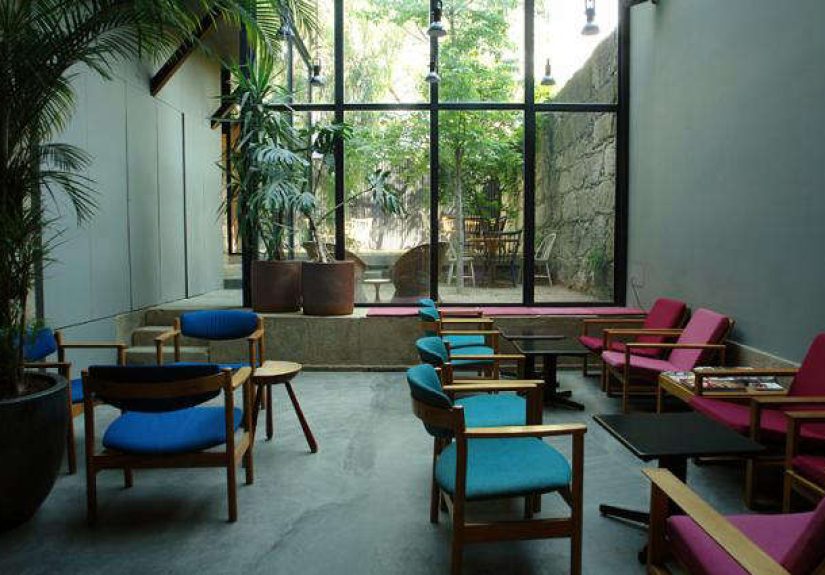
Its interiors became memorable because they understood something many trendy cafés forget: comfort and personality are not enemies. The space mixed Thonet-style chairs, relaxed couches, colorful surfaces, patterned moments, and an informal layout that invited people to settle in. It did not scream “do not touch.” It whispered, “sit down, stay longer, and maybe order something you cannot pronounce confidently.”
The Design Language: Old Porto Meets Modern Mischief
Porto is a city of beautiful contradictions. It is ancient and youthful, practical and poetic, faded and vivid, elegant and slightly chaotic in the best possible way. Café Vitória borrowed that language and translated it into interior design. The café’s appeal came from contrast: old walls with fresh color, classic café references with midcentury details, and polished design choices that still felt relaxed enough for everyday use.
A Palette That Refused to Be Boring
The first thing people often remembered about Café Vitória was color. Porto already has a famous relationship with color through its tilework, painted façades, and riverside buildings. Café Vitória took that local habit and turned up the saturation. The colors were not random decoration; they helped separate zones, create energy, and make the old building feel alive.
In design terms, color can do what architecture cannot always do quickly. It can warm a corner, lighten a heavy room, guide the eye, and make a space feel more social. Café Vitória used color almost like seasoning. Too little and the room would have tasted flat. Too much and it might have become visual soup. Somehow, the café found the sweet spot between playful and composed.
Furniture With a Social Purpose
The furniture was not just there to look charming in photographs, although it certainly handled that assignment well. The mix of chairs, sofas, tables, and lounge-like seating created different ways to use the space. This is one reason Café Vitória became associated with working, meeting, eating, and hanging out rather than just quick service.
A stiff café tells you to finish your espresso and leave. A generous café gives you options. Sit upright and work. Sink into a couch and gossip. Take a table with friends. Choose a corner and pretend you are writing a novel. Café Vitória understood that modern café culture is not one activity. It is a whole ecosystem of small rituals.
Architecture That Kept Its Memory
One of the strongest design moves was the decision to keep the older character of the building visible. In Porto, buildings often carry their past openly. They do not feel new in the way a shopping mall feels new. They feel lived in, repaired, adapted, and rediscovered. Café Vitória used that sense of age as a foundation, then layered contemporary design on top.
This is where the “collision” becomes important. The café did not erase history to become modern. It let history and modernity sit at the same table. That is also what makes Porto such a compelling city for design lovers. The best spaces there rarely feel frozen in time. They feel like conversations between centuries.
Café Vitória and Porto’s Café Culture
Portuguese café culture is wonderfully serious about small pleasures. A coffee is rarely just a drink. It can be a morning pause, a neighborhood check-in, a meeting point, a quick sugar rescue, or an excuse to sit outside and judge the weather like a professional. In Porto, cafés are woven into daily life, from historic institutions with ornate interiors to newer spaces designed for freelancers, travelers, and people who say “just checking email” before opening twelve tabs.
Café Vitória occupied an interesting middle ground. It was not as formal as Porto’s grand historic cafés, and it was not merely a third-wave coffee counter built around the sacred geometry of the pour-over. It was more flexible. It could be a daytime café, a lunch stop, a relaxed meeting space, or an evening hangout for adults. That adaptability made it feel very Porto: practical, social, and stylish without becoming precious.
The café also reflected a larger shift in Porto’s historic center. Over the last two decades, the city has attracted more artists, designers, remote workers, food travelers, and architecture fans. Classic and contemporary Porto now overlap constantly. You can walk from a medieval-feeling street to a sleek restaurant, from a tiled church to a concept store, from a tiny bakery to a gallery. Café Vitória belonged to that wave of spaces that made the old center feel newly alive.
Why the Location Mattered
Rua José Falcão sits within the broader cultural fabric of central Porto, near neighborhoods known for nightlife, galleries, independent shops, and student energy. That matters because cafés do not become memorable by design alone. They need foot traffic, stories, and a surrounding city that feeds them.
Café Vitória benefited from being part of a walkable Porto experience. A visitor might spend the morning staring at azulejos, climb toward a viewpoint, browse shops, dodge a hill that looked smaller on the map, and then find relief in a café like Vitória. The space offered what every good urban café should offer: a reset button.
The historic center of Porto is recognized for its long urban development and layered architecture. The city’s hills, riverfront, churches, train station, bridges, and dense streets create a feeling of compressed history. Inside that environment, Café Vitória worked as a softer interior counterpoint. Outside: granite, slope, traffic, bells, tiles, weather. Inside: color, couches, conversation, food, and the civilized miracle of a chair.
Food, Drink, and the All-Day Café Idea
Although Café Vitória became especially loved for its look and atmosphere, its format was also part of its identity. It was described as an all-day gathering place, serving light meals during the day and shifting into a more social evening mood later. That type of flexibility is increasingly important in modern hospitality. People do not always want rigid categories. Is it a café? A restaurant? A lounge? A workspace? A date spot? The best answer is often yes.
In Porto, this all-day model makes sense. The city rewards wandering, and wandering creates unpredictable hunger. You may plan a careful itinerary, but Porto has a way of interfering with stairs, views, markets, and sudden pastry needs. A café like Vitória gave people a place to pause without requiring a grand dining commitment.
For web readers searching for “Cafe Vitoria Porto,” “colorful café design,” or “Porto café culture,” the important takeaway is not a specific dish. It is the way food and space worked together. The menu supported the atmosphere. The atmosphere made lingering natural. And lingering is the secret ingredient of any beloved café.
The Closure and the Legacy
Café Vitória was reported closed after 11 years, which gives the story a bittersweet edge. For locals, spaces like this are not just businesses. They become personal geography. People remember where they sat, who they met, what they ordered, which conversations changed direction, and which ordinary afternoons became strangely permanent in memory.
When a café closes, the furniture can be moved, the lease can change, and the sign can come down. But the atmosphere does not disappear completely. It survives in photographs, design blogs, travel notes, old recommendations, and the collective “remember that place?” of people who spent time there. Café Vitória’s legacy is exactly that: proof that a café can become part of a city’s emotional architecture.
Its closure also says something about the pressures facing distinctive independent spaces in popular cities. As Porto’s tourism profile has grown, central neighborhoods have had to balance visitors, residents, rents, nightlife, preservation, and changing commercial realities. A beautiful café can become famous and still remain vulnerable. That is not a failure of design. It is a reminder that urban culture needs more than admiration; it needs conditions that allow local places to last.
Design Lessons From Café Vitória
Even if you never visited Café Vitória, its design offers useful lessons for café owners, interior designers, and anyone trying to make a room feel less like a waiting area and more like a place people remember.
1. Contrast Creates Character
The café worked because it did not match everything perfectly. Old and new, bright and neutral, formal and relaxed: these contrasts created depth. A room where everything matches can look expensive but forgettable. A room with thoughtful collisions can feel alive.
2. Comfort Is a Design Strategy
Beautiful cafés fail when people do not want to sit in them. Café Vitória’s relaxed seating showed that comfort is not the opposite of style. It is the reason style becomes useful.
3. Local Context Matters
The design felt connected to Porto because it echoed the city’s love of color, texture, history, and social life. A café inspired by its surroundings will always feel richer than one copied from a global trend folder labeled “industrial chic, add plant.”
4. Flexible Spaces Age Better
A café that supports multiple uses has more chances to become part of daily life. Work, lunch, conversation, reading, evening gatherings, and quiet pauses can all belong in one place if the layout allows them to.
How Café Vitória Fits Into a Porto Design Itinerary
For travelers interested in design, Café Vitória still works as a reference point, even if the original venue is no longer part of a practical itinerary. Its story pairs naturally with Porto’s broader design landscape. A strong Porto design day might include São Bento Station for azulejo tilework, Livraria Lello for dramatic interior architecture, Rua Miguel Bombarda for galleries, Serralves for contemporary art and architecture, and the riverside for the city’s famous stacked façades.
What Café Vitória adds to that list is intimacy. Landmarks show a city at its most public. Cafés show a city at human scale. You can admire a bridge, but you cannot spend two hours inside it discussing whether to order dessert. A café lets design become part of ordinary life, which is often where design matters most.
Experiences Inspired by Café Vitória: Color, Coffee, and Porto’s Beautiful Chaos
Imagine starting a Porto morning with no heroic plan beyond walking downhill, which in Porto is both a direction and a lifestyle choice. The streets are narrow, the buildings lean into the light, and every corner seems to offer either a tiled wall, a pastry, or a hill that wants to test your cardiovascular honesty. This is the kind of city where a café becomes more than convenient. It becomes survival with better lighting.
An experience inspired by Café Vitória begins with paying attention to color. Porto is not afraid of visual drama. Blue tiles wrap around churches like illustrated history books. Yellow trams move through streets with old-world confidence. Laundry adds accidental flags to balconies. The Douro River catches the sky and throws it back in silver pieces. Against that background, Café Vitória’s colorful interior made sense. It did not compete with Porto; it joined the conversation.
If you were designing a day around the spirit of Café Vitória, you would avoid rushing. The correct pace is “curious turtle.” Start with coffee near the historic center, then walk toward the tiled landmarks around São Bento and Santo Ildefonso. Notice how surfaces matter in Porto. Walls are not just walls; they are pattern, memory, weather, and craft. Then wander toward streets with galleries and independent shops, where Porto’s contemporary creative scene becomes easier to spot.
By early afternoon, the Café Vitória mindset suggests finding a place that lets you sit for a while. Not a grab-and-go counter. Not a place where the chairs seem designed by someone angry at spines. Look for warmth, mixed furniture, a little imperfection, and a room where people appear to be doing different things. The best cafés are democratic in that way. Someone is reading. Someone is working. Someone is arguing softly about directions. Someone is eating cake with the focus of an Olympic athlete.
The experience is also about texture. Run your eyes across wood, tile, plaster, fabric, metal, and glass. Café Vitória’s charm came from the way materials created layers. You can bring that same awareness to Porto itself. The city is a master class in surfaces: worn steps, glossy tiles, painted doors, iron railings, stone churches, and modern interiors tucked behind old façades. For design lovers, Porto is not just seen. It is read, one material at a time.
Later in the day, walk toward a viewpoint and let the city rearrange itself below you. Porto looks especially good from above, where the rooftops, bridges, river, and shadows create a composition that feels both accidental and perfect. This is when the memory of Café Vitória makes sense emotionally. A place like that was never only about furniture or color. It was about giving people a room where the city’s contradictions could become comfortable.
Evening in Porto brings another layer. The streets become warmer, voices carry, and restaurants begin to glow from within. For adults, the city has a long tradition of wine bars and relaxed dining, but the broader pleasure is social rather than simply culinary. Sit somewhere with good food, kind lighting, and a view of passing life. Order something local. Listen more than you talk for a few minutes. Porto rewards that.
The most meaningful Café Vitória-inspired experience is not trying to recreate the café exactly. It is learning how to notice places that have a point of view. A memorable café does not need to be perfect. It needs atmosphere, generosity, and a little bravery. It should feel like someone made choices, not like a spreadsheet selected the chairs. Café Vitória had that bravery, and that is why people still search for it, write about it, and remember it after the doors closed.
In the end, Café Vitória’s story is a reminder that travel is often shaped by small interiors. We remember the famous bridge, yes. We remember the tiled station, of course. But we also remember the café where the light hit the table just right, where the chair was comfortable, where the walls had color, and where for one slow hour a city stopped being a destination and became a feeling.
Conclusion
Cafe Vitoria: Colorful Collisions in Porto is more than a story about one café. It is a story about how design, memory, and city life meet inside a room. Café Vitória captured a version of Porto that many travelers and locals love: historic but not frozen, stylish but not stiff, social but not superficial. Its colorful interiors, mixed furniture, and layered atmosphere reflected the city around it, from azulejo-covered landmarks to creative neighborhoods and everyday café rituals.
Although the original Café Vitória has been reported closed, its influence remains valuable. It shows how independent hospitality spaces can become cultural landmarks when they combine local context, comfort, personality, and visual courage. For readers planning a Porto trip, the lesson is simple: do not only chase the famous sights. Pay attention to the cafés, corners, rooms, and small design moments. They may become the memories that last longest.




 Close
Close