
Table of Contents >> Show >> Hide
- Why Blue Works So Well in a Master Bedroom
- Step 1: Pick Your Blue “Lane” (Soft, Medium, or Moody)
- Step 2: Build a Bedroom Palette That Looks Intentional (Not Accidental)
- Step 3: Choose Paint and Finishes Like a Pro
- Step 4: Layer Textiles (Because Blue Loves Texture)
- Step 5: Lighting That Flatters Blue (and Your Face)
- Step 6: The “Finishing Touch” Details That Make It Feel Complete
- A Simple and Beautiful Bathroom Update (Weekend Edition)
- Putting It Together: A Cohesive Bedroom + Bathroom “Blue Thread”
- Common Mistakes (So You Don’t Learn Them the Hard Way)
- Conclusion: Calm Bedroom, Fresh Bathroom, Happier Daily Routine
- Real-World Experiences: What People Commonly Notice After Doing These Updates
If your home had a “reset” button, it would probably live in two places: the master bedroom (where you recover from life)
and the bathroom (where you prepare to face it again). The good news? You don’t need a full renovationor a reality TV
crew yelling “MOVE THAT BUS!”to make both spaces feel fresh, intentional, and quietly fancy.
This guide walks you through a calming master bedroom done in blues (from soft coastal to moody navy) plus a simple,
beautiful bathroom update you can knock out in a weekend. We’ll talk color choices, lighting, finishes, common mistakes,
and the small upgrades that deliver big “wow” without big “why is my bank app crying?” energy.
Why Blue Works So Well in a Master Bedroom
Blue is the design equivalent of a deep exhale. It can read crisp and classic (blue-and-white), cozy and cocoon-like
(deep navy), or airy and coastal (misty blue-gray). And because it plays nicely with warm woods, creamy whites, soft
grays, and even metallics like brass, it’s flexible enough to fit modern, traditional, transitional, and everything
in between.
The secret is choosing the right blue for your room’s light and mood. A bedroom isn’t a showroomyou’ll see it
at sunrise, at night, and in that weird mid-afternoon glare when you’re wondering why you own so many throw pillows.
So your blue needs to behave in real life, not just in a perfectly edited photo.
Step 1: Pick Your Blue “Lane” (Soft, Medium, or Moody)
Option A: Soft blues for an airy, relaxed retreat
Soft blues (powder, sky, blue-gray) tend to feel bright and easy. They’re great if your room is small, lacks natural
light, or you want the space to feel breezy and open. Pair them with crisp white trim, light oak, linen textures, and
simple patterns for a calm, clean look.
Option B: Medium blues for balance and warmth
Medium blues can look “designer” without being dramatic. They’re the sweet spot when you want color on the walls but
still want the room to feel restful. Add cream or ivory bedding to soften the palette, then bring in contrast through
dark wood, black accents, or a grounded rug.
Option C: Moody navy for a cozy, hotel-like vibe
Navy is bold, but in a bedroom it can act like a neutralespecially when balanced with bright trim and warm lighting.
If you’ve ever stayed in a boutique hotel and thought, “I could live here,” there’s a good chance navy was involved.
The trick is to avoid turning the room into a cave: add layered lighting, reflective touches (mirror, glass, satin
bedding), and lighter elements to keep it elevated.
Step 2: Build a Bedroom Palette That Looks Intentional (Not Accidental)
A blue bedroom feels cohesive when you repeat the color in at least three places. Think: walls + bedding + art, or
rug + drapes + accent chair. Then add a “supporting cast” of neutrals and warm textures so the blue doesn’t feel cold.
Three foolproof blue bedroom palettes
- Classic & crisp: Blue + white + warm wood + small hits of black
- Coastal (without the seashell overload): Blue-gray + ivory + natural fibers (jute, rattan) + brushed brass
- Moody modern: Navy + cream + walnut + matte black + a touch of bronze
Want an easy “designer move”? Pair blue with warm metals like brass or aged bronze. That mix reads instantly polished,
like your bedroom hired a stylist and then casually forgot to mention it.
Step 3: Choose Paint and Finishes Like a Pro
Paint is the fastest transformation, but it’s also the easiest place to get surprised. Blues can shift based on
undertones (gray, green, violet), surrounding materials, and light direction. That’s why sampling matters.
How to test blue paint the smart way
- Sample on multiple walls: One near a window, one in a shadowy corner.
- Check it in the lighting you actually live in: Morning, afternoon, and at night with lamps on.
- Compare next to your “fixed” items: Flooring, bedding, large furniture, and trim color.
If you’re going dark (navy), finish choice matters too. A matte wall can look rich and velvety, while trim in a satin
or semi-gloss adds crisp contrast. That contrast is what keeps deeper blues looking tailored instead of heavy.
Step 4: Layer Textiles (Because Blue Loves Texture)
A blue bedroom can fall flat if everything is the same tone and finish. Texture creates depthlike a good playlist,
not just one song on repeat.
Easy layers that instantly upgrade the room
- Bed: White or ivory sheets + a blue duvet/coverlet + a throw in a different texture (knit, quilt, linen)
- Pillows: Mix solids, subtle patterns, and one “statement” pillow (velvet, embroidered, or a bold stripe)
- Windows: Curtains add softness and help the room feel finishedespecially in a master bedroom
- Rug: A rug anchors the palette and keeps blue from feeling chilly on hard floors
If you love pattern, blue makes it easy: stripes, florals, geometrics, and classic checks all behave nicely in a
blue-forward scheme. Just repeat one neutral (like cream) so the mix looks deliberate.
Step 5: Lighting That Flatters Blue (and Your Face)
Blue can look dreamy or dreary depending on lighting. The answer is layered light:
- Ambient: A ceiling fixture or flush-mount that fills the room (dimmer if possible)
- Task: Bedside lamps or wall sconces for reading
- Accent: A small lamp on a dresser, picture light, or subtle LED in a shelf
Warm bulbs often make blue feel richer and more inviting. If your bedroom lighting feels harsh or clinical, your blue
might be innocentthe bulb could be the real villain.
Step 6: The “Finishing Touch” Details That Make It Feel Complete
This is where the room goes from “painted” to “designed.” Pick two or three of these:
- Art that echoes the palette: Blue + neutrals, or a piece that includes blue as an accent
- A mirror: Adds light and helps deeper blues feel less heavy
- Greenery: Plants or a simple branch arrangement add life to cool palettes
- Hardware + metals: Match finishes across lamps, frames, and knobs for cohesion
A Simple and Beautiful Bathroom Update (Weekend Edition)
Bathrooms don’t need a full gut remodel to feel new. In fact, the most satisfying updates are usually the ones that
fix what your eyes trip over every day: dated hardware, a bland mirror, poor lighting, tired paint, and grime that has
officially become a “design element.”
Think of this as a high-impact refresh: a few targeted swaps that make the room feel cleaner, brighter, and more modern.
The 5 bathroom updates with the biggest “before-and-after” payoff
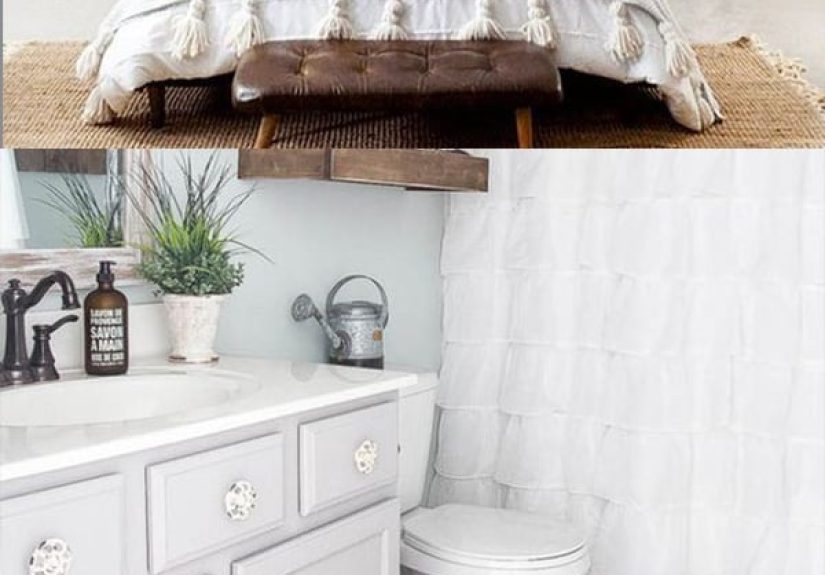
1) Paint the vanity (or walls) for instant transformation
If your vanity is builder-basic or your wall color is “rental beige,” paint is your best friend. A soft blue-gray can
feel spa-like; a deep navy can feel boutique-hotel chic. Use the right prep (cleaning, light sanding, priming when
needed), and choose paint designed for durability in humid spaces.
2) Frame the mirror (or swap it) to upgrade the focal point
A plain sheet mirror is functional, surebut so is a paper towel. A simple wood frame adds warmth and looks custom.
If you’d rather replace it, a framed mirror (arched, oval, or thin metal) instantly makes the bathroom feel more finished.
3) Update the lighting so the whole room looks better
Lighting changes everything. Swap dated fixtures for something clean-lined, and choose bulbs that flatter skin tones
(because nobody wants to brush their teeth under interrogation lighting). Bonus: good lighting makes your paint color,
mirror, and hardware all look more expensive.
4) Replace hardware and small accessories for a “matched set” look
New knobs, pulls, towel bars, and a toilet paper holder can make an older bathroom feel modern in an hour. Pro tip:
measure existing hardware spacing so you can avoid drilling new holes (a small detail that saves a lot of annoyance).
5) Clean, re-caulk, and refresh grout to make it feel truly “updated”
This is the unglamorous hero step. Fresh caulk lines and clean grout can make the whole bathroom look newereven if
nothing “major” changed. If grout is cracked or moldy, regrouting can restore the look without a full renovation.
Bathroom moisture: the part everyone forgets (until mold reminds them)
Bathrooms are basically humidity gyms. To keep your update looking good, manage moisture:
- Run the exhaust fan during showers and for a bit afterward
- Keep indoor humidity in a healthy range (a cheap humidity meter helps)
- Fix leaks quickly and wipe down heavy condensation
This isn’t just about aestheticsit helps protect paint, grout, cabinetry, and overall indoor air quality.
Putting It Together: A Cohesive Bedroom + Bathroom “Blue Thread”
Want your home to feel pulled together, not like each room was designed by a different version of you?
Use a subtle “blue thread” across both spaces.
Three easy ways to connect the rooms without matching everything
- Repeat one shade family: If the bedroom is navy, echo it in the bathroom through towels or art.
- Repeat one metal finish: Brass in bedroom lamps? Use brass or warm metal accents in bathroom hardware.
- Repeat one neutral: Creamy white walls/trim or warm wood tones can tie both spaces together.
The goal isn’t twins. It’s cousins who get along at family gatherings.
Common Mistakes (So You Don’t Learn Them the Hard Way)
- Choosing blue without sampling: Blues can shift dramatically in different light.
- Going dark without contrast: Navy needs bright trim, textiles, and layered lighting.
- Skipping bathroom prep: Paint and hardware look best when surfaces are properly cleaned and prepped.
- Ignoring moisture: A beautiful bathroom update won’t stay beautiful if humidity wins the fight.
- Trying to do everything at once: Pick the top 2–3 changes that matter most and build momentum.
Conclusion: Calm Bedroom, Fresh Bathroom, Happier Daily Routine
A master bedroom done in blues can feel like a personal retreatcalm, cozy, and tailored to your style. Pair that with
a simple, beautiful bathroom update, and you’ve upgraded two of the most-used spaces in your home without a full-scale
remodel. Paint, textiles, lighting, and a few smart swaps do the heavy lifting. You just get to enjoy the “ahhh” factor.
Real-World Experiences: What People Commonly Notice After Doing These Updates
Here’s the funny thing about updating a master bedroom and bathroom: the changes aren’t just visualthey’re behavioral.
People often report that once the bedroom feels calmer (especially with blues), they start treating it more like a
retreat and less like a storage unit with a bed in it. The nightstand clutter shrinks. Laundry mysteriously makes it to
a basket. The room becomes a place you actually want to wind down, not a place you sprint through while hunting for
phone chargers.
One of the most common “surprises” is how much lighting matters. Homeowners frequently think they need more decor, when
what they really need is less overhead glare and more warm, layered light. A navy wall can look dramatic and luxe at
night with soft bedside lamps, but the same paint can feel heavy under a single bright ceiling fixture. After swapping
bulbs or adding a second light source, the room often feels more expensivewithout buying anything big.
In bathrooms, the biggest emotional win tends to come from the least glamorous jobs: fresh caulk, cleaned grout, and a
mirror upgrade. People expect the vanity paint to be the headline, but then they step back and realize the bathroom
looks “new” because the lines look crisp and clean. It’s like getting your car detailedyou didn’t change the car, but
suddenly it looks like it has its life together.
Another common experience: the “hardware domino effect.” Someone replaces a faucet and suddenly the towel ring looks
dated. Then the vanity knobs look tired. Then the light fixture starts giving 2008 energy. This isn’t a problemit’s
your eye leveling up. The trick is to pick one finish (like brushed nickel, matte black, or warm brass) and commit
consistently so upgrades feel intentional rather than endless.
People also notice that blues can be unexpectedly moody depending on undertones. A soft blue-gray can read fresh and
spa-like in daytime but turn slightly cooler at night. That’s why many homeowners end up adding warmer textureswood,
woven baskets, creamy bedding, or brass accentsto keep the palette from feeling chilly. Once those warm elements are
in place, the blue usually feels balanced and inviting, not icy.
Finally, there’s the practical “aha”: moisture management in the bathroom is everything. After painting a vanity or
updating fixtures, homeowners often become more consistent about running the fan, wiping down puddles, or keeping a
small humidity gauge around. Not because they suddenly love choresbut because the updated space feels worth protecting.
When the bathroom stays drier, paint lasts longer, grout looks better, and the whole room keeps that just-refreshed
feeling.
In short: these updates tend to improve how a home feels day to day. Blues make the bedroom feel like a deep breath.
A cleaner, brighter bathroom makes mornings smoother. And together, they create a small but meaningful shiftyour
routine starts feeling a little more “put together,” even if life is still life.






 Close
Close