
Table of Contents >> Show >> Hide
- What anxiety feels like in the body (and why yoga can help)
- What the research actually says about yoga for anxiety
- Benefits of yoga for anxiety (beyond “it chills me out”)
- Which yoga styles tend to help the most with anxiety?
- 9 calming yoga poses for anxiety relief
- 1) Child’s Pose (Balasana)
- 2) Legs Up the Wall (Viparita Karani)
- 3) Cat-Cow (Marjaryasana-Bitilasana)
- 4) Standing Forward Fold (Uttanasana)
- 5) Reclining Bound Angle (Supta Baddha Konasana)
- 6) Supported Bridge (Setu Bandha Sarvangasana)
- 7) Supine Twist (Reclined Spinal Twist)
- 8) Mountain Pose with Grounding (Tadasana)
- 9) Corpse Pose (Savasana)
- Breathing techniques that pair well with yoga for anxiety
- Mini routines you can actually do
- Safety notes and smart modifications
- FAQ: quick answers you’ll actually use
- Real-world experiences: what people often notice when they use yoga for anxiety
- Conclusion
If you typed “anxiety for yoga” into a search bar, chances are you meant “yoga for anxiety”aka:
“Please help my brain stop running a marathon while my body is just trying to fold laundry.”
Good news: yoga isn’t a magic wand, but it can be a surprisingly practical tool for calming anxious energyespecially
when you pair gentle movement with breathwork and a little patience.
This guide breaks down what yoga can (and can’t) do for anxiety, what the research says, and which poses tend to feel
the most soothing in real life. You’ll also get short routines you can use when anxiety shows up at 2:00 p.m.
(or 2:00 a.m.) like an uninvited pop-up ad.
What anxiety feels like in the body (and why yoga can help)
Anxiety isn’t “just in your head.” It often shows up as a full-body situation: racing heart, tight chest, shaky limbs,
stomach flip-flops, tense jaw, restless thoughts, trouble sleeping, and the classic “I’m fine” while your shoulders try
to become earrings. Those symptoms line up with how anxiety triggers the body’s stress responseyour system preparing
for danger even when you’re only facing an email subject line like “Quick Question.”
Yoga can help because it trains the opposite skill set: slowing down, noticing sensations,
lengthening the breath, and staying present without immediately sprinting away mentally.
Many yoga practices emphasize gentle movement, longer exhales, and relaxationsignals that can support the body’s
“rest-and-digest” mode.
What the research actually says about yoga for anxiety
Let’s keep it honest and helpful: yoga isn’t a cure-all, but research suggests it can reduce anxiety symptoms for many people,
especially as a supportive practice alongside other treatments.
Yoga may reduce anxiety symptomsoften modestly
Reviews and meta-analyses have found that yoga can reduce anxiety symptoms in the short term, though results vary by study
quality, yoga style, and who’s practicing (everyday stress vs. diagnosed anxiety disorders). Some analyses show small-to-moderate
improvements compared with no treatment or wait-list controls.
Yoga can help, but it’s not necessarily “better than therapy”
In a well-known randomized clinical trial of adults with generalized anxiety disorder, group yoga helped reduce anxiety more than
stress-education control, but cognitive behavioral therapy (CBT) remained more effective overall. Translation: yoga can be valuable,
and therapy is still a top-tier optionthese tools can work together, not compete like reality TV rivals.
Why evidence can look “mixed”
Yoga studies use different styles (restorative vs. vigorous), different instructors, different session lengths, and different outcome
measures. Some reviews also point out that while results are promising, more rigorous research is neededespecially for diagnosed
anxiety disorders. If you’ve ever tried to compare “one yoga class” to “another yoga class,” you already understand the research problem.
Benefits of yoga for anxiety (beyond “it chills me out”)
1) A calmer nervous system through breath + longer exhales
Many yoga practices emphasize slow breathingoften with an exhale that’s longer than the inhale. That pattern can help reduce the feeling
of being “revved up.” Even a few minutes of diaphragmatic (belly) breathing may help take the edge off everyday anxiety.
2) Releasing physical tension you didn’t realize you were “holding”
Anxiety and muscle tension are frequent roommates. Gentle stretching (especially hips, chest, neck, jaw, and low back) can help your body
stop clenching like it’s bracing for impact. Poses that feel supported (rather than strenuous) tend to work best when you’re anxious.
3) Better sleepbecause anxiety loves bedtime
Restorative yoga and slow, down-regulating routines can be particularly useful before bed. When your nervous system settles, falling asleep
often gets easierand sleep is one of the most underrated anxiety buffers around.
4) Attention training: “Come back to this moment”
Yoga is basically a practice of noticing: where your breath is, what sensations are present, and what your mind is doingwithout having to
believe every thought it produces. Over time, that can strengthen your ability to redirect attention away from spirals and toward something
concrete (like “my feet are on the floor”).
5) A routine that builds confidence
Anxiety can make you feel powerless. Having a repeatable 5–15 minute yoga plansomething you can do anywherecan restore a sense of agency:
“I know what to do when this starts.”
Which yoga styles tend to help the most with anxiety?
If your goal is anxiety support, the “best” yoga style is usually the one that helps you feel safe and steadyphysically and mentally.
These options are common favorites:
- Restorative yoga: long-held, supported poses with props; deeply down-regulating.
- Gentle Hatha: slower pace, basic postures, more breathing and breaks.
- Yin yoga: longer holds, deep stretch; soothing for some, intense for others (especially when anxious).
- Yoga Nidra: guided relaxation/“yogic sleep” style; excellent for nighttime worry.
If you’re already anxious, very vigorous styles (fast vinyasa, hot yoga) can feel activatinggreat for some people, too much for others.
Your nervous system gets to vote.
9 calming yoga poses for anxiety relief
These poses are commonly used in gentle and restorative practices. Go slowly, never force a stretch, and use props (pillows, folded blankets,
a couch) like they’re part of the planbecause they are.
1) Child’s Pose (Balasana)
Why it helps: feels grounding and protective, encourages slow breathing into the back body.
- Kneel and bring big toes together; widen knees if comfortable.
- Fold forward, resting forehead on the mat or a pillow.
- Arms can reach forward (more stretch) or rest by your sides (more soothing).
- Breathe slowly for 5–10 breaths.
Make it easier: place a pillow under your chest or between hips and heels if your knees or hips complain.
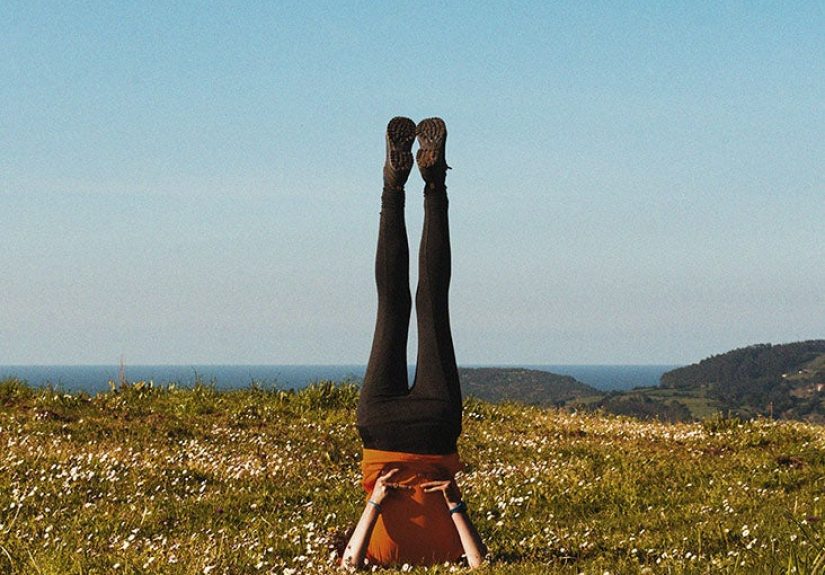
2) Legs Up the Wall (Viparita Karani)
Why it helps: restorative, low effort, often quiets a busy mind; great for end-of-day tension.
- Sit beside a wall, then gently roll onto your back as you swing legs upward.
- Scoot hips as close to the wall as comfortable (it doesn’t have to be perfect).
- Rest arms by sides; soften jaw and shoulders.
- Stay 3–10 minutes with slow breathing.
Make it easier: bend knees slightly, or place calves on a chair if hamstrings feel tuggy.
3) Cat-Cow (Marjaryasana-Bitilasana)
Why it helps: synchronizes breath and movement; helps “unstick” tension in spine and ribs.
- Start on hands and knees, wrists under shoulders, knees under hips.
- Inhale: lift chest and tailbone (Cow), gaze slightly forward.
- Exhale: round spine (Cat), draw belly in, let head relax.
- Repeat for 6–10 slow rounds.
4) Standing Forward Fold (Uttanasana)
Why it helps: gently lengthens the back body and can feel calming and inward-focused.
- Stand with feet hip-width apart.
- Soften knees (seriouslysoften them).
- Fold forward, letting head and arms hang; hold opposite elbows if that feels good.
- Take 5 slow breaths, then slowly roll up.
Make it easier: rest hands on a chair seat or a countertop.
5) Reclining Bound Angle (Supta Baddha Konasana)
Why it helps: opens hips gently; feels restful and supported, especially with props.
- Lie on your back and bring soles of feet together, knees falling outward.
- Support knees with pillows or folded blankets.
- One hand on belly, one on chest; breathe for 1–3 minutes.
6) Supported Bridge (Setu Bandha Sarvangasana)
Why it helps: gentle chest opening; supportive version feels steady without strain.
- Lie on your back, knees bent, feet flat.
- Lift hips slightly and slide a yoga block (or firm pillow) under your sacrum.
- Let hips rest on support; breathe slowly for 30–90 seconds.
- Remove support and lower down slowly.
7) Supine Twist (Reclined Spinal Twist)
Why it helps: decompresses low back and can feel like a “reset” after a stressful day.
- Lie on your back, hug knees in.
- Drop knees to the right; extend arms in a T.
- Turn head left if comfortable; breathe 5–8 breaths.
- Switch sides.
Make it easier: place a pillow under knees for support.
8) Mountain Pose with Grounding (Tadasana)
Why it helps: simple and surprisingly effective for “I feel floaty/panicky” moments.
- Stand tall, feet grounded, knees soft.
- Press toes down, then heels, noticing weight shift.
- Inhale gently; exhale longer than inhale (example: in 4, out 6).
- Repeat for 6 breaths while looking at a steady point.
9) Corpse Pose (Savasana)
Why it helps: teaches full-body letting go; it’s the “close all tabs” button (results vary, but we try).
- Lie down, legs long, arms relaxed, palms up.
- Support knees with a pillow if low back is sensitive.
- Do a quick body scan from forehead to toes, softening each area.
- Rest 3–10 minutes.
Breathing techniques that pair well with yoga for anxiety
If poses are the “movement,” breath is the steering wheel. Try these gentle options:
Belly breathing (diaphragmatic breathing)
- Place one hand on belly, one on chest.
- Inhale through the nose so the belly rises more than the chest.
- Exhale slowly, letting belly fall.
- Repeat for 1–3 minutes.
Extended exhale (simple and effective)
Inhale for a comfortable count (like 4), exhale for a slightly longer count (like 6). Do 8 rounds.
A longer exhale often signals “safe enough” to your system.
Alternate nostril breathing (Nadi Shodhana) optional
Some people find it calming; others find it fiddly. If you try it, keep it gentle and skip breath-holding if that makes you anxious.
Important: If breathing practices make you lightheaded, panicky, or pressured, stop and return to normal breathing.
“Calm” should feel like spaciousnessnot like you’re trying to win a breathing contest.
Mini routines you can actually do
The 5-minute “I need a reset” routine
- Cat-Cow 6 rounds
- Child’s Pose 8 breaths
- Standing Forward Fold (or fold on a chair) 5 breaths
- Mountain Pose + extended exhale 6 breaths
The 10-minute “turn the volume down” routine
- Child’s Pose 1 minute
- Cat-Cow 1 minute
- Supine Twist 1 minute per side
- Reclining Bound Angle 2 minutes
- Savasana 3 minutes
The 20-minute “sleep is the goal” routine
- Legs Up the Wall 6 minutes
- Supported Bridge 2 minutes
- Supine Twist 2 minutes per side
- Reclining Bound Angle 4 minutes
- Savasana or Yoga Nidra track 4 minutes
Safety notes and smart modifications
Yoga is generally safe when practiced gently, but injuries can happenespecially when you push through pain, copy someone else’s range of motion,
or treat “no pain, no gain” like a spiritual teaching (it isn’t).
- Go easy on inversions (even mild ones) if you have conditions like glaucoma or if head-down positions make you uncomfortable.
- Use props to reduce strainpillows, blankets, a chair, or the wall count as excellent yoga equipment.
- If you have trauma history, certain cues or positions may feel activating; consider trauma-informed classes or a therapist-informed plan.
- If dizziness, chest pain, or severe shortness of breath occurs, stop and seek medical care.
If anxiety is frequent, intense, or interfering with daily life, consider talking with a licensed professional.
Yoga can be a powerful support, but you deserve a full toolkit.
FAQ: quick answers you’ll actually use
How often should I do yoga for anxiety?
Consistency matters more than intensity. Even 5–10 minutes most days can be useful. Think “daily toothbrush,” not “once-a-month home renovation.”
What if I feel anxious during yoga?
Totally normal. Try opening your eyes, choosing a grounding pose (Mountain, Child’s Pose with support), and returning to natural breathing.
If a pose feels vulnerable, modify or skip it. Yoga is not a test of bravery.
Is restorative yoga better than vigorous yoga for anxiety?
Often, yesespecially for immediate calming. But some people feel best after more active movement. Your best choice is what reliably leaves you
steadier afterward.
Real-world experiences: what people often notice when they use yoga for anxiety
The interesting thing about yoga and anxiety is that the “results” are often subtle at firstless like flipping a switch and more like turning down
the brightness on a screen that’s been blinding you all day. Many people report that the earliest change isn’t “I’m never anxious,” but
“I notice the anxiety sooner.” That’s huge, because catching anxiety early makes it easier to work with. It’s the difference between noticing one
ant in the kitchen versus discovering a full ant convention that has booked the place for the weekend.
A common experience is realizing how physical anxiety is. Someone might start a short routine with a tight jaw, clenched hands, and shallow breathing
and only notice it once they try Child’s Pose and suddenly feel their breath hitting the back ribs. That moment can be oddly emotional, like:
“Oh… I’ve been bracing all day.” Gentle poses often create a safe excuse for the body to stop performing toughness. Legs Up the Wall can feel like
permission to finally clock out. People also describe a “softening” effectshoulders drop, forehead unclenches, belly loosenstiny changes that signal
the nervous system is shifting gears.
Another frequent pattern: yoga helps most when it’s used before anxiety hits peak drama. For example, someone with afternoon work
jitters might do five minutes of Cat-Cow and a supported forward fold at 3:30 p.m. They don’t become a Zen monk, but the “doom soundtrack” gets quieter
and they can finish the day without spiraling. Others use a bedtime routine: two minutes of belly breathing, three minutes in Reclining Bound Angle with
pillows, then Savasana. The mind still offers up worry-fanfiction (“What if I forgot something important in 2009?”), but the body feels safe enough
that sleep has a fighting chance.
People also learn what doesn’t help. Some discover that strong breath holds make them more anxious. Others realize fast flows spike their heart
rate in a way that feels too similar to panic. The practical takeaway: the “right” yoga for anxiety is the version that feels steady, spacious, and
supportiveespecially on hard days. Many end up with a personalized short list of “safe poses,” like Child’s Pose, a twist with pillows, and Legs Up the
Wall. Having that list can feel like carrying an umbrella: you can’t control the weather, but you’re not defenseless.
Over time, lots of people report a confidence shift. Not the loud kindmore like quiet competence. They can walk into a stressful moment and think,
“If I start spinning, I know what to do.” They use a longer exhale while standing in line. They unclench their jaw during a meeting. They put one hand
on the belly and breathe like a human instead of a startled squirrel. Those small skills add up. Yoga becomes less of a “workout” and more of a
nervous-system practice: a way to remind your body, repeatedly, that it’s allowed to be here without sounding the alarm.
Conclusion
Yoga can be a practical, body-based way to support anxietyespecially when you choose calming styles, lean into breath, and focus on comfort over
performance. The most effective routine is the one you’ll actually do: five minutes of gentle movement and slower breathing beats a perfect 60-minute
class you’ll “definitely do someday.”
Start small, stay consistent, and let yoga be what it’s best at: a reliable way to come back to yourselfone breath, one pose, one softened shoulder
at a time.


 Close
Close