
Table of Contents >> Show >> Hide
- What Is Campaign Furniture, Really?
- Why Campaign Style Makes an Excellent Home Bar
- Picking the Right Piece for a Campaign Furniture Home Bar
- Design the Setup: Make the Bar Easy to Use
- Stocking the Bar: Essentials Without Turning Your House Into a Liquor Store
- Styling Your Campaign Bar Cabinet: Classic, Not Costume
- Care and Maintenance: Keep Wood and Brass Happy
- DIY Upgrades That Won’t Anger the Furniture Gods
- Real-World Experiences: What It’s Like Living With a Campaign Furniture Home Bar (Extra )
- Conclusion
A home bar is basically a tiny hospitality department that lives in your house. It’s where you become the
“I’ll just make one quick drink” person whomysteriouslyends up polishing glassware at midnight like a
Victorian butler. If you’re going to build a bar setup you’ll actually use (and not just photograph),
there’s one furniture style that pulls double duty like a champ: campaign furniture.
The punchline is that campaign furniture was designed for movementtravel, military campaigns, and life on the
goyet it looks perfectly at home in a living room. That combination (portable, tough, organized, handsome)
is exactly what a campaign furniture home bar needs. Your bottles are heavy. Your tools are
small and easy to lose. Your glassware wants to chip itself the second you look away. Campaign furniture was
basically invented to boss that chaos around.
What Is Campaign Furniture, Really?
Campaign furniture is travel-ready furniturebuilt to be packed, carried, and reassembled without falling apart
or throwing a tantrum. Historically, it’s strongly associated with military campaigns and colonial travel, but
the design language has outlived the baggage trains. The core idea is practical engineering dressed in its Sunday
best.
The signature “campaign look”
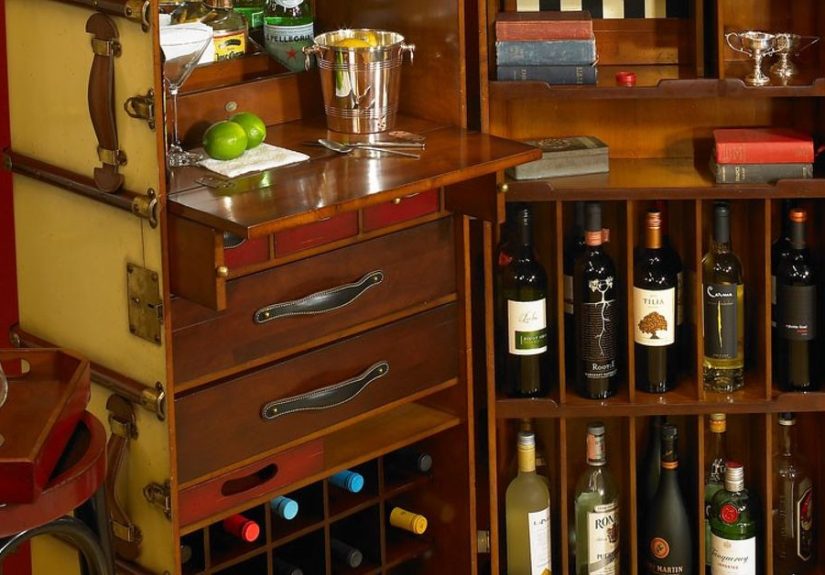
- Brass corner guards and strapwork to protect edges during transport (and to look expensive doing it).
- Recessed/flush handles that don’t snag when moving pieces.
- Modular constructionoften two-part cases that stack and separate for easier carrying.
- Removable feet on some chests, again for travel and stability.
- Sturdy joinery because a furniture piece that travels has no patience for flimsy shortcuts.
In a modern home, campaign furniture shows up as chests, cabinets, desks, and “campaign-style” pieces that borrow
the brass-and-recessed-hardware vibe. Sometimes the portability is still real; sometimes it’s aesthetic. Either
way, it’s a strong match for a bar cabinet that needs to be durable, organized, and good-looking even when guests
open every drawer like they’re searching for a secret passage.
Why Campaign Style Makes an Excellent Home Bar
A home bar fails for boring reasons: nowhere to prep, nowhere to store, and everything gets cluttered. Campaign
furniture solves those problems with the kind of common sense that feels rare in 2026.
1) Built for weight and movement
Bottles are dense, and a fully stocked bar cabinet is basically a small gym membership. Campaign furniture’s
sturdiness and protective corner hardware translate well to a bar station that might get bumped, shifted, or
re-styled as your space changes.
2) Storage that behaves
Drawers and compartments are where cocktail tools thrive: jiggers, strainers, bar spoons, peelers, napkins,
coasters, bitters, and the mysterious tiny clip you swear came with something important. Campaign chests and
cabinets are naturally compartment-friendly.
3) It looks “collected,” not “catalog”
A campaign bar cabinet brings instant characterbrass details, warm wood, and the sense that you might own a
leather-bound atlas (even if it’s actually just a takeout menu).
Picking the Right Piece for a Campaign Furniture Home Bar
There’s no single “correct” campaign home bar layout. The best piece depends on your space and how you drink:
cocktails often? Wine-forward? Mostly sparkling water with “just a little lime” because you’re an icon of restraint?
Option A: Campaign chest → dry bar powerhouse
A campaign chest (or campaign-style chest) is the classic conversion. The top surface becomes your mixing zone;
the drawers become tool and accessory storage; the lower section can handle bottles. If you want an easy win,
choose a chest with deeper drawers and a stable top.
Pro tip: If the piece is an antique, avoid permanent modifications. Use removable inserts:
a tray for bottles, felt-lined dividers for tools, and a fitted interior rack that can lift out later.
Your future self (and any future appraiser) will thank you.
Option B: Campaign-style cabinet → “open the doors, cue the applause”
A cabinet-style piece is ideal if you want glassware display, bottle storage, and a cleaner look when closed.
Many modern bar cabinets borrow campaign cuesbrass accents, corner details, recessed pullswhile offering
purpose-built shelving, stemware holders, and pull-out serving trays.
Option C: Secretary or desk → cocktail station with a secret identity
A secretary-style piece (drop-front or writing surface) can create a tidy, “I’m just a normal cabinet” exterior
that transforms into a prep station when opened. It’s a great solution for small spaces where you don’t want the
bar visible 24/7.
Option D: Trunk or portable cabinet → bar that can travel (actually)
Want to roll the bar to the patio, bring it to a friend’s place, or stash it away between parties?
A trunk-style pieceespecially one inspired by travel furnituremakes the whole bar concept more flexible.
Think “home bar,” but with a tiny bit of adventure energy.
Design the Setup: Make the Bar Easy to Use
A bar that looks amazing but functions poorly is just a shrine to disappointment. The goal is a simple workflow:
grab glass → measure → mix → strain → garnish → serve. Your campaign furniture home bar can support that
with a few smart zones.
The four zones
- Prep zone: a clear surface (tray optional) where you can mix without juggling clutter.
- Tools zone: drawers or a caddy for shaker, jigger, strainer, bar spoon, muddler, peeler.
- Bottles zone: stable, upright storage with spill protection (liners or trays help).
- Glassware zone: either inside the cabinet or on a nearby shelfeasy reach, low risk.
Lighting: the underrated MVP
Home bar design pros constantly emphasize lighting because it changes the mood and makes the setup feel intentional.
Add a small lamp, under-shelf lighting, or a warm accent light. A campaign-style bar with brass details looks
especially good under warm lightit’s basically the furniture equivalent of golden hour.
Stocking the Bar: Essentials Without Turning Your House Into a Liquor Store
The smartest home bars are customized to what you actually drink. You do not need 43 bottles to impress anyone.
You need a functional set of tools, a handful of versatile spirits, and the basics that make drinks taste right.
Must-have tools (the “make most cocktails” kit)
- Shaker: a two-piece shaker (often preferred for durability and ease of use) or a three-piece if you like it.
- Jigger: because guessing your measurements is a fun hobby until you taste it.
- Strainer: Hawthorne-style is the workhorse; add a fine mesh strainer for clarity.
- Bar spoon: for stirring and layering, and for feeling like you know what you’re doing.
- Muddler: for herbs and fruit (your mojitos are counting on you).
- Citrus tool: a hand juicer or reamer for fresh juice.
- Peeler + knife: garnishes are flavor, not just decoration.
Glassware that earns its shelf space
Start with “workhorse” glasses and grow from there. A few sturdy rocks glasses and highballs cover a lot of ground.
Add coupes (or similar stemmed cocktail glasses) if you make classic shaken/stirred drinks. If you entertain,
consider a flexible all-purpose wine glass so you’re not running a stemware museum.
A practical starter bottle list
Build around versatile categories rather than chasing every niche bottle. A balanced home bar often includes:
a gin, a whiskey/bourbon, a tequila, a rum, and a vodkaplus bitters and one or two modifiers (like a sweet vermouth
or orange liqueur) depending on your favorite drinks. Add mixers you’ll actually use: tonic, soda, ginger beer,
and citrus. If you don’t drink something, don’t buy it “for the bar.” Your cabinet is not a shrine to regret.
Styling Your Campaign Bar Cabinet: Classic, Not Costume
Campaign furniture can lean “adventure classic” without turning into a theme park. The best styling is restrained:
a few intentional pieces, strong materials, and breathing room.
Easy wins
- Use a tray on top (wood, metal, or leather) to corral tools and prevent ring marks.
- Add a small lamp or warm accent light for a lounge-like vibe.
- Balance brass with darker wood, black accents, or deep colors for a richer look.
- Keep a “guest-ready” kitnapkins, bottle opener, and a bar towel in one drawer.
- Include one conversation piece: vintage glassware, a cocktail book, or a quirky garnish jar.
Care and Maintenance: Keep Wood and Brass Happy
A campaign furniture home bar sees spills, condensation, and the occasional “oops.” Protecting the piece is simple:
coasters, trays, and quick wipe-downs. For brass hardware, gentle cleaning keeps it from looking dull. For wood,
avoid soaking the surface; treat water rings early; and keep the cabinet away from extreme heat or humidity swings.
If the furniture is vintage or antique, resist harsh products. The goal is to preserve character, not sand it into
a sterile imitation of itself. A few honest marks are fine. They’re proof your bar actually gets used, which is the
entire point.
DIY Upgrades That Won’t Anger the Furniture Gods
You can make a campaign bar cabinet dramatically more functional without drilling holes or committing permanent
crimes against wood.
Reversible upgrades
- Drawer dividers: removable organizers for tools, bitters, and garnishes.
- Cabinet liners: cut-to-fit mats that protect wood from sticky leaks.
- Lift-out bottle racks: keep bottles upright and separated (especially helpful in drawers).
- Stemware inserts: use freestanding holders rather than mounted rails if you want flexibility.
- Felt or cork pads: reduce rattle and protect glassware in drawers.
If you want a wet bar with plumbing, that’s a bigger projectusually better handled as built-in cabinetry rather
than converting a vintage piece. But if you’re building a dry bar (spirits + tools + glassware), campaign furniture
is a near-perfect match.
Real-World Experiences: What It’s Like Living With a Campaign Furniture Home Bar (Extra )
Experience #1: The “small apartment, big hosting energy” setup.
One of the most satisfying campaign home bars is the kind you can fit into a corner without sacrificing your
entire living room. Picture a campaign-style chest that looks like a normal piece of furniture until Friday night
hits. The top drawer holds the “grab-and-go” kit: jigger, bar spoon, strainer, peeler, and a small bar towel.
The second drawer is the “backup singer” drawerbitters, extra napkins, cocktail picks, and a lighter for candles
(because mood is half the drink). The bottom section stores bottles upright in a removable rack, so the cabinet
doesn’t turn into a glass-and-label avalanche. The surprising part? Guests don’t treat it like a clutter magnet.
Because it looks intentional, people instinctively put things back where they found them. Humans are trainable.
Experience #2: The vintage find that became the “signature” piece.
A campaign chest with brass corners has instant presence. Even if you don’t know the history, it reads as
well-made and a little bit dramaticin a good way. In real life, the most common win is using a tray on top as a
dedicated mixing zone. That tray is the secret sauce: it keeps condensation off the wood, prevents tools from
wandering, and makes cleanup fast. With a tray, you can go from “party mode” to “normal living room” in about
sixty seconds. Without a tray, you’ll eventually find a lime wedge fossilized behind a bottle and wonder what
choices brought you here.
Experience #3: The “I don’t even drink much, I just love having it” bar.
Not every home bar is about cocktails. Some people use the campaign cabinet as a beverage station: sparkling
water, bitters and citrus, a few special bottles for guests, and an impressive set of glasses that make Tuesday
night feel less like Tuesday. This is where campaign furniture shines: the drawers keep everything tidy, and the
cabinet closes to hide the chaos. It’s also surprisingly useful for non-bar thingslike storing fancy coffee gear
or tea servicebecause the organization is the same: tools, ingredients, serving pieces, and a clean surface.
The bar becomes a “ritual station,” not a drinking identity.
Experience #4: The outdoor hang that made everyone jealous.
Campaign furniture has travel DNA, so it feels oddly appropriate for patios and screened porches (weather
permitting and with sensible protection). The move is to keep the cabinet inside, then roll out a “field kit”:
a tray with tools, a small caddy for garnishes, and a bucket for ice. The campaign vibe makes it feel like
intentional entertaining rather than “we dragged a cooler outside.” Add a lantern-style light and suddenly it’s
not just drinksit’s an event. Even if the event is two people sipping something simple and arguing about what
movie to watch.
The big takeaway from living with a campaign furniture home bar is that the best bars are not the most expensive
or the most stockedthey’re the most usable. When the storage is smart, the setup stays clean. When the setup is
clean, you actually use it. And when you actually use it, it stops being “decor” and becomes a little slice of
hospitality you can pull off on a random Wednesday without a full production meeting.
Conclusion
A campaign furniture home bar is a rare combination: handsome, durable, and genuinely practical.
The brass details and recessed hardware give it character, while the modular storage makes it easy to keep tools,
bottles, and glassware organized. Start with a piece that fits your space, build a simple workflow, stock only
what you’ll actually drink, and protect the furniture with a few smart accessories. You’ll end up with a bar
that feels collectednot clutteredand entertaining that feels easy, not exhausting.






 Close
Close