
Table of Contents >> Show >> Hide
- What Is a Dynamometer?
- Why Measuring Motor Power Matters
- The Basic Formula: Torque, Speed, and Power
- How a Motor Dynamometer Works
- Types of Dynamometers Used for Motor Power Testing
- Building a Small Dynamometer for Motor Power Measurement
- Important Design Considerations
- What Data Does a Dynamometer Produce?
- Specific Example: Testing a Small Brushless DC Motor
- Dynamometer Testing vs. Nameplate Ratings
- Common Mistakes in Motor Dynamometer Testing
- Applications of Motor Dynamometers
- Experience Notes: What Testing Motor Power Teaches You
- Conclusion
- SEO Tags
If a motor could brag, it would probably say something vague like, “I’m pretty strong.” That is charming, but not useful. Engineers, makers, students, and anyone who has ever watched a tiny electric motor smoke itself into retirement need numbers. How much torque does the motor produce? At what speed? How much usable power reaches the shaft? Where does performance fall off? A dynamometer answers those questions without relying on wishful thinking, marketing stickers, or the sacred garage method of “it feels faster.”
A dynamometer for measuring motor power is a test device that places a controlled load on a motor while measuring torque and rotational speed. With those two values, mechanical output power can be calculated. In simple terms, the dynamometer tells you how hard the motor twists, how fast it spins, and how much work it can actually do. That makes it one of the most important tools in electric motor testing, robotics, automotive development, aerospace research, industrial equipment validation, and home-shop experimentation.
What Is a Dynamometer?
A dynamometer, often shortened to “dyno,” is a device used to measure force, torque, or power. For rotating machines such as electric motors, engines, gearboxes, and turbines, a dynamometer measures torque and speed so output power can be calculated. Instead of guessing how powerful a motor is, the dyno gives a repeatable test environment where performance can be recorded across different speeds and loads.
Think of it as a treadmill for motors. A treadmill does not make a runner faster, but it gives a controlled way to measure effort, speed, endurance, and fatigue. A motor dynamometer does the same thing for rotating machinery. It applies resistance, records the motor’s response, and helps create performance curves that show what the motor can really do.
Why Measuring Motor Power Matters
Motor power is not just a bragging number. It affects product design, battery life, thermal performance, safety, reliability, efficiency, and cost. A drone motor that performs beautifully for ten seconds but overheats after one minute is not a great motor; it is a tiny flying toaster. A conveyor motor that has enough rated power but poor low-speed torque may stall under real load. A robot joint motor that looks strong on paper may disappoint once gear friction, heat, and controller limits enter the room like uninvited relatives.
By using a dynamometer, engineers can compare motors fairly. They can see how output power changes with RPM, how efficiency changes under load, and where the motor’s safe operating zone begins and ends. This is especially important for electric vehicles, industrial automation, CNC machines, pumps, fans, robotics, and any system where power must be predictable rather than inspirational.
The Basic Formula: Torque, Speed, and Power
At the heart of dynamometer testing is a simple relationship: power equals torque multiplied by angular speed. In metric units, torque is measured in newton-meters, angular speed is measured in radians per second, and power is measured in watts. In U.S. customary units, horsepower is often calculated from torque in pound-feet and speed in RPM.
The common horsepower formula is:
The metric power relationship is:
This is why a dynamometer does not need to “see” power directly. It measures torque and rotational speed, then calculates power. The calculation is straightforward, but getting accurate torque and speed measurements under real load is where the craft begins.
How a Motor Dynamometer Works
A typical motor dynamometer setup includes the motor under test, a coupling or shaft connection, a load device, torque measurement hardware, a speed sensor, a controller, and data acquisition software. The motor spins the dyno, the dyno applies resistance, and sensors record what happens. If the motor is strong, it maintains speed under load. If it is weak, overloaded, or poorly controlled, the numbers reveal the truth with the emotional softness of a tax audit.
1. The Motor Under Test
This may be a brushed DC motor, brushless DC motor, induction motor, permanent magnet synchronous motor, servo motor, stepper motor, pneumatic motor, or small engine. The motor is mounted securely so its shaft can be aligned with the dynamometer input.
2. The Load Device
The load device absorbs or resists the motor’s output. Depending on the dyno type, this load may come from friction, eddy currents, magnetic hysteresis, powder braking, water drag, hydraulic resistance, or an electrical generator. The goal is to apply a known and controllable load without turning the test bench into a parts launcher.
3. Torque Measurement
Torque can be measured with a torque transducer, load cell, reaction arm, strain gauge sensor, or calibrated brake mechanism. Accurate torque measurement is the soul of dynamometer testing. Bad torque data leads to bad power data, and bad power data leads to confident mistakes, the most expensive kind.
4. Speed Measurement
Speed is usually measured with an encoder, tachometer, Hall sensor, optical sensor, magnetic pickup, or integrated motor feedback device. RPM data must be synchronized with torque data so power can be calculated at each operating point.
5. Data Acquisition and Control
Modern dynamometers use software to record torque, RPM, voltage, current, temperature, vibration, and efficiency. This makes it possible to create torque-speed curves, power curves, efficiency maps, thermal profiles, and pass-fail test reports.
Types of Dynamometers Used for Motor Power Testing
Not all dynos work the same way. Choosing the right dynamometer depends on motor size, speed range, torque range, test duration, cooling requirements, budget, and whether you want to absorb energy as heat or recover it as electricity.
Absorption Dynamometers
An absorption dynamometer absorbs the motor’s output power and converts it into heat. This category includes friction brakes, water brakes, eddy-current brakes, powder brakes, and hysteresis brakes. These dynos are common because they are effective, controllable, and suitable for many testing environments.
Friction or Prony Brake Dynamometers
A Prony brake is one of the oldest and simplest dynamometer designs. It uses friction applied to a rotating drum or pulley. A lever arm and scale or load cell measure the reaction force, allowing torque to be calculated. It is simple enough for educational projects and home-built experiments, but it has limits. Friction creates heat, wear, and variability, so careful calibration and cooling are required.
Eddy-Current Dynamometers
An eddy-current dynamometer uses electromagnetic resistance to load the motor. As a conductive rotor moves through a magnetic field, circulating currents generate braking force. Eddy-current dynos are smooth, fast-responding, and widely used in engine and motor testing. They are excellent for controlled load sweeps, although they require cooling because absorbed energy becomes heat.
Hysteresis Dynamometers
Hysteresis dynamometers use magnetic hysteresis to create braking torque. They can often provide torque at low or zero speed, making them useful for small motors, servo motors, and applications where low-speed torque matters. They are known for smooth operation and repeatable control.
Powder Dynamometers
Powder dynamometers use magnetic powder between rotating and stationary elements. When magnetized, the powder transmits torque and creates braking resistance. These dynos can provide strong low-speed torque and are often used for applications where stable loading is needed across a broad operating range.
Regenerative Dynamometers
A regenerative dynamometer can act like a generator, converting mechanical power back into electrical energy. Instead of wasting all test energy as heat, it can return energy to a power supply or grid-compatible system. This is especially attractive for electric vehicle motors, high-power industrial motors, and long-duration testing where energy cost and heat management matter.
Building a Small Dynamometer for Motor Power Measurement
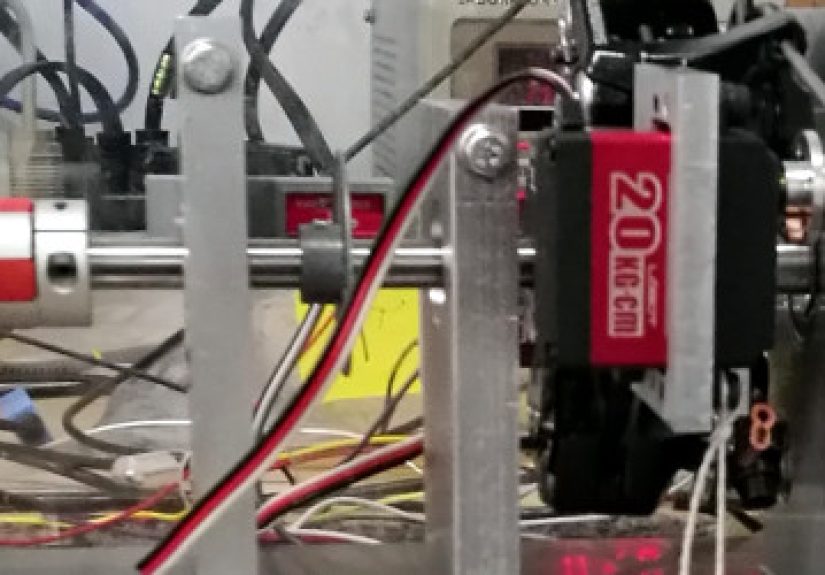
For makers, students, and lab teams, a small dynamometer can be built with practical components: a sturdy frame, shaft coupler, bearing supports, brake or generator load, torque sensor or reaction arm, speed sensor, current and voltage sensors, and data logging hardware. The design does not need to be exotic, but it must be safe and mechanically sound.
A basic DIY version might use a DC generator as the load. The motor under test spins the generator, and the generator output is connected to an adjustable resistive load. By measuring generator reaction torque and shaft speed, the system can estimate motor output power. A more advanced setup may use a commercial torque transducer, encoder, electronic load, and computer-controlled test sequence.
The key is to measure mechanical output, not just electrical input. Electrical input power is easy to calculate from voltage and current, but it does not tell the full story. Motors lose energy through winding resistance, magnetic losses, bearing friction, windage, controller losses, and heat. A dynamometer measures what actually comes out of the shaft, which is the power your machine can use.
Important Design Considerations
Torque Range
The dyno must handle the motor’s expected torque without saturating the sensor or slipping the coupling. If the torque sensor is too small, it may be damaged. If it is too large, small measurements may become noisy or imprecise.
Speed Range
High-speed motors require careful balancing, secure couplings, guarded rotating parts, and sensors rated for the expected RPM. A tiny shaft spinning at 20,000 RPM deserves respect. It may look harmless, but so does a paperclip until it becomes airborne.
Power Absorption
The dynamometer must safely absorb the motor’s output power. A 500-watt motor running at full load produces 500 watts of mechanical energy that must go somewhere. In an absorption dyno, that “somewhere” is usually heat. Without cooling, the setup can overheat quickly.
Alignment and Coupling
Misalignment creates vibration, bearing load, inaccurate readings, and possible failure. Flexible couplings can help, but they are not magic erasers for poor setup. The motor shaft and dyno shaft should be aligned carefully.
Calibration
Calibration is what separates measurement from decoration. Torque measurement systems should be calibrated with known forces and lever arms or traceable calibration equipment. Speed sensors should be checked against reliable references. Even a small calibration error can distort power and efficiency calculations.
Safety Guards
Every rotating shaft, coupling, pulley, flywheel, and belt should be guarded. Test benches should include emergency stop controls, thermal limits, current limits, secure mounting, and common sense. Common sense is the cheapest safety feature, but strangely, it is often backordered.
What Data Does a Dynamometer Produce?
A well-instrumented dynamometer can produce a rich performance profile. The most common outputs include torque versus speed, power versus speed, efficiency versus load, current draw, voltage, temperature, vibration, and controller behavior. These values can be plotted to reveal the motor’s real operating personality.
A torque-speed curve shows how torque changes as RPM increases. Many electric motors produce strong torque at low speed but reach a point where torque falls as speed rises. A power curve shows where the motor produces maximum output power. An efficiency map shows where the motor converts electrical input into mechanical output most effectively. For battery-powered systems, this map is gold.
Specific Example: Testing a Small Brushless DC Motor
Imagine testing a brushless DC motor intended for a small robotic drive system. The motor is connected to a dynamometer through a flexible coupling. The controller runs the motor through several speeds while the dyno applies increasing load. Sensors record voltage, current, RPM, torque, and winding temperature.
At low RPM, the motor produces strong torque but draws high current. At midrange speed, torque remains useful and efficiency peaks. At high RPM, torque falls and temperature begins to climb. The final data shows that the motor is best suited for continuous operation in the midrange, not at its advertised no-load speed. That discovery may save the robot from sluggish movement, overheating, or dramatic failure during a demo in front of people holding coffee.
Dynamometer Testing vs. Nameplate Ratings
Motor nameplate ratings are useful, but they do not always describe real application behavior. A rated power value may depend on cooling conditions, duty cycle, voltage, controller settings, ambient temperature, or a specific test standard. A motor that can produce a peak power value for five seconds may not survive producing that same power continuously.
Dynamometer testing helps separate peak performance from continuous performance. Peak power is useful for acceleration, short bursts, and marketing brochures with dramatic fonts. Continuous power is what matters when the motor must work all day without smelling like toasted varnish.
Common Mistakes in Motor Dynamometer Testing
Ignoring Heat
Motor performance changes as temperature rises. Winding resistance increases, magnets may weaken temporarily, lubricants change behavior, and electronics may limit current. A good dyno test records temperature and allows enough time to understand thermal behavior.
Using No-Load Speed as a Power Indicator
No-load speed tells you how fast a motor spins when it is doing almost no useful work. It is not a power rating. A motor that spins very fast with no load may still have poor torque under load.
Forgetting Inertia
During acceleration and deceleration tests, system inertia can affect torque readings. If the test ramp is too aggressive, data may reflect the energy required to accelerate the test system rather than the motor’s steady output. Controlled ramp rates and proper correction methods help improve accuracy.
Poor Mechanical Mounting
A motor flopping around on a flexible bracket will not produce reliable data. The test stand should be rigid, aligned, and repeatable.
Confusing Input Power with Output Power
Electrical input power is not the same as mechanical output power. Efficiency is the bridge between the two. A dynamometer helps measure output power directly so efficiency can be calculated instead of guessed.
Applications of Motor Dynamometers
Motor dynamometers are used across a wide range of industries. In electric vehicle development, dynos validate traction motors, inverters, cooling strategies, and efficiency maps. In robotics, they help select actuators and characterize gearmotors. In aerospace, they support testing of compact, high-performance motors. In manufacturing, they verify production motors before shipment. In education, they make physics visible, measurable, and harder to argue with.
For hobbyists, a small dynamometer can transform motor selection from guesswork into engineering. Instead of buying five motors and hoping one behaves, a maker can test torque, speed, current draw, and heat. That is especially valuable in drones, electric skateboards, CNC spindles, combat robots, model aircraft, pumps, and custom automation projects.
Experience Notes: What Testing Motor Power Teaches You
Working with a dynamometer for measuring motor power teaches a lesson that spec sheets often whisper but never shout: motors are deeply contextual. A motor is not simply “powerful” or “weak.” It is powerful at certain speeds, under certain loads, at certain temperatures, with a certain controller, and for a certain amount of time. Once you see a full dyno curve, you stop asking, “How many watts is it?” and start asking better questions.
One of the first practical lessons is that mounting matters more than beginners expect. A loose bracket, soft base, or slightly crooked coupling can introduce vibration that pollutes the data. At first, the numbers may look mysterious. Torque jumps around. RPM wanders. The motor sounds unhappy. Then you tighten the frame, align the shaft, and suddenly the readings calm down. The dynamometer has not changed; the test quality has.
Another experience is learning how quickly heat becomes the boss. A motor may produce impressive power at the beginning of a test, then slowly fade as temperature rises. This is not failure; it is physics wearing a referee shirt. Copper resistance increases with heat, magnets and bearings behave differently, and controllers may reduce current to protect components. A short test may flatter a motor. A longer test tells the truth.
Load control is another eye-opener. When you increase load gradually, you can see the motor’s character unfold. Some motors handle load smoothly. Others reach a point where current spikes, speed collapses, and the setup politely suggests that you stop. A dynamometer makes these transitions visible. It shows not just maximum power, but usable power, stable power, and efficient power.
Testing also builds respect for calibration. A small error in torque measurement can create a large misunderstanding in calculated power. The old “close enough” approach may be acceptable when hanging a picture frame, but not when evaluating a motor for a production machine or high-speed vehicle. A calibrated torque sensor, verified lever arm, accurate speed reading, and clean data logging process all contribute to trustworthy results.
Finally, dyno testing teaches humility. Motors that look unimpressive can perform beautifully in the right range. Motors with loud marketing claims can disappoint under continuous load. Gearboxes may add torque but steal efficiency. Controllers can limit performance. Cooling can turn a mediocre setup into a reliable one. The dynamometer does not care about brand names, opinions, or forum arguments. It simply reports what happened.
That is why a dynamometer is so valuable. It turns motor testing from a guessing game into a measurable process. It helps engineers design better systems, helps makers avoid expensive mistakes, and helps students connect formulas to spinning hardware. It is the difference between saying, “This motor should work,” and knowing exactly where, how, and for how long it will work.
Conclusion
A dynamometer for measuring motor power is more than a test bench accessory. It is the translator between electrical promise and mechanical reality. By measuring torque and speed under controlled load, it reveals output power, efficiency, thermal limits, and real-world performance. Whether the setup is a professional regenerative dyno for electric vehicle motors or a carefully built small dyno for a workshop project, the principle remains the same: load the motor, measure accurately, and let the data speak.
In a world full of optimistic ratings and shiny product claims, the dynamometer brings refreshing honesty. It shows where a motor shines, where it struggles, and where it should never be asked to go unless you enjoy smoke, noise, and learning lessons the expensive way. For anyone serious about motor performance, a dynamometer is not just useful. It is the bench-side truth machine.







 Close
Close