Table of Contents >> Show >> Hide
- What Is a Runaway Greenhouse Effect, Exactly?
- Venus: The Solar System’s Cautionary Cousin
- Could Human Activity Trigger a Full Runaway Greenhouse on Earth?
- What Earth’s More Likely Climate “Hellscape” Looks Like
- Why the Phrase “Runaway Greenhouse” Still Matters
- So, Is Earth Headed for a Hellscape?
- What Needs to Happen Next
- Conclusion
- What Living in a Near-Hellscape World Could Feel Like
Earth has plenty of problems already. It does not need to audition for the role of “Venus 2.0.” Yet that is exactly why the idea of a runaway greenhouse effect grabs people by the collar. It is dramatic, a little terrifying, and scientifically fascinating. The phrase sounds like the title of a disaster movie where the oceans boil, the sky turns into soup, and everyone suddenly regrets making fun of the weather forecast.
But here is the important part: the science is more nuanced than the headline. A true runaway greenhouse effect is a real planetary process, and Venus is the classic example. Earth, meanwhile, is dealing with a different but still extremely dangerous problem: human-caused climate change that can make large parts of the world hotter, harsher, and far less stable long before our planet ever reaches full Venus-style madness.
So yes, a runaway greenhouse effect would turn Earth into a hellscape. The bigger question is this: how close is that scenario, what does mainstream science actually say, and why should we care even if the full runaway version is not the most likely near-term outcome? Let’s talk about the difference between a scientific apocalypse and the one we are already busy stress-testing.
What Is a Runaway Greenhouse Effect, Exactly?
First, a quick reality check. The greenhouse effect itself is not the villain. Without it, Earth would be a frozen marble with terrible beach weather. Greenhouse gases such as carbon dioxide, methane, and water vapor trap some of the heat radiating away from Earth’s surface. That natural process keeps the planet warm enough for liquid water, ecosystems, and people arguing online about humidity.
The trouble begins when humans pile extra greenhouse gases into the atmosphere. That strengthens the greenhouse effect and raises global temperatures. Carbon dioxide is especially important because it acts like the climate system’s long-lived control knob. Water vapor matters too, but mostly as a feedback. Warmer air can hold more water vapor, and because water vapor is itself a greenhouse gas, that extra moisture amplifies the warming. In other words, carbon dioxide often starts the fire, and water vapor throws on more wood.
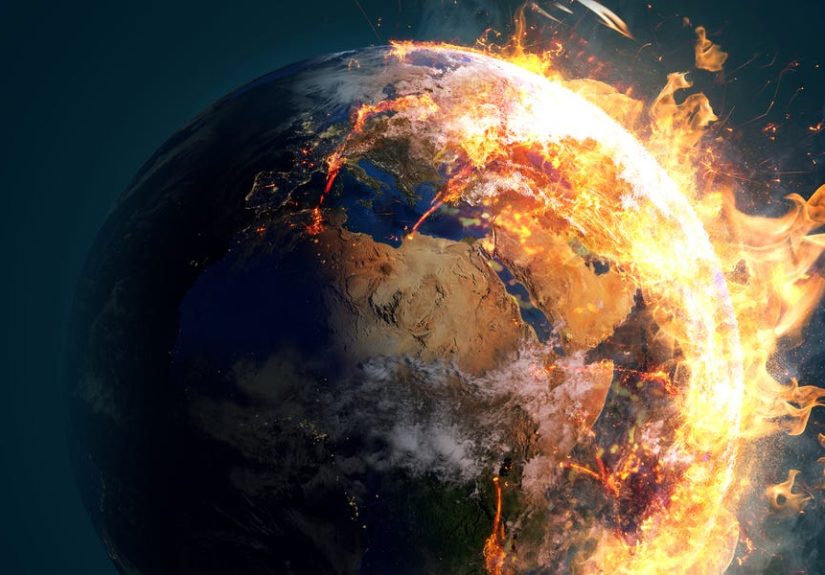
A runaway greenhouse effect is a much more extreme version of that feedback loop. In a true runaway, warming causes so much additional water vapor to enter the atmosphere that the planet loses its ability to shed heat to space efficiently. The more it warms, the more water evaporates. The more water vapor accumulates, the more heat gets trapped. Eventually the system spirals upward until the oceans are lost and surface conditions become catastrophically hot.
That is not “a hotter summer.” That is not “miserable heat index season.” That is a complete planetary breakdown.
Venus: The Solar System’s Cautionary Cousin
If Earth is the sensible sibling who mostly has it together, Venus is the cautionary cousin who set the thermostat to “molten regret.” Venus is similar to Earth in size and rocky composition, which is why scientists have long viewed it as a valuable comparison planet. But its atmosphere is massively thick and dominated by carbon dioxide, and its surface is hot enough to melt lead.
Planetary scientists believe Venus likely went through a catastrophic greenhouse transition in its deep past. The exact history is still being studied, but the broad lesson is clear: if a rocky planet receives enough solar energy and loses enough water, climate feedbacks can push it into a radically hotter and more hostile state. Once that happens, there is no pleasant “open a window and let the heat out” option.
This is one reason scientists study Venus so intensely. It is not just a weird neighbor. It is a planetary warning label.
Why Venus Matters for Earth
Venus shows that greenhouse physics is not a political opinion, a trend, or a buzzword invented to ruin barbecue season. It is basic atmospheric science. Planets respond to energy balance, atmospheric composition, clouds, water, and sunlight. Change those ingredients enough, and the climate outcome changes with them.
That said, Venus is not a copy-and-paste forecast for Earth’s next century. Mainstream research does not say that burning fossil fuels will literally boil Earth’s oceans in the near future. The more scientifically honest takeaway is this: a full runaway greenhouse is a real phenomenon, but the nearer-term danger for Earth is a different kind of climate hellscape, one built from escalating heat, disrupted rainfall, crop stress, sea level rise, ecosystem collapse, and compounding human vulnerability.
Could Human Activity Trigger a Full Runaway Greenhouse on Earth?
This is where the internet often grabs a megaphone and the scientists clear their throats. The strongest mainstream view is that current human-caused warming, while severe and dangerous, is not expected to trigger a full Venus-style runaway greenhouse on modern Earth by greenhouse gas emissions alone.
That does not mean everything is fine. It means the scientific distinction matters.
Some climate researchers have argued that a true runaway greenhouse on Earth would require much more forcing than human emissions alone are likely to provide. In simple terms, Earth can still radiate a lot of heat back to space even as greenhouse gases rise. That is one reason today’s warming, however serious, is not the same as an immediate slide into ocean-boiling catastrophe.
There is also research suggesting that over very long timescales, as the Sun gradually brightens, Earth could eventually cross into a moist greenhouse or runaway greenhouse state. That is a planetary-future problem measured in geological time, not next quarter’s utility bill. Still, it proves the physics is real. Earth is not magically exempt. It is simply not thought to be on the edge of a full runaway from today’s emissions alone.
The Real Risk Is Not Smaller. It Is Just Different.
If you were hoping this means we can all relax and buy beachfront property with confidence, absolutely not. The climate danger that scientists warn about most is not a textbook runaway greenhouse tomorrow morning. It is a world that becomes hotter, more chaotic, more expensive, less predictable, and less hospitable to human health and economic stability.
That future can still feel like a hellscape for millions of people.
What Earth’s More Likely Climate “Hellscape” Looks Like
A non-runaway but heavily warmed planet can still deliver brutal consequences. In fact, that is the scenario already unfolding in pieces. Scientists consistently warn that more greenhouse gases mean more trapped heat, and more trapped heat means broader risks across natural and human systems.
1. Extreme Heat Becomes a Public Health Crisis
Extreme heat is one of the clearest ways climate change becomes personal. It is not just about comfort. It increases heat exhaustion, heat stroke, cardiovascular stress, respiratory problems, lost labor productivity, and mortality. When humid heat gets severe enough, the body’s cooling system starts to fail. Air conditioning helps, until the power grid is strained, bills spike, or vulnerable people cannot access it.
Put bluntly, the atmosphere does not care whether you “run hot.”
2. Water Gets Weird
Warmer air changes the hydrologic cycle. That means some places get hammered by more intense rainfall and flooding, while others face deeper drought. Snowpack shifts. Rivers behave differently. Agriculture loses the old rhythm it relied on. You can have both flash floods and water scarcity in the same broader warming system, which is climate change’s favorite way of being inconvenient and theatrical at the same time.
3. Food Systems Get Stress-Tested
Crops depend on temperature ranges, water availability, soil conditions, and predictable growing seasons. Push heat too high or rainfall too far off pattern, and yields can decline. Livestock also suffer under heat stress. Fisheries shift as oceans warm. Food prices become more volatile. Supply chains, which already behave like anxious overachievers, become even less resilient.
4. Fire, Smoke, and Ecosystem Loss Spread
Hotter, drier conditions can increase wildfire risk in many regions. Even people far from flames are not safe from smoke exposure. Forests, wetlands, coral reefs, and Arctic systems all face pressure from rising temperatures and feedback loops. Lose enough natural systems, and you do not just lose scenery. You lose carbon storage, biodiversity, water regulation, and protection against climate extremes.
5. Tipping Risks Start to Matter More
Scientists also warn about thresholds and tipping elements. These are not the same thing as a full runaway greenhouse, but they are serious. Ice sheets can destabilize. Permafrost can release more greenhouse gases. Ocean circulation patterns can weaken. Forests can lose resilience. Each of these shifts can amplify the damage or lock in long-term change.
Think of it this way: a planet does not need to become Venus to become dangerous enough to reshape civilization.
Why the Phrase “Runaway Greenhouse” Still Matters
Some readers hear that a full runaway greenhouse is unlikely from present-day emissions alone and assume the topic is overhyped. That would be the wrong conclusion.
The concept matters for three big reasons.
- It clarifies the physics: climate is governed by energy balance and feedbacks, not wishful thinking.
- It shows the stakes: planetary climates can cross thresholds beyond which recovery is difficult or impossible.
- It sharpens the warning: even without full runaway conditions, human-caused warming can produce deadly and destabilizing outcomes on a scale large enough to transform daily life.
In other words, the lesson is not “don’t worry, we’re not literally Venus.” The lesson is “don’t confuse ‘not Venus’ with ‘safe.’” That is a terrible bargain.
So, Is Earth Headed for a Hellscape?
If by “hellscape” you mean a literal, ocean-vaporizing, lead-melting Venus clone in the near term, mainstream science says no. If by “hellscape” you mean a harsher Earth with worsening heat waves, water stress, crop shocks, wildfire smoke, stronger climate extremes, rising costs, and deeper inequality, then yes, that is a credible risk if greenhouse gas emissions keep climbing.
And that risk is not abstract. Atmospheric carbon dioxide concentrations remain far above preindustrial levels and continue to rise. The warming already observed is enough to intensify heat extremes, increase climate-related hazards, and strain both ecosystems and public health systems. The future is not written in stone, but it is definitely being edited in carbon.
What Needs to Happen Next
The practical takeaway is refreshingly unglamorous: cut greenhouse gas emissions, strengthen resilience, modernize infrastructure, protect vulnerable communities, and stop treating climate physics like it can be negotiated with a talking point.
Reducing fossil fuel use matters. Expanding clean energy matters. Improving buildings, grids, transport, and urban heat planning matters. Protecting forests, wetlands, and coastal systems matters. Better adaptation matters too, because some warming is already here and already costly.
The climate system does not hand out gold stars for partial effort, but it does respond to the total amount of greenhouse gases we put into the atmosphere. Every increment of avoided warming reduces risk. Every delay increases it.
Conclusion
A runaway greenhouse effect would absolutely turn Earth into a hellscape. On that point, planetary science is not shy. But the smartest reading of the evidence is not that Earth is about to become Venus because of this century’s emissions alone. It is that greenhouse warming is powerful, feedbacks are real, and the damage from unchecked climate change can become profound long before we ever approach a full runaway state.
That distinction should not comfort us into complacency. It should wake us up. A full runaway greenhouse is the nightmare at the far end of the chart. The nearer nightmare is a planet that stays technically livable while becoming increasingly punishing, unequal, and unstable. That is not science fiction. That is the kind of future policy, technology, and collective choices can still influence right now.
Earth does not need to become Venus to become a place we barely recognize. And that is exactly why this conversation matters.
What Living in a Near-Hellscape World Could Feel Like
The following section is a reality-based imaginative reflection meant to illustrate human experience, not a literal forecast.
You wake up before sunrise because that is the only hour the air feels negotiable. By 8 a.m., the sidewalks are already radiating heat like they were preheated overnight. The weather app says the temperature is bad, but the humidity is what really makes it sinister. The air does not feel like air anymore. It feels like something you have to push through.
The old routines no longer work. Jogging after work is gone. Yard work becomes a tactical mission. Kids’ sports get moved, shortened, canceled, then moved again. Your phone fills with heat alerts, air-quality alerts, utility alerts, flood alerts, and one increasingly desperate group chat where everybody asks the same question: “Is your power still on?”
At the grocery store, some shelves look normal and others look strangely unreliable. Produce prices bounce around. Coffee is suddenly expensive again. Insurance is worse. Summer travel becomes a gamble between wildfire smoke, airport delays, flood warnings, and the possibility that your destination is now having a “once in a century” event for the third time in six years.
The most unsettling part is not one giant disaster. It is the accumulation. The constant recalculation. The way daily life becomes an exercise in thermal logistics. Which room stays coolest? Which route has shade? Can the dog walk happen safely? Can grandma make it through the afternoon? Should the school install better cooling? Should the city plant more trees? Should people who work outside get mandatory heat protections? Every normal day now comes with a climate footnote.
Then there is the psychological shift. Seasons stop feeling dependable. Summer stretches wider. Autumn arrives late and tired. Rain comes all at once or not when it is needed. People start speaking in adaptation language without realizing it: backup battery, cooling center, smoke mask, flood map, defensible space, wet-bulb temperature. Vocabulary changes when the environment starts grading your survival skills.
Nature changes too. Birds alter their timing. Trees look stressed by August. Lakes run warmer. Bugs show up earlier and stay longer. Some places bloom at the wrong time. Others dry out so completely that the landscape seems to crack emotionally before it cracks physically. Even on beautiful days, there is a sense that the background settings have been tampered with.
And yet life goes on, which is almost the strangest part. People still go to work, make dinner, walk the dog, charge their phones, and argue about thermostats like that remains civilization’s core political issue. Human beings are adaptable, funny, stubborn creatures. We keep normalizing what should alarm us.
That is what a climate-driven near-hellscape might really feel like: not one cinematic end, but a long, exhausting negotiation with a world that keeps getting harder to inhabit. Not Venus. Not boiling oceans. Just an increasingly punishing Earth that asks more from bodies, cities, farms, budgets, and nerves every single year. Which, frankly, is frightening enough.