Table of Contents >> Show >> Hide
- First, What Counts as “Bamboo” and What Counts as “Wood”?
- Side-by-Side Snapshot: Bamboo vs Wood Flooring
- Durability: Dents, Scratches, and the Janka Reality Check
- Moisture, Humidity, and Seasonal Mood Swings
- Refinishing and Repair: Can You Hit the Reset Button?
- Cost: The Price Tag Is a Range, Not a Number
- Sustainability: Fast-Growing Bamboo vs Long-Growing Trees (It’s Complicated)
- Indoor Air Quality: Adhesives, Finishes, and the Formaldehyde Conversation
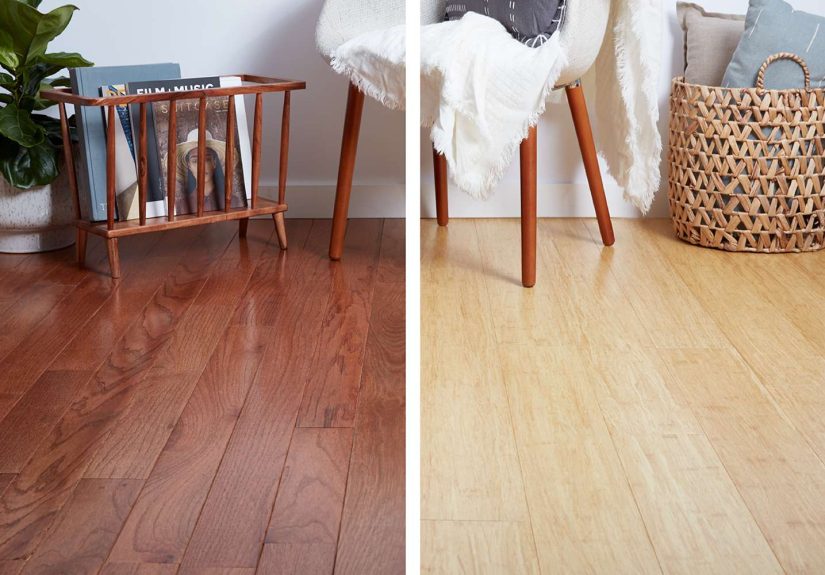
- Look and Feel: Grain, Color, and the “Does This Look Like a Dentist Office?” Factor
- Which One Should You Choose? Match the Floor to the Room (and the Humans)
- Shopping Checklist: Questions That Save You Regret
- Conclusion: The Best Floor Is the One That Fits Your Life
- Real-World Experiences: What Homeowners Commonly Notice After the Hype
Choosing a floor sounds simple until you realize you’re basically picking a roommate: it’s going to be underfoot every day,
it will witness your worst dance moves, and it will silently judge every dropped frying pan. Two top contendersbamboo flooring
and wood flooringoften look similar in photos, but behave very differently once real life (kids, pets, humidity, and that one
chair you refuse to lift) shows up.
This guide compares bamboo vs wood flooring in plain English, with enough detail to help you buy confidentlywithout turning
your living room into a science experiment. We’ll break down durability, water and humidity, refinishing, cost, indoor air
quality, sustainability, and the “will I regret this?” factorplus a longer section of real-world experiences at the end.
First, What Counts as “Bamboo” and What Counts as “Wood”?
Bamboo flooring
Bamboo is technically a grass, but in flooring form it’s processed into planks. The big categories you’ll see are:
horizontal/vertical bamboo (sliced and laminated) and strand-woven bamboo (shredded fibers
compressed with resins). Strand-woven is usually the “toughest” option in the bamboo aisle.
Wood flooring
“Wood flooring” usually means solid hardwood (a single species plank, often 3/4-inch thick) or
engineered hardwood (a real wood veneer over layered core material for stability). Species matters a lot:
oak, maple, hickory, walnutall behave differently even before you consider finish type.
Side-by-Side Snapshot: Bamboo vs Wood Flooring
Use this as your quick filter. Then we’ll dig into the “why” behind each category.
| Category | Bamboo Flooring | Wood Flooring (Solid & Engineered) |
|---|---|---|
| Durability (dents/scratches) | Varies widely; strand-woven can be very dent-resistant, while some carbonized/softer bamboo dents easier. | Depends on species; hickory & hard maple resist dents better than softer species. Finish quality matters a lot. |
| Humidity & stability | Can be stable, but still sensitive to big moisture swings; quality and construction matter. | Solid wood moves with seasons; engineered is typically more dimensionally stable than solid. |
| Refinishing potential | Sometimes refinishable, often limiteddepends on thickness and construction. | Solid hardwood can usually be refinished multiple times; engineered depends on veneer thickness. |
| Water resistance | Not waterproof; standing water is still a problem. Some products perform better than others. | Not waterproof; engineered usually tolerates moisture better than solid, but water can still cause damage. |
| Cost (installed) | Often competitive; ranges overlap with hardwood depending on type and quality. | Wide range; premium species and solid planks usually cost more than basic engineered options. |
| Eco story | Fast-growing resource, but often imported and resin-intensive depending on product. | Slower-growing, but strong domestic supply chain options and certified forestry are common. |
| Indoor air quality | Check adhesives/resins and emissions certifications; quality varies by brand and construction. | Similar: finishes and adhesives matter (especially for engineered). Look for low-emission products. |
| Resale & “classic” appeal | Can look modern and clean; resale impact varies by market and buyer expectations. | Hardwood is the classic; often considered a resale-friendly upgrade when well maintained. |
Durability: Dents, Scratches, and the Janka Reality Check
People love quoting the Janka hardness scale, which measures how much force it takes to dent a wood surface.
It’s a useful metricjust not the whole story. A hard floor with a mediocre finish can still show scratches, and a softer
floor with a great factory finish can look surprisingly good for years.
What the numbers generally suggest
Many common hardwood species cluster around the “solidly durable” zone: think red oak and white oak as the baseline, hard maple
higher, and hickory higher still. Strand-woven bamboo is often marketed as extremely hard, sometimes landing in the
“seriously tough” range. The catch: bamboo hardness can vary a lot by product, processing, and even manufacturing runs.
Where bamboo wins (and where it loses)
If you’re considering bamboo specifically for dent resistance, focus on strand-woven bamboo. It’s typically
the most impact-resistant bamboo category because the fibers are compressed under high pressure. On the flip side, some
carbonized bamboo (heat-darkened) can be softer than its lighter counterpartsso “darker” doesn’t always mean
“tougher.”
Where hardwood wins (especially long-term)
Hardwood’s superpower is not “never dent.” It’s “I can be renewed.” A solid hardwood floor can often be sanded and refinished
multiple times over decades, which changes the durability conversation from “How hard is it?” to “How long can I keep it
looking good?”
Moisture, Humidity, and Seasonal Mood Swings
Wood is hygroscopicit absorbs and releases moisture with the environment. That’s why hardwood expands in humid summers and
contracts in dry winters. Bamboo can also react to moisture changes, and quality differences can make or break performance.
Solid hardwood: beautiful, but it moves
Solid hardwood is famously long-lasting, but it’s also the most sensitive to seasonal shifts. Proper acclimation, moisture
testing, and correct installation details matter. If your home swings from “tropical rainforest” to “desert vibes” depending on
the season, that movement becomes part of the decision.
Engineered hardwood: the stability upgrade
Engineered wood is designed with layered construction that usually improves dimensional stability. It can be a smart choice
for spaces with more variable humidity (or where you want a wood look with fewer seasonal surprises).
Bamboo: stable when it’s made well
Bamboo’s stability depends heavily on manufacturing. High-quality bamboo can perform well, but lower-quality products may be
more prone to issues like gapping, cupping, or squeackiness if moisture conditions aren’t controlled. Translation: bamboo is
not a magic humidity shield; it’s a flooring material that still wants you to respect physics.
Refinishing and Repair: Can You Hit the Reset Button?
If you love the idea of a floor you can “renew” instead of replace, refinishing potential is a big deal.
Solid hardwood: the champ of second chances
Standard solid hardwood (often 3/4-inch thick) typically offers the most refinishing runway. That’s one reason it can stay in
homes for decades: when life happens, you sand and refinish rather than rip everything out.
Engineered hardwood: depends on veneer thickness
Engineered wood can sometimes be refinished, but the number of times depends on how thick the real wood wear layer is. Some
engineered planks are “one-and-done,” while others with thicker veneers can take more future sanding.
Bamboo: sometimes refinishable, sometimes not
Bamboo can often be refinished in certain constructions, but it’s not a universal guarantee. Some bamboo floors are best
treated as “prefinished for life,” meaning you’ll rely on careful maintenance and spot-repair rather than aggressive sanding.
If refinishing is a must-have, confirm the product’s thickness and refinishing guidance before you buy.
Cost: The Price Tag Is a Range, Not a Number
The honest answer to “Which is cheaper?” is: “Yes.” Both bamboo and hardwood have broad price ranges depending on type, quality,
and installation complexity.
Typical cost patterns
-
Bamboo flooring often overlaps with mid-range hardwood pricing, with strand-woven usually priced higher than
basic bamboo types. - Hardwood flooring spans from accessible engineered options to premium solid planks in upscale species.
What changes the bill fast: subfloor prep, removal/disposal of old flooring, transitions and trim work, stair treads, and
whether the space is a simple rectangle (easy) or an architectural labyrinth (less easy, more invoice).
A practical budgeting tip
When comparing bids, ask contractors to separate materials from labor and to list prep items as line items.
This makes “apples-to-apples” comparisons possibleand prevents the classic surprise where one quote quietly assumed a perfect
subfloor and your home politely disagrees.
Sustainability: Fast-Growing Bamboo vs Long-Growing Trees (It’s Complicated)
Bamboo’s headline is simple: it grows fast and can reach harvestable maturity in a handful of years, which sounds like the
dream of renewable materials. Hardwood’s headline is different: trees take longer, but in the U.S. there are established forest
management systems and robust certification options.
Key nuance #1: “Renewable” isn’t the only variable
Sustainability also includes manufacturing inputs (resins and finishes), shipping distance, product lifespan, and whether the
floor can be refinished instead of replaced. A floor that lasts longer can reduce replacement cycles, which matters.
Key nuance #2: Certifications help, regardless of material
Whether you choose bamboo or wood, look for credible certifications related to responsible sourcing and low emissions.
Certifications don’t magically make a floor perfect, but they do turn “trust me” into “here’s the paperwork.”
Indoor Air Quality: Adhesives, Finishes, and the Formaldehyde Conversation
Flooring isn’t just a surfaceit’s also a product made with finishes and sometimes adhesives. For indoor air quality, the
biggest concerns are typically volatile organic compounds (VOCs) and formaldehyde emissions
from certain composite wood components and resins.
What to look for as a homeowner
- Clear labeling that indicates compliance with relevant formaldehyde emission rules for composite wood components.
- Low-emission certifications (common in the U.S. market) if indoor air sensitivity is a concern.
- Ventilation plan: even low-emission materials can smell “new.” Air out the space after installation.
Bottom line: bamboo and engineered wood can include resins and composite layers. That doesn’t automatically make them “bad,”
but it does make it smart to check emissions documentationespecially for bedrooms, nurseries, or anyone with asthma or chemical sensitivities.
Look and Feel: Grain, Color, and the “Does This Look Like a Dentist Office?” Factor
Bamboo aesthetics
Bamboo can look sleek and contemporary. Traditional bamboo often shows subtle “nodes” (natural growth marks), while some
modern products minimize that look for a smoother, more uniform appearance. If you like clean lines, bamboo can be a great fit.
Hardwood aesthetics
Hardwood offers the deepest bench of character: grain patterns, natural variation, and species-specific “personality.”
If you want a floor that ages like leathermore character over timewood is hard to beat.
Underfoot comfort and sound
Both can feel firm and solid. What changes comfort and acoustics more than the material is what’s underneath:
underlayment choice, subfloor quality, and installation method (floating vs nailed vs glued). If you’re sensitive to noise,
plan for rugs and consider underlayment upgrades.
Which One Should You Choose? Match the Floor to the Room (and the Humans)
Choose bamboo flooring if…
- You want a modern look with a potentially strong dent-resistance option (especially strand-woven).
- You prefer a material with a fast-renewing resource storywhile still checking emissions and quality.
- You like the idea of a hard, cleanable surface that’s different from traditional wood grain.
Choose wood flooring if…
- You want the classic look and broadest design range (species, stain colors, textures).
- You value the ability to refinish and refresh the floor over a long lifespan (especially solid hardwood).
- You want a “known quantity” for resale appeal in many U.S. markets.
Choose engineered hardwood specifically if…
- You want real wood, but with extra stability for humidity swings compared to solid planks.
- You’re installing over concrete or in areas where solid hardwood is more risk-prone.
Shopping Checklist: Questions That Save You Regret
- What is the construction? (solid, engineered, strand-woven, core type)
- What is the wear layer thickness? (especially for engineered wood and engineered bamboo)
- What’s the finish system? (factory-cured finishes often outperform many site finishes in scratch resistance)
- What are the moisture requirements? (acclimation time, acceptable subfloor moisture, humidity range)
- What emissions documentation is available? (formaldehyde/VOC disclosures and certifications)
- What does the warranty actually cover? (and what voids ityes, “a mop” sometimes counts)
Conclusion: The Best Floor Is the One That Fits Your Life
Bamboo vs wood flooring isn’t a simple “which is better” contest. It’s a “which is better for your home” decision.
If you want a modern look with potentially impressive dent resistance, high-quality strand-woven bamboo can be a strong contender.
If you want timeless style and the ability to refinish your way out of years of wear, hardwoodespecially solidstill has a
well-earned reputation.
The smartest move is to treat flooring like you treat shoes: the label matters, but so does how it’s made, where you’ll use it,
and whether it’s built for your daily routine. Choose accordinglyand your future self (and your knees) will thank you.
500-word experiences section
Real-World Experiences: What Homeowners Commonly Notice After the Hype
Product spec sheets are great, but they rarely mention the most important “test lab” of all: a Tuesday morning when you’re late,
you’re holding coffee, your dog is doing parkour, and the mail carrier rings the bell like it’s a game show.
So here are experience-based patterns that show up again and again in homeowner stories, contractor interviews, and the
collective wisdom of people who have lived with both bamboo and wood flooring long enough to stop babying it.
1) The finish matters more than people expect. Plenty of homeowners pick based on hardness claims, then discover
that surface scratches are often a finish issuenot a core hardness issue. A harder floor can still show micro-scratches if the
finish is thin or if grit gets tracked in like it pays rent. Conversely, a slightly softer species of hardwood with a tough
factory finish can stay looking “new” longer than expected. The lesson most people learn: doormats, felt pads, and a no-shoes
policy (or at least a “wipe-your-feet-like-you-mean-it” policy) are worth more than a marketing brochure.
2) Humidity is the secret third roommate. In climates with strong seasonal swingsor homes where HVAC is used
aggressivelypeople often notice gaps or slight movement in solid hardwood during drier months. That doesn’t automatically mean
something is wrong; it can be normal wood behavior. The homeowners who are happiest are usually the ones who planned for it:
they kept indoor humidity more consistent, followed acclimation guidance, and didn’t expect natural materials to behave like
plastic. With bamboo, satisfaction tends to track strongly with product quality. When bamboo performs poorly, it’s often a mix
of lower-grade material plus moisture conditions that weren’t controlled.
3) Pets reveal the truth fast. Dogs don’t care what species you chose; they care about traction and whether the
hallway is long enough for a full sprint. Homeowners with big dogs often report that denting is less of a daily problem than
scratching from nails and the “sandpaper” effect of tracked-in dirt. For bamboo, strand-woven products get the best reviews in
busy homesbut people still emphasize maintenance: regular sweeping, a soft-bristle vacuum setting, and trimming nails. For
hardwood, many pet owners lean toward harder species and a matte or textured finish that hides fine wear better.
4) The smell of “new floor” is real. Many people mention an initial odor after installationsometimes mild,
sometimes noticeable. The common thread in positive experiences is simple: ventilation. Open windows (when weather allows),
run fans, and keep airflow moving. Those who are more sensitive often wish they had asked about low-emission certifications
earlier, especially when choosing engineered products or bamboo with more resin content.
5) Long-term peace of mind looks different for different people. Some homeowners love hardwood because they
know they can refinish it later and erase years of wear. Others love bamboo because it delivers a contemporary look and strong
everyday performanceespecially when they choose a high-quality product and keep humidity stable. The happiest endings usually
come from matching the floor to the lifestyle: busy household = prioritize finish durability and maintenance habits; design-first
home = prioritize look and refinishing strategy; variable environment = prioritize stability and installation quality.
If you take only one “real life” takeaway, make it this: the floor you’ll love most isn’t the one with the boldest claim on the box.
It’s the one that fits your home’s conditions, is installed correctly, and has a finish that can handle the chaos of actual living.
SEO tags in JSON format at the very end