
Table of Contents >> Show >> Hide
- Why a Cotton Throw Is the MVP of Home Accessories
- High vs. Low: What You’re Actually Paying For
- Weave and Texture: The Cheat Sheet That Makes Shopping Easier
- How to Choose the Right Cotton Throw for Your Space
- Styling Tricks That Make Any Cotton Throw Look Expensive
- Care and Longevity: Keep It Soft, Keep It Square
- Certifications and Labels: Helpful Signals, Not Magic Spells
- The High/Low Cotton Throw Strategy: Where to Splurge and Where to Save
- Real-Life Experiences: Living With a High/Low Cotton Throw (Extra )
- Conclusion
There are two kinds of homes: the ones that look “finished,” and the ones that look like you moved in yesterday and are still negotiating with your laundry pile.
The difference is often… a throw. Not a giant renovation. Not a new sofa. Just one deceptively simple cotton throw blanket doing what it does best:
adding texture, warmth, color, and a subtle message that says, “Yes, I own baskets on purpose.”
This is your deep-dive guide to the high/low cotton throwhow to choose one that looks expensive even when it wasn’t, when it’s worth splurging,
and how to style it like a designer (or at least like a person who has seen a designer once on TV).
Why a Cotton Throw Is the MVP of Home Accessories
Cotton is the “white tee” of textiles: classic, versatile, and somehow always appropriate. A cotton throw is breathable, soft, and easy to live with, which matters
because a throw blanket isn’t a museum piece. It’s a daily drivergrabbed for movie nights, draped over chair arms, and occasionally used as a cape when you
discover your thermostat has opinions.
Cotton’s comfort perks are rooted in how it behaves against skin: it allows humidity to pass through and helps reduce that sticky, overheated feeling you can get
from some synthetics. In real life, that translates to “cozy, but not sweaty,” which is an underrated lifestyle upgrade.
High vs. Low: What You’re Actually Paying For
Let’s clarify the high/low game. A “high” cotton throw isn’t magical. It’s usually better because of materials, construction, and finishing.
A “low” cotton throw isn’t automatically badit’s often a simpler weave, a lighter weight, or fewer premium details. The trick is knowing which upgrades matter
for your home.
The “High” Features That Can Be Worth It
- Better fiber + yarn quality: You’ll often see longer-staple cotton, smoother yarns, and tighter knitting/weaving that holds up to snuggling and washing.
- More thoughtful finishing: Pre-washing for softness, cleaner hems, mitered corners, sturdier fringe/tassels, and fewer loose threads over time.
- Design that looks intentional: Subtle texture, elevated neutrals, or rich yarn-dyed color that doesn’t look flat on a sofa.
- Certifications: Not a requirement, but sometimes a helpful signal (more on that below).
The “Low” Features That Can Be Totally Fine
- Simple knits and basic weaves: Great for everyday use, guest rooms, kids’ rooms, and “the dog lives here too” spaces.
- Lighter weights: Perfect if you run warm, live somewhere mild, or want a throw for layering rather than deep winter warmth.
- Seasonal rotation: If you like changing colors often, going budget-friendly can make sense (because you’re not marrying your throwjust dating it).
Weave and Texture: The Cheat Sheet That Makes Shopping Easier
If you’ve ever stared at product descriptions like “waffle,” “herringbone,” and “ribbed knit” and thought, “Sure, those are words,” this section is for you.
Texture is what makes a cotton throw look styled rather than tossed.
Knitted Cotton Throws
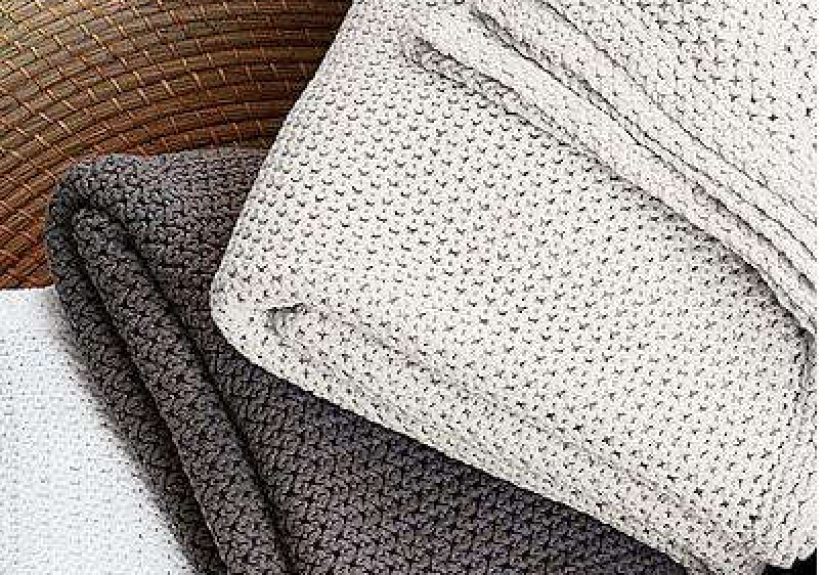
Knits tend to drape beautifullyideal for the “casually luxurious” look. They’re often breathable and cozy without being heavy. If you want a throw that reads
soft from across the room, a knit cotton throw is a strong move. Great for couches, reading chairs, and the foot of the bed.
Waffle Weave Cotton Throws
Waffle weaves are texture champions: airy pockets, visual depth, and that spa-adjacent vibe. They’re frequently described as lightweight yet warm because the
weave traps warmth while still letting air move. Bonus: waffle texture hides minor wrinkles and “I folded this in a hurry” moments.
Herringbone and Patterned Wovens
Herringbone is the quiet luxury of throwspatterned, but not loud. Woven throws often look more tailored, which can be great if your room leans classic or
you want your sofa to look a bit more “grown-up.”
Gauze, Muslin, and Lighter Cotton Layers
These are the warm-weather throws: breezy, soft, and easy to toss over shoulders when the AC turns your living room into an iceberg exhibit. They also layer
nicely on beds without adding bulk.
How to Choose the Right Cotton Throw for Your Space
1) Pick the Job First (Not the Color)
Before you fall in love with a shade called “Foggy Oat Latte,” decide what the throw needs to do:
Is it for daily snuggling, decorative layering, guest-room polish, or outdoor-adjacent lounging?
A purely decorative throw can be lighter and simpler; a daily-use throw should prioritize comfort and durability.
2) Think Size and Where It Lives
Throw blankets vary in size, and that changes everything. A smaller throw can look tidy and decorative; a larger one is better for actual human coverage.
If your throw will live on a couch, choose a size that can drape over an arm or corner without swallowing the furniture. If it’s for the end of the bed,
consider something wide enough to look balanced with your mattress size.
3) Match Texture to Your Room’s “Vibe”
If your space is minimal, texture does the heavy lifting. A tonal knit, waffle weave, or subtle pattern can add depth without changing your palette.
If your room already has pattern (rug, art, pillows), pick a throw with simpler texture so it doesn’t become a visual argument.
4) Use Color Strategically: Tone-on-Tone or Pop
Two styling paths almost always work:
- Tone-on-tone: Choose a throw in the same family as your sofa or bedding for a calm, elevated look. Let the texture be the star.
- Pop of color: If the room feels flat, a throw is an easy way to add contrast without repainting a wall or emotionally committing to a bold sofa.
Styling Tricks That Make Any Cotton Throw Look Expensive
Design secret: you don’t need more throwsyou need one throw styled well. When throws multiply, rooms start to look like a blanket aisle had a small accident.
Keep one “hero throw” visible, and store extras nearby for practical use.
The Three Folds (A.K.A. Your Shortcut to “Polished”)
- Tidy fold: Clean lines over the sofa arm or folded at the foot of the bed for a tailored look.
- Relaxed fold: Fold, drape, and let edges fall naturally so it looks effortless (even if it took two tries).
- Pinch-and-toss: Grab the center and drape for casual textureperfect for knits and waffle weaves.
Use a Basket Like You’ve Been Doing This Forever
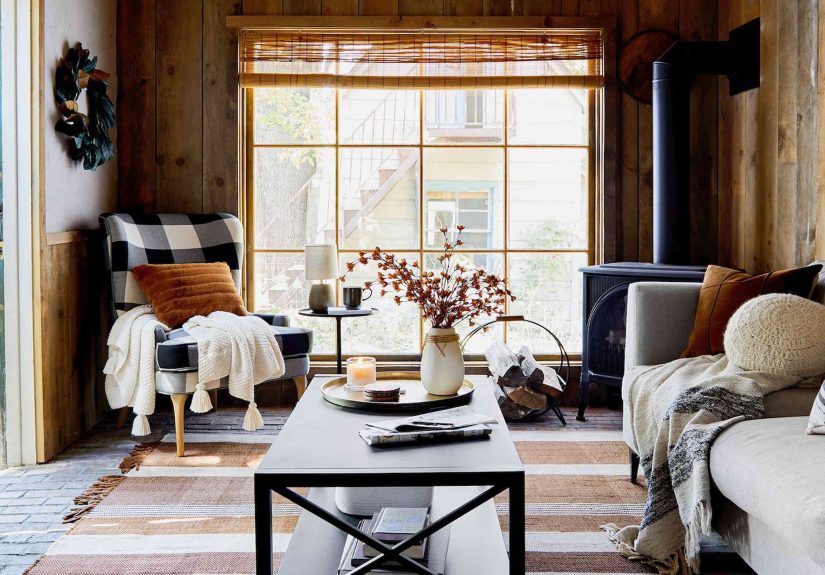
A basket (woven, lidded, or open) solves two problems at once: it stores extra throw blankets and adds a styling moment. Keep it near the sofa or reading chair,
and suddenly your room looks intentional and ready for guestswhether or not that’s emotionally true.
Care and Longevity: Keep It Soft, Keep It Square
Cotton throws are generally easy-care, but cotton also has one hobby: shrinking when you annoy it with heat. Your best defense is boring but effective:
read the care label, wash gently, and avoid blasting it on high heat until it becomes a decorative napkin.
Practical Care Rules (That Actually Work)
- Check the care label first: Care instructions exist for a reasonand in the U.S., care labeling rules are meant to give you at least one safe method.
- Use cool or lukewarm water: Gentle washing protects fibers and helps reduce shrink risk, especially for cotton.
- Go easy on detergent: Too much can leave residue that makes textiles feel stiff or dull.
- Skip high heat drying: High heat is the fast lane to shrinkage. Air dry or tumble dry low when possible.
- Store clean: If you rotate throws seasonally, wash them before storing so oils and dust don’t settle in for the long haul.
Also: if your throw starts to look tired, it might not be “bad quality”it might be doing its job. A throw that lives on a couch, gets washed, and serves as a
movie-night burrito will show wear eventually. That’s not failure; that’s evidence of a cozy life.
Certifications and Labels: Helpful Signals, Not Magic Spells
If you’ve seen tags like “OEKO-TEX” or “GOTS,” here’s the plain-English version.
OEKO-TEX® STANDARD 100
This label indicates the textile has been tested for harmful substances, from yarn to finished product. It’s a safety-focused certification that can be reassuring
for items you touch a lotlike bedding and throws.
GOTS (Global Organic Textile Standard)
GOTS is one of the best-known standards for organic textiles, covering the processing and manufacturing requirements and how products are labeled. If “organic cotton
throw” is part of your buying criteria, GOTS certification can add credibility.
Quick reality check: a throw can be wonderful without certifications, and certified items can still be the “wrong” throw if the texture or size doesn’t fit your
space. Use labels as a signal, not your entire personality.
The High/Low Cotton Throw Strategy: Where to Splurge and Where to Save
Here’s a practical way to build a high/low cotton throw collection (even if that collection is one throw and a backup you keep in a closet like a cozy emergency kit).
Splurge If…
- It’s your everyday throw: The one you actually use every night deserves better construction and softer hand-feel.
- It’s a “statement texture” piece: A gorgeous knit or rich woven pattern can anchor a sofa or bed styling.
- You’re sensitive to feel: If scratchy textures ruin your day, upgrade the fiber and finishing.
- You want a cleaner look longer: Better hems, less pilling, and stronger edges can keep it looking sharp.
Save If…
- Pets/kids are involved: Choose a cotton throw that’s washable, replaceable, and emotionally low-stakes.
- It’s seasonal decor: A budget-friendly throw in a trend color lets you swap without regret.
- It’s a guest room: You want it to look good and feel nicebut it won’t see constant wear.
Budget Examples That Work in Real Homes
- Low + practical: A simple cotton knit throw in a neutral tone for the couch, styled with two textured pillows and a basket nearby.
- Mid-range + versatile: A waffle weave cotton throw that layers on a bed in summer and moves to the sofa in winter.
- High + “designer finish”: An organic cotton throw with refined edging and rich texture, used as the hero piece in a living room or primary bedroom.
Real-Life Experiences: Living With a High/Low Cotton Throw (Extra )
Here’s what people tend to learn the first week they bring home a cotton throwespecially when they’ve got both a “high” and a “low” version in the mix.
Day one is all romance. You drape the throw over the sofa corner and suddenly the room looks like it has a skincare routine. The texture catches the light.
The color makes your couch look more expensive than it has any right to. You post a photo, and someone comments, “Love your space!”which is the modern
equivalent of being knighted.
By day three, reality arrives. The throw is no longer just decor; it’s part of the household ecosystem. Someone uses it during a nap and leaves it in a
lopsided heap. The cat adopts it. A snack crumb appears out of nowhere, as if crumbs can teleport. This is where cotton earns its keep: it’s breathable and
generally washable, so you can keep using it without treating it like fine china.
The “low” cotton throw often becomes the true workhorse. It’s the one you grab without thinking, the one you hand to a guest, the one that travels to the car
for a chilly soccer game or ends up on a patio chair. It might be slightly less refined in finishmaybe the edge stitching is simpler or it’s lighter weightbut
it’s easy to toss in the wash and it doesn’t make you nervous. If it gets a stain, you’re annoyed, not devastated. That’s a win.
The “high” cotton throw, meanwhile, becomes the hero piece you treat a little bettermostly because it looks so good when it’s styled. It’s the one that drapes
in a way that looks intentional, even when you only spent 12 seconds on it. The texture reads rich from across the room, and it tends to feel softer in that
“I could wear this as a sweater and be emotionally stable” kind of way. People notice it when they sit down. They may even ask where you got it, which is your cue
to casually say, “Oh, this old thing?” as if you didn’t research throws like it was your second job.
Then there’s the laundry lesson. At least once, someone will forget and dry the cotton throw on high heat. The result isn’t always dramatic, but it can be:
edges tightening, the drape changing, the size feeling slightly smaller. This is where the care-label habit becomes a real-life superpower. Cool water, gentle cycles,
and low-heat drying keep cotton throws feeling softer and looking better longer. And when you store throws between seasons, putting them away clean means you’re not
reintroducing a “mystery closet smell” to your living room come fall.
The best outcome is a partnership: a low cotton throw that takes the daily wear and a high cotton throw that does the styling heavy lifting.
Together, they make your space feel layered, comfortable, and lived-inin the good way, not the “we forgot to unpack since 2021” way.
Conclusion
A high/low cotton throw is one of the smartest accessory moves you can make because it upgrades your space without demanding a full-room overhaul.
Choose texture that matches your style, size that matches your life, and care habits that keep cotton soft and square. Splurge on the throw you’ll touch every day,
save on the one that can handle chaos, and style your hero throw with intentionfolded, draped, or casually tossed like you absolutely meant to do that.






 Close
Close