Table of Contents >> Show >> Hide
- What Is the AJ Table Lamp, Exactly?
- Quick Spec Snapshot (U.S. buyers)
- Why Designers Keep Coming Back to the AJ Lamp
- Standard vs. Mini: Which AJ Table Lamp Should You Buy?
- Colors, Finishes, and the “Do I Dare?” Question
- Bulb and Light Tips: How to Make the AJ Look Its Best
- Where the AJ Table Lamp Shines in a Home
- Buying Advice: Authenticity, Value, and “Is It Worth It?”
- Care and Maintenance (Easy, Promise)
- Conclusion: A Design Classic That Still Does the Job
- Real-World Experiences With the AJ Table Lamp (What It’s Like to Live With One)
Some lamps are “lighting.” The AJ Table Lamp is furniture that just so happens to throw a very good pool of light.
It’s the kind of object that makes a room look like it has its life togethereven if the junk drawer is basically a
archaeological site. Designed by Danish architect Arne Jacobsen for the SAS Royal Hotel in Copenhagen, the AJ became a
design classic because it pairs razor-clean geometry with a genuinely useful, adjustable beam.
In this guide, we’ll break down what makes the AJ Table Lamp special, how to choose between the standard and mini versions,
what to look for in bulbs (so you don’t accidentally light your book like it’s being interrogated), and how to style it in real
American homesfrom nightstands to WFH command centers.
What Is the AJ Table Lamp, Exactly?
The AJ Table Lamp is part of the broader AJ lighting family created by Arne Jacobsen, best known for its slanted, conical shade,
slim stem, and base with a circular cut-out that makes the whole piece feel lighter than it is. It was originally designed as part
of Jacobsen’s “total design” approach for the SAS Royal Hotel (architecture, interiors, furniture, and lighting working as one).
That’s why the lamp feels so “complete”it wasn’t designed to match a trend; it was designed to be the environment.
The signature move: a shade that actually works
The tilted shade is not a gimmick. It’s built for directed, glare-controlled task lighting, and you can tilt it to aim the beam where
you need iton a page, a keyboard, or that one corner of your desk that turns into a paper stack ecosystem. The shade is painted white
on the inside to soften and distribute the light more comfortably.
Quick Spec Snapshot (U.S. buyers)
Specs vary slightly by retailer listing and region, but the big picture is consistent: metal construction, adjustable head, plug-in
convenience, and a bulb base that depends on the size.
| Model | Height | Bulb Base (U.S.) | Materials (typical) | Best Use |
|---|---|---|---|---|
| AJ Table Lamp (Standard) | ~21.5–22 in | E26 (medium) | Spun steel shade, steel stem, die-cast zinc base | Desk, console, side table |
| AJ Mini Table Lamp | ~17–17.25 in | E12 (candelabra) | Steel construction | Nightstand, shelf, small tables |
Why Designers Keep Coming Back to the AJ Lamp
1) It’s “minimal” without being bland
Minimalism can sometimes feel like a diet where you’re only allowed to eat ice cubes. The AJ is different. It’s minimal, but it has
personality: the angled shade reads graphic; the base cut-out adds visual lift; and the silhouette looks intentional from every angle.
It’s one of those rare objects that can sit in a maximalist room and still look coollike it’s there to “balance the energy,” not judge it.
2) The light is focused, not fussy
The AJ Table Lamp is a classic task lamp idea refined: direct light where you need it, with a softer edge thanks to the white interior.
That combination makes it popular on desks and reading nooksespecially in spaces where overhead lighting feels like it’s trying too hard.
Even modern retailers categorize it as a serious workhorse for task lighting, not just décor.
3) It’s built like it expects to be around in 2057
The materials list reads like a love letter to durability: spun steel, steel stem, and a heavy base (often die-cast zinc) that helps the
lamp stay put when you adjust it. This is not a wobbly “tap it and it scoots” situation.
Standard vs. Mini: Which AJ Table Lamp Should You Buy?
Choose the AJ Table Lamp (Standard) if…
- You want a true desk lamp height that can “reach” over a workspace without feeling tiny.
- You like a stronger visual statementespecially in bold colors like Electric Orange or Soft Lemon.
- You prefer the common U.S. medium-base bulb format (E26), which makes bulb shopping easier.
Choose the AJ Mini Table Lamp if…
- Your nightstand is already doing a lot (phone, water, book, “book,” charger snake pit).
- You want the iconic look in a more compact footprint.
- You’re okay using an E12 bulb base (candelabra), which is commonbut slightly less “grab-any-bulb” than E26.
Colors, Finishes, and the “Do I Dare?” Question
The AJ is famous in classic neutrals (black, white, warm gray), but the collection also embraces color in a very Jacobsen way:
confident, clean, and not overly cute. Recent spec sheets and product listings show a range that can include tones like Pale Petroleum,
Dusty Blue, Warm Sand, Soft Lemon, and Electric Orangeplus polished stainless steel for a crisp, architectural look.
Newer “brass-detail” editions
If you like your modernism with a little jewelry, Louis Poulsen has also highlighted new AJ editions featuring brass details paired with
Black and Warm Grey finishes (introduced as special editions). These versions keep the classic form but add warmthgreat for interiors that
lean contemporary but don’t want to feel icy.
Bulb and Light Tips: How to Make the AJ Look Its Best
The AJ Table Lamp is designed for directed light, so your bulb choice matters. The manufacturer spec sheets often list a maximum around
1x20W in an E27-format socket (region-dependent), while U.S. retail listings commonly specify an E26 medium base for the standard lamp and
E12 for the mini. Translation: you’ll usually be happiest with a high-quality LED that stays within the fixture’s recommendations and doesn’t
run hot.
What to look for in an LED bulb (U.S.)
- Warm color temperature: 3000K or warmer keeps the vibe cozy and flattering.
- High color rendering: CRI 90+ helps colors look real (especially if your lamp is near art or textiles).
- Frosted envelope: reduces harsh glare and hides the “I can see the filament” effect.
- Omni-directional distribution: helps the shade do its job evenly.
A practical approach many owners use: pick a frosted A19 LED (for E26) in the 600–800 lumen range if you want a strong reading/task light,
then aim the shade slightly downward to keep the beam focused and comfortable. If you’re using the AJ primarily as ambient light, go a bit
lower on lumens and let the warm interior reflection do the soothing work.
Where the AJ Table Lamp Shines in a Home
On a desk
This is the AJ’s natural habitat. The head tilts to aim light precisely on your work, and the profile stays visually cleanso your desk looks
curated even when your browser has 47 tabs and one of them is just a recipe you’ll never cook. Many U.S. retailers describe it explicitly as an
effective reading or work lamp, which is the nicest way of saying: it earns its spot.
On a nightstand
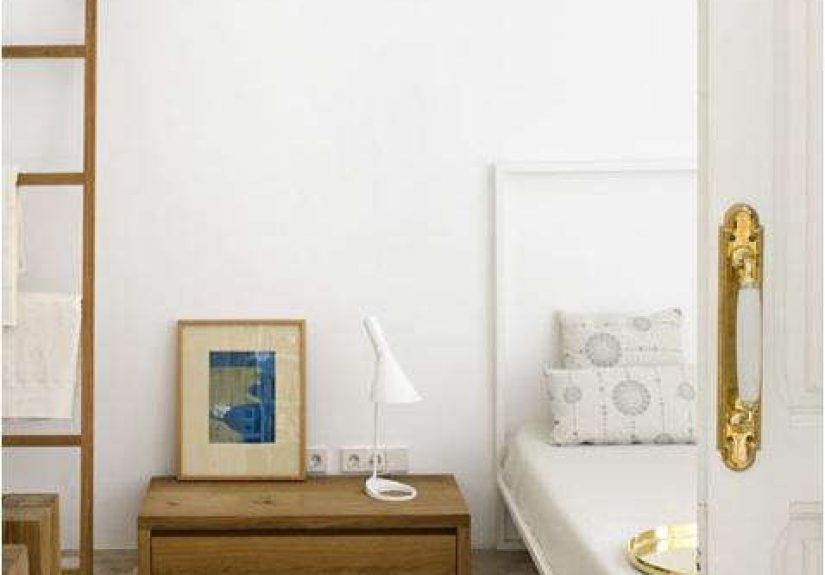
The mini is a strong choice here: it’s tall enough to give you a good reading pool without towering over the bed. Because the light is directed,
it’s also more considerate to partnersless “entire bedroom spotlight,” more “my chapter, my business.”
On a console or side table
The AJ can act like a sculptural object during the day and a functional light source at night. If you’re styling a console, consider pairing it
with one lower object (like a stack of books or a tray) so the lamp reads as intentional height and not “random tall thing.”
Buying Advice: Authenticity, Value, and “Is It Worth It?”
The AJ Table Lamp isn’t cheap. You’re paying for iconic design, strong materials, and reputable manufacturing. If you’re shopping in the U.S.,
buying through established retailers (think design-focused stores and major modern lighting shops) also helps with authenticity and warranty support.
MoMA Design Store, for example, emphasizes authenticity and curator-approved sourcingexactly the energy you want when a lamp costs “weekend trip”
money.
How to avoid knockoffs (without becoming a detective)
- Be suspicious of prices that look “too good to be true.” Designer classics don’t suddenly become bargain-bin items.
- Check for credible product details (materials, bulb base, UL/cUL listings) and consistent specs across listings.
- Buy from known retailers or authorized dealers whenever possible.
- Read the return policy before you click “buy”future you will be grateful.
Care and Maintenance (Easy, Promise)
The AJ’s finishes are designed to look crisp, so treat them gently:
- Dust with a soft microfiber cloth.
- Avoid abrasive cleaners that can dull painted or polished surfaces.
- If you’re moving it around, lift from the base instead of yanking the shade like you’re starting a lawn mower.
Conclusion: A Design Classic That Still Does the Job
The AJ Table Lamp has stayed relevant because it never relied on novelty. It’s architectural, functional, and surprisingly adaptableequally at home
next to a mid-century walnut desk or on a modern nightstand with a phone charger and a water glass. Choose the standard if you want the full statement
and easy E26 bulb options; choose the mini if you want the icon in a compact, bedside-friendly form. Either way, you’re getting a piece of design history
that still behaves like a practical lampbecause it was always meant to.
Real-World Experiences With the AJ Table Lamp (What It’s Like to Live With One)
Let’s talk about the part no one puts in a product description: the day-to-day reality of owning an AJ Table Lamp. Because yes, it’s an icon, but it’s also
a lamp you’ll touch, aim, bump into, and occasionally glare at when you realize you bought the wrong bulb.
First experience: the tilt mechanism becomes your new best friend. People often assume “tilting shade” means “a little wiggle.” With the AJ,
the shade angle genuinely changes how the light behaves. On a desk, you can aim it down for a tight pool of light on your notebook, then tilt it up slightly
when you’re on a video call and want your face to look like it sleeps sometimes. It’s a small adjustment with a big impactespecially if your overhead lighting
is harsh or you’re working in a room that only gets decent daylight for, like, 11 minutes at 4:07 p.m.
Second experience: the AJ has a “designer object” effect that’s both delightful and mildly annoying. Delightful because the lamp makes almost any
surface look more intentional. Annoying because once it’s there, you’ll start noticing everything else that suddenly looks… less intentional. (That frayed charging
cable? That stack of unopened mail? The random coaster that’s been there since 2021?) The AJ doesn’t judge you out loud, but it does create an environment where
you might judge yourself.
Third experience: bulb choice is make-or-break. With a frosted, warm LED, the AJ feels calm and expensive in the best way. With a too-cool bulb,
it can feel like a surgical spotlight, which is great if you’re performing dentistry on a blueberry muffin but less great for bedtime reading. Owners who love the AJ
tend to land in that sweet spot: warm color temperature, high color rendering, and enough lumens to read comfortably without bouncing light off every wall.
Fourth experience: placement matters more than you expect. On a nightstand, the mini is often the “right” kind of presenceiconic but not looming.
On a desk, the standard size feels properly scaled, especially if you have a monitor. People who put the standard AJ on a very small nightstand sometimes realize
they’ve created a situation where the lamp is basically the tallest personality in the room. The fix is simple: either choose the mini, or move the standard to a
desk/console where it can breathe.
Fifth experience: it’s sturdier than it looks. That base isn’t just for aesthetics. In daily use, the lamp feels stable when you adjust it, and it doesn’t slide around
like lightweight desk lamps can. You get used to that “quiet confidence” quicklyand then other lamps start feeling flimsy by comparison. It’s a little like driving a
solid car for a week and then getting into a rental that rattles when you blink.
Finally, there’s the experience that’s hardest to measure: the AJ Table Lamp becomes a visual anchor. In open-plan spaces, it helps define a “work zone”
or a “reading corner” without adding clutter. In bedrooms, it can make a nightstand feel finished even if you keep the rest minimal. And in living rooms, it works as
a sculptural accent that still earns its keep when you want to read, journal, or just pretend you’re reading while actually scrolling.
Bottom line: living with an AJ Table Lamp is less about owning a trophy and more about having a genuinely excellent task lamp that happens to be famous. It’s one of those
rare design classics that still behaves like it remembers its job description.