
Table of Contents >> Show >> Hide
- Why White Wine Works So Well With Pork Chops
- Pick Your Pork Chops Like You Mean It
- Ingredients
- The Recipe: Baked Pork Chops With White Wine Sauce
- The Sauce Science (So It Works Every Time)
- Easy Variations (Same Pork, Different Vibes)
- What to Serve With Baked Pork Chops and White Wine Sauce
- Wine Pairings (Because You Opened the Bottle Anyway)
- Storage and Reheating
- Troubleshooting FAQ
- Kitchen Experiences: of Real-Life Pork Chop Wisdom
- Conclusion
If you’ve ever baked pork chops and ended up with something that could double as a doorstop, welcome. You are among friends.
The good news: juicy, oven-baked pork chops are not a myth. You just need two things: (1) the right doneness
and (2) a white wine pan sauce that tastes like you paid for valet parking.
This recipe uses a quick stovetop sear for flavor, then finishes in the oven so the chops cook evenly (aka: no raw centers, no Sahara edges).
While the chops rest, you’ll whip up a glossy white wine sauce in the same panbecause washing extra dishes is not a love language.
Why White Wine Works So Well With Pork Chops
White wine is basically a flavor multitool. It brings acidity to brighten rich meat, and it’s excellent at
deglazingloosening those browned bits (fond) stuck to the pan after searing. That fond is pure concentrated “wow,” and wine helps you
turn it into sauce instead of letting it fossilize on your skillet.
Stick with a dry white wine (think Sauvignon Blanc, Pinot Grigio, or an unoaked Chardonnay). Sweet wines can turn syrupy when reduced,
and nobody asked for pork chops in “dessert sauce.”
Pick Your Pork Chops Like You Mean It
Bone-in vs. boneless
Both work. Bone-in chops tend to stay juicier and have great flavor. Boneless chops cook a bit faster and are convenient,
but they can dry out if overcooked by even a few minutes. Translation: a thermometer is your best kitchen buddy here.
Thickness matters (a lot)
For baked pork chops, aim for about 1 to 1½ inches thick. Thin chops can go from “perfect” to “paperwork” quickly.
If your chops are thinner than ¾ inch, consider pan-searing only (or shorten oven time aggressively).
Ingredients
For the pork chops
- 4 pork chops (bone-in or boneless), ideally 1 to 1½ inches thick
- 1½ teaspoons kosher salt (or 1 teaspoon fine salt)
- ¾ teaspoon black pepper
- 1 teaspoon garlic powder (optional, but recommended for weeknight swagger)
- 1 teaspoon smoked paprika (optional, for subtle “grill vibes”)
- 1 tablespoon neutral oil (avocado, canola, or grapeseed)
For the white wine pan sauce
- 1 tablespoon butter (plus 1 more tablespoon to finish)
- 1 small shallot, finely chopped (or ¼ small onion in a pinch)
- 2 cloves garlic, minced
- ¾ cup dry white wine
- ½ cup low-sodium chicken broth (or stock)
- 1 teaspoon Dijon mustard
- 1 to 2 teaspoons fresh lemon juice (to taste)
- 1 teaspoon chopped fresh thyme or parsley (or ½ teaspoon dried thyme)
- Optional: 1 tablespoon capers (drained) for a bright, briny twist
Don’t cook with wine?
No problem. Swap the wine with extra broth plus 1 to 2 teaspoons lemon juice (or a small splash of white vinegar).
You’ll still get a tangy, pan-sauce momentjust without the vino.
The Recipe: Baked Pork Chops With White Wine Sauce
Timing, yield, and equipment
- Prep: 10 minutes (plus optional salting time)
- Cook: 20 to 30 minutes (depends on thickness)
- Total: ~35 minutes
- Serves: 4
- Equipment: oven-safe skillet (cast iron or stainless steel), instant-read thermometer
Step 1: Salt the chops (quick dry-brine for better flavor)
Pat chops dry. Season both sides with salt and pepper (and garlic powder/paprika if using).
If you have time, let them sit 15 to 30 minutes at room temperature. This helps seasoning penetrate and encourages better browning.
If you don’t have time, it’s okayweeknights do not negotiate.
Step 2: Preheat the oven
Heat oven to 400°F. This temperature is hot enough to cook quickly without drying out the exterior before the center is done.
Step 3: Sear for flavor
- Heat oil in a large oven-safe skillet over medium-high heat until shimmering.
- Add pork chops and sear 2 to 3 minutes per side, until nicely browned.
- Transfer the skillet to the oven.
Step 4: Bake to the right temperature (the juicy secret)
Bake until the thickest part of the chop reads 140–145°F on an instant-read thermometer.
Remove from the oven and let chops rest at least 3 minutes before slicing. The temperature can rise slightly as they rest, and resting
helps keep juices where they belong: inside the pork, not on your cutting board.
General timing guide at 400°F:
• Boneless, ~1 inch: usually 18 to 23 minutes (less if very hot sear + thin chops)
• Bone-in, 1 to 1½ inches: often 20 to 28 minutes
These are estimatesyour thermometer is the truth serum.
Step 5: Make the white wine pan sauce
- Move pork chops to a plate and loosely tent with foil.
- Place skillet on the stove over medium heat. Add 1 tablespoon butter.
- Add shallot and cook 1 to 2 minutes until softened. Stir in garlic for 30 seconds.
- Pour in white wine and stir, scraping up browned bits. Simmer 3 to 5 minutes to reduce slightly.
- Add chicken broth and Dijon mustard. Simmer 2 to 4 minutes until the sauce lightly coats a spoon.
- Turn off heat. Stir in lemon juice, herbs, and the final 1 tablespoon butter to make it glossy.
- Taste and adjust: more lemon for brightness, more salt/pepper if needed, capers if you want a briny pop.
Step 6: Serve like a bistro genius
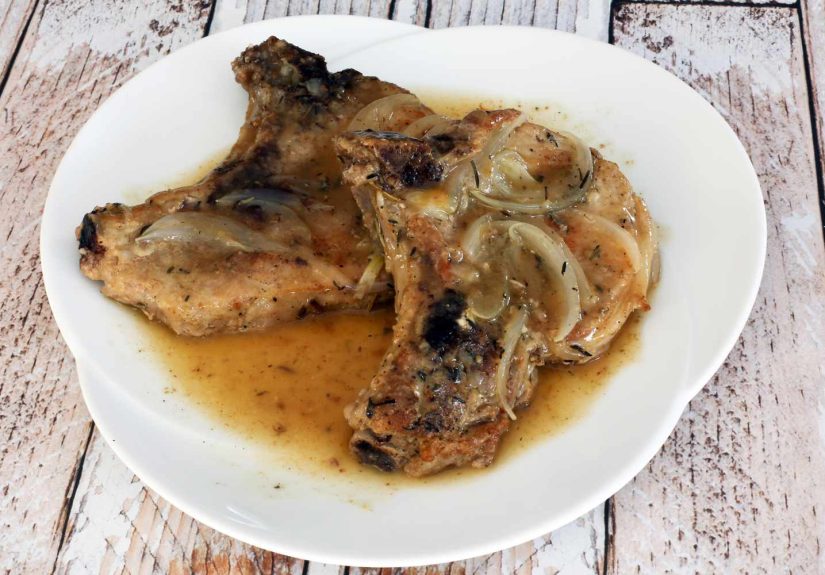
Spoon sauce over the pork chops. If you’re feeling fancy, add herbs on top. If you’re feeling realistic, eat it straight from the plate while standing
at the counter “just to taste.” (We all know how this ends.)
The Sauce Science (So It Works Every Time)
Great pan sauce is a simple formula: fond + acid + simmer + fat. The wine loosens the fond. Simmering reduces and concentrates flavor.
Finishing with butter helps emulsify the sauce so it tastes rich and looks silky instead of watery and sad.
If your sauce ever looks split or greasy, lower the heat and whisk in a tiny splash of broth or water, then swirl in a small piece of cold butter.
Sauce therapy is real.
Easy Variations (Same Pork, Different Vibes)
1) White wine caper “piccata-ish” sauce
Add 1 tablespoon capers and a little extra lemon. Bright, salty, and perfect if you love bold flavors.
2) Creamy white wine mushroom sauce
Sauté sliced mushrooms after the shallot, then continue with wine and broth. For creaminess, stir in a spoonful of crème fraîche or a splash of cream
at the end (keep it gentleboiling can break dairy).
3) Leek + thyme white wine sauce
Swap shallot for thinly sliced leeks and let them soften longer. The sauce becomes slightly thicker and cozy, like a sweater for your pork chops.
What to Serve With Baked Pork Chops and White Wine Sauce
- Roasted potatoes (they love sauce more than anyone)
- Green beans sautéed with garlic and a squeeze of lemon
- Buttered noodles or mashed potatoes for maximum comfort
- Simple salad with a bright vinaigrette to balance the richness
- Roasted apples or pears for a sweet-savory pairing that just makes sense with pork
Wine Pairings (Because You Opened the Bottle Anyway)
Keep it crisp and food-friendly: Sauvignon Blanc, Pinot Grigio, dry Riesling, or an unoaked Chardonnay are great with pork and a bright pan sauce.
If you prefer red, go light: Pinot Noir is often a happy match with pork.
Storage and Reheating
- Refrigerate leftovers within 2 hours, and keep your fridge at 40°F or below.
- Store pork and sauce separately if possible (sauce reheats best gently).
- Reheat in a skillet over low heat with a splash of broth/water to loosen the sauce. Avoid high heat, which can dry out chops fast.
Troubleshooting FAQ
Why are my baked pork chops dry?
The most common reason is overcooking. Pork chops are lean and unforgiving. Pull them around 140–145°F and let them rest.
Also, thicker chops buy you more forgiveness than thin ones.
Do I really need a meat thermometer?
For consistently juicy pork chops? Yes. It’s the difference between “nailed it” and “why is this chewing back?”
What white wine is best for cooking?
Choose a dry wine with decent acidity and avoid anything sweet. You don’t need the fancy bottlejust something you’d happily sip.
Can I bake pork chops without searing first?
Absolutely. You’ll still get tasty chops, but searing builds deeper flavor and gives you better fond for the sauce.
If you skip searing, the sauce won’t have as much “restaurant pan” energystill good, just less dramatic.
Kitchen Experiences: of Real-Life Pork Chop Wisdom
The first time I made baked pork chops with white wine sauce, I treated the pork chop like a chicken breast’s tougher cousin: “It’s fine, just cook it
until it looks done.” That approach produced a chop with the personality of a beige folder. Edible? Yes. Memorable? Only as a cautionary tale.
So I tried again, but this time I did two things differently: I bought thicker chops, and I used a thermometer like an adult who pays taxes.
Instantly, the whole game changed. At around 140-something degrees, the pork looked slightly under what my childhood brain insisted was “safe.”
But I let it rest (because that’s what the charts say), and the temperature climbed. The final result was juicy and tendernot “pink and scary,” just
“still has moisture like meat is supposed to.”
Then came the white wine part. I used to think cooking with wine was either (A) only for people with copper pans and a mysterious collection of tiny
spoons, or (B) a trick to make you feel fancy while eating in sweatpants. Turns out it’s mostly science and a little magic.
After searing the chops, I poured in wine and watched the browned bits melt off the skillet like they’d been waiting for their moment.
The smell alone made the kitchen feel like a small bistro where the chef is confident and the lighting is forgiving.
I’ve learned a few “oops-proof” habits along the way. One: if the garlic goes in too early, it can burn and turn bitter, so I give the shallot a head
start. Two: reduce the wine enough that it doesn’t taste raw or sharp. If you take a spoonful and it tastes like you accidentally licked a vineyard,
simmer it a bit longer. Three: finish with butter off the heat. This is not just indulgenceit’s how you get that silky sauce that clings to the pork
instead of running away like it has places to be.
My favorite weeknight version is the “pantry bistro” remix: Dijon, lemon, and whatever herbs are still alive in the crisper drawer. If I have capers,
I toss them in and suddenly dinner tastes intentional. If I don’t have wine, I use broth and lemon and pretend it was the plan all along.
And when I’m feeling extra, I roast a tray of potatoes underneath the chops so they catch drips and become crunchy little sauce magnets.
The biggest lesson? Pork chops aren’t difficultthey’re just honest. Treat them gently, cook them to the right temperature, let them rest, and reward
them with a bright white wine sauce. In return, they’ll stop haunting your dinner table and start starring in it.
Conclusion
Baked pork chops don’t need to be dry, bland, or “fine, I guess.” With a quick sear, a thermometer, and a simple white wine pan sauce,
you get a meal that feels special without turning Tuesday into a culinary obstacle course. Keep the chops thick, pull them at the right temp, rest them,
and let the wine do what it does best: make simple food taste smarter than it is.







 Close
Close