
Table of Contents >> Show >> Hide
- Why This Banana Bread Works
- Ingredients (and Why They Matter)
- Equipment
- Step-by-Step Instructions
- Variations: Make This Banana Bread Recipe Yours
- Troubleshooting: Common Banana Bread Problems
- Storage, Freezing, and Make-Ahead Tips
- Nutrition Notes (Realistic, Not Magical)
- of Banana Bread Experiences (the relatable kind)
You know those bananas on your counter that have gone from “bright and hopeful” to “tiny spotted drama queens”?
Congratulations: they’ve just become your ticket to the best banana bread recipemoist, fragrant,
and basically a legal form of aromatherapy.
This guide gives you a reliable classic loaf, plus smart upgrades (hello, sour cream and brown butter), easy swaps,
and troubleshooting tips so your bread comes out tendernot gummy, not dry, and definitely not “why is this bread
squeaking when I slice it?”
Why This Banana Bread Works
Banana bread is a “quick bread,” meaning it relies on chemical leaveners (like baking soda) instead of yeast.
The goal is a loaf that’s moist but not heavy, sweet but not dessert-cake sweet, and full of
banana flavor without tasting like a smoothie in loaf form.
This recipe nails that balance by using:
- Very ripe bananas for sweetness and bold flavor (the spottier, the better).
- Brown sugar for a softer crumb and a warm, caramel vibe.
- Greek yogurt or sour cream for moisture, tenderness, and a gentle tang that keeps the sweetness in check.
- Gentle mixing to avoid overdeveloping gluten (a.k.a. the #1 cause of rubbery quick bread).
It’s also flexible: you can go classic, turn it into banana nut bread, fold in chocolate chips,
or level it up with brown butter if you’re feeling fancy (or procrastinating something important).
Ingredients (and Why They Matter)
Yield: 1 loaf (9×5-inch), about 10–12 slices
Core Ingredients
- All-purpose flour – 2 cups (spooned and leveled so the loaf doesn’t turn dense).
- Baking soda – 1 teaspoon (main lift; reacts with acidic ingredients like yogurt/sour cream).
- Fine salt – 1/2 teaspoon (sweet breads still need seasoningtrust the process).
- Ground cinnamon – 1/2 teaspoon (optional but highly recommended for cozy flavor).
- Unsalted butter – 1/2 cup (1 stick), softened (or meltedsee notes below).
- Brown sugar – 3/4 cup, packed (light or dark; dark = deeper molasses flavor).
- Eggs – 2 large, room temp if possible (structure + tenderness).
- Very ripe bananas – 1 1/2 cups mashed (about 3–4 medium bananas).
- Plain Greek yogurt or sour cream – 1/3 cup (moisture + tenderness + a little tang).
- Vanilla extract – 1 teaspoon (rounds out the flavor).
Optional Add-Ins (Pick Your Adventure)
- Chopped walnuts or pecans – 3/4 cup (toast them for extra flavor).
- Chocolate chips – 3/4 cup (semi-sweet is the crowd favorite).
- Turbinado sugar – 1 tablespoon for the top (crackly, sparkly, bakery-style crust).
Ingredient Notes
If you prefer a slightly lighter texture, use softened butter and cream it with the sugar.
If you want a denser, super-moist loaf, you can melt the butter and whisk (great for lazy days).
Both workyour vibe, your loaf.
Equipment
- 9×5-inch loaf pan (metal or light-colored works best for even baking)
- Mixing bowls (1 large, 1 medium)
- Whisk + rubber spatula
- Measuring cups/spoons
- Cooling rack
Step-by-Step Instructions
1) Prep the pan and oven
Preheat oven to 350°F. Grease a 9×5-inch loaf pan, then line with parchment if you want easy lift-out.
(Optional, but it makes you feel like you run a tiny bakery.)
2) Mix the dry ingredients
In a medium bowl, whisk together:
2 cups flour, 1 tsp baking soda, 1/2 tsp salt,
and 1/2 tsp cinnamon (if using).
3) Cream butter and sugar (for a plush crumb)
In a large bowl, beat 1/2 cup softened butter with 3/4 cup brown sugar until it looks lighter
and fluffierabout 2 minutes by hand mixer, or a little longer if you’re doing it manually and building character.
4) Add eggs, then bananas + dairy
Beat in 2 eggs, one at a time. Stir in 1 1/2 cups mashed bananas,
1/3 cup Greek yogurt or sour cream, and 1 tsp vanilla.
The batter may look a bit curdled at this stage. That’s normal. Banana bread is not here to be photogenicit’s here to be delicious.
5) Combine wet + dry gently
Add the dry ingredients to the wet and fold with a spatula just until no dry streaks remain.
Overmixing = tough, rubbery loaf. We’re making comfort bread, not a stress test.
6) Add mix-ins (optional)
Fold in 3/4 cup nuts and/or 3/4 cup chocolate chips. If using both, do 1/2 cup each so the loaf doesn’t turn into trail mix.
7) Bake
Scrape batter into pan, smooth the top, and (optional) sprinkle with turbinado sugar.
Bake 55–70 minutes, until a toothpick inserted in the center comes out with a few moist crumbs (not wet batter).
If the top browns too fast, loosely tent with foil around the 45–50 minute mark.
8) Cool (yes, you must)
Cool in the pan for 10–15 minutes, then transfer to a rack. Let it cool at least 30 minutes before slicing.
Cutting too early can make the center gummyeven if it’s fully baked. Patience is a baking ingredient.
Variations: Make This Banana Bread Recipe Yours
1) Banana Nut Bread (Classic)
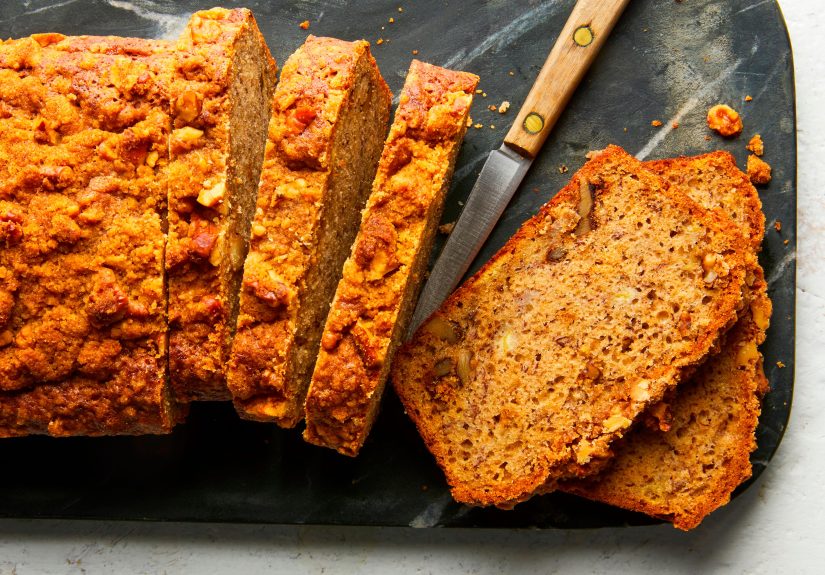
Stir in 3/4 cup toasted walnuts or pecans. Toasting takes 6–8 minutes at 350°F and makes the nuts taste deeper and less “raw.”
2) Chocolate Chip Banana Bread (Fan Favorite)
Fold in 3/4 cup chocolate chips. For a bakery look, sprinkle a small handful on top before baking.
(This is optional, but your slice photos will thank you.)
3) Cinnamon Swirl (Dessert Energy)
Mix 1/3 cup sugar with 1 1/2 tsp cinnamon. Pour half the batter into the pan,
sprinkle most of the cinnamon sugar, add remaining batter, then lightly swirl with a butter knife.
Don’t over-swirl or you’ll lose the ribbon effect.
4) Brown Butter Upgrade (Next-Level Flavor)
Brown the butter first: melt butter in a small saucepan and cook until it smells nutty and turns golden-brown with brown flecks.
Cool slightly before using. This adds a toasted, caramel-like depth that makes the banana flavor pop.
5) “Extra Moist” Sour Cream Boost
Use sour cream instead of yogurt, and consider bumping it up to 1/2 cup if your bananas are on the smaller side.
The loaf stays tender longer and slices cleanly.
Smart Swap Table
| Goal | Swap | What to Expect |
|---|---|---|
| Less sweet | Reduce sugar to 1/2 cup | More banana-forward, slightly less browned crust |
| More whole grain | Swap 1/2 cup flour for whole wheat flour | Heartier crumb, slightly nuttier taste |
| Dairy-free | Use plant yogurt + vegan butter | Still moist; choose thicker yogurt for best texture |
| Mini loaves or muffins | Divide into smaller pans | Shorter bake time; start checking early |
Troubleshooting: Common Banana Bread Problems
“Why is my banana bread dry?”
- Too much flour: Spoon and level instead of scooping with the cup.
- Overbaked: Pull when toothpick shows moist crumbs, not when it’s bone-dry.
- Not enough ripe banana: Under-ripe bananas don’t bring moisture or sweetness.
“My loaf is gummy in the middle.”
- Underbaked: Ovens vary; check internal doneness with a long skewer in the center.
- Sliced too soon: Cooling finishes setting the crumb.
- Overmixed batter: Tough gluten can trap moisture oddly and create a dense, gummy texture.
“It sank in the center!”
- Too much leavener or overmixing can create a fast rise then collapse.
- Opening the oven early can drop temperature and cause sinkingwait until at least 45 minutes.
“The top is done but the center isn’t.”
- Tent with foil after the top is golden.
- Make sure you’re using the correct pan size (9×5-inch). Smaller pans = thicker batter = longer bake.
Storage, Freezing, and Make-Ahead Tips
Short-term storage
Once fully cooled, wrap the loaf tightly or store in an airtight container. It keeps well at room temperature for about
2–3 days (depending on your kitchen humidity and how often people “walk by and take a slice”).
Freezing banana bread
Banana bread freezes beautifully. Wrap the whole loaf (or individual slices) in plastic wrap, then place in a freezer bag.
Freeze up to 3 months. Thaw at room temperature, or warm slices gently for that fresh-baked feel.
Make-ahead pro move
If you’re baking for guests, make it the day before. Banana bread often tastes even better after resting overnight because flavors settle and deepen.
Nutrition Notes (Realistic, Not Magical)
Banana bread can be a cozy breakfast, snack, or dessertdepending on your slice size and whether you add butter (no judgment).
Bananas contribute potassium and fiber, but the loaf is still a baked good with sugar and fat.
If you want a lighter version, reduce sugar slightly, use Greek yogurt, and add nuts for satisfying texture.
The “best” banana bread is the one you’ll actually enjoybecause a sad loaf eaten out of obligation is not a wellness plan.
of Banana Bread Experiences (the relatable kind)
In real kitchens, banana bread isn’t just a recipeit’s a small domestic event. Bakers often describe the same familiar scene:
a bunch of bananas crosses the invisible line from “snackable” to “suspicious,” and suddenly everyone becomes extremely passionate about
the idea of using them “before they go to waste.” That’s banana bread’s origin story, and it has powered more weekend baking sessions than
most motivational quotes ever could.
A common experience is realizing that “ripe bananas” means different things to different people. Some folks think a few freckles are enough.
Others wait until the peels are nearly black and the bananas look like they’ve been through a dramatic character arc. The second group usually
gets the more flavorful loaf. Home bakers frequently notice that the darker the bananas, the sweeter and more aromatic the bread becomesalmost like
the bananas are apologizing for their appearance by showing up with better taste.
Another classic banana bread moment: the mixing dilemma. Many bakers start confidently, stirring like they’re auditioning for a role called
“Human Cement Mixer,” then wonder why their loaf turns out chewy. After a few attempts, most people discover the quiet power of stopping early.
When the flour disappears and the batter looks just barely combined, that’s the moment to put the spoon down. It feels wrong because it’s not
perfectly smooth, but it bakes up right because quick breads reward gentleness.
Then there’s the add-in debate, which can get surprisingly intense. Some households are firmly Team Walnutloving the crunch and the “classic bakery”
vibe. Others are Team Chocolate Chip, chasing those melty pockets that make each slice feel like a treat. Many bakers report that the happiest compromise
is “a little of both,” but that’s also how you accidentally create a loaf so loaded it’s basically a banana-studded snack bar. The sweet spot is enough
add-ins to keep bites interesting without turning the batter into edible gravel.
Banana bread also has a social life. People bring it to neighbors, share slices with coworkers, and quietly leave a loaf on someone’s porch like a
baked-good fairy tale. It’s one of the few foods that feels equally appropriate as a casual breakfast, an afternoon coffee companion, or a late-night
“just one more slice” situation. And because it freezes well, lots of bakers end up with a secret stashslices wrapped individually, ready for future
snack emergencies. The first time someone discovers they can thaw a slice and warm it up to taste nearly fresh-baked, it feels like a life upgrade.
Finally, banana bread teaches a low-stakes but genuinely useful lesson: perfection is optional. A cracked top is normal. A slightly darker edge can be
delicious. Even a loaf that’s a touch denser than planned usually disappears once it meets butter, coffee, or a hungry household. That’s the charm:
banana bread is forgiving, comforting, and always ready to turn “overripe and ignored” into “warm and worth sharing.”






 Close
Close