Table of Contents >> Show >> Hide
- Why This Brûléed Rice Pudding Works
- Ingredients
- Equipment You’ll Want
- How To Make Brûléed Rice Pudding with Honeyed Citrus
- Chef-Style Tips for the Best Results
- Make-Ahead and Storage
- Variations (Because Your Kitchen, Your Rules)
- Troubleshooting
- Serving Ideas (A.K.A. How to Make It Look Like a Restaurant Dessert)
- Experience Notes: The Many Tiny Adventures of Brûléed Rice Pudding (About )
- SEO Tags
Rice pudding is already comfort food royalty. But give it a crackly, caramelized sugar “hat” (brûlée-style), plus a bright
honeyed citrus topping, and suddenly it’s wearing a crown and asking for its own theme music.
This recipe is the best kind of fancy: it looks like a restaurant dessert, tastes like a warm blanket, and still works in a real-life
kitchen where someone is probably asking, “Is this done yet?” every six minutes.
Why This Brûléed Rice Pudding Works
- Short-grain rice = extra creaminess. Arborio (or another short/medium grain) releases starch, thickening the pudding into that spoon-coating, silky texture.
- Whole milk + a little cream gives richness without turning the whole thing into a dairy flex.
- Egg yolks (optional but recommended) add a custardy vibe that pairs perfectly with the brûléed topping.
- Brûlée at the last minute so the sugar stays crisp instead of turning into a sticky, sad puddle.
- Honeyed citrus cuts the sweetness with fresh acidity and a glossy syrupbasically dessert’s version of a good punchline.
Ingredients
For the rice pudding
- 3/4 cup Arborio rice (or other short/medium-grain rice)
- 1 tablespoon unsalted butter
- 4 cups whole milk
- 1 cup heavy cream (or half-and-half for a lighter version)
- 1/3 cup granulated sugar (adjust to taste)
- 1/4 teaspoon kosher salt
- 1 cinnamon stick (optional, but cozy)
- 1 vanilla bean (split) or 2 teaspoons vanilla extract/vanilla bean paste
- 2 large egg yolks (optional, for a custard-like finish)
For the honeyed citrus
- 2 oranges
- 1 grapefruit (or swap in more oranges if grapefruit isn’t your thing)
- 1/4 cup honey
- 1/2 cup fresh orange juice (or a mix of orange and grapefruit juice)
- 2 to 3 strips citrus zest (orange or grapefruit), removed with a peeler (avoid the white pith)
- Pinch of salt
- Optional: 1 small sprig rosemary, 2 thin slices fresh ginger, or a tiny pinch of cayenne for gentle heat
For the brûlée topping
- 4 to 6 tablespoons superfine sugar (or regular sugar, pulsed briefly in a blender/food processor)
Equipment You’ll Want
- Heavy-bottom saucepan (rice pudding scorches if you look at it funny)
- Whisk and silicone spatula
- Ramekins or small heat-safe bowls
- Kitchen torch (best) or oven broiler (still worksjust keep an eye on it)
- Microplane or zester (optional, for extra citrus flair)
How To Make Brûléed Rice Pudding with Honeyed Citrus
Step 1: Start the rice pudding base
-
In a heavy-bottom saucepan over medium heat, melt the butter. Add the Arborio rice and stir for 1 minute to lightly toast.
(This adds a subtle nutty note and helps the grains stay pleasantly tender.) -
Add the milk, cream, sugar, salt, and cinnamon stick. If using a vanilla bean, add the seeds and the pod. Bring just to a gentle simmer.
Don’t boilwe’re making pudding, not chaos. -
Reduce heat to low and cook at a steady, gentle simmer for 30 to 40 minutes, stirring often (more often as it thickens).
You want the rice tender and the mixture creamy, like a loose risotto that joined a dessert book club.
Step 2: Add the custard finish (optional, but gives that crème brûlée vibe)
- In a small bowl, whisk the egg yolks until smooth.
- Ladle a few spoonfuls of hot rice pudding liquid into the yolks while whisking constantly (this is temperingaka “don’t scramble my eggs” technique).
-
Pour the warmed yolk mixture back into the pot, whisking as you go. Cook 2 to 4 minutes on low, stirring constantly, until slightly thicker.
Do not let it boil. - Remove from heat. If using vanilla extract/paste (instead of a bean), stir it in now. Remove the cinnamon stick and vanilla pod if used.
Step 3: Chill (or serve warm, but brûlée prefers cold)
- Spoon the pudding into a bowl or directly into ramekins. Press a piece of plastic wrap directly onto the surface to prevent a skin.
- Refrigerate at least 2 hours, ideally 4. The texture sets up, and the brûlée step becomes much easier (and crispier).
Step 4: Make the honeyed citrus
-
While the pudding chills, make the syrup: in a small saucepan, combine honey, orange juice, zest strips, and a pinch of salt.
Add rosemary/ginger/cayenne if using. - Bring to a simmer and cook 8 to 12 minutes, until slightly reduced and glossy. You’re aiming for “light syrup,” not “glue.”
-
Meanwhile, segment the citrus (aka “supreme” it):
cut off the top and bottom, stand the fruit upright, slice away peel and white pith, then cut segments free from membranes over a bowl.
Catch the juicesthey’re liquid gold for flavor. -
Remove syrup from heat. Let cool 5 minutes, then add citrus segments and any collected juices. Cool to room temperature, then refrigerate
until serving. (The syrup thickens a little as it coolslike a good plot twist.)
Step 5: Brûlée the top (the “crack!” moment)
- Right before serving, uncover the chilled pudding. If it looks very thick, stir in a splash of milk to loosen.
- Sprinkle a thin, even layer of superfine sugar over the surface of each ramekin. Tip and tap to distribute evenly; pour off excess.
-
Use a kitchen torch to melt and caramelize the sugar, moving constantly to avoid burning one spot.
For extra crunch, add a second very thin sugar layer and torch again. -
No torch? Set ramekins on a sheet pan and broil on high, very close to the heating element, 1 to 3 minutes. Watch like a hawk.
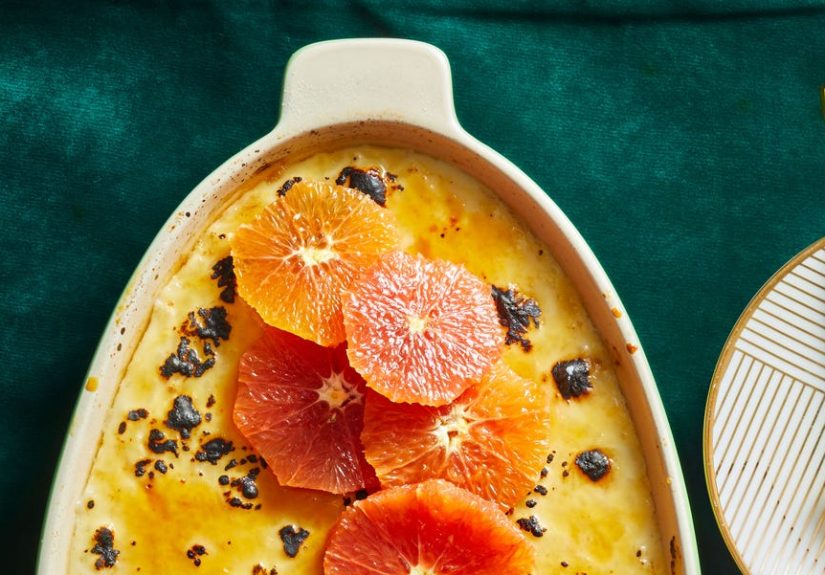
Sugar goes from “golden” to “regret” fast. - Let the brûléed tops stand 1 to 2 minutes to harden. Spoon honeyed citrus on top or serve on the side so the crust stays crisp longer.
Chef-Style Tips for the Best Results
Texture control (so you get creamy, not clumpy)
- Stir often. Milk loves sticking to the bottom of pots. Rice pudding is basically a scorching prevention course you can eat.
- Gentle heat wins. If you rush it, the dairy can scorch and the rice won’t hydrate evenly.
- Thicker than you want? Stir in milk a tablespoon at a time after chilling. Cold pudding always feels thicker.
Brûlée success (crackly, not burnt)
- Use superfine sugar for an even melt and fewer “sugar boulders.”
- Go thin. A thick sugar layer turns into a jaw workout (and not the fun kind).
- Deeper ramekins help. If rice grains poke up, they can scorch when torchedkeep the surface smooth before sugaring.
Make-Ahead and Storage
- Rice pudding: Make up to 3 days ahead. Store covered in the fridge. Expect it to thicken; loosen with a splash of milk when serving.
- Honeyed citrus: Best within 24 to 48 hours for peak brightness, but still good up to 3 days.
- Brûlée topping: Always do this right before serving. Caramelized sugar is dramatic and does not handle humidity well.
Variations (Because Your Kitchen, Your Rules)
Flavor twists
- Orange blossom honey vibe: Add a tiny splash of orange blossom water to the citrus syrup after it cools (start with 1/4 teaspoon).
- Warm spice mode: Add a pinch of cardamom or nutmeg to the pudding base.
- Coconut-citrus: Swap 1 cup of milk for coconut milk and top with toasted coconut + citrus.
- Extra “brûlée energy”: Torch the sugar twice with two thin layers for a thicker crack.
Rice options
- Arborio: Creamiest, classic “dessert risotto” feel.
- Jasmine: Fragrant and lovely, especially if you want a lighter texture.
- Leftover cooked rice: Totally doablereduce the cooking time since the rice is already hydrated, and adjust milk until creamy.
Troubleshooting
My pudding is grainy
If you used yolks, the pot may have been too hot after adding them. Next time: lower the heat, temper slowly, and never let it boil.
My pudding is too thick after chilling
Normal. Stir in a splash of milk and give it 30 seconds of vigorous whisking. It should smooth out.
My brûlée burned (or went bitter)
Torch farther away, keep moving, and use a thinner sugar layer. Also: your sugar isn’t mad at you. It’s just very passionate.
My citrus topping tastes harsh
Too much pith can add bitterness. When peeling, remove all the white pith, and segment cleanly. A little extra honey in the syrup also helps.
Serving Ideas (A.K.A. How to Make It Look Like a Restaurant Dessert)
- Serve the citrus on the side for maximum sugar-crack effect.
- Add a few toasted sliced almonds or pistachios for crunch without stealing the brûlée’s thunder.
- Finish with a pinch of flaky salt on top of the caramel for sweet-salty drama.
- For a dinner party: torch the tops at the table if you want instant applause (and mild kitchen-magician vibes).
Experience Notes: The Many Tiny Adventures of Brûléed Rice Pudding (About )
The first time you brûlée anything at home, you learn two truths very quickly: (1) caramelized sugar is pure joy, and (2) it has the attention span
of a toddler in a candy aisle. One second it’s pale and innocent, the next it’s the color of a penny found under a couch cushion. That’s why this
brûléed rice pudding became one of my favorite “looks impressive, actually manageable” desserts. You get the theatrics of crème brûlée without the
stress of “Did my custard set?” panic.
My earliest attempt was… educational. I sprinkled sugar like I was salting an icy sidewalk and hit it with the torch like I was trying to weld a
spaceship. The result was a top layer that could have been registered as protective sports equipment. The fix was simple: thinner sugar, calmer torch,
and a gentle, steady sweeplike you’re painting with heat instead of declaring war on dessert. The second lesson: if the rice surface isn’t smooth, a few
grains will poke up and scorch, leaving dark freckles. Not always a problem (some people love that toasted flavor), but if you want a cleaner finish,
press the pudding flat before sugaring and use a deeper ramekin so the rice stays tucked in.
The honeyed citrus part happened because rice pudding, for all its cozy charm, can sometimes taste like it’s wearing beige pants on purpose.
Citrus fixes that. Segmenting oranges and grapefruit feels a little fussy until you realize it’s basically edible confettibright, juicy, and
instantly elegant. The syrup is the secret handshake: honey plus citrus juice reduced just enough to coat the fruit. It’s the difference between
“fruit on pudding” and “fruit that clearly has a plan.” If you add a rosemary sprig, the aroma turns quietly fancy. If you add a whisper of ginger,
it feels warmer and more wintery. And if you add the tiniest pinch of cayenne, it becomes one of those “What is that?” flavors that makes people take
a second bite just to confirm they’re not imagining it.
The best serving trick I’ve learned is to keep the brûlée and the citrus from meeting too early. The caramel top wants to stay crisp; citrus wants to
be juicy. If you pile fruit right on top, the crust will soften faster (still delicious, just less crackly). When I’m trying to impress, I torch the
sugar, let it harden, and then spoon citrus on the side like a bright little accessory. The spoon breaks the caramel with that satisfying “tap,” and
suddenly you’ve got creamy pudding, bitter-sweet caramel, and honeyed citrus all in one bite. It’s cozy and fresh at the same timelike wearing a
hoodie while eating something served in a ramekin. Honestly? That’s the dream.